Kairos Pharma is a clinical-stage biopharmaceutical company focused on developing novel therapies to overcome drug resistance and reverse immune suppression in cancer patients. Pulse 2.0 interviewed Kairos Pharma Chairman and CEO Dr. John Yu to learn more.
Dr. John Yu’s Background
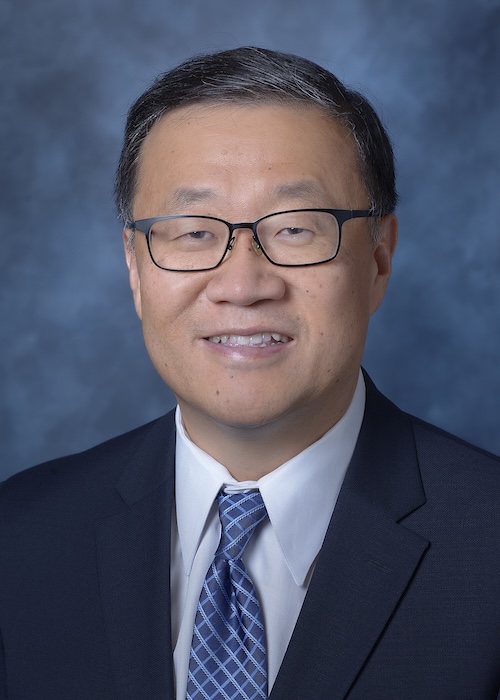

Could you tell me more about your background? Dr. Yu said:
“I’ve spent most of my career at the intersection of neurosurgery, immunology, and cancer research. Today, I serve as CEO and Chairman of Kairos Pharma, and I’m also a Professor of Neurosurgery and Director of Surgical Neuro-Oncology at Cedars-Sinai Medical Center in Los Angeles.”
“My background is in both medicine and science, I earned my BAS from Stanford University and my MD from Harvard Medical School and MIT. I completed my neurosurgery residency at Massachusetts General Hospital/Harvard and an immunology fellowship at the Institut Pasteur in Paris. That combination of surgery and immunology has always shaped how I think about cancer, not just as a set of tumors to remove, but as a biological system that can be retrained or reprogrammed.”
“Over the years, I’ve developed eight FDA investigational drugs and hold multiple patents for immunotherapies and nanotechnologies. Much of that work has come out of my NIH-funded lab at Cedars-Sinai, where our focus is on leveraging the immune system to fight some of the most aggressive cancers. Before founding Kairos, I served as CEO and Chairman of AcTcell and as Director of Enviro Therapeutics. Those experiences really gave me perspective on how to move science from the lab into the clinic, and that’s what ultimately led to Kairos.”
Formation Of The Company
How did the idea for Kairos come together? Dr. Yu shared:
“Kairos really started as a mission to solve a gap in the drug development process, what is sometimes called the “valley of death.” That’s the stage between early academic discovery and clinical validation where so many promising therapies stall because the risk is too high and the funding is too scarce.”
“A number of us, scientists, clinicians, and biotech veterans, had developed therapies that we believed could make a real difference for patients, but we knew they would never reach them if we stayed in the traditional academic framework. So, we formed Kairos to bridge that gap, to take science that was validated in principle and push it through early clinical stages where we could prove efficacy and safety in patients.”
“The ‘valley of death’ is where most drugs die, not because they don’t work, but because there isn’t a structure to support them through that translational phase. That’s the void Kairos was built to fill, and that’s still what drives us today.”
Core Products
What are the company’s core products and features? Dr. Yu explained:
“Our lead program, ENV105, is really the embodiment of what Kairos stands for, science that targets one of the biggest problems in oncology: drug resistance. We’re currently running a Phase 2 trial in advanced metastatic prostate cancer and a Phase 1 trial in non-small cell lung cancer (NSCLC).”
“In the prostate cancer study, we’re enrolling patients who have become resistant to a range of anti-androgen therapies. The trial is designed around progression-free survival and biomarker validation, and it’s based on a three-gene biomarker signature we identified that can predict and monitor resistance.”
“In NSCLC, ENV105 is being studied in combination with osimertinib (Tagrisso) for patients with EGFR mutations whose disease has progressed or who have incompletely treated disease who still show circulating tumor DNA despite treatment. The reality is that almost all patients on targeted therapies like Tagrisso eventually relapse. We believe ENV105 can help extend that benefit by directly targeting the mechanisms that drive cancer drug resistance.”
“Beyond ENV105, we’ve built a robust pipeline focused on the same theme, overcoming treatment resistance across multiple cancer types. That includes:
— KROS-101, a GITR agonist that enhances T-cell activity and strengthens immune response;
— KROS-201, a cell-based therapy for glioblastoma, one of the most difficult cancers to treat; and
— KROS-401, a macrophage reprogramming peptide for triple-negative breast cancer (TNBC), is designed to shift the tumor microenvironment from suppressive to active.
“We are also very excited about our acquisition of CL‑273 and CL‑741, which reflects a strategic focus on overcoming key resistance mechanisms in lung cancer, with one asset designed to broadly target EGFR mutations and the other to address c‑MET–driven resistance pathways. Together, these therapies have the potential to expand treatment options for patients with hard‑to‑treat NSCLC.”
All of this work is supported by a strong patent portfolio and non-dilutive funding from NIH and philanthropic donors, which allows us to move multiple programs forward efficiently, something most early-stage biotechs are unable to do.”
Challenges Faced
Have you faced any challenges in your sector recently? Dr. Yu acknowledged:
“The biggest challenge has been education, helping the broader scientific and investment communities recognize that drug resistance isn’t just a side effect of treatment; it’s a biological phenomenon we can target and manipulate.”
“Resistance is the reason why so many positive therapies stop working, yet it’s still not widely accepted as its own field of study. We’re shaking the trees a bit, showing that if you understand the mechanisms behind resistance, you can intervene early and change patient outcomes.”
“That shift in mindset is starting to take hold, but it takes time and data to move the needle in a field as conservative as oncology. Instead of abandoning treatment modalities as soon as they stop being efficacious, we can augment them to ensure they work longer for the patients who need them the most.”
Evolution Of The Company’s Technology
How has the company’s technology evolved since launching? Dr. Yu noted:
“The core science hasn’t changed, our approach to targeting resistance remains central. What’s evolved is how the industry is beginning to view this problem. Biotech tends to chase the next shiny thing. Right now, everyone’s focused on T-cell engagers, but ultimately, all therapies face the same wall when resistance develops.”
“Our job is to stay ahead of that curve. The market is cyclical, but the biology doesn’t change. We’re building for the long game, for when the conversation shifts from short-term responses to durable, long-term control of disease.”
Significant Milestones
What have been some of the company’s most significant milestones? Dr. Yu cited:
“Our IPO in September 2024 was a defining moment. It validated the work we’d been doing for years and gave us the resources to accelerate our programs. Launching our Phase 2 trial in prostate cancer was another huge milestone, moving from concept to patient impact is what every biotech aims for.”
“And now that we’re starting to see encouraging safety and early efficacy data, that’s giving our team and our investors confidence that the science is holding up in the clinic. These date are not just lab results anymore, we’re seeing real-world validation and the doctors running our study are excited by the results they’re seeing.”
Funding/Revenue
Are you able to discuss funding and revenue metrics? Dr. Yu revealed:
“We’ve been very intentional about building Kairos in a financially sustainable way. Non-dilutive funding, primarily through NIH grants and philanthropic support, has been a cornerstone of that approach. It allows us to run rigorous clinical studies without constantly raising equity and diluting shareholders.”
“It also serves as scientific validation, our proposals are peer-reviewed by leading experts and selected for public funding, which reinforces confidence in our direction. This approach has given us a longer runway, a lower burn rate, and the ability to advance multiple programs in parallel, something rare for a company of our size.”
“In a market where many biotech companies are struggling to secure capital, we’ve been able to maintain steady progress without compromising our timelines or scientific integrity.”
Differentiation From The Competition
What differentiates Kairos from its competition? Dr. Yu affirmed:
“What truly sets us apart is our focus on drug resistance and the proprietary molecules that allow us to target it in ways no one else can. Thanks to our patents, we’re operating in a unique space with molecules that address the central reason cancer therapies eventually fail.”
“Most companies are focused on killing cancer cells; we’re focused instead on keeping them from becoming more aggressive by tackling drug resistance head-on. That’s a different mindset, and it’s one that has the potential to significantly extend patient survival through therapies that are already proven to be effective. You can look at treatments like Pluvicto, for example, it’s been a great advancement, but patients still face a progression-free survival gap. That’s the gap we’re working to close.”
Future Company Goals
What are some of the company’s future goals? Dr. Yu concluded:
“Our immediate focus is execution, completing our ongoing Phase 1 and 2 trials and continuing to build data that demonstrates the power of our approach. At the same time, we’re actively engaging with large pharmaceutical companies to explore potential strategic partnerships that could help us scale and accelerate development.”
“Long-term, our goal is to change how the industry thinks about resistance, to make it a core part of how we design and sequence treatments. If we can do that, the impact goes far beyond one drug or one cancer type. It changes the way we approach therapy altogether.”

