

Learn to Live is a digital mental health company that delivers confidential, self-directed cognitive behavioral therapy (CBT) programs supported by clinician coaching to help people manage common conditions like stress, anxiety, depression, insomnia, and substance use. Pulse 2.0 interviewed Learn to Live co-founder and CEO Dale Cook to learn more.
Dale Cook’s Background

Could you tell me more about your background? Cook said:
“We founded Learn to Live to address the critical issues that prevent people from receiving effective mental health support–stigma, access, and cost–by providing a unique set of options that deliver immediate, clinically-validated mental health services. In the fourteen years since founding Learn to Live, we have focused on building and scaling our offerings to lower barriers to care, improve outcomes, and reduce total cost for employers, health plans, providers, higher education, and other groups. Today, we’re focused on expanding our partnerships with health plans and employers, among others, to integrate Learn to Live’s programs into their broader mental health and benefits ecosystems to deliver the most measurable impact.”
Formation Of The Company
How did the idea for the company come together? Cook shared:
“Historically, people have accessed mental health services through fairly conventional ways: either through in-person therapy or, more recently, through virtual therapy or counseling. Unfortunately, both of those options have significant barriers to access–limited provider availability, variation in quality of services, and cost. When we founded Learn to Live, there were already over two decades of gold-standard research substantiating the effectiveness of digital Cognitive Behavioral Therapy (CBT). We recognized a massive opportunity to bring this to all Americans, especially for those who otherwise wouldn’t receive help. We were one of the very first companies to offer digital CBT in the United States so that people could access it immediately when they needed help, and do so privately, on their own schedule and before their problems escalated.”
Favorite Memory
What has been your favorite memory working for the company so far? Cook reflected:
“One of our clients loved her job, but her overwhelming anxiety prevented her from feeling comfortable taking on a leadership position and growing in her career. After working through our social anxiety program, her anxiety dramatically improved. She accepted the promotion she wouldn’t otherwise have taken, and was able to accept increasing responsibility at her company. Hearing stories like this every day from people who use our programs to learn how to succeed and thrive is really the reason we founded Learn to Live. It’s always so gratifying to hear from our users about the impact our programs have had on their lives.”
Core Products
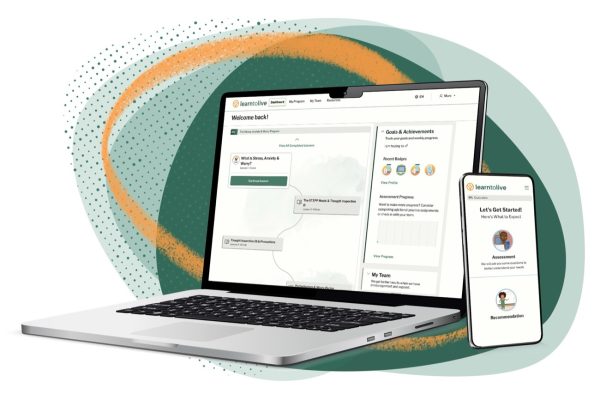
What are the company’s core products and features? Cook explained:
“We address numerous mental health problems, from low to high acuity, at scale, through clinically proven cognitive behavioral therapy programs and tools, gold standard psychometric assessments, 24/7 clinician coaching, crisis and urgent care management, extensive care navigation capabilities, peer support, and robust clinician care and client success portals. Our tools are designed to provide support for the most common mental health problems, including anxiety, stress, panic, resilience, insomnia, substance use, trauma, ADHD, and women’s and maternal health, and managing grief. Our services are designed to be immediately accessible, private, and easy for employees and their family members to use without long wait times or referrals, allowing members to move through self-guided modules at their own pace, with the help of clinically-trained coaches when they need extra support.”
Challenges Faced
Have you faced any challenges in your sector of work recently? Cook acknowledged:
“The biggest challenge facing the mental health space has been a surge in the demand for services that has dramatically outpaced traditional therapy provider networks. We’re addressing that unmet need by continuing to provide clinically-grounded services that are accessible 24/7 and don’t rely on a therapist’s availability to be effective, while providing immediate, straightforward access for those who are struggling with their mental health but don’t know where to go for help before it gets worse.”
Evolution Of The Company’s Technology
How has the company’s technology evolved since launching? Cook noted:
“We have grown from simply a standalone solution into a sophisticated technology, data and navigation platform that actively adapts to our users’ needs. Our technology safely and reliably supports data-driven clinical outcomes for large populations while still delivering a personalized experience shaped by real-time interaction data and clinician-reviewed oversight, not just self-guided content. As health plans and employers become more sophisticated in how they use data, they can direct members into Learn to Live programs at the right moment, which has driven stronger engagement, higher utilization, and better outcomes. When someone needs a higher level of care, the platform and/or our clinicians guide them smoothly to the right in-network providers through built-in care navigation. All this results in an expanded user experience that allows us to meet users where they are and play an integrated role with all of the solutions our customers offer.”

Significant Milestones
What have been some of the company’s most significant milestones? Cook cited:
“Over the past fourteen years, we’ve grown from serving small and mid-sized employers to working with large national employers, with commercial fully-insured groups, and Medicare and Medicaid programs to reach over 38 million Americans in all 50 states. At the same time, we have gained a tremendous amount of experience in learning which services and interventions are the most impactful, allowing us to expand our services and capabilities to ensure that sufferers are successful and our customers see significant return on their mental health investment.”
Customer Success Stories
Can you share any specific customer success stories? Cook highlighted:
“We work closely with each of our clients to make sure that they have the right tools to meet their populations’ needs and that everyone who could benefit is accessing our programs – engaging what we call ‘silent sufferers.’ These are often the individuals who aren’t using an employer’s Employee Assistance Program (EAP), for example, or their health plan’s traditional behavioral health benefits. This engagement means that our customers’ populations are happier, healthier, and better able to focus on meeting their personal, professional, and academic goals. For example, one large university system we work with found that 32% of Learn to Live users were less likely to drop out of school and 78% felt more productive. Clifton Larson Allen, one of the largest accounting firms in the country, brought on Learn to Live to help employees cope with periods of high stress and burnout and found that 91% of Learn to Live users had more positive feelings toward the company and 93% made progress towards their personal goals. And on a company wide basis, we see world-class NPS scores; a 27% average drop in psychometric measures (comparable with in-person therapy); industry-leading utilization and engagement over six times greater than traditional solutions; and an average 3:1 net hard-dollar ROI for our clients, all resulting in 95% client retention.”
Total Addressable Market
What total addressable market (TAM) size is the company pursuing? Cook assessed:
“The scope of the problem is massive. One in five Americans lives with a mental illness at any given time and nearly half of all Americans will struggle with mental health problems at some point in their life. 40% of Americans currently live in an area with a shortage of mental health providers, and the mental health provider shortage is expected to number in the hundreds of thousands within the coming decade. Our market is every employer or health plan looking to address that urgent level of need through effective digital behavioral health solutions for employees and their families across commercial and self-insured markets.”
Differentiation From The Competition
What differentiates the company from its competition? Cook affirmed:
“Learn to Live is unique in its ability to offer a breadth of programs and services, while also going very deep with those services. Our programs and tools are both scalable and proven to be highly effective. Our evidence-based CBT programs are delivered in a way that removes stigma and friction, increasing the number of individuals who seek mental health help, while our combination of self-guided programs and optional clinician coaching effectively addresses the provider shortage. And because of our integration, we’re able not just to reach people at an early moment of need before their mental health problems become crisis-level or drive unnecessary claims, but also to work with our clients to develop new tools to meet their needs in real time, whether that’s responding to natural disasters, economic uncertainty, or other urgent issues that arise in specific populations or communities.”
Future Company Goals
What are some of the company’s future goals? Cook concluded:
“We’re driven by our mission to provide silent sufferers with access to affordable, effective mental healthcare that is easily accessible and fits their schedule. We’re focused on continuing to serve our 38M existing members and expanding our reach, providing access to new health plan members, employees at large employers, students at universities, and patients within health systems.”
“To achieve the highest ROI for our clients and the best clinical outcomes for our users, we’re also continuing to elevate the user experience for those that we serve. We’re focused on the continual delivery of new and expanded clinical content to cover the wide variety and acuity of mental health needs. Whether it be helping parents of kids with mental health issues, leaders who are supporting the mental health of their teams, or the individual sufferers themselves looking for solutions, we regularly release new cognitive-behavioral therapy-based content in multiple formats to improve clinical outcomes, drive engagement, and improve overall well-being.”
“We know that personalization is important to our users and we’re incorporating the latest technology to tailor their experience with our solutions, while our clinician coaches continue to provide human touchpoints.”
