

Leia develops the Immersity Platform, combining Spatial AI Software and Switchable-Display Hardware to bring immersive visual experiences to phones, tablets, laptops, and monitors. The company is led by Founder and Chief Technical Officer David Fattal. Pulse 2.0 interviewed Leia Founder and Chief Technical Officer David Fattal to learn more.

Background in Physics and Nanophotonics
Asked about his background, Fattal shared:
I am a physicist by training. I studied at École Polytechnique in France and completed a Ph.D. in Physics at Stanford University, where my work in quantum computing led to a fascination with nanophotonics—the seemingly magical ways in which nanostructures can interact with light.
I then spent nine years at HP Labs, where I led research that ultimately produced the core display breakthrough behind Leia. In 2014, I co-founded the company to take that technology out of the lab and bring it into everyday products.
Since then, I have worked across research, product development, partnerships, and company leadership, including serving as CEO and now as CTO. The common thread has always been the same: turning deep technology into experiences that feel magical, yet natural and useful.
I hold more than 250 patents and have been fortunate to see our work evolve from early prototypes into commercial phones, tablets, laptops, and monitors.
Origins and Technology Evolution
Asked how the idea for the company came together and how the technology has evolved since launching, Fattal explained:
Leia was founded around a breakthrough display nanotechnology originally developed at HP Labs. The vision was ambitious from the beginning: make immersive visual experiences available on mainstream devices, not confined to specialized hardware or niche ecosystems.
Over time, that vision evolved into what is now the Immersity platform — a combination of Spatial AI Software and Switchable-Display Hardware that enables immersive experiences across phones, tablets, laptops, monitors, and more
What has changed most significantly is our ability to scale. Early immersive technologies often depend on isolated hardware experiences or required major behavioral shifts from users. We took a different path. Our focus has been on integrating immersive experiences into the devices people already use every day.
The evolution of AI has also accelerated what is possible. Spatial AI now allows us to add depth, context, and immersive experiences to content and workflows in ways that are practical, scalable, and OEM-ready.
Favorite Memory
Asked about his favorite memory working for the company so far, Fattal reflected:
One of my favorite memories was seeing the RED Hydrogen One—our first commercial product—on display in thousands of AT&T and Verizon stores across the United States. After years of research, engineering, and countless prototypes, it was incredibly special to see our technology leave the lab and reach consumers at that scale. It was a proud and emotional moment for the entire team, because it made tangible what we had been working toward from the beginning: bringing immersive experiences into everyday devices.
Core Technology
Asked what the company’s core technology is and what makes it unique, Fattal detailed:
The Immersity Platform combines two core technologies: Spatial AI Software and Switchable-Display Hardware.
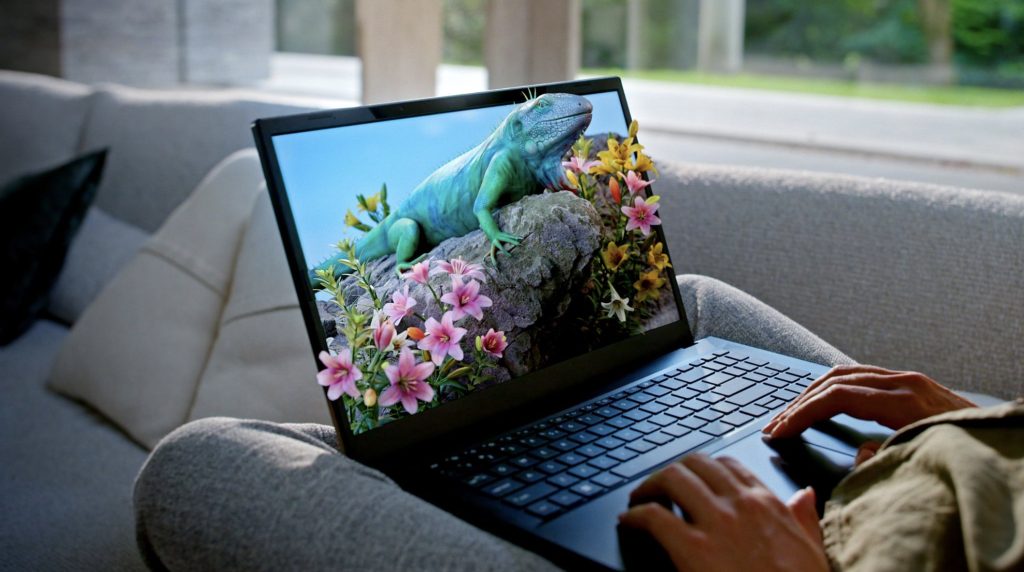
Our Spatial AI Software understands depth, perspective, and spatial context, enabling content and applications to feel more immersive and natural on a display. Our Switchable-Display Hardware adds a dynamic optical layer that can transition between standard viewing and immersive viewing modes depending on the experience.
What makes this unique is that we are not building a closed ecosystem or requiring entirely new user behavior. Leia’s technology is designed to integrate into the devices people already use, and the workflows they already understand, while our Immersity Platform makes it easy to create, convert, and experience immersive content.
Equally important is scalability. We’ve invested heavily in creating a platform that OEMs and partners can realistically deploy across consumer and enterprise devices. That combination of immersive quality, practical integration, and manufacturing readiness is what differentiates us.
Challenges in the Sector
Asked whether he has faced any challenges in his sector of work recently and how he overcame them, Fattal outlined:
One of the biggest challenges across immersive technology has been the gap between impressive demonstrations and scalable adoption. Many technologies generate excitement early but struggle when integration complexity, hardware requirements, or user friction enter the equation.
Our approach has been to focus relentlessly on accessibility and scalability. Instead of asking users to adopt entirely new ecosystems, we work within existing devices, workflows, and content environments.
Another challenge has been ensuring manufacturing readiness at scale. Bringing advanced display technology into mass-market products requires not only innovation, but also reliability, yield optimization, and ecosystem alignment. We’ve worked closely with strategic partners across the supply chain to industrialize our platform and ensure it can support large-scale deployment.
The industry is moving beyond experimentation and toward practical adoption. We believe that shift strongly favors platforms that can integrate seamlessly into everyday technology experiences.
Significant Milestones
Asked about the company’s most significant milestones, Fattal noted:
There have been several important milestones for Leia over the past few years.
One has been the continued advancement of our Switchable-Display manufacturing capabilities alongside our ecosystem partners, enabling scalable production readiness for future device deployments.
Another major milestone has been the expansion of the Immersity Platform into real-world enterprise and consumer use cases. We are seeing increasing interest across communication, gaming, design workflows, entertainment, healthcare visualization, and education.
We’ve also reached an important stage in software maturity. The company is no longer just about hardware innovation — it is a full platform combining AI, content tools, display technology, and ecosystem integration.
Finally, industry engagement has accelerated significantly. Events like AWE, MWC, Display Week, and enterprise-focused XR conferences have become important opportunities to demonstrate that immersive experiences are evolving into practical, deployable solutions.
Use Cases and Customer Fit
Asked to share specific use cases and what makes Leia uniquely positioned to answer their needs, Fattal highlighted:
One area where we see strong momentum is immersive communication. Traditional video calls flatten interaction, while the experience we offer introduces more depth and presence, helping conversations feel more natural and engaging.
Another key use case is design and visualization. Designers, engineers, and creators can interact with models and environments in a more intuitive way using tools they already know, including workflows built around platforms like Unity and Blender.
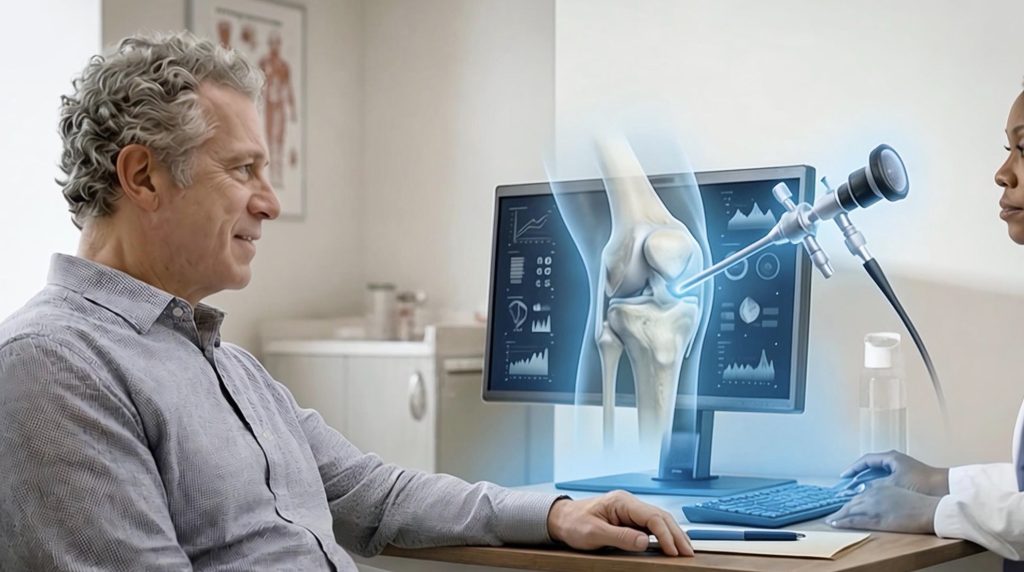
Healthcare is also an exciting area. Through collaborations involving medical visualization partners, immersive displays can help improve how clinicians interact with complex imaging and spatial information.
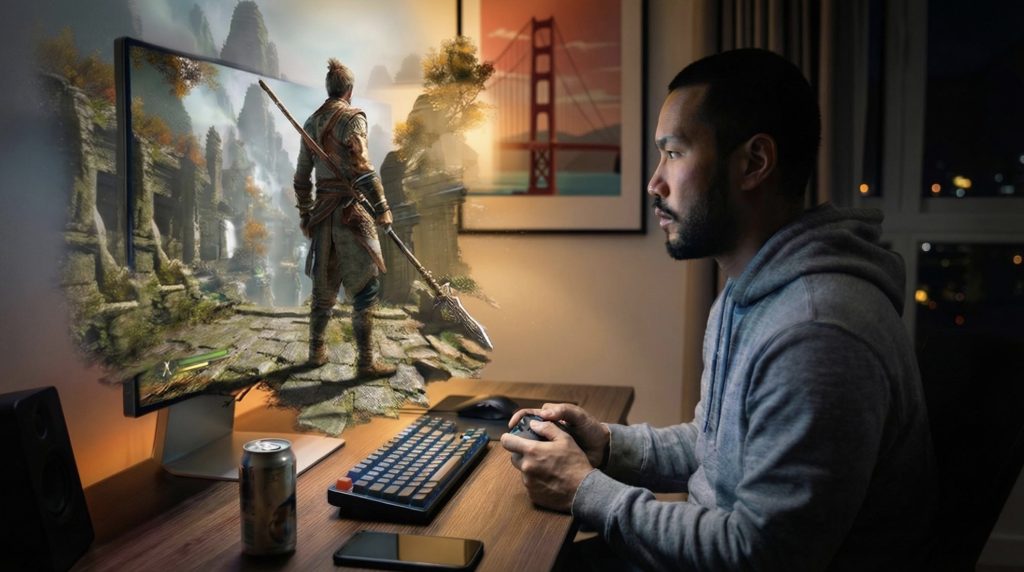
Gaming and entertainment remain important as well. Immersive experiences can enhance engagement on devices consumers already own, without requiring major platform changes.
What uniquely positions our technology is our ability to support these experiences across multiple device categories and industries using a scalable, OEM-ready platform approach rather than isolated solutions.
Total Addressable Market
Asked about the total addressable market the company is pursuing, Fattal described:
We are addressing a massive $1 trillion-plus opportunity across the global personal-device market and its broader ecosystem.
To put the scale into perspective, approximately 1.7 billion personal devices are shipped every year, including 1.2 billion smartphones. Today, there is an active installed base of roughly 6.8 billion smartphones worldwide, along with more than 2 billion PCs in use that can render immersive content.
In addition, there are over 100 million high-end gaming devices already in consumers’ hands, including PCs and consoles with the processing power needed to run immersive applications today.
When you look at the size of the installed base, the pace of device shipments, and the growing demand for more immersive digital experiences, we believe the opportunity spans virtually every category of personal computing and connected devices.
Competitive Differentiation
Asked what differentiates the company from its competition, Fattal emphasized:
What truly differentiates Leia is our proprietary, extensively patented display technology and Spatial AI Software. Our Switchable-Display technology allows devices to move seamlessly between their standard viewing mode and immersive experiences on demand, without compromising how the device is used every day.
We complement that display technology with Spatial AI software that can transform existing images and video into immersive content while giving developers the tools to build new applications. This means our partners are not adopting a standalone display component; they gain the hardware, software, calibration tools, and expertise needed to deliver complete experience.
Our experience bringing this technology to market is another important differentiator. For more than a decade, we have worked to move immersive display technology from laboratory prototypes into commercial products. That combination of patented technology, an integrated platform approach, and real-world experience working with device manufacturers is difficult to replicate and essential as immersive experiences move toward broader adoption.
Future Goals
Asked about the company’s future goals, Fattal concluded:
Our first goal is to continue advancing our Switchable-Display technology so it can work across every major category of personal device, including new form factors such as foldable phones. At the same time, we are working with leading display and manufacturing partners to improve performance and continue reducing the cost of the solution.
Our second goal is to deepen the connection between our devices and our Spatial AI capabilities. With users’ consent, 3D data collected from shipped devices can help us train better Spatial AI models. These models can then create higher-quality spatial content and enable more compelling applications.
We see this creating a virtuous circle: more immersive devices generate more useful 3D data, which leads to better Spatial AI, richer content and use cases, and ultimately greater demand for immersive devices.
That combination of continued display innovation, lower cost, and increasingly capable Spatial AI is how we plan to make immersive experiences available across phones, tablets, laptops, monitors, and new device form factors.
