

Lektra is a distributed energy and artificial intelligence company developing decentralized data centers that use existing solar, battery, and electrical infrastructure to power AI workloads. Pulse 2.0 interviewed Lektra Founder and CEO Karl Andersen to learn more about his background, the company’s origins, its EdgeScale and EdgeStart products, energy host business model, technology partnerships, funding, and future growth plans.
Karl Andersen’s Background
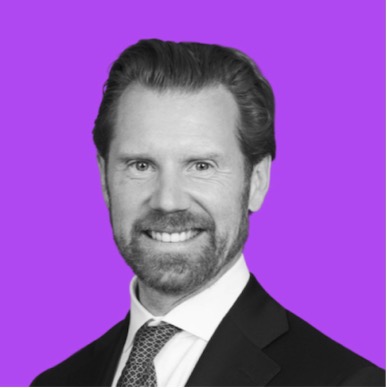
When asked about his professional background and the experiences that led him to establish Lektra, Andersen shared:
I’m Karl Andersen, and I’m the CEO and Founder of Lektra, a distributed energy and artificial intelligence company. My background actually stems from insurance and finance, and in 2008 I founded my first company – an insurance-linked securities hedge fund and launched it in the middle of the financial crisis. I was bought out at the end of 2011, when the fund was up around 45%. I then founded Hedmark Insurance in Bermuda in 2012, reinsuring longevity and mortality risk for public pension funds and other custom books of risk. After that, I ran River Oak Risk, which provided reinsurance for corporations, hedge funds, and private equity.
From 2017 until this May, I was Managing Director at Greenlight Group, a Nordic investor in climate technology and infrastructure. I’ve also been Chief Counsel at Grid Shield Alliance, a nonprofit that works on grid resilience, since 2024, and I’ve been on the board of the Norwegian American Chamber of Commerce since 2009. Greenlight and Grid Shield Alliance gave me a close look at distributed energy and helped me develop the concepts that eventually became Lektra.
What stuck with me from my most recent roles is that solar owners in the Nordics were making power for about three cents a kilowatt-hour and getting paid almost nothing for it. I knew that we could leverage that power to profit those producing it at home and on buildings, especially with the rise of AI and its power needs. It’s clear that the grid wasn’t built for what’s coming, and that those producing energy could both become part of the solution and could significantly profit from that need.
How The Idea For Lektra Came Together
Discussing the origins of Lektra and how increasing demand for AI computing influenced its business model, Andersen explained:
My first idea was EV charging stations. Then ChatGPT came out in 2023, and it was obvious AI was going to put far more strain on the grid than anything before it. So, we decided to put the compute where the energy already is. I worked on it with a former senior engineer at Con Edison, and in 2024 we were granted the first patent for distributed data centers built alongside solar and batteries. My co-founders are Arthur Orsmanov, who handles product, brand and design, and Vitaly Leokumovich, who runs engineering. I’m the CEO, so I set the direction, raise the money, and work with energy hosts – that’s what we call people who are hosting solar and selling it as AI compute – and partners on where we build next.
Favorite Memory Working At Lektra
Reflecting on one of his favorite memories while building the company, Andersen highlighted the arrival of Jerry Gutierrez and the development of Lektra’s leadership team:
My favorite memory was when my head of cloud joined the team, Jerry Gutierrez. We called him Cloud Jesus right off the bat because he was the final piece of a team I knew could take Lektra from a start-up to an enterprise. My team and I are making new and awesome memories every day and that is what we live for.
Core Products And Features
Describing Lektra’s core products, Andersen outlined how the company’s EdgeScale infrastructure, EdgeStart cabinets, cloud computing network, and energy host program work together to turn existing electricity resources into AI computing capacity:
Everything runs on one idea: turning energy that already exists at a building or home into AI compute. Our EdgeScale suite is our line of distributed data centers, built at 20 MW or less at buildings that already have solar, batteries, or grid capacity. EdgeStart is the entry product, a self-contained cabinet with eight NVIDIA GPUs, sold in an RTX version at $310,197 and a B300 version at $840,951. Edge Pro serves larger commercial deployments, and Edge Max supports multi-megawatt installations.
Each EdgeStart cabinet comes with the power backup, power distribution, firewall, and switch it needs, and the price covers installed hardware and shipping. We estimate owner earnings at about $9,700 a month in the first year for the RTX and about $36,950 a month for the B300, based on 730 contracted hours a month, power at 10 cents a kilowatt hour, and the owner’s 80% share. Owners can pay cash or finance through Blue Street Capital at 9 percent over 48 months with 20 percent down. They can start with one cabinet and add more later.
We install it, run it remotely, sell the capacity, handle customers, billing, monitoring, and support, and pay the owner 80% of the revenue. A live dashboard shows the owner usage, energy, and earnings.
Lektra Cloud is the other side of the business. It’s where developers and enterprises rent GPU capacity from our network, with no egress fees and no lock-in. Because our sites are physically spread out, customers get programmable geographic control, which means they choose the state, city, or facility where a workload runs. That matters for latency and for data residency rules.
The energy host program ties it together. Homes and businesses with solar, batteries, or other behind-the-meter energy supply power to AI and cloud workloads, and they earn up to 80% of the compute revenue. The compute is carbon-free, which we’ve trademarked as Carbon-Free Compute, but I think of that as a cost advantage first.
Challenges In Distributed AI Infrastructure
Addressing the challenges of developing AI computing infrastructure outside conventional hyperscale data centers, Andersen discussed the limitations of the existing electrical grid and the importance of deploying reliable hardware across distributed locations:
While it’s not a Lektra problem, the existing power grid and US infrastructure are the real problem we’re trying to overcome. AI is growing faster than utilities can serve it, and extending the grid to meet that demand the traditional way would take a decade or more and trillions of dollars.
Lektra is building Grid 2.0, a distributed energy and computing network that uses the solar and batteries buildings already have to put AI compute where it’s needed, but the hard part for us was making a data center work in an existing building, which runs counter to how everyone else is trying to build data centers. From our perspective, the hardware has to be deployed and run reliably at sites that aren’t hyperscale facilities, and the GPUs have to stay busy once they’re online.
We worked with Penguin Solutions to deploy and optimize the hardware, and Thunder Compute’s software now manages the network and virtualizes the GPUs, so customers get more compute out of the same machines. Eight sites are running today, including Kearny, which we own.
How Lektra’s Technology Has Evolved
Looking back at the company’s technological development, Andersen described its progression from exploring electric vehicle charging to establishing distributed AI computing facilities and introducing standardized hardware products:
We started with the idea of getting more value out of solar that wasn’t earning much, first through EV charging and then through compute. The 2024 patent is what let us put compute directly next to solar and storage. Since then, we’ve gone from the concept to EdgeScale sites running real workloads, and now to EdgeStart, which packages all of it into a cabinet an owner can buy. Blue Street Capital offers financing. Lektra Cloud is the layer that ties the sites into one network. Over time, I expect this to reach microgrids, small modular nuclear, and fuel cells.
Significant Company Milestones
When asked about Lektra’s most important achievements, Andersen pointed to its patent, operational data center network, and introduction of the EdgeStart product:
Our first major milestone was our 2024 patent. Today EdgeScale is online at eight sites, including Kearny, NJ, which is wholly owned, and McKinney, TX is coming online shortly. We also launched EdgeStart this fall, the first product that lets a building owner buy an AI server, run it on their own solar and batteries, and keep 80% of the revenue.
Customer Success Stories
Highlighting a real-world application of Lektra’s distributed computing infrastructure, Andersen discussed a New Jersey school that uses AI-powered video analysis supported by Lektra Cloud:
We have a strong example from a school in New Jersey, but for privacy reasons, I can’t say which one. In that school, an AI model from our customer Griffin 365 runs on Lektra Cloud and watches camera feeds to spot weapons. A system like that needs to work in real time; otherwise, positive identification of a weapon might not happen in time to prevent a tragedy. Having GPUs nearby, powered by solar, reduces cost and latency.
Funding And Financial Performance
Discussing how Lektra has been financed, Andersen explained that the company has relied primarily on bootstrapping alongside limited strategic investment:
We took some capital early on from strategic investors, battery makers, solar owners and that diluted us to a total of around 3.8%. Otherwise, we have bootstrapped the entire thing. Now we are able to pay for our burn and future growth. The best part is that we can stick to our mission rather than just having to constantly think about reporting next quarters figures.
What Differentiates Lektra From Its Competition
Explaining Lektra’s competitive advantages, Andersen emphasized its patented distributed data center architecture, energy host revenue-sharing model, geographic flexibility, and integration with existing solar and battery infrastructure:
We hold the first patent for distributed data centers built next to solar and storage, and with EdgeStart the owner keeps 80% of the revenue while we run everything. Our data centers are built onsite where solar and batteries already exist, so a customer can choose exactly where a workload runs, whether for latency or because of data residency rules. Most edge networks sit inside the same hyperscale facilities everyone else uses, so they aren’t really distributed. And as I mentioned, our power is carbon-free, which is what Carbon-Free Compute refers to.
Future Company Goals
Outlining Lektra’s long-term growth plans, Andersen discussed the company’s intention to expand its distributed data center network across the United States:
Today, Lektra’s EdgeScale data centers, which operate at 20 MW or less, are online at eight sites, including a wholly owned site running in Kearny, NJ, and another coming online shortly in McKinney, TX. Our EdgeScale product suite lets commercial and industrial building owners turn their buildings into data centers, and in the future, I expect hundreds of sites using our systems across the country. This will let energy hosts run on their own solar and batteries while AI customers use that compute power to run real workloads. The result will be AI capacity that comes online at buildings that already have the power, instead of after a decade-long grid buildout.
Creating A Shared Economy For Energy
Discussing the broader economic opportunity behind Lektra’s business model, Andersen compared the company’s approach to platforms that allow individuals to generate income from assets they already own:
One thing I’d like to add is the idea of a shared economy for energy. Airbnb let people earn money from a spare bedroom, and we’re doing the same with the solar and batteries that are already installed on buildings. Most owners today use that equipment to cut a utility bill, or they sell the extra back to the grid at whatever rate the utility sets. With EdgeStart, they put it to work running AI compute, and they keep 80% of the revenue. They stop being just electrical grid customers and take part in the AI economy.
