

Liberate develops AI agents that handle insurance sales, service, and claims by executing business processes within carriers’ existing systems. Co-Founder and CEO Amrish Singh launched the company in 2022 with Ryan Eldridge and Jason St. Pierre after identifying the operational challenges insurers face when connecting customers with their core systems. Liberate has raised $72 million, including a $50 million Series B led by Battery Ventures in October 2025 at a $300 million post-money valuation. Pulse 2.0 interviewed Singh to learn more about building AI agents that execute insurance processes, handling regulated claims calls, and preparing the insurance industry for an AI-driven workforce transition.
Amrish Singh’s Background
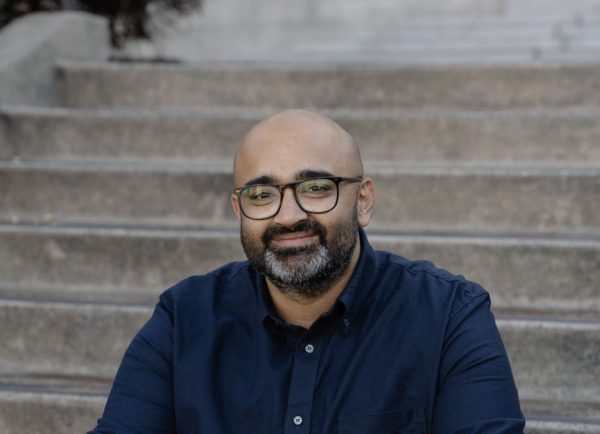
When asked about his background and his path to founding Liberate, Singh explained:
I trained as a software engineer and spent 16 years building large core systems. I led enterprise product, engineering, and consulting teams before working in insurance, including a stint as the founding CTO of a startup.
In 2018, I joined Metromile to launch Metromile Enterprise, the software group that helped insurers automate claims and fraud detection. That’s where I saw the real problem up close: carriers weren’t short on software. They were drowning in human middleware between customers and the systems that already had the answers.
Singh also served as a venture partner at Eclipse Ventures, where he met co-founders Eldridge and St. Pierre. He holds an MBA from NYU Stern, a master’s degree in information systems from Carnegie Mellon, and a bachelor’s degree in information technology.
How Liberate Started
When asked how the idea for Liberate came together, Singh explained:
Insurance companies spend over $250 billion a year on a human middleware problem: people whose entire job is relaying information between a customer and a system of record.
I’d watched that up close at Metromile. My co-founders Ryan, Jason and I started Liberate in 2022 with a simple thesis: the hard part of an insurance call isn’t the talking. It’s everything underneath it.
Filing a claim, quoting a policy, collecting a payment: that information runs through Guidewire, Snapsheet, Duck Creek, Applied Epic and a dozen other systems with their own rules and compliance requirements.
Singh described this as the company’s 5%/95% insight:
5% of the value is the talking. 95% is the complex orchestration of the business process behind it.
Most AI vendors compete on the 5%. We built Liberate to win the 95%, which is why we call ourselves a System of Action, not a chatbot.
Favorite Memory
When asked about his favorite memory working for the company, Singh pointed to Hurricanes Helene and Milton:
Helene and Milton were back-to-back in the fall of 2024. One of our coastal carrier customers saw their claim volume increase by 14 times in two weeks. No one added a single person to the contact center. Watching the system absorb that surge in real time, while claims came in every few seconds and adjusters kept pace instead of drowning, is the moment I point to when people ask why we built the company this way.
That customer logged 925 hours of CSR time saved in two weeks alone.
That’s the whole point of a System of Action. It’s not a demo that looks good in a pitch meeting. It’s infrastructure that holds up when the volume triples overnight, and people’s homes are underwater.
Core Products And Features
When asked about Liberate’s core products and features, Singh explained:
Liberate has three layers. Nicole is our insurance-native AI agent that answers calls, emails and texts instantly, verifies identity and understands insurance intent.
The Orchestration Layer executes the actual work within a carrier’s systems: first notice of loss (FNOL) intake, claims status, billing, policy changes, full Rate/Quote/Bind and writing back to Guidewire, Duck Creek, Snapsheet, Applied Epic and Vertafore, with a full audit trail.
The Supervisor Layer governs every interaction with hundreds of insurance-specific risk signals and warm transfers to a human the moment confidence drops or the conversation touches something regulated.
Singh summarized the architecture:
The Agent Layer answers, the Orchestration Layer executes, the Supervisor Layer governs.
No competitor has a real equivalent to that third layer. It’s the reason carriers can expand our footprint instead of capping it at a pilot.
What Separates A System Of Action From A Chatbot Or Copilot
When asked what distinguishes Liberate’s technology from chatbots and copilots, Singh explained:
A chatbot deflects. A copilot suggests something to a human who still has to do the work. Our insurance-native AI agent executes.
Nicole validates a policy, dispatches a vendor, writes the claim back into Guidewire and closes the loop without a human touching it unless the Supervisor Layer decides a human needs to be in the loop.
That’s the whole distinction, and it’s why we don’t let people call Nicole a bot, even casually.
How The Technology Has Evolved
When asked how Liberate’s technology has evolved since launching, Singh said:
We started narrow, focused on a single channel and a single use case, and expanded deliberately from there: voice to SMS to email to digital and sales to service to claims.
The Supervisor Layer came from watching real production traffic and cataloging every failure mode we needed to govern against.
Today, we run 2.8 million automated transactions a month across voice, SMS, and email for more than 70 enterprise customers, supporting insurance operations representing over $100 billion in premium volume.
That expansion is also reflected within individual customer accounts:
Sixt started with outbound sales and is expanding into inbound service. Liberty started in commercial claims and is now moving into workers’ comp and personal lines.
AIS started with sales and now runs all its sales and servicing through us and cut call abandonment from 20% to 5% by doing it.
Overcoming Challenges In Insurance AI
When asked about the biggest challenges Liberate has faced, Singh pointed to automating first notice of loss:
Claims FNOL is genuinely hard. It isn’t a quick service call. It’s a 15- to 20-minute regulated conversation with someone who’s just been in an accident, and real system orchestration running behind every minute of it.
So we set an honest target up front: 45 to 55% autonomous completion. We’d rather commit to a number we can beat than one that sounds good in a deck. We’re past 70% in production today.
We got there by being honest about what’s hard, and by building a Supervisor Layer to catch the cases that shouldn’t be automated yet. Escalation is a feature, not a failure.
Singh also identified unrealistic expectations as an industry-wide challenge:
The other challenge is one I see kill deals across the industry: unrealistic expectations.
Carriers hear “AI” and picture something that solves everything on day one. We tell every prospect up front this is a journey. Sales converts differently than service, which converts differently than claims.
Setting that expectation honestly closes deals faster than overselling.
Deciding Which Use Case To Tackle First
When asked how Liberate approaches new customer deployments, Singh explained:
We start with volume and pain, not ambition.
Sales and servicing convert fastest, so most new customers land there: outbound sales or inbound policy servicing, with at least 5,000 calls a month so the ROI math is clear.
We’re typically live in 4 to 6 weeks, and once that’s proven, usually within 8 to 12 weeks, we expand into new channels and eventually into claims, which is harder and takes longer to trust.
Building Trust On Regulated Calls
When asked how Liberate addresses concerns about allowing AI agents to handle regulated insurance calls, Singh said:
I tell clients the real risk is AI making mistakes without anyone watching.
That’s what the Supervisor Layer exists for: hundreds of risk signals monitoring confidence, conflicting entities, regulated language and PII exposure on every single interaction, with an instant warm transfer the moment something crosses a threshold.
Our hallucination rate is under 1%, and we log and audit every action.
That’s why compliance teams end up being the ones who approve expanding us, not the ones blocking us.
Key Company Milestones
When asked about Liberate’s most significant milestones, Singh highlighted:
We just passed a million minutes of automated calls.
That sounds like a systems milestone. It isn’t. Every one of those minutes used to come out of somebody’s day. An agent reading a policy number back for the fourth time. An adjuster typing intake notes instead of sitting with the family whose house just flooded.
We didn’t automate that time away. We handed it back to carriers and agencies so their people can do the work they were meant to do.
Customer Success Stories
When asked to share specific customer success stories, Singh highlighted several deployments:
Allied Trust had been stuck with a prior vendor for two years with nothing to show for it. We got them live in 6 weeks.
Branch Insurance built their own persona for Nicole, which they call cAItlin, and 65% of claim reporting now runs through that experience, cutting call resolution time by 42% compared with their previous outsourced call center.
Singh noted that these deployments follow a similar pattern:
A carrier stuck on cost, cycle time or capacity, and a measurable result within weeks, not years, of go-live.
Funding And Revenue Metrics
When asked about Liberate’s funding and revenue metrics, Singh explained:
I can talk funding openly: $72 million raised total, a Series A led by Redpoint in 2024, and a $50 million Series B led by Battery Ventures in October 2025 at a $300 million post-money valuation.
I don’t discuss specific revenue figures. Instead, I point to $100 billion-plus in premium volume flowing through our platform and 100% retention across every enterprise customer we’ve deployed to.
Those numbers show the business is real.
Total Addressable Market
When asked about the total addressable market Liberate is pursuing, Singh explained:
U.S. P&C carriers wrote $1.06 trillion in direct premium in 2024, spread across roughly 2,500 carriers, 443,000 agencies and brokerages, plus more than 1,000 MGAs and MGUs.
Insurers spend over $250 billion a year on the human middleware problem we solve, and McKinsey pegs generative AI’s annual value potential in insurance at $50 to $70 billion.
That’s the market. We’re not trying to be a horizontal AI platform chasing every industry. We’re trying to own the System of Action category inside the one industry we understand from the inside.
Competitive Differentiation
When asked what differentiates Liberate from its competition, Singh explained:
Depth versus breadth. Horizontal platforms like the big CX and conversational AI vendors serve 20 industries at the surface.
We serve one industry at a depth nobody else matches, with pre-built write-back into Guidewire, Insuresoft and Snapsheet, plus native integration into Applied Epic, AMS360 and Vertafore, not a generic API.
Our founding team spent years inside P&C operations before writing a line of Liberate’s code, so we built for the messy edge cases that break automation instead of discovering them after a customer complains.
Singh identified the Supervisor Layer as another differentiator:
The Supervisor Layer is the other piece nobody else has built.
Governing hundreds of insurance-specific risk signals in real time, with warm transfer and full audit trails, lets a compliance team say yes to expanding our footprint instead of freezing us at a pilot forever.
Future Goals
When asked about Liberate’s future goals, Singh outlined several priorities:
Push autonomous rates higher across every use case, starting with Frontline’s FNOL line, where Spanish-language support and policy-number lookup should take us from 70% to 80%. Keep expanding within existing accounts as Sixt, Liberty and AIS have, moving from a single use case and channel to full coverage across sales, service, and claims. Keep building the Supervisor Layer because governance turns a good pilot into infrastructure a carrier’s compliance team trusts enterprise-wide.
Singh also described a longer-term opportunity involving personal AI agents:
The next wave of AI will be personal agents that act on someone’s behalf, and every industry will need a way to let those agents in safely.
We want Liberate to be the layer that makes that possible, starting with insurance: an agent asks a question and gets a governed, auditable answer pulled straight from the systems of record, not a guess.
Get that right in a regulated industry, and the same model extends to healthcare, banking, government services, anywhere trust and compliance can’t be an afterthought.
That’s the bet we’re building toward.
The Next Five Years
When asked where Liberate and the insurance industry could be in five years, Singh discussed the workforce transition he expects insurers to face:
Longer term, the P&C industry is on track to lose roughly 400,000 workers to retirement, with about half the current workforce retiring over the next 15 years. That’s not a hypothetical problem we’re preparing for. It’s already showing up in our pipeline.
Our goal is for Liberate to be the layer that absorbs that transition without carriers losing service quality or control.
Singh added:
I think the carriers who treated AI as a pilot program lose the workforce transition happening in front of them.
Roughly 400,000 insurance workers are retiring in this wave, and there isn’t a hiring pipeline to replace them at scale.
Five years out, I want Liberate to be core infrastructure at the carriers we work with today, running full GRC monitoring across every line of business, not a point solution bolted onto a call center.
The industry that wins this decade resolves work end-to-end instead of just routing it faster.
Why Honesty Matters More Than Overpromising
When invited to share another topic, Singh emphasized the importance of setting realistic expectations for enterprise AI:
Honesty matters more to me than most people expect from a CEO.
Two things kill AI deals in this industry: pricing that doesn’t work or a customer who expected AI to solve everything on day one.
We’d rather tell a prospect our real numbers, such as 45-55% on claims and 85%+ on servicing.
We don’t sell a fantasy and lose the account eighteen months later.
Trust is the actual product here, and you don’t get it by overpromising.
