Loora is an AI-powered English learning platform that gives users a personal AI tutor for one-on-one conversations, personalized feedback, and practice centered on real-life situations and individual interests. Alongside its consumer app, Loora offers a B2B product for corporations, governments, and universities. The company has taught more than 15 million learners and supported more than 250 million interactions since launching. Today, Loora also raised $22 million in Series B funding, led by Union Tech Ventures, bringing funding to $43.25 million as it increases access to effective English fluency training. vgames also participated in the round alongside existing investors Emerge, Hearst Ventures, and QP Ventures.

Loora is aiming to define the category by creating one of the world’s largest datasets focused on English language acquisition and building the necessary infrastructure to leverage it for measurable learning outcomes. Where general-purpose LLMs are optimized for breadth — coding, productivity, search — Loora’s system learns, based on hundreds of millions of real interactions, which paths actually produce retention and fluency. The result is a platform that goes beyond connecting users to a frontier model, built instead for the personal, iterative process of language acquisition.
Loora was founded in 2020 by Roy Mor and Yonatan Levin and is headquartered in Tel Aviv.
Pulse 2.0 interviewed Loora Co-Founder Roy Mor to learn more.
Roy Mor’s Background
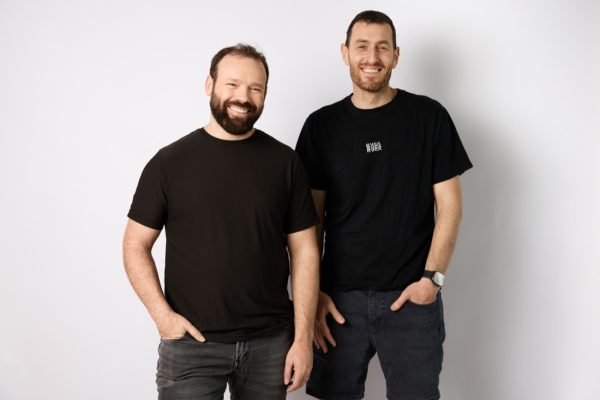
Roy Mor & Yonti Levin

When asked about his background, Mor shared:
Before founding Loora, I spent over a decade working across AI, product, and technology at innovative tech companies such as Mobileye, a global leader in autonomous driving.
I founded Loora in late 2020 with Yonti Levin, one of my best friends for over 23 years, both of us powered by the belief that AI, built with rigor and purpose, can meaningfully improve people’s lives.
I hold two Bachelor’s degrees in Physics and Electrical Engineering, and a Master’s in Computer Science specializing in Machine Learning from Tel Aviv University, where I graduated summa cum laude.
How Loora Started
When asked how the idea for Loora came together, Mor explained:
As non-native English speakers, both Yonti and I hit the same wall with our learning: keeping up and improving our English without a tutor was hard, human tutors were expensive and time-consuming, and every app on the market was built for casual learners rather than people who wanted and needed to progress.
We had the idea to create an AI tutor that could live in your pocket, something that’s available any time, judgment-free, and personalized.
By the end of 2020, advances in large language models made that idea possible, so we validated the technology, the market opportunity, and launched!
Favorite Memory
When asked about his favorite memory working for Loora so far, Mor recalled:
One of my favorite memories was early on, speaking with a paying learner who told us how much her English had improved with Loora.
That was the first time we felt like we were building something that actually delivered real value to people.
Core Products And Features
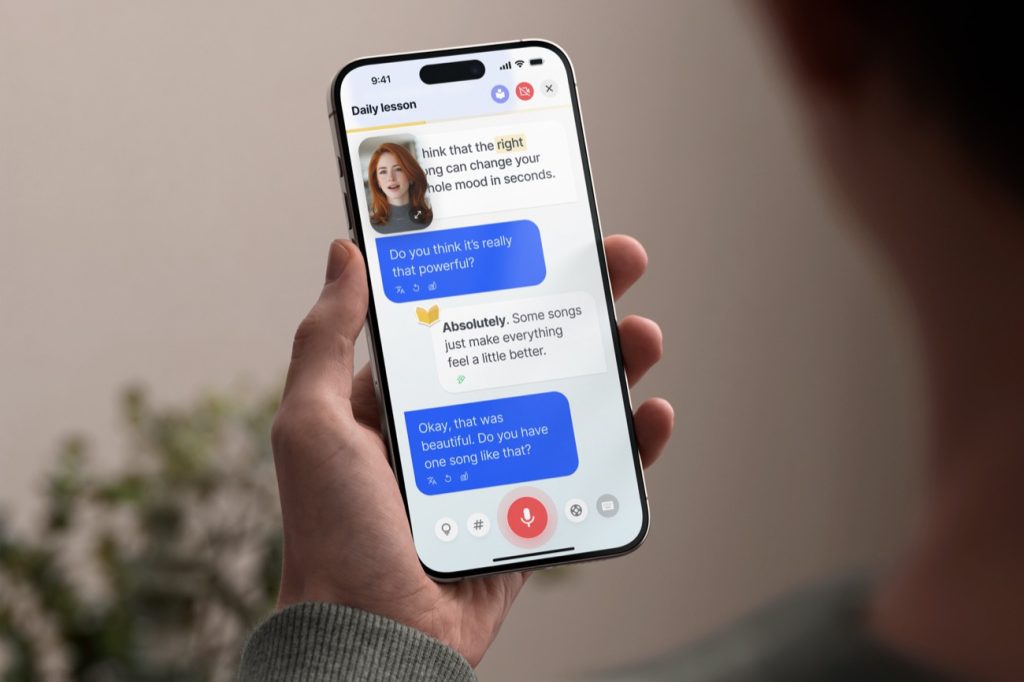

When asked about Loora’s core products and features, Mor detailed:
Loora gives every learner their own personal AI English tutor, in their pocket, available any time.
Learners have real 1-1 conversations, just like with the best human tutor, on the subjects that matter to them and the real-life situations they’ll actually face.
Each conversation is tailored to their level and interests, and they get personalized, digestible, actionable feedback on their English skills.
Alongside the consumer app, we offer a B2B version for corporations, governments, and universities that want to give their people access to the same tool.
How The Technology Has Evolved
When asked how Loora’s technology has evolved since launching, Mor explained:
Our technology is evolving all the time because of the positive compounding impact of our AI flywheel: more learners means more real conversational data, which trains better AI models, which drives better retention and learning outcomes, and that compounds over time.
It’s a fundamentally different starting point from a general-purpose LLM, which is optimized for breadth, coding, productivity, and search, rather than the slow, highly personal process of actually acquiring a language.
Leveraging this data flywheel, connecting new data back into better models, and tuning how the system personalizes to each learner over longer and longer horizons takes sophisticated post-training and optimization infrastructure, and it’s something we’re continuously building and evolving.
We’ve also built advanced models that assess a learner’s English level with real calibration, so we know precisely where someone stands and what they need next, plus dedicated models purpose-built just to catch grammar and fluency issues and give feedback that’s personalized to them, digestible, and delivered right when they need it.
Key Company Milestones
When asked about some of Loora’s most significant milestones, Mor highlighted:
Today, we’re closing a $22 million Series B, taking total funding raised to $43.25 million.
We’ve taught over 15 million learners and had more than 250 million interactions since we started.
Revenue has more than doubled in the past twelve months, with ARR now in the tens of millions.
We built the entire B2B business in the last year, going from zero to over 150 organizations.
Retention has more than doubled since we started this journey, which is the clearest signal to us that the product is genuinely working.
Learner Success Stories
When asked about specific customer success stories, Mor shared:
The stories that mean the most to us are the ones about outcomes, not usage. We regularly hear from users who practiced daily with Loora and landed the promotion they’d been working toward, or walked into a meeting feeling heard in English for the first time.
On the more unusual end, we have learners like Sriman in India, who covered 38 different topics in 49 sessions, everything from military history to philosophy to science and technology, and a learner in Germany who’s spent 40% of his sessions talking about politics.
When someone’s talking about something they genuinely care about, every bit of their cognitive bandwidth goes toward the language itself rather than managing the content, so those sessions tend to be where we see people speak at length and push past where they’d normally stop.
It’s part of why we built Loora around open conversation rather than a fixed syllabus: the platform ends up reflecting what learners care about, not a generic curriculum designed for anyone.
Funding And Revenue
When asked about funding and revenue metrics, Mor said:
The $22 million Series B was led by Union Tech Ventures with participation from new investor V Games and existing investors Emerge, Hearst Ventures and QP Ventures, bringing total funding raised to $43.25 million.
Revenue has more than doubled in the past twelve months, with ARR in the tens of millions.
Total Addressable Market
When discussing the total addressable market Loora is pursuing, Mor explained:
MMR quotes the TAM of the English language learning market as $34 billion in 2025, set to rise to $58 billion by 2032.
The British Council put the number of people learning English, or wanting to, at over 1.5 billion globally.
Competitive Differentiation
When asked what differentiates Loora from its competition, Mor identified three areas:
There are three distinct layers to think about.
Against human tutors, we’re a fraction of the cost. Loora runs at around $120 a year for unlimited learning time against $1,700 to $4,000 for something like Cambly. In addition, human tutor platforms structurally can’t embrace AI without cannibalizing their own business.
Against casual learning apps like Duolingo, we’re simply not built for the same user. They’re optimized for entertainment and dabbling; we’re built to get someone to professional fluency.
And against other dedicated AI tutors like Speak or ELSA, origins matter: Speak was built in 2016 around video lessons for beginner Korean learners, and that shapes everything about the product underneath it.
Loora was built AI-native from day one, specifically for a global, fluency-driven adult audience, and that’s reflected in the proprietary dataset we’ve been building since 2020.
Future Goals
When discussing Loora’s future goals, Mor concluded:
We’re doubling our headcount from 30 to 60 within six months, primarily investing in AI research, engineering, and product.
The core focus is deepening the AI flywheel. Better learning outcomes drive retention, retention generates more conversational data, and that data improves the model further.
We’re also accelerating B2B go-to-market across the US, Europe, Asia, and South America.
Longer term, we want Loora to be the default platform for English fluency globally, with the 1.5 billion people who couldn’t previously afford or access a tutor reaching functional fluency, and English no longer determined by geography or income.

