Lumotive is a semiconductor company pioneering software-defined, programmable optical chips that utilize patented Light Control Metasurface (LCM) technology to electronically steer and shape light. Pulse 2.0 interviewed Lumotive CEO Dr. Sam Heidari to learn more.
Dr. Sam Heidari’s Background
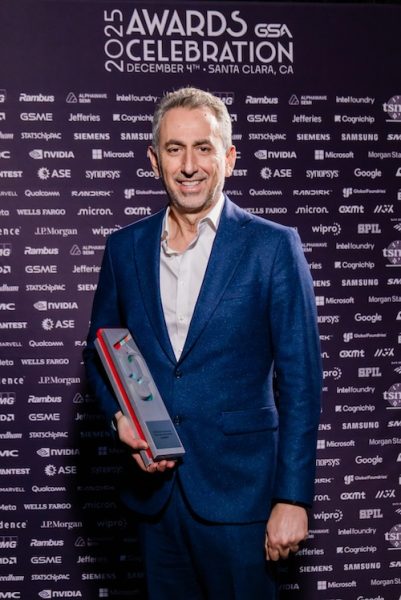

Dr. Heidari brings over 30 years of leadership experience across a range of technology sectors. He is currently the CEO of Lumotive and serves on the board of Morse Micro. His previous roles include CEO and Chairman of Quantenna Communications, CEO of Doradus Technologies, CTO of Ikanos, and Venture Partner at Cota Capital.
Dr. Heidari has contributed significantly to the tech industry, serving on the Global Semiconductor Alliance Board of Directors and the advisory boards for the Electrical Engineering and Computer Science departments at the University of Southern California.
His achievements have earned him numerous recognitions. A senior member of IEEE, Dr. Heidari holds more than 50 U.S. and international patents, and over a dozen refereed journal and conference papers.
He earned his M.S. and Ph.D. in Electrical Engineering from the University of Southern California, and his B.S. in Electrical Engineering from Northeastern University.
Formation Of The Company
How did the idea for the company come together? Dr. Heidari shared:
“Lumotive was founded around a very simple question: what if light could be controlled and steered with the same flexibility and speed as software?”
“The company’s core innovation is Light Control Metasurface (LCM) technology, invented by our founder and CTO Dr. Gleb Akselrod, which brings digital beamforming through a semiconductor platform. Today, even beam steering — which is just one subset of beamforming — relies on mechanical motion or bulky optics. Instead of relying on mechanical motion or bulky optical systems, LCM enables electronic control of light—making optical systems more compact, reliable, scalable, and configurable. To further note, a core vector of innovation here is the fact that this technology can be produced utilizing the traditional manufacturing techniques. In summary, building groundbreaking physics using traditional mature manufacturing techniques.”
Favorite Memory
What has been your favorite memory working for the company so far? Dr. Heidari reflected:
“My favorite memory is around the day that we started shipping actual products to our customers. It was when we saw the technology make the jump from “this is possible in a lab” to “this is a product that customers can build around.” It was a dream come true. Science making it to products.”
“That transition takes a huge amount of cross-functional execution—engineering, manufacturing, operations, and customer engagement all coming together. Watching our team turn a breakthrough optical semiconductor technology into something that can ship, scale, and be deployed in real-world environments has been the most rewarding part of the journey.”
Core Products
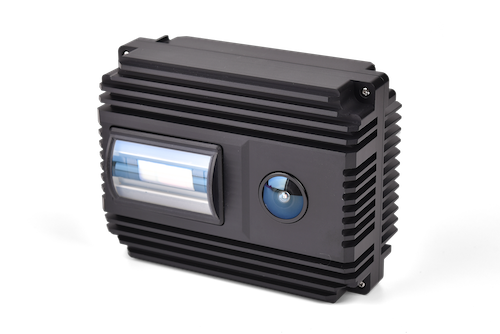
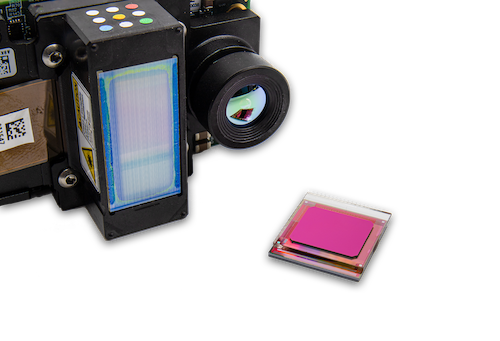


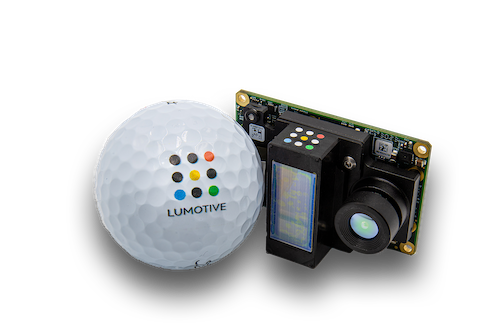

What are the company’s core products and features? Dr. Heidari explained:
“At Lumotive, we’re an optical semiconductor company focused on programmable optics. Our core technology is something we call the Light Control Metasurface (LCM), which we use in products like our LM10 beam‑steering chip. In simple terms, LCM lets us steer and shape light electronically—with no moving parts.”
“Because of that, our products can do a lot of useful things: they offer solid‑state beamforming, cover a wide field of view, and let you program different scan patterns or focus on certain regions through software. They’re also really reliable and rugged since there’s nothing mechanical to break, and the compact design makes integration easier. Plus, everything is built using scalable semiconductor manufacturing, so it’s designed to work at scale.”
“All of this enables next‑gen 3D sensing and perception for robotics, mobility, and smart infrastructure.”
Challenges Faced
Have you faced any challenges in your sector of work recently? Dr. Heidari acknowledged:
“One of the biggest challenges in bringing deep tech to market is crossing the ‘productization gap’—turning something novel into something manufacturable, reliable, and scalable.”
“In optical systems, it’s not enough to demonstrate performance once. Customers need repeatability, supply chain stability, and consistent quality at scale. We’ve addressed this by investing heavily in process development, test and validation infrastructure, and a disciplined product roadmap—so we can deliver a semiconductor platform that’s ready for real-world deployments.”
Evolution Of The Company’s Technology
How has the company’s technology evolved since launching? Dr. Heidari noted:
“Over time, we’ve expanded performance, improved manufacturability and yield, and hardened the technology for deployment in demanding environments. We’ve also invested in the supporting ecosystem around the chip—modules, reference designs, control software, and integration workflows—so customers can move faster from evaluation to product development. We are also augmenting our markets, by considering other markets that could benefit from programmable optics capabilities such as data centers.”
Significant Milestones
What have been some of the company’s most significant milestones? Dr. Heidari cited:
“Some of Lumotive’s most significant milestones include (1) inventing and proving Light Control Metasurface (LCM™) beamforming as a semiconductor approach to controlling light, (2) building a strong IP foundation with ~160 patents, and (3) launching and commercializing the LM10, our first production LCM beamforming product. Another major milestone has been moving from reference designs into real customer product launches — including Hokuyo’s YLM-10LX and Namuga’s Stella series (including Stella-180). We’ve also expanded global execution with design wins with ePhotonics, supporting smart infrastructure and next-generation 3D sensing deployments.”
Customer Success Stories
Can you share any specific customer success stories? Dr. Heidari highlighted:
“A key success story is that our LCM technology is no longer just ‘evaluation-stage’ — it is powering products that are already in-market. Hokuyo and Namuga have launched commercial LiDAR products enabled by Lumotive’s LCM platform, demonstrating real-world deployment readiness in industrial and automation use cases. In parallel, partners like ePhotonics have adopted our reference designs to accelerate productization for smart infrastructure applications. Across these programs, customers value that Lumotive provides a repeatable transmitter platform that can be paired with different receiver architectures and tuned via software-defined scan patterns, reducing redevelopment cycles and shortening time-to-market.”
Funding/Revenue
Are you able to discuss funding and/or revenue metrics? Dr. Heidari revealed:
“Lumotive has raised over $100M in funding to date from a mix of strategic and financial investors. This includes a recent strategic investment from Amazon — a global leader in large-scale robotics deployment — which validates the importance of scalable, reliable perception technologies for the automation economy. While we do not disclose detailed revenue metrics publicly, Lumotive is in active commercial engagements and is scaling customer adoption as LM10-based systems move from development into product deployments.”
Total Addressable Market (TAM)
What total addressable market (TAM) size is the company pursuing? Dr. Heidari assessed:
“Lumotive is building a programmable optics semiconductor platform, which gives us a broad and expanding addressable opportunity well beyond any single sensing category. As we extend our roadmap, LCM has the potential to become a core building block for high-growth optical markets such as optical circuit switching for AI data centers, where scaling demands are pushing the industry toward more dynamic, software-defined optical architectures. Our first market, and where we’re focused in the near term, is 3D sensing and LiDAR — itself a large and growing multi-billion-dollar market driven by industrial robotics, automation, smart infrastructure, and mobility.”
Differentiation From The Competition
What differentiates the company from its competition? Dr. Heidari affirmed:
“Lumotive’s differentiation is that we make beamforming programmable at the semiconductor level. Legacy approaches rely on mechanical motion (polygon mirrors, MEMS mirrors) or rigid optical architectures that limit reliability, scalability, and flexibility. Lumotive’s LCM replaces moving parts with a solid-state chip that electronically steers light and enables greater capabilities via software-defined scan patterns. This allows our customers to build more compact and robust systems, scale manufacturing through semiconductor-style processes, and reuse a common transmitter platform across multiple LiDAR architectures and applications — reducing cost, complexity, and time-to-market.”
Future Company Goals
What are some of the company’s future goals? Dr. Heidari emphasized:
“In the near term, Lumotive’s focus is to expand adoption of LM10 and strengthen our position as the leading programmable optics supplier for LiDAR and 3D sensing, especially across robotics, industrial automation, and smart infrastructure. In parallel, we are about to introduce next-generation LCM products and increasingly integrated architectures to further simplify customer system design and accelerate deployment at scale. Longer term, we aim to extend programmable optics into adjacent markets, including optical switching for AI data centers, where the need for scalable and software-controlled optical infrastructure is rapidly increasing. The goal is to establish LCM as a foundational semiconductor platform that makes optical systems programmable, reliable, and deployable at high volume.”
Additional Thoughts
Any other topics you would like to discuss? Dr. Heidari concluded:
“A useful way to think about Lumotive is that we’re making light programmable—similar to how semiconductors made computing programmable.”
“When light can be controlled electronically and shaped by software, it changes how sensing systems are designed, deployed, and scaled. That shift will unlock new products, new form factors, and new levels of performance in real-world autonomy and automation.”

