

MatSing is an innovative telecommunications company that designs and manufactures patented, lightweight radio frequency (RF) lens antennas, which provide high-capacity 4G and 5G mobile coverage and are widely used in large-scale venues like stadiums, arenas, and mega-events.
Leo Matytsine’s Background
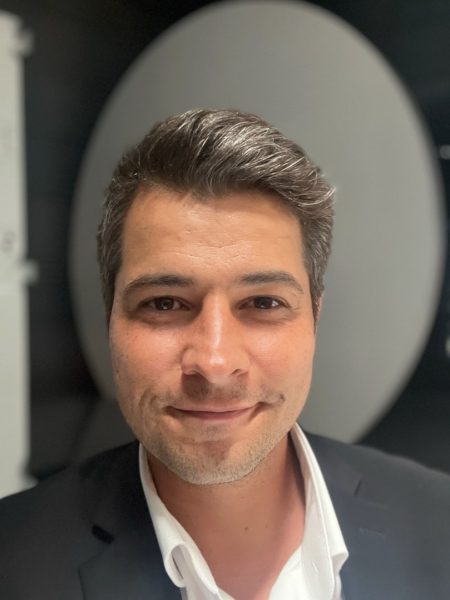
Could you tell me more about your background? Matytsine said:
“I grew up in Singapore and completed my undergraduate degree at the University of Southern California (USC) and my MBA at the Australian Graduate School of Management (AGSM) in Sydney. I’ve always had a passion for physics and business. In 2005, my father, Dr. S Matitsine, founded a company around the idea of creating a new type of antenna using RF Radio Frequency (RF) Lenses. Although the core theory of RF lens antennas was well known, there were many practical challenges to building them due to a lack of required dielectric/meta materials.
“The company was founded in Singapore in 2005 by Dr. S. Matitsine, together with me and my brother.”
“What began as a family-led innovation has evolved into a global antenna company, with technology applications in telecommunications, satellite, and antenna measurements. Our antennas are now deployed across venues, urban networks, and macro infrastructure worldwide, while the company continues to maintain a core philosophy of innovation, solving challenges through physics-driven engineering and a focus on technology.”
Formation Of The Company
How did the idea for the company come together? Matytsine shared:
“The idea originated from exploring how RF lens theory, particularly Luneburg lenses, could be applied to communications. The basic theory of RF Lenses has been around for some time and it was a very intriguing approach to communications, in particular, how antennas fundamentally work to send and receive signals.”
“At their core, antennas are able to send and receive radio frequency waves by focusing the RF waves. If you look at a traditional dish antenna, it operates on the principle of reflection. The dish acts as a large reflective surface that concentrates incoming radio waves onto a focal point, where the signal is received or transmitted.”
“The key principle behind a lens antenna is refraction. In many ways, it operates similarly to the human eye, which focuses light waves by refracting them through a lens. We found this idea fascinating, and if nature focuses waves through a lens, it makes sense for us to create antennas with the same core principle. It also provides a fundamental advantage over dish antennas, just like your eye can focus light from multiple directions simultaneously, a lens antenna can send/receive multiple signals simultaneously in multiple directions. So, in essence, instead of putting up several dish antennas to send multiple signals at once, you can simply use one lens.”
“Although the basic physics principles of how RF lenses were well understood, the challenge was making it, in particular, solving the challenges of the materials needed to create such RF lenses. MatSing’s early work focused on inventing and developing new meta-materials that enabled the construction of functional RF lenses suitable for real-world deployment.”
“Once we developed suitable materials and began building RF lenses, several applications became clear. One major focus has been telecommunications, where rapid growth in mobile users, video streaming, and data consumption has created demand for higher-capacity antenna infrastructure. Because a single lens antenna can effectively replace 10, 20, 30, or even 40 conventional antennas, it offers a compelling solution: reducing antenna count while delivering the capacity and performance needed to meet growing network demand.”
“The goal was to rethink wireless infrastructure at a fundamental level, using the antenna’s physical properties to distribute RF energy more efficiently and create a fundamentally different approach beyond increasingly complex electronic systems.”
Favorite Memory
What has been your favorite memory working for the company so far? Matytsine reflected:
“One of my favorite moments was our early deployment at the 2013 Coachella Music Festival. At the time, we were still a relatively small team, and this was one of the first opportunities to prove the technology in a truly high-density, real-world environment.”
“We partnered with one of the nation’s largest cellular operators, and the system ended up supporting what was, at the time, their most successful data event. That moment was important, not just from a performance standpoint, but because it created the first real validation and momentum behind the technology. It demonstrated that what we had been developing could solve real problems at scale, and it ultimately helped drive broader interest and adoption across the industry.”
Core Products
Screenshot
What are the company’s core products and features? Matytsine explained:
“Our core products are based on RF lens antenna technology, including both spherical and cylindrical designs. These antennas allow a single unit to create multiple focused coverage areas, which helps increase network capacity and deliver more consistent performance, especially in high-density environments, while at the same time reducing the number of antennas and cell towers.”
“Because this is achieved through passive, physics-based design rather than complex active systems, the result is:
- Higher capacity and spectral efficiency, in essence allowing more people to send messages, videos and stream content
- Broadband frequency coverage – allowing a single antenna to cover multiple frequency bands
- Reduced interference through high beam isolation
- Lower power consumption
- Reduced infrastructure requirements – fewer antennas and cell towers are needed to do the job
The portfolio now spans over 100+ models, ranging from single-beam to high-sector-count antennas for stadiums, macro networks, and Wi-Fi deployments.”
“Ultimately, you need fewer antennas, fewer locations, fewer cell towers to provide better capacity and performance. In terms of satellite applications, one core feature is the ability to track multiple satellites through one antenna, instead of placing multiple large dish antennas.”
“Additionally, as the materials we invented are broadband (can work for multiple frequency bands), we can cover different types of frequencies through one antenna, again allowing for our customers to reduce the number of antennas they need to do the job.”
Challenges Faced
Have you faced any challenges in your sector of work recently? Matytsine acknowledged:
“One ongoing challenge is integrating a fundamentally different antenna technology into established network planning and deployment models. We address this through detailed RF modeling, planning tools, close collaboration with operators and partners, and trial deployments that prove real-world performance. As customers gain experience with the technology, deployments become more straightforward and repeatable.”
Evolution Of The Company’s Technology
How has the company’s technology evolved since launching? Matytsine noted:
“The technology has evolved from early lens implementations into a broader platform that supports multiple deployment scenarios. This includes:
- Expansion from special outdoor events, such as music festivals, into venues and most recently into macro cellular infrastructure
- Introduction of compact multi-beam antennas (MBA line) focused on urban and city deployments
- Development of cylindrical lens antennas (MBC line)
- Extension into Wi-Fi with multi-beam architectures
Across all of these, the core principle remains consistent, which is improving network performance through more efficient use of RF energy. We have also evolved our satellite portfolio, developing new types of antennas that allow customers to track multiple satellites through antennas.”
“We started with solving the problem of creating a lens antenna, and since then we have been evolving the technology for different applications in multiple industries.”
Significant Milestones
What have been some of the company’s most significant milestones? Matytsine cited:
“MatSing’s development has been defined by a series of technical and commercial milestones. Early on, in 2008, we patented the first practical implementation of a Luneburg lens using our new meta-materials, which established the foundation for applying lens technology to telecommunications. This was followed, in 2009, by our first product demonstration, a 360-degree multiband lens antenna, which marked the transition from concept to a viable system architecture.”
“From there, we moved into real-world validation. Deployments, such as the 2013 Coachella Music Festival, followed by large-scale events like South by Southwest and the Presidential Inauguration, demonstrated that the technology could perform reliably in some of the most demanding, high-density environments.”
“As the company evolved, we expanded into permanent infrastructure. Deployments at venues such as Allegiant Stadium and AT&T Stadium showed that the same architecture could scale beyond temporary events into long-term, high-performance network environments.”
“Today, our systems are deployed in approximately 70% of NFL stadiums and 50% of NBA arenas, in addition to global events such as Formula 1 races and the Paris Olympics. We’ve also supported fixed wireless deployments at scale in markets such as Australia and South Africa.”
“We’re also continuing to extend the platform into new areas, including Wi-Fi, with products designed to deliver high-capacity coverage from fewer deployment points.”
“More broadly, we work with customers across 24 countries, including mobile network operators, neutral hosts, and private network providers.”
Customer Success Stories
Can you share any specific customer success stories? Matytsine highlighted:
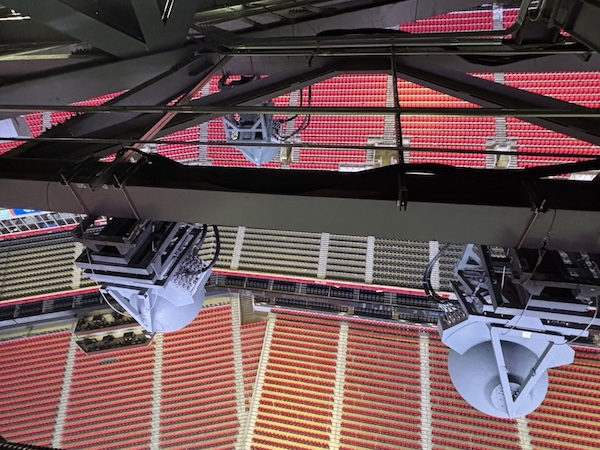
“One example is Allegiant Stadium in Las Vegas, home to the Las Vegas Raiders, where we worked with partners to support a high-capacity, multi-carrier network across the entire venue. By shifting away from traditional under-seat antenna deployments to a more centralized lens-based approach, the network was able to deliver strong, consistent performance for tens of thousands of users while reducing overall infrastructure complexity. This deployment was a perfect fit for our technology as there was a major challenge in providing good cellular service for almost 70,000 fans all in one location.”
“Another example is our work with nbn in Australia, the country’s national broadband network operator, where our antennas are deployed across thousands of fixed wireless towers to deliver broadband connectivity in regional and remote areas. In that case, the focus is less about density and more about coverage and efficiency, extending reliable service over large geographic areas where traditional infrastructure and building thousands of new cell sites isn’t practical.”
“These two deployments are quite different, but they highlight the same underlying advantage, which is the ability to deliver high-capacity, efficient coverage in environments where conventional approaches tend to struggle.”
Funding/Revenue
Are you able to discuss funding and/or revenue metrics? Matytsine revealed:
“We were founded as and still are a fully privately held, family-owned company with no outside funding or investment. We have been fortunate to have been able to grow the business to a global scale without the need of outside investment. We’ve seen very strong year-to-year growth and at this moment continue to focus on innovation, new products, new applications and continued year to year revenue growth.”
Total Addressable Market
What total addressable market (TAM) size is the company pursuing? Matytsine assessed:
“For MatSing’s current product categories — base-station antennas, WiFi antennas, and satellite antennas — the estimated total addressable markets are substantial. Base-station antennas represent an approximately $14 billion TAM today, WiFi antennas roughly $1 billion, and satellite antennas approximately $6 billion. Over the next eight to 10 years, these markets are expected to expand significantly, with base-station antennas projected to grow to approximately $40 billion, WiFi antennas to $30 billion, and satellite antennas remaining around $6 billion.”
“With connectivity becoming essential, there is strong growth potential and we believe providing a new unique technology to solve some of the key challenges positions us well.”
Differentiation From The Competitions
What differentiates the company from its competition? Matytsine affirmed:
“MatSing’s differentiation is rooted in both its technology and its execution.”
“From a technology standpoint, our antenna approach is fundamentally different from competitors. Because we develop and manufacture the technology fully in-house, we control the process end to end and deliver a highly differentiated solution.”
“This approach allowed MatSing to control our technology and build extensive knowledge and experience with:
- Over 20 years of R&D in meta-materials and RF design
- A portfolio of 70+ patents
- In-house design and manufacturing
- Proven performance in large-scale, real-world deployments
This combination of innovation and validated performance distinguishes it in an increasingly competitive market. Additionally, being a privately-held family-owned business has also provided us the ability to continue to focus on R&D and innovation, as well as flexibility to grow into different applications and markets.”
Future Company Goals
What are some of the company’s future goals? Matytsine concluded:
“MatSing continues to focus on its core principles of R&D and innovation, expanding RF lens technology for broader applications across telecom and adjacent markets, such as cellular and satellite. This includes advancing new designs, such as cylindrical lens antennas for macro deployments, and growing our Wi-Fi portfolio to bring multi-beam, high-efficiency performance into unlicensed spectrum environments.”
“The goal is to expand our technology, product applications and global business while continuing to strengthen its in-house design and manufacturing capabilities.”
