

Mechanical Orchard is an AI-native technology company focused on modernizing mainframes applications. Pulse 2.0 interviewed Mechanical Orchard CEO Rob Mee to gain a deeper understanding of the company.
Rob Mee’s Background
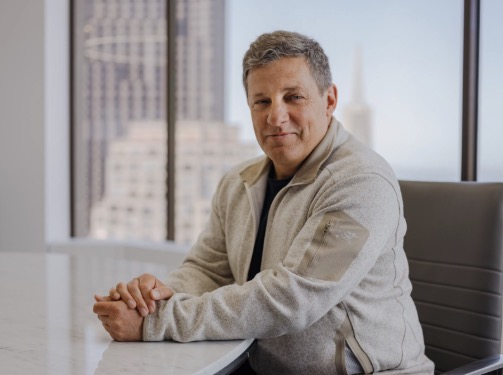
Could you tell me more about your background? Mee said:
“I’m a second-generation Silicon Valley tech nerd. My Dad was a physicist who worked on storage technology for many years.”
“It was only natural that I would pursue a career in software engineering, and from there, I founded Pivotal Labs, the software development consultancy that became known for its disciplined approach to agile methodologies, including Extreme Programming (XP) and Test-Driven Development (TDD).”
“Acquired in 2012 by EMC, we were spun out a year later to become Pivotal Software, where we built and deployed Pivotal Cloud Foundry for clients and developed applications to run on this open-source-based cloud platform. We helped Global 2000 companies and government agencies modernize their software development capabilities and deploy mission-critical systems to the cloud, and we also helped our clients operate the platform.”
“Spending so many years helping the world’s largest and most sophisticated organizations shed their legacy IT ties highlighted the stark reality of just how challenging, complex and vast this problem is – we kept seeing the same negative patterns where IT departments would either try to modernize bits and pieces with ad-hoc patch up jobs or embark on multi-year, multi-million dollar ‘lift and shift’ modernization projects that only ended in disappointment.”
“I wanted to build a company with a radically different approach to solving the problem – removing risk, improving transparency and ultimately reducing the cost of change in perpetuity.”
Formation Of The Company
How did the idea for the company come together? Mee shared:
“In Pivotal, we’d built a network of brilliant engineers and business operators, so it wasn’t hard to assemble a group of trusted folks who quickly got to work making the vision a reality.”
“We’ve always been very clear on our approach – one grounded in a highly disciplined methodology and iterative process that, unlike traditional ‘lift and shifts’, doesn’t focus simply on translating old code to new, but actually gets to grips with the behavior of the system and then rewrites it piece by piece very quickly. With closed-loop feedback and testing inherently embedded into this process, we only ever cut over to the cloud once we’re certain the workload is performing as it should. This eliminates the uncertainty and fear of failure that typically plague large rewrites.”
“We knew the addressable market was large (over 70% of Fortune 500 Companies still house critical applications on dated mainframe systems), but we never anticipated quite the level of interest we’ve had since launching in 2022. As well as growing our customer base of Global 2000 customers, we’ve received over $80 million in funding from investors, including GV, Emergence Capital and Munich Re Ventures and grown the team to 100+.”
Favorite Memory
What has been your favorite memory working for the company so far? Mee reflected:
“There have been so many, but if I had to pick one, it would be late last year, when we had a major breakthrough in our technology capabilities. There was a real sense in the room that we were on to something special.”
Core Products
What are the company’s core products and features? Mee explained:
“Our approach is manifested in Imogen, our end-to-end technology platform. The platform combines everything we’ve learned from manually using our behavior-based methodology to modernize systems, and automates it. Because we capture the data flows, we’re able to really see how the system works, helping teams understand what’s actually going on, rather than what the code says is supposed to happen. We’re able to create a test harness around the behavior of that system, and drive generative AI to replicate that behavior exactly in a way that ensures nothing breaks. So IT leaders can enjoy the incremental, risk-mitigated, and non-disruptive benefits of our method at a speed that is far faster than traditional approaches.”
Evolution Of The Company’s Technology
How has the technology evolved? Mee noted:
“When we talk about tapping data flows to understand the behavior of a system, it means we can answer questions like, ‘what’s talking to what? How complex is each job? Are there any that look similar to each other? Are there any missing files?’ You combine all that useful analysis with the mechanisms to generate code to the behavioral specification that comes from that analysis into a platform, and now you have a repeatable way to deliver the highest quality modernization, continuously, at speed.”
“Looking ahead, our roadmap is packed full of new developments, including being able to deploy faster and expanding to new source and destination languages.”
Challenges Faced
Have you faced any challenges in your sector of work recently? Mee acknowledged:
“Our biggest challenge is inertia.”
“Mainframe modernization has been a hot potato for so many years, and, understandably, IT executives are choosing the shortest route to perceived safety. There’s a lot of cynicism stemming from failed projects. It’s all about trust and execution: we build trust by showing proof of equivalence, and we’ve partnered with Thoughtworks, a global IT consultancy steeped in Agile practices, to execute well.”
Customer Success Stories
When asking Mee about customer success stories, he highlighted:
“We’ve had customers across the banking, insurance, retail, healthcare, automotive, manufacturing, and logistics industries. We’ve helped move systems that would’ve taken 18 months and done them in 4 months. And when we say 4 months, that’s actually 4 months, not 4 months to get the code transpiled into Java, followed by 12-18 months of regression testing and integration, a period of effort that usually is swept under the rug.
Differentiation From The Competition
What differentiates the company from its competition? Mee affirmed:
“Our whole approach and ethos set us apart. The incremental and iterative approach is certainly one that is not easily replicated, but it is our use of data flows to help generative AI converge on creating correct, well-factored code at rapid speeds, which is the real standout ingredient.”
“The final point I’d add is that mainframe modernization is serious business – it’s hugely complex, extremely sensitive and requires a great deal of IQ, EQ and precise technical ability to get it right – we are the antithesis of the ‘move fast and break things’ start-up—maybe more of a ‘move fast and make things’ mentality.”
Future Company Goals
What are some of the company’s future goals? Mee concluded:
“As well as always improving our platform capabilities, such as expanding to many other types of legacy systems beyond mainframes, we’re working on building that trust and credibility with the Global 2000. We’ll keep growing the team and have some fun along the way.”
