Meridian is an AI visibility platform that helps brands monitor, measure, and optimize their presence in AI-driven search, with co-founder and CEO Alex Dees leading the company’s growth, strategy, and talent acquisition.
Alex Dees’ Background


Could you tell me more about your background? Dees said:
“I’m the co-founder and CEO at Meridian, and my background is in startups, growth operations, and building products with lean teams. Before Meridian, I spent several years scaling an embedded fintech company from pre-seed through Series B as their Head of Business Development, where I owned the entire customer journey from initial sales through customer experience and solutions engineering.”
Formation Of The Company
How did the idea for the company come together? Dees shared:
“My experience in agentic commerce and fintech gave me a front-row seat to how AI was fundamentally changing buyer behavior. The way people find, evaluate, and choose products is increasingly happening through AI assistants rather than traditional search. Every business leader I spoke with was grappling with the same challenge, how to ensure their products were being surfaced and recommended correctly in these AI-driven experiences.”
Role At The Company
What are your primary responsibilities? Dees described:
“I focus on three main areas: setting product direction and roadmap to ensure we’re building what actually matters, driving our go-to-market strategy including positioning, pricing, partnerships, and sales, and working directly on customer success across our user base to ensure they are seeing value daily.”
Favorite Memory
What has been your favorite memory working for the company so far? Dees reflected:
“The moment that stands out most was when a customer told us that our platform was responsible for the majority of their sales after they partnered with us to help increase their visibility. Beyond that, I love that we are shipping fixes quickly and providing strong customer support that results in genuine relationships with our users. Bringing on talented team members who share our vision has been incredibly rewarding as well.”
Core Products
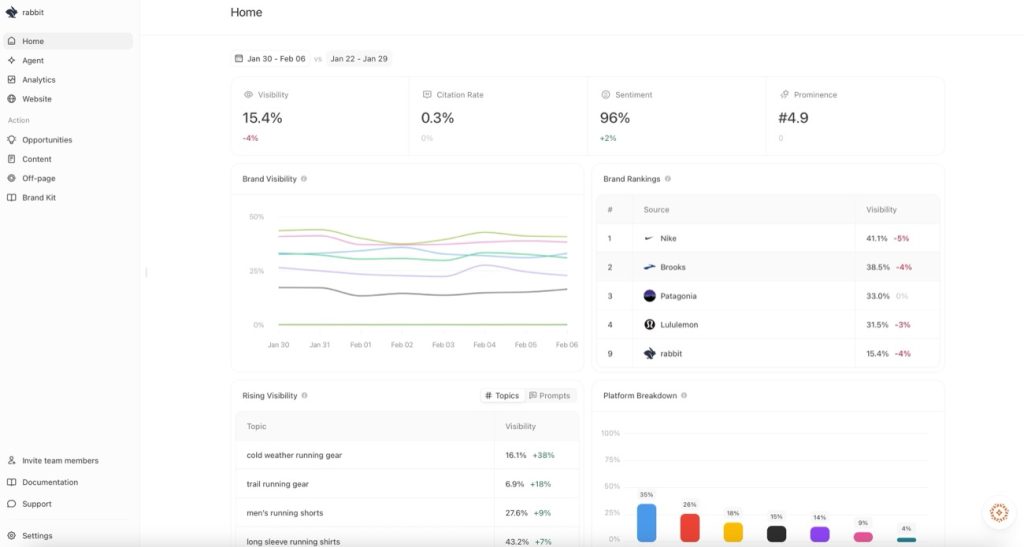
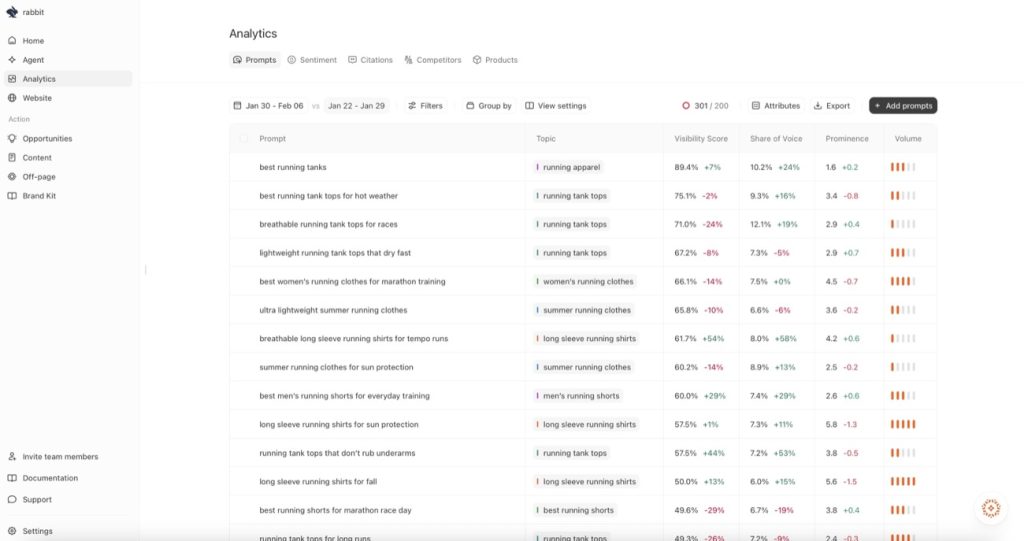
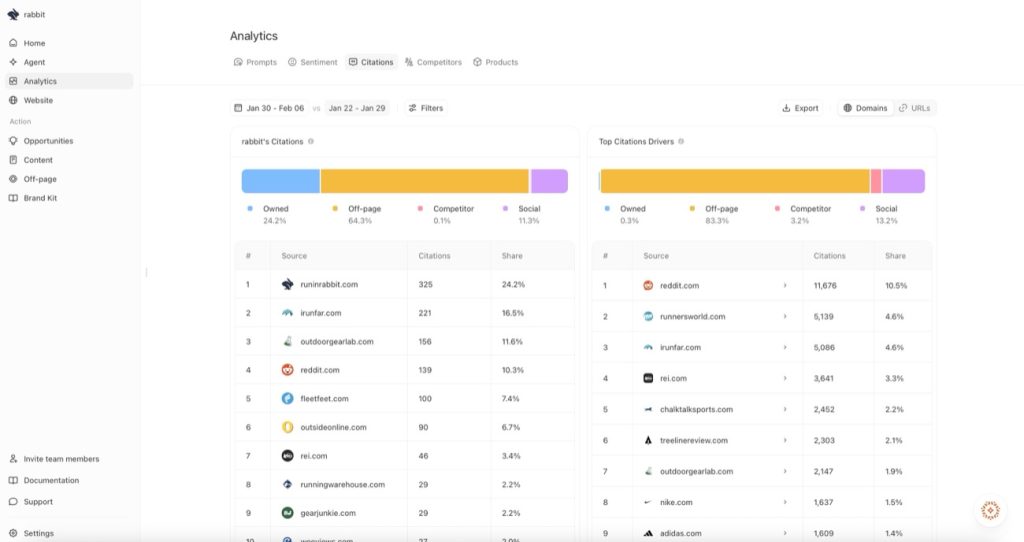


What are the company’s core products and features? Dees explained:
“Our platform provides comprehensive AI visibility tracking across different assistants, measuring mentions, sentiment, and ranking position. We offer deep citation and source analysis to show where AI answers are pulling information from and identify what’s missing. We also track competitor share of voice and perform gap analysis. The most important piece is our action workflows, which prioritize specific opportunities and tell you exactly what to change to improve your visibility in AI search, whether that’s on your own site or through external channels.”

Challenges Faced
Have you faced any challenges in your sector of work recently? Dees acknowledged:
“One major challenge is that AI answers can be highly inconsistent, so we built repeatable test sets with rigorous scoring methodologies to measure change reliably. Attribution is also complicated because AI influence doesn’t always translate to a clean conversion click, which pushed us to focus on leading indicators and proxy metrics that correlate with revenue. We’ve also had to cut through significant market noise around “AI SEO” by being extremely specific about the outcomes we deliver, i.e. measurable improvements in visibility, citations, and the concrete actions that drive them.”
Evolution Of The Company’s Technology
How has the company’s technology evolved since launching? Dees noted:
“We started with fairly basic visibility tracking and quickly evolved toward sophisticated opportunity detection that helps customers actively improve their positioning. Our focus shifted from simply answering “are we mentioned?” to solving “why are we or aren’t we mentioned, where specifically, and how do we improve?” We added workflows and integrations so that teams can take immediate action rather than just reviewing dashboards.”
Significant Milestones
What have been some of the company’s most significant milestones? Dees cited:
“Securing our first paying customers validated that we were solving a genuine business problem rather than addressing just curiosity. Our public launch generated over 10 million views on Twitter, which helped us build momentum quickly. Since then, we’ve grown into a substantial customer base with strong retention and consistent expansion patterns.”
Customer Success Stories
Can you share any specific customer success stories? Dees highlighted:
“Christian & Timbers, an elite executive search firm, went from zero visibility to a 60% mention rate for relevant recruiting queries in just eight weeks. They used Meridian to identify gaps in both their content strategy and their third-party citation presence, then systematically addressed weaknesses in their on-site positioning and off-site authority signals. The result was that AI assistants began recommending them alongside much larger, established competitors with genuine confidence.”
Total Addressable Market (TAM)
What total addressable market (TAM) size is the company pursuing? Dees assessed:
“The SEO industry alone is worth over $100 billion, and online commerce represents a trillion-dollar market. We’re positioned at the intersection of both as AI fundamentally reshapes how discovery and purchasing decisions happen.”
Differentiation From The Competition
What differentiates the company from its competition? Dees affirmed:
“We’ve built a complete system that connects visibility measurement to problem identification, solution discovery, and concrete implementation steps. Our platform is designed for operators who need real workflows, clear prioritization, and practical integrations, not researchers looking for interesting data. We also have deep expertise in ecommerce and SKU-level tracking, which means we understand the specific factors that actually influence AI recommendations for products.”
Future Company Goals
What are some of the company’s future goals? Dees emphasized:
“Our primary goal is to establish Meridian as the standard AI visibility platform for modern marketing teams. We’re investing heavily in attribution capabilities to connect AI visibility improvements directly to pipeline and revenue with greater precision. We’re also building more automation into the platform, including AI-generated content briefs, recommended technical fixes, and off-site opportunity identification that teams can execute without heavy lifting.”
Additional Thoughts
Any other topics you would like to discuss? Dees concluded:
“Something else that has been interesting to me lately has been where AI search is heading and what will ultimately replace traditional SEO practices. Brands need to understand what they should be doing right now to prepare for this shift. The reality is that having AI systems recommend your brand will become orders of magnitude more important than traditional Google SEO because AI is making decisions on behalf of the customer. That fundamentally changes how we need to think about trust signals like reviews, authoritative sources, and domain credibility in the context of AI-generated answers.”

