

Meta has unveiled Meta VR Glasses, a $1,299.99 virtual reality device launching in spring 2027, alongside major updates to its Muse AI agent and an expanded portfolio of smart glasses at Meta Connect 2026. The announcements include Meta’s first audio-focused glasses, new Ray-Ban and Oakley models, AI-powered hearing assistance, and additional entertainment and productivity capabilities. By the end of 2026, Meta expects to offer more than 100 AI glasses styles, marking its broadest wearable technology lineup to date.
The September 23 event outlined Meta’s strategy to integrate personal AI agents more deeply into everyday devices while developing lighter hardware capable of delivering immersive entertainment, gaming, and spatial computing experiences.
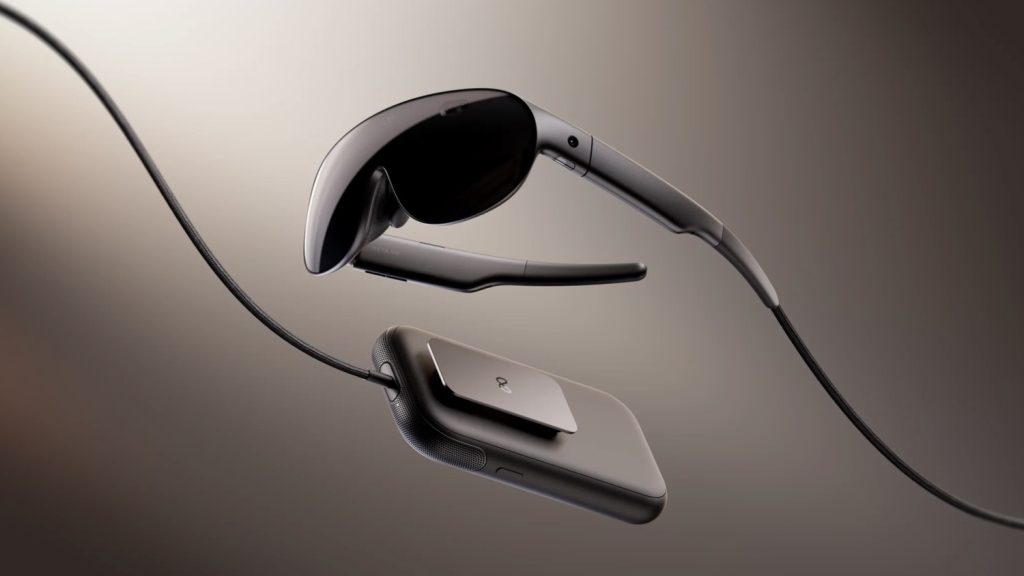
One of the central announcements was Meta VR Glasses, a new device that weighs approximately 100 grams, making it five times lighter than Meta Quest 3. Rather than placing the processor, battery, and other major components inside a conventional headset, Meta developed a two-part design that moves those components into a separate puck connected to the glasses through an optical cable.
The puck contains the processing hardware, battery, and storage and can be attached to a belt, pocket, or bag. The glasses themselves house the display and sensors, using a magnesium alloy construction designed to maintain structural strength while improving comfort and thermal performance.
Meta VR Glasses feature a 5K Infinite Display using micro-OLED panels, offering 37 pixels per degree and ultra-compact pancake lenses. The display supports Dolby Vision, while Dolby Atmos spatial audio is integrated into the frames.
The device is powered by Qualcomm’s Snapdragon Reality Elite processor, with a battery providing up to three hours of continuous high-resolution media playback and support for 45W fast charging. Its open-sided design and passthrough cameras allow users to remain aware of their physical surroundings while using virtual displays.
Meta is positioning the new glasses as a multipurpose computing device that combines a personal cinema, virtual workspace, and gaming console.
For entertainment, Meta VR Glasses are the first IMAX Enhanced-certified VR device, supporting select films in IMAX’s expanded aspect ratio. The company has also established partnerships with Disney, streaming services, film studios, and sports organizations to expand the available library of immersive content.
Beginning in November 2026, Disney+ subscribers in select countries will be able to stream certain movies in 3D, including The Avengers and Black Panther. Disney is also developing themed virtual viewing environments inspired by properties such as Star Wars and Marvel.
When Meta VR Glasses launch in spring 2027, the new Disney Immersive Cinema by ILM app will offer VR-enhanced versions of films including Avengers: Infinity War and Star Wars: A New Hope. These experiences will incorporate immersive environments, dynamic visual effects, 3D imagery, and spatial audio.
Meta is also expanding its streaming partnerships to include Prime Video, YouTube, DIRECTV, AMC+, Crunchyroll, Plex, and Tubi. Peacock, HBO Max, and Paramount+ will make their 3D media catalogs available through the platform.
The company is working with filmmaker James Cameron and Lightstorm Vision to introduce additional films in 3D during 2027. Its expanding entertainment library will also include Hit Me Hard and Soft: The Tour, a concert film co-directed by Billie Eilish and Cameron.
Sports represent another major component of the VR strategy. Meta is partnering with ESPN to offer immersive sports coverage featuring 8K streaming and 180-degree views, beginning with college football on Meta Quest in 2026.
Following the launch of Meta VR Glasses, the company expects to offer more than 100 immersive live sporting events annually through partnerships with MLB, NBC Sports, TNT Sports, and UFC.
Beyond entertainment, Meta VR Glasses are designed to serve as a portable workstation. Users can open multiple virtual displays, connect their Mac or Windows PC wirelessly or through USB-C, and extend their existing screens into a virtual environment.
The device also introduces surface input technology, allowing a conventional table or desk to function as a virtual keyboard and touchpad. Users can interact with applications through eye tracking, natural hand gestures, and voice commands without requiring dedicated controllers.
For gaming, Meta VR Glasses will support more than 75 games playable entirely through hand gestures at launch, alongside access to the existing Meta Quest catalog of thousands of titles.
The device will also support Touch Plus controllers and Xbox Cloud Gaming, enabling users to stream games through a virtual display using a Bluetooth gamepad.
Meta announced a major update to Beat Saber for spring 2027, including a new visual design and Flux, a gameplay mode that uses high-fidelity hand tracking instead of conventional controllers. Additional titles announced for Meta VR Glasses and Quest include Cardmada, Dice Throne Digital, Dragon Grove, Phoenix Wright: Ace Attorney – Dual Destinies, Tetris Effect: Mixed Realities, and Two Point Hospital.
Another major addition is Hologram, Meta’s technology for creating photorealistic, real-time digital representations of users during video calls.
The feature uses a brief smartphone-based capture process to create a digital representation capable of reproducing facial expressions and reactions. During calls, participants wearing Meta VR Glasses can see one another as spatially positioned holograms, while participants joining from conventional devices can view those representations on their screens.
Hologram will be supported across calling applications including WhatsApp and Zoom. It will be available when Meta VR Glasses launch and will begin rolling out in early access to Meta Ray-Ban Display users in the United States in the coming months.
Alongside its new VR hardware, Meta announced significant developments involving Muse, its personal AI agent, which the company intends to make accessible across smartphones, desktop computers, smart glasses, and dedicated wearable devices.
Muse’s expanded real-time voice capabilities are designed to support extended conversations while completing tasks in the background. Users will also be able to customize their agent’s voice by describing their preferred speaking style, speed, or accent.
Meta Superintelligence Labs introduced Muse Realtime Avatar, technology that gives the AI agent an expressive, interactive digital appearance.
In the coming months, Muse will become available through Meta’s AI glasses, allowing users to activate their personal agent by speaking its name. The agent will also be able to interpret what users are looking at and take relevant actions, such as researching a product, interpreting information on a poster, or helping purchase items from a shopping list.
Muse will receive its own email address and expanded computer-use capabilities. With the latest Muse for Mac update, the agent can operate applications on a user’s computer with permission and continue completing assigned tasks while the user is away.
Meta is expanding Muse’s connections to outside services, adding retail partners including Walmart, Best Buy, American Eagle Outfitters, Sephora, Ulta, and Wayfair. Additional integrations include Shop Pay, PayPal, Expedia, Instacart, Notion, GitHub, Granola, and Box.
The company also introduced Muse Charm, a pocket-sized device designed for voice-based interaction with the personal AI agent. Meta plans to provide further information about the product later in 2026.
Its broader AI glasses expansion includes the introduction of Ray-Ban Meta Audio, the company’s first audio-focused glasses. The new models feature open-ear audio, integrated AI capabilities, and up to 12 hours of battery life.
The glasses will be available in two new frame styles, Clubmaster and Burbank, with slimmer and lighter designs intended for extended daily use.
Meta also announced Ray-Ban Meta Gen 3, featuring a slimmer design, an additional action button for accessing AI capabilities, and longer battery life than previous Ray-Ban Meta models. New frame options include Aviator and Zena.
Additional products include new Meta Glasses collaborations and frame designs, a lower-cost Meta Adventurer model, and limited-edition Meta Fury glasses.
The company is also introducing a U.S. Mix & Match program that allows customers to customize their frame, lens, and case colors.
Meta Glasses became available in Singapore, South Korea, and Mexico on September 23, with launches planned for Brazil and the United Arab Emirates. Meta Ray-Ban Display is also expanding internationally, becoming available in Canada and the United Kingdom, with availability in France, Italy, and Germany scheduled for October 13.
Meta announced several upcoming software features for its AI glasses, including FDA-cleared hearing enhancement software designed for adults aged 18 and older with perceived mild to moderate hearing loss.
The feature is expected to launch in the United States later in 2026 for $149.99, with access also available through a Meta One subscription. The company is introducing additional audio accessibility controls, including left-right balance adjustments and mono audio.
Other upcoming capabilities include hands-free guided workouts, nutrition tracking, AI-assisted shopping, landmark-based walking directions, and video recording with Dolby Atmos spatial audio.
Cycling and public transit navigation will also become available on Meta Ray-Ban Display in the United States and Canada, while personalized audio and customizable gestures will provide additional control over the glasses’ functionality.
Taken together, the Connect 2026 announcements represent Meta’s effort to establish a broader computing ecosystem built around personal AI agents, lightweight wearable devices, immersive entertainment, and spatial productivity tools.
With its expanded smart glasses portfolio and the planned introduction of Meta VR Glasses in spring 2027, Meta is pursuing a strategy in which users can access AI assistance, entertainment, communications, and computing capabilities through wearable hardware rather than relying exclusively on smartphones and conventional computers.
