

Metal is a company that provides a unified AI-powered platform for private equity firms that aggregates all of a fund’s historical deal, research, and document data, and then uses that as the basis for workflow-driven diligence, insight extraction, and smarter investment decision making. Pulse 2.0 interviewed Metal’s software engineer Pablo Ríos to gain a deeper understanding of the company.
Pablo Ríos’ Background
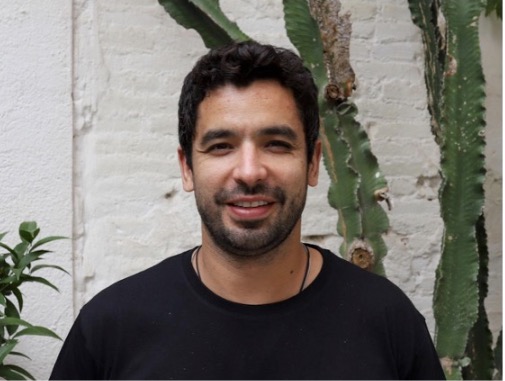
Could you tell me more about your background? Ríos said:
“Throughout my career, I’ve always gravitated toward startups and building products. I’ve taken a few different paths toward that – working close to operations, getting into data science to understand how decisions get made, and eventually moving into engineering so I could build the systems behind those products. I also founded a couple of startups along the way. They didn’t grow into big companies, but they taught me a lot about shipping quickly, listening to users, and figuring out what actually solves a problem. That’s really what drives me today: taking an idea, understanding the problem around it, and turning it into something people actually use. And that’s the kind of work I get to do at Metal.”
“I’ve built across the entire product as we’ve grown, but my main focus now is the data foundation of the platform. That means pulling in a firm’s data from all its systems, unifying it, and structuring it so companies, deals, documents, and people all link together consistently. When that layer works well, everything on top – chat, workflows, analysis – becomes far more powerful.”
Favorite Memory
What has been your favorite memory working for the company so far? Ríos reflected:
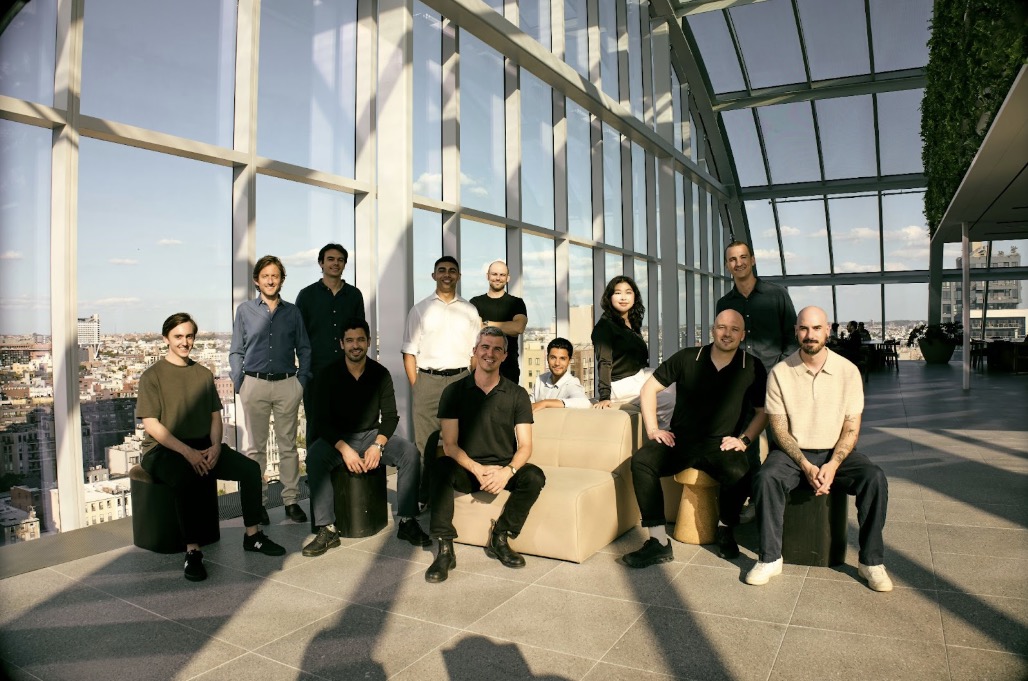
“I’ve had a lot of favorite moments at Metal, especially when customers validate what we’re building. There’s something really energizing about shipping a feature and immediately hearing that it saved someone hours of work or simplified a part of their process. For example, when we built tools that helped teams evaluate opportunities more efficiently, or generate reports they used to assemble manually, the reactions were incredibly positive – clear signs we were solving real problems.”
“But the moment that stands out the most is when the product itself started to truly feel cohesive. In the early days, we were moving fast and building in many directions at once, so different parts of the platform felt disconnected – sometimes it was even hard to define what the “product” was yet. Then there was a turning point where everything began to click: the data layer, the assistant, the workflows, the interface. Suddenly Metal felt compact, connected, and powerful in a way it hadn’t before.”
“Seeing that shift happen – and knowing how many small decisions and iterations led up to it – was incredibly rewarding.”
Core Products
What are the company’s core products and features? Ríos explained:
“Metal is a platform built specifically for private equity. The core idea is to bring together all the data a firm relies on – documents, company information, deal history, research, expert calls – and turn it into a connected system that AI can actually work with.”
“That starts with the data layer. We pull in information from data rooms, document repositories, CRMs, and external sources, then automatically classify it and map the relationships between companies, deals, and people. That structure is what makes everything else possible.”
“On top of that, we have an AI assistant that can search, answer questions, and run analysis across a firm’s entire history. And we have workflows for things like CIM screening, portfolio monitoring, VDR reviews, benchmarking – each tuned to how PE teams actually operate. Users can also build their own workflows for processes specific to their firm.”
“The key is that these pieces work together. A workflow can generate new data that feeds back into the knowledge layer, and the assistant can trigger workflows when needed.”
Challenges Faced
Have you faced any challenges in scaling AI in PE? Ríos reflected:
“One of the biggest challenges is that in PE, “almost right” isn’t useful. If an AI tool is 80% accurate, the analyst still has to go back to the source documents to validate anything that looks uncertain, which means we haven’t actually saved them any time. That last 20% is where all the value and all the trust lives.”
“What that means for us is that the foundation has to be extremely reliable. Documents, company information, deal context – everything needs to be connected, consistent, and grounded in a way that users can trust without having to redo the work themselves. A lot of our effort goes into solving those last-mile issues: the edge cases, the exceptions, the contextual nuance that makes PE workflows different from other industries.”
“Another challenge is that many teams are still figuring out what “AI workflows” even look like. Their world has traditionally been Excel, Outlook, and shared drives, so when they ask us to “show them the art of the possible,” they genuinely have no mental model for how AI can fit into their day-to-day work. They can’t articulate what they want because they don’t know what’s possible. And critically – they’re not going to invest time learning a new platform until they see a concrete output that proves value.”
Evolution Of The Company’s Technology
How has the company’s technology evolved since launching? Ríos noted:
“We’ve gone through several major iterations. Early on, we built AI agents but the reasoning models weren’t capable enough. We also developed reporting features that partially worked but didn’t meet the mark.”
“A lot of what didn’t work then works now. The models have gotten better at reasoning through multi-step tasks which means we can build things that actually feel reliable enough for firms to depend on. Along the way, we built our own agentic framework. It started simple – just agents calling tools – but we’ve layered in more structure around planning, error handling, and validation. That’s given us a lot more reliability and consistency in the outputs.”
Significant Milestones
What have been some of the company’s most significant milestones? Ríos cited:
“A big milestone for us was the moment Metal narrowed its focus to PE. We originally started as a broader data infrastructure product, but committing to one vertical changed the trajectory of the company. It gave us clarity on what to build and who we were building for.”
“Landing our first enterprise PE customer, Berkshire Partners, was another defining moment. It showed that firms were willing to trust us with real internal processes and data. And seeing more enterprise customers come on board after that, and rely on the platform more deeply, was a strong signal that we were moving in the right direction.”
“Internally, a key milestone was when the team began to grow. We could move faster, tackle deeper technical challenges, and have people focused on specific areas instead of constantly context-switching. That let us build toward a much more capable product than what a small group could realistically support.”
Differentiation From The Competition
What differentiates the company from its competition? Ríos affirmed:
“A few things. First, we’re focused on depth over breadth. We’re building for PE specifically, not financial services broadly. That lets us go deep on the workflows and outputs that actually matter to these firms – things like CIM scoring, portfolio monitoring, deal analysis. We’re not trying to be everything to everyone.”
“Second, our team. The founders and engineers have 10+ years of experience in the CRM space and scaling tech companies. We know the data problems we’re solving, and we’re moving fast.”
“And third, we’re obsessed with adoption. We’ve heard from prospects that other tools in this space get deployed but then sit on the shelf because they don’t fit how people actually work. We measure success by whether firms genuinely depend on what we’ve built.”
Additional Thoughts
Any other topics you would like to discuss? Ríos concluded:
“I’m really excited about where the product is headed. We’re at a point where the foundation is solid and we can start delivering workflows that firms genuinely depend on. The next year is going to be about proving that out at scale.”
