

MetalBear builds mirrord, a developer tool that lets engineers run services locally while seamlessly connecting to real cloud environments to speed up development, improve debugging, and reduce cloud costs. Pulse 2.0 interviewed MetalBear co-founder and CEO Aviram Hassan to gain a deeper understanding of the company.
Aviram Hassan’s Background
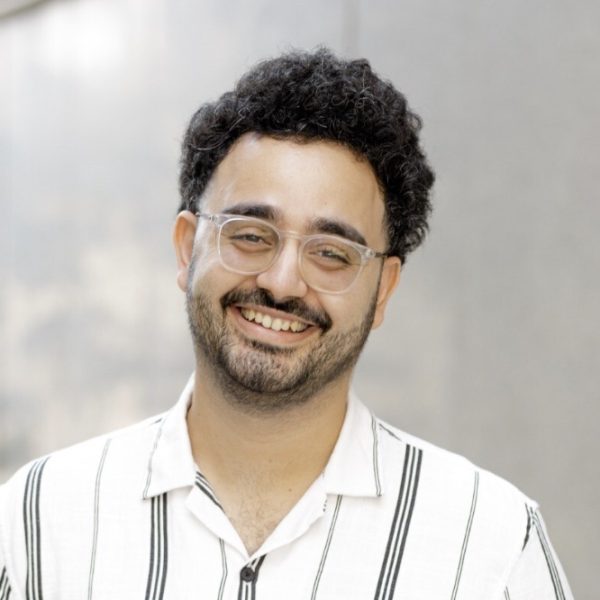
Could you tell me more about your background? Hassan said:
“I started coding when I was about seven years old. What began as playing computer games with my mom eventually turned into a fascination with how software actually works. I started scripting when I wanted to translate and extend a chat-based online game into Hebrew, which pushed me to learn multiple programming languages. By sixteen, I was freelancing. After serving in an intelligence unit in the army, I worked as a solutions architect for a telco and cable company, then became a backend team lead at a fraud prevention startup. Those roles shaped how I think about large systems, developer workflows, and the importance of fast iteration.”
Formation Of The Company
How did the idea for the company come together? Hassan shared:
“My co-founder and I wanted to build a product we would have loved using as engineers. We both felt the pain of testing code changes in cloud microservice architectures. Even a small change required a lot of steps just to understand its real impact in production-like conditions. We realized that solving that bottleneck would help not only us but every other engineer writing code for the cloud, so we built the product we always wished existed.”
Favorite Memory
What has been your favorite memory working for the company so far? Hassan reflected:
“Our very first team call. We were only four people at the time, all joining from different parts of the world: Canada, Brazil, the UK, and Israel. Seeing the early team come together, establishing our culture, and kicking things off in a shared Discord channel was a moment that made everything real.”
Core Products
What are the company’s core products and features? Hassan explained:
“Our open source product is mirrord, which lets developers run local code in the context of their live Kubernetes environment. Instead of building an image, going through CI, and deploying it to a cloud environment, you can test your code in cloud conditions directly from the IDE as you would local code. This makes feedback loops dramatically shorter.”
“Our commercial product, mirrord for Teams, expands on that by enabling safe, collaborative remote environments. The entire engineering organization can work against one staging environment at the same time, and from the very first step of the development process. It provides fast, production-like testing without the cost and complexity of maintaining full per-developer environments.”
Challenges Faced
Have you faced any challenges in your sector of work recently? Hassan acknowledged:
“A major challenge is skepticism. Many engineers and managers assume that what we’re doing is too complex to be reliable. We overcame that by proving the value with real adoption. We released the open source version before raising funding, grew it to thousands of users, and then built the enterprise features on top of that foundation. Delivering results consistently has done more to change minds than anything else.”
Evolution Of The Company’s Technology
How has the company’s technology evolved since launching? Hassan noted:
“In the beginning we focused on deep, low-level capabilities that made mirrord technically possible. Now that the foundation is strong, we’ve shifted our focus toward usability. Our priority is making mirrord easy for any engineer to adopt, even those new to Kubernetes. The core technology is mature, so we’re investing in abstractions and UX improvements that turn mirrord from a powerful tool into a polished, highly accessible product.”
Significant Milestones
What have been some of the company’s most significant milestones? Hassan cited:
“Signing our first enterprise customer was a major moment. We’ve since moved mirrord for Teams into full General Availability and recently grew ARR 2X in only three months. The adoption curve validated that we are solving a widespread problem.”
Customer Success Stories
Can you share any specific customer success stories? Hassan highlighted:
“One example is SurveyMonkey. They evaluated alternatives for a month, then quickly standardized on mirrord because it was simple to adopt. They rolled it out to hundreds of engineers within weeks.”
“Another example is Zooplus, a leading European e-commerce company. They began with a narrow use case, but soon expanded mirrord across their development workflow and retired several legacy tools in the process.”
Funding/Revenue
Are you able to discuss funding and/or revenue metrics? Hassan revealed:
“We raised $12.5 million recently. From a business standpoint, we are on track to close this year with three times the ARR we started with.”
Total Addressable Market
What total addressable market (TAM) size is the company pursuing? Hassan assessed:
“Any company that builds applications on Kubernetes is part of our TAM, which we estimate to be about $30 billion. That ranges from startups with five engineers to large enterprises with hundreds. We typically focus on companies with teams of fifty engineers or more, but modern software development increasingly relies on Kubernetes, so the market is very large.”
Differentiation From The Competition
What differentiates the company from its competition? Hassan affirmed:
“Our advantage is the depth of our integration and the completeness of the experience. Other solutions require stitching together multiple third-party tools and often force teams to change their workflows. mirrord works with existing infrastructure and existing processes. It is plug-and-play, safe to use, and designed specifically for production-like testing without friction.”
Future Company Goals
What are some of the company’s future goals? Hassan emphasized:
“We want mirrord to become a standard tool for any engineer working over Kubernetes. Our near-term focus is making mirrord the best possible solution for production-like testing. As we grow, we will expand the product to solve additional developer bottlenecks and help teams experiment and iterate more effectively.”
Additional Thoughts
Any other topics you would like to discuss? Hassan concluded:
“Our mission is to remove developer bottlenecks, especially around testing, validation, and experimentation. Most engineering challenges today come from slow feedback loops rather than from writing code itself. We want to make real-world testing seamless so engineers, and eventually AI-driven development agents, can move from idea to confirmation in the fastest, safest way possible.”
