

MileageWise is a mileage tracking and recordkeeping platform designed to help drivers create structured mileage logs both prospectively and retroactively. The company offers automatic mileage tracking, web and mobile tools, and a retroactive mileage log solution that can use Google Timeline data to help reconstruct past business travel. Pulse 2.0 interviewed MileageWise Founder and CEO Akos Barazsy to learn more about his background, the origins of the company, its approach to retroactive mileage documentation, and its bootstrapped growth strategy.
Akos Barazsy’s Background

When asked about his background, Barazsy shared:
I’m Akos Barazsy, founder and CEO of MileageWise. My background is in IT, product building, and entrepreneurship.
I started out closer to the hardware side of IT, running a systems administration business, and over time I naturally moved toward software and product development.
Before MileageWise, I built and operated several software businesses, including RoadRecord in the mileage-log space and MiniCRM in customer relationship management.
I also wrote a business book in Hungary about building more sustainable companies, which became one of the country’s most successful business books in its category.
On a personal level, I have been together with my wife for 20 years, and we are proud parents of 7-year-old boy-girl twins. We also have two dogs around the house, so life is rarely quiet.
Family gives me a very practical view of responsibility and long-term thinking: you try to build things that last, whether that is a company, a product, or the values you hope to pass on to your children.
That same way of thinking has shaped how I build businesses.
Most business problems become manageable when you turn messy, manual work into a reliable system.
I have always been more of a practical systems-builder than a theoretical founder.
MileageWise is very much the result of that mindset: take a painful administrative task, understand the real-life edge cases, and make the software strong enough that users can rely on it when the stakes are high.
How MileageWise Started And Barazsy’s Responsibilities
When asked how the idea for MileageWise came together and about his primary responsibilities, Barazsy explained:
The idea came from seeing the same problem again and again: people drive for business, postpone documentation, and then suddenly face tax season, reimbursement deadlines, or an accountant asking for records they do not really have.
Mileage logs are easy to ignore until the moment they become urgent.
We started working on this problem back in 2001 with RoadRecord, and later brought that experience to the U.S. market through MileageWise.
What we noticed in the U.S. was that most of the market talks about tracking from today forward: download an app, start tracking, and from now on you are covered.
That is useful, and we do that too. But it only solves the problem for people who made the right decision at the right time.
The more interesting problem, and frankly the more painful one, is what happens to everyone else.
What about the person who was already driving for business before they started using a tracker? What about someone who tried another app, but the data is incomplete? What about people who only realize after talking to their accountant that those miles could have mattered?
That is where our retroactive approach became different.
For mileage records, the IRS expects documentation to be reliable and created from credible records, not simply guessed later.
Google Timeline data can be very valuable in that context because it was recorded at the time the travel happened.
MileageWise can import that data, help identify the business drives among many personal and mixed trips, and then guide the user through the finalization process.
The goal is to turn messy real-world location history into a structured, defensible mileage log with as little manual work as possible.
So the idea was never just to build another mileage tracker.
It was to build a system that helps people both going forward and retroactively.
Tracking is important, but rescue is just as important.
On his responsibilities as CEO, Barazsy added:
My responsibility as CEO is to keep that entire system working as a real business, not just as a good product idea.
First, we have to give users a software solution that actually solves a painful problem well enough that they become customers.
Then we have to keep those customers with reliable software, strong support, and a level of trust that makes people recommend us to others.
That base is what allows the company to grow.
Entering the U.S. market six years ago was already a major step for us after building the business in a much smaller Hungarian market.
Now my focus is the next stage: strengthening MileageWise in the U.S., expanding internationally where the problem is similar, and increasing the long-term value of the company.
In practice, that means product, customer experience, marketing, operations, and every decision that helps turn a specialized solution into a stronger global business.
Favorite Memories
When asked about his favorite memories working for MileageWise, Barazsy said:
After almost 25 years in this business, it is hard to choose just one favorite memory.
There are certain moments that keep repeating, and they still matter every time.
One of them is when a customer comes to us in panic.
Sometimes they are facing an IRS audit, sometimes they lost data with another provider, and sometimes they simply realize too late that they need a proper mileage log.
For them, the situation can feel almost hopeless.
For us, this is exactly the kind of problem we have been working on for decades.
So when we can help them rebuild the missing records and they realize the situation is not lost, that is a very good feeling.
At that moment, MileageWise is not just software. It is relief.
Barazsy also recalled an early U.S. customer:
Another favorite memory goes back to our early days in the U.S. market.
We had a customer who had worked with mileage logs for many years, and she told our support team something like, “Whoever came up with MileageWise is a genius.”
Of course, as a founder, you try to stay humble, but I would be lying if I said that did not feel great.
Coming from an American customer, especially when we were still proving ourselves in the U.S. market, that kind of feedback gave us real validation.
He also pointed to the process of discovering new ideas:
The other type of favorite memory is when a new idea finally works.
In business, you often have to lift ten stones to find one diamond.
We constantly test ideas, and many of them do not work for one reason or another.
The market does not care, the timing is wrong, or the execution is not good enough.
But then sometimes you lift the next stone, and there it is: something that truly adds value to the company and to customers.
Those moments give the team energy.
You feel that you have taken another step forward, that you became a better company together, and that the next idea is worth trying.
Core Products And Features
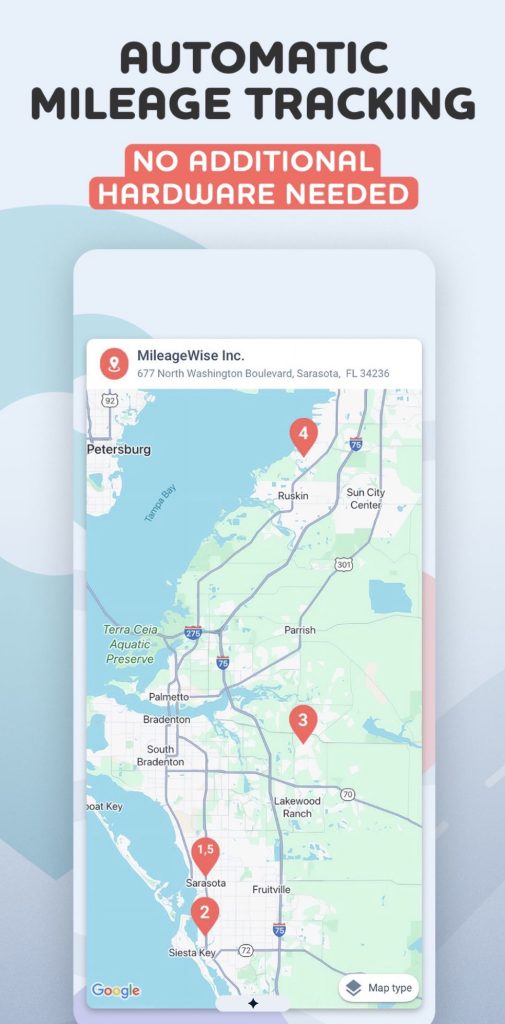
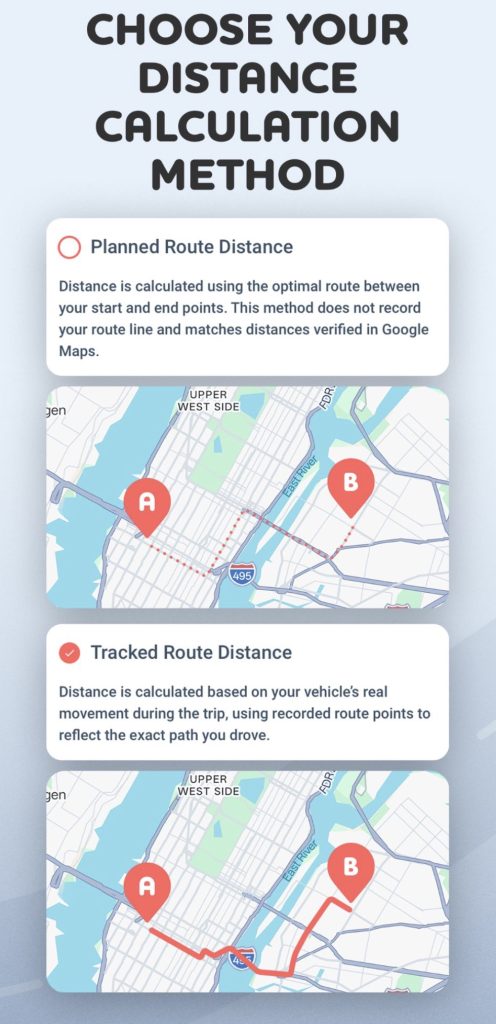
When asked about MileageWise’s core products and features, Barazsy explained:
MileageWise has two main product lines: a mileage tracker for ongoing mileage recording, and a retroactive mileage log solution for people who need to rebuild records from the past.
Our mileage tracker does what users expect from a modern tracker app: it can automatically record trips, help categorize business and personal drives, and connect everything to the user’s mileage log.
Where we add something different is distance calculation.
Users can choose between actual tracked routes and server-calculated distances between two points or business locations.
That flexibility matters because different drivers and businesses have different needs.
Some want the exact driven route, while others prefer a standardized, clean calculation method.
Barazsy also described MileageWise’s retroactive capabilities:
The second product line is our retroactive mileage log solution, where Google Timeline import plays a central role.
Users can import their Timeline data; the system helps identify car trips from all the movement data, and then guides them through a much simpler finalization process.
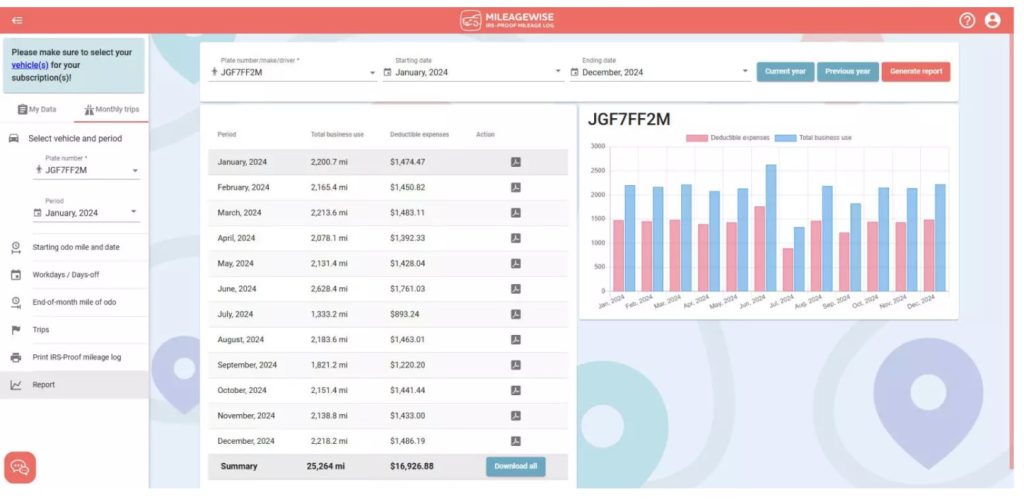
It sounds easy when you explain it in one sentence, but making it feel easy took a lot of work.
We are proud of the fact that the interface looks simple while a very complex engine is working behind it.
Both approaches are available through dedicated mobile apps, and both connect to our web dashboard.
The dashboard is important because many users prefer to review, edit, and finalize their mileage log on a larger screen, especially when they are working with a full year of records.
The goal is to help them create a structured, defensible mileage log that is ready for tax or reimbursement purposes.
Barazsy also highlighted the company’s pricing approach:
Our pricing is also a little different from the market.
In the standard mileage tracker category, we are positioned around the middle of the market.
The retroactive mileage log product is harder to compare because there are very few true alternatives.
We also offer lifetime plans in both categories, which is unusual today.
It is a bit like the old days of software: if someone likes the solution and wants to avoid ongoing subscription payments, they can buy lifetime access and not have to think about that cost again.
Challenges In The Mileage Tracking Market
When asked about challenges facing the company and the broader software market, Barazsy said:
In software, especially after almost 25 years in the same field, challenges are not occasional events.
They are the normal operating environment.
The market changes, competitors change, customer expectations change, technology changes, and the economy changes.
If we have a few unusually calm months, that almost feels suspicious.
The good side is that it makes you battle-tested.
You learn not to panic every time the market moves.
You learn to keep improving the things that must be good: the product, the customer experience, the support, the positioning, and the way you explain the value to the market.
Barazsy said the larger challenge is determining what customers actually need:
For us, the biggest challenge today is not simply building features.
If we can define the right product clearly enough, building it becomes a task.
A hard task, but still a task.
The real challenge is understanding what the market actually needs, how to reach the right users, how to stand out in a very noisy category, and how not to waste the one chance a user gives you.
That is especially true in mileage tracking.
There are many providers, many good promises, and some genuinely good products.
From the user’s point of view, it is difficult to know which solution will really work for their situation.
So people often try several tools, and each product gets only a short window to prove itself.
We make mistakes too.
A bug can appear, a user can miss an important feature, or we may not explain something clearly enough.
The challenge is to reduce those moments, because trust is fragile.
Barazsy also discussed the difficulty of understanding user behavior:
Another difficulty is that users usually do not tell you everything.
They rarely explain why they did not convert, why they stopped using a feature, or what confused them.
Most of the time, they only contact you when something goes wrong.
So we have to learn from behavior: data, usage patterns, support tickets, conversion points, drop-offs, and all the small signals that show where the product or the message is not clear enough.
He also pointed to changes in Google Timeline:
Compared to that, even large technical changes can feel more manageable.
A good example from the past year was Google’s change around Timeline data and on-device storage.
That made it harder for many users to find, export, and use their own location history, and it forced us to rethink parts of our import workflow.
But that is the kind of challenge we can solve by rebuilding the process around the new reality.
The harder challenge is always the same: make the product strong, make the value obvious, earn the user’s trust quickly, and keep earning it after they become a customer.
Key Company Milestones
When asked about MileageWise’s most significant milestones, Barazsy highlighted the company’s long history in the category:
One of the most important milestones was simply starting in this field back in 2001.
We began in the Windows software era, long before mileage logging was a popular app category.
At that time, we were not coming from the typical software startup world. We were solving a very practical administrative problem and slowly building deeper and deeper expertise around it.
The next major milestone was becoming the clear market leader in Hungary with RoadRecord.
That gave us proof that the problem was real, that users were willing to pay for a reliable solution, and that a small team could build a very strong position by understanding one niche extremely well.
The company continued evolving with changes in computing platforms:
Technology kept changing, and we had to change with it.
By 2013, we already had mobile apps for Android, iOS, and even Windows Phone.
In 2018, we launched our web-based online dashboard, which was a major transition from the old Windows-based software environment.
It was a big technical and business shift, but it also made the product much more flexible.
Entering the U.S. market with MileageWise in 2020 was another major step.
Coming from a much smaller Hungarian market, the U.S. forced us to think bigger, communicate more clearly, and build for a very competitive environment.
Barazsy identified Google Maps Timeline integration as another major product milestone:
From a product perspective, one of our biggest milestones was creating and implementing the Google Maps Timeline import workflow.
That was not just another feature. It changed what we could offer users.
We were no longer only helping people track future trips.
We could also help them rebuild mileage records from existing location data.
Later, when Google changed how Timeline data was stored and accessed, we had to rethink and rebuild parts of that workflow again.
By 2025, we had brought this experience to mobile as well, which meant we effectively had two types of mobile apps: one for mileage tracking and one for converting Google Timeline data into mileage logs.
A more recent external validation was being listed by Forbes Advisor as “Best for Compliance.”
That mattered to us because compliance has never been a side feature in our product.
It has always been one of the main reasons MileageWise exists.
Now, the next milestone we are working toward is broader international expansion.
After proving the model in Hungary and then entering the U.S., we see similar problems in other markets as well.
The challenge is to adapt the solution intelligently without losing what made it strong in the first place.
Funding And Bootstrapped Growth
When asked about funding and revenue metrics, Barazsy explained:
We are privately held, so we do not publicly disclose revenue figures.
What I can say is that we have always been a bootstrapped company.
In almost 30 years of entrepreneurship, I have always built businesses from what we could earn in the market.
We have never had outside investors, and we have never carried debt.
That approach has both advantages and disadvantages, of course.
It can limit speed compared with heavily funded competitors, especially in a market like the U.S., where some companies have access to amounts of capital that are simply in a different universe.
We knew that when we entered the U.S. market.
We understood that we would not win by being the biggest or by spending the most.
Our only chance was to be smarter in very specific areas and to solve certain problems better than others.
Barazsy said bootstrapping has also provided the company with greater independence:
The advantage of bootstrapping is independence.
We do not have to build the company around investor expectations, debt obligations, or short-term financial pressure.
The market itself validates us.
If customers buy, renew, and recommend the product, then we know we are creating value.
If something does not work, the market tells us very quickly.
For me, the harder question has usually not been how to raise money, but how to spend money intelligently.
Where do we invest inside the company? Product? Marketing? Support? International expansion? Which bet creates the most long-term value?
Those decisions matter more to me than chasing funding rounds.
So our growth philosophy is simple: stay independent, build from real customer revenue, invest carefully, and keep improving the product.
We may not always be able to outspend competitors, but we can outthink them, out-focus them, and in some areas, outperform them.
