

MixRift is a gaming studio that develops mixed-reality games—primarily for platforms like Meta Quest and Apple Vision Pro—that blend the physical and digital worlds into immersive, easy-to-pick-up experiences. Pulse 2.0 interviewed MixRift co-founder and CEO Bobby Voicu to learn more.
Bobby Voicu’s Background
Could you tell me more about your background? Voicu said:
“I’m a serial entrepreneur and have spent my entire career creating businesses. I’ve been building online businesses since 2005, first with a consulting company, which led me to be more involved in the mobile space. From there, I co-founded MavenHut, a mobile gaming studio, and led that as CEO before exiting in 2016. I then spent a few years as an angel investor and mentor for start-ups before co-founding MixRift, a mixed reality (MR) gaming start-up, in 2024.”
“I’m not sure I’ve necessarily had a clear plan of what’s next, but looking back, it makes sense that I’m now leading a gaming company that’s gaining real traction in a space that’s constantly changing. With MavenHut, we wanted to create games that harnessed the native mechanisms of the device to create great gaming experiences, and that’s what we’re doing at MixRift; the difference is that the potential for unlocking new types of experiences is much greater.”
“I’m passionate not just about creating mixed reality (MR) games, but how XR could transform multiple industries, and I publish a regular newsletter bringing together the latest news of this thriving, exciting ecosystem.”
Formation Of The Company
How did the idea for the company come together? Voicu shared:
“The short answer is that we saw a major opportunity in the extended reality (XR) gaming space, not just with the market expanding rapidly, but in creating games differently.”
“The slightly longer answer is that in MR, people have heard of the devices – Apple Vision Pro, Meta Quest – but not many would be able to name a title that makes full use of the platform’s potential. If you look back at the history of gaming, there’s always a game that sticks in people’s minds and becomes synonymous with that platform.”
“We’re already working towards changing that and we’re going to do it differently from how games are traditionally developed. We’re building accessible, social-first games faster than the competition, because we’re involving our audiences very early on; not in beta tests and demos, but by rapidly prototyping games, launching them, seeing what works, and then adapting titles based on that genuine, live feedback.”
Favorite Memory
What has been your favorite memory working for the company so far? Voicu reflected:
“I wouldn’t say there’s one particular memory so much as exciting moments when a game really connects with its audience. That’s a by-product of our rapid prototyping approach to game development: we learn quickly what players like and don’t like, and then we decide on whether to improve or discontinue. We move fast, and that means sometimes things don’t work, but when they do, and you see players not just have a go at the game, but really embrace it, it’s a fantastic feeling.”
“One such game was our first title, Hell Horde, which had 150,000 downloads on Meta Quest in its first 30 days, and has now been downloaded more than 300,000 times.”
Core Products
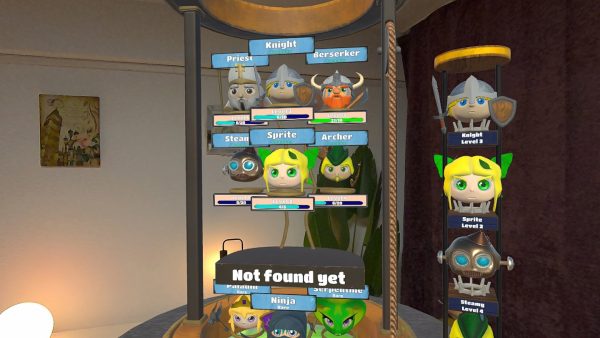
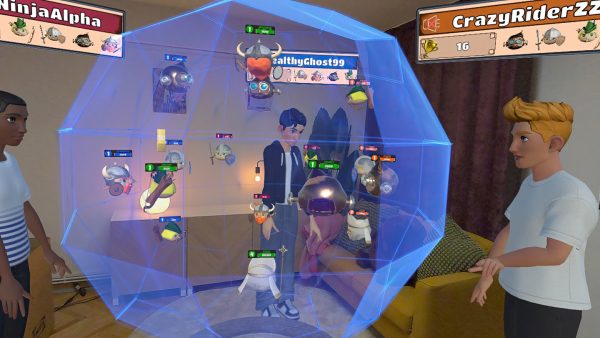
What are the company’s core products and features? Voicu explained:
“We develop MR games that create fun, immersive experiences that resonate with a whole variety of gamers, bridging the gap between virtual and real worlds. As well as Hell Horde, our titles include Fractured, a 3D puzzle game for both Apple Vision and Meta Quest, and Battle Orb, our first co-operative game.”
“They have all been developed through our rapid prototyping approach. It means we learn constantly, and those insights don’t just improve the titles players are already enjoying, but on future ones as well. For instance, Battle Orb embraces the social element of MR that we can see is a major feature of titles that have made an initial splash in XR, and it also incorporates feedback that we’ve received from our own titles.”
Challenges Faced
Have you faced any challenges in your sector of work recently? Voicu acknowledged:
“Differentiating your product or service is always the number one challenge for any start-up, and we are no different. We obviously want our games to connect with audiences, but with XR in general being such an evolving space, there’s no guaranteed route to success. We’re not just trying to produce great games, but great games that are only available via MR.”
“The way we’re tackling that is to create games that make the most of the platform and really harness its full potential. This is where our rapid prototyping approach helps: we’re getting instant, real feedback from our target audiences, not in a sterile testing environment but actually out in the market, where they have a choice of multiple platforms and thousands of games. Our aim isn’t to build great games for players, but to build with them.”
Evolution Of The Company’s Technology
How has the company’s technology evolved since launching? Voicu noted:
“We’re constantly developing new games, with our pipeline filled with titles designed to meet the growing demand for mixed reality experiences. Unlike other studios, we’re solely focused on MR, which means that we’re not being distracted by other platforms: we’re committed to unlocking the medium’s potential and creating games that really maximise the MR immersive experience.”
“Our development approach centres on three key areas:
— Creating standout moments that showcase what’s possible in mixed reality
— Fostering social connections through shared virtual experiences
— Providing stress relief through immersive gaming experiences
Each upcoming title demonstrates why mixed reality represents the future of interactive entertainment. We’re developing games that blur the boundaries between digital and physical worlds.
This focused approach allows us to move quickly whilst the market is still developing, positioning us as category leaders rather than followers.”
Significant Milestones
What have been some of the company’s most significant milestones? Voicu cited:
“In 2024, we secured pre-seed funding in just seven weeks, demonstrating both their confidence in our potential and the opportunity on offer.”
“Our first game, Hell Horde, was another significant milestone. It achieved a 4.4 star rating and 300,000 downloads on Meta Quest, a major achievement for a gaming start-up. We’ve since followed it up with Fractured,, and Battle Orb.”
“Most recently, we’ve secured a major new addition to our board of advisors: Dr Ingrid Cotoros, a former VP at Meta’s Reality Labs and GoPro, and a leading expert in the breakthrough technologies powering the world’s most advanced VR, AR and smart glasses products.”
Funding/Revenue
Are you able to discuss funding and/or revenue metrics? Voicu revealed:
“Our pre-seed funding round raised $1.6 million from leading investors, including Outsized Ventures, Underline Ventures, and SOSV.”
Total Addressable Market (TAM)
What total addressable market (TAM) size is the company pursuing? Voicu assessed:
“Right now, the mixed reality market is valued at around $8.7 billion, covering hardware and software. The latter makes up 45% of the market, and of that, gaming and entertainment amounts to a 30% market share, so that’s the opportunity we’re aiming at.”
Differentiation From The Competition
What differentiates the company from its competition? Voicu affirmed:
“Our approach to designing, developing, and deploying games. We come up with a concept, rapidly prototype it, and get it into the players’ hands. We have an idea of who we think will like the game, but that’s just our theory, so we keep an open mind and then we adapt based on that user feedback. Sometimes our games don’t get the traction we need to iterate; in which case, we move on to a new idea.”
“Other companies focus a lot of time and resources on a single title, test it with a controlled group of users, develop it some more, test, develop, and so on, until they release it. That might work to a greater or lesser extent on established platforms, but with something like MR, we’re all still trying to find those native mechanisms, so it makes no sense to us to put everything into something that’s got the same level of risk as our rapid prototypes.”
Future Company Goals
What are some of the company’s future goals? Voicu concluded:
“We’re focused on establishing ourselves as a leading force in mixed reality gaming. To do that, we’re investing in our research and development so that we can expand what MR offers gamers.”
“Understanding where hardware is going is central to this; we’ve already developed strategic partnerships with some manufacturers, and will be expanding on this as part of our plans for growth. Working with content creators is also important if we want to understand what ideas could turn into fantastic games.”
“These sorts of relationships should be something the whole MR industry develops if we want the market to grow: great devices without great games are just expensive paperweights, just as exciting games without the right hardware are wasted code.”
“Gaming will always be at our core, but our ultimate goal is to become the global leader in MR content. Immersive experiences can and will shape industries far beyond gaming, and we’re going to be at the forefront of MR innovation, helping guide how people interact with digital environments in the age of spatial computing.”
