

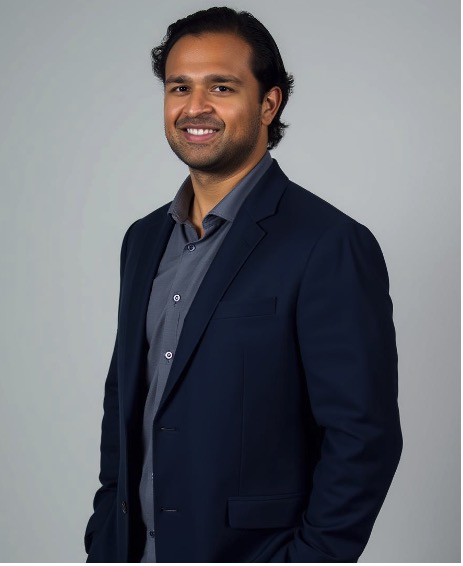
Mo Hamid is a Detroit-based technology and go-to-market leader with a background spanning software engineering, data products, market research, and operational analytics. He previously founded Unison, a SaaS market intelligence platform that was acquired by FigBytes, and has held roles across global enterprise and high-growth environments. Today, his work focuses on helping organizations connect data and AI investments to real-world outcomes, with an emphasis on clarity, adoption, and measurable wins over hype.
Q: Could you tell me more about your background and what shaped your perspective in this space?
A: I’ve had a non-linear path, and I’m grateful for that. I started as a software engineer and gradually moved into product, analytics, and go-to-market roles where I could see how decisions actually get made. Originally, I joined Unison as CTO, leading the development of the technology platform, but was eventually asked to lead the company as CEO.This experience taught me how hard it is to earn trust in data, not just collect it. And working across large enterprises taught me that the most elegant model in the world does not matter if it can’t survive contact with real operations. Over time I’ve become more interested in the usefulness of analytics than the novelty of it.
Q: What are you seeing in today’s analytics landscape?
A: I keep seeing the same pattern. Leaders feel pressure to invest in modern platforms and Gen AI quickly, but the value story is often fuzzy. This is a normal consequence of fast-changing tech and finite bandwidth. My hope is to slow the conversation down just enough to ask better questions about outcomes, causality, and adoption.
Q: What are your primary responsibilities today?
A: I spend most of my time helping teams define what success should look like, translate that into an analytics or AI roadmap, and then build the internal confidence to execute it. A lot of that work is less about technology and more about alignment. The job is to reduce ambiguity for leadership, protect focus for technical teams, and make change feel possible for the people who carry the operational burden.
Q: How do you define your approach to analytics and AI in simple terms?
A: Start with the business outcome. Be honest about what data can and cannot prove. Then pick the smallest set of tools that can get you to a measurable win. I’m not a minimalist for sport. I’m a realist about how fragile trust can be when the numbers start influencing budgets, performance, and politics.
Q: What problems are you seeing leaders struggle with right now?
A: The biggest one is mistaking activity for progress. I’ve seen teams assemble impressive stacks and still struggle to answer basic questions like “What exactly will be better in 90 days?” Another is treating data quality as a compliance chore instead of a growth lever. And with Gen AI, there’s a temptation to demo first and operationalize later. The hard part is reversing that instinct.
Q: You’ve worked with automotive clients for years…Can you share a story from the automotive world that illustrates your point?
A: One OEM I supported had a familiar challenge. They were drowning in operational data but still dealing with the same bottlenecks in plant flow and supplier coordination. The turning point was not a new tool. It was a simple, shared value model that tied forecasting accuracy to production stability and working capital. Once that connection was explicit, the analytics work became easier to prioritize, and adoption improved because the “why” was finally concrete. It was a good reminder that operational leaders don’t need more dashboards. They need fewer surprises.
Q: More recently, it seems like you’ve been doing a fair bit of work with insurance clients. What about a story from insurance MGAs?
A: I’ve seen MGAs wrestling with growth, carrier expectations, and underwriting discipline at the same time. One of the more effective approaches I’ve observed was focusing on clean segmentation and appetite clarity before getting fancy with AI. The team created a tighter feedback loop between submission patterns, early loss signals, and underwriting guidelines. It wasn’t glamorous work, but it reduced noise, improved speed-to-decision, and helped align growth with risk. Sometimes the best “AI strategy” is getting the fundamentals stable enough that AI can be trusted later.
Q: Take us back to your roots from the old Unison days where you worked significantly with electric utilities. What kinds of analytics challenges did you find they had?
A: Utilities live in a world where reliability and public trust matter as much as margin. In one case, a team was trying to improve customer experience and outage communication. The initial instinct was a broad platform overhaul. The more practical win came from improving data hygiene around asset records and aligning a few key operational metrics with storm response workflows. That created tangible improvements in how quickly teams could predict and communicate restoration windows. Again, the lesson was simple. When the stakes are high, trust in the input data is often the biggest multiplier.
Q: How has analytics technology evolved over the years?
A: Across the market, the evolution has been toward speed and accessibility. We now have tools that can shorten analysis cycles dramatically. But the better question is whether that speed is being used to increase clarity or just increase output. The strongest teams I see are using modern tooling to reduce decision friction, not to produce more artifacts.
Q: What have been some of the most significant milestones you look for in analytics maturity?
A: I look for moments where analytics becomes part of the operating rhythm rather than a special project. That might be a forecasting improvement tied to working capital, a quality initiative linked to revenue protection, or a new workflow that reduces frontline rework. The milestone isn’t a launch. It’s the quiet moment when someone says, “This is how we run the business now.”
Q: What differentiates a strong analytics approach from a weak one right now?
A: Strong approaches are humble about uncertainty and disciplined about sequencing. Weak approaches try to impress stakeholders with complexity. The best leaders I’ve worked with are comfortable starting smaller than their ambitions because they know momentum is earned.
Q: What are some future goals you think organizations should pursue?
A: Build a small, visible wins pipeline. Invest in “thought translators” who can bridge business logic and technical reality. Treat governance as an enabler of speed, not a blocker. And be selective with Gen AI use cases. The right ones simplify work and sharpen decisions. The wrong ones create theater.
Q: Any final themes you want readers to take away?
A: You don’t need perfect data or a flawless platform to make meaningful progress. You need a clear value hypothesis, a realistic change plan, and the patience to build trust one win at a time. If this article helps a leader feel more grounded and less pressured to chase every new trend, I’ll consider that a good outcome.
