

Monjur provides a specialized Contracts-as-a-Service (CaaS) platform for Managed Service Providers (MSPs), utilizing AI-powered, attorney-supervised technology to manage, draft, and negotiate contracts, ensuring legal compliance and faster sales cycles. It combines expert legal oversight with AI to deliver tailored, up-to-date agreements. Pulse 2.0 interviewed Monjur co-founder and CEO Rob Scott to learn more.

Q.) Tell me about your background and Monjur’s formation.
Rob: I’ve spent more than two decades at the intersection of law and technology, building my career around helping businesses, especially managed service providers, navigate complex legal challenges in a way that actually supports growth.
Earlier in my career at Scott & Scott, I represented clients in high-stakes matters, including software licensing disputes and audits initiated by the Business Software Alliance (BSA). In many of these situations, businesses were faced with aggressive and often disproportionate claims that created significant financial and operational pressure. That experience shaped my perspective on how legal risk actually shows up for small and mid-sized companies, and reinforced my commitment to building more practical, accessible solutions that protect them.
In 2000, I met Charles Weaver, the founder of MSPAlliance, who was deeply embedded in the MSP space. In speaking with him, I became intrigued by the unique legal challenges facing MSPs.
MSPs aren’t typical IT vendors. They have constantly evolving products, ongoing service obligations, recurring revenue models, cybersecurity exposure, compliance concerns, and complex client relationships that traditional, cookie-cutter legal contracts didn’t fully address. Through Charles, I began getting more and more requests from MSPs to review and improve their customer agreements. These engagements quickly uncovered a pattern of MSPs asking the same questions, running into the same risks, and lacking access to legal counsel from attorneys who actually understood their business.
I soon realized this was a massive underserved market, which led to me to build a large MSP-focused legal practice at Scott & Scott, and eventually launch Monjur in 2022 as a scalable, subscription-based solution. I began developing specialized MSP agreements, first on an hourly basis, then as fixed-fee packages, and eventually as standardized templates that could be reused and customized at scale.
Between Monjur and my law practice, I’ve helped thousands of MSPs across the US and Canada develop, refine, and operationalize their contracts, moving beyond static, one-time legal documents to a dynamic contract intelligence system built to evolve with their business. Along the way, I’ve focused on making legal more practical, more accessible, and ultimately more reliable by combining deep industry expertise with technology, including our work in attorney-supervised AI. My goal has always been to take the uncertainty and friction out of legal processes so business owners can focus on what they do best and, quite literally, sleep better at night.
Q.) What inspired the creation of Monjur Pilot, and what gap in the MSP market are you aiming to address?
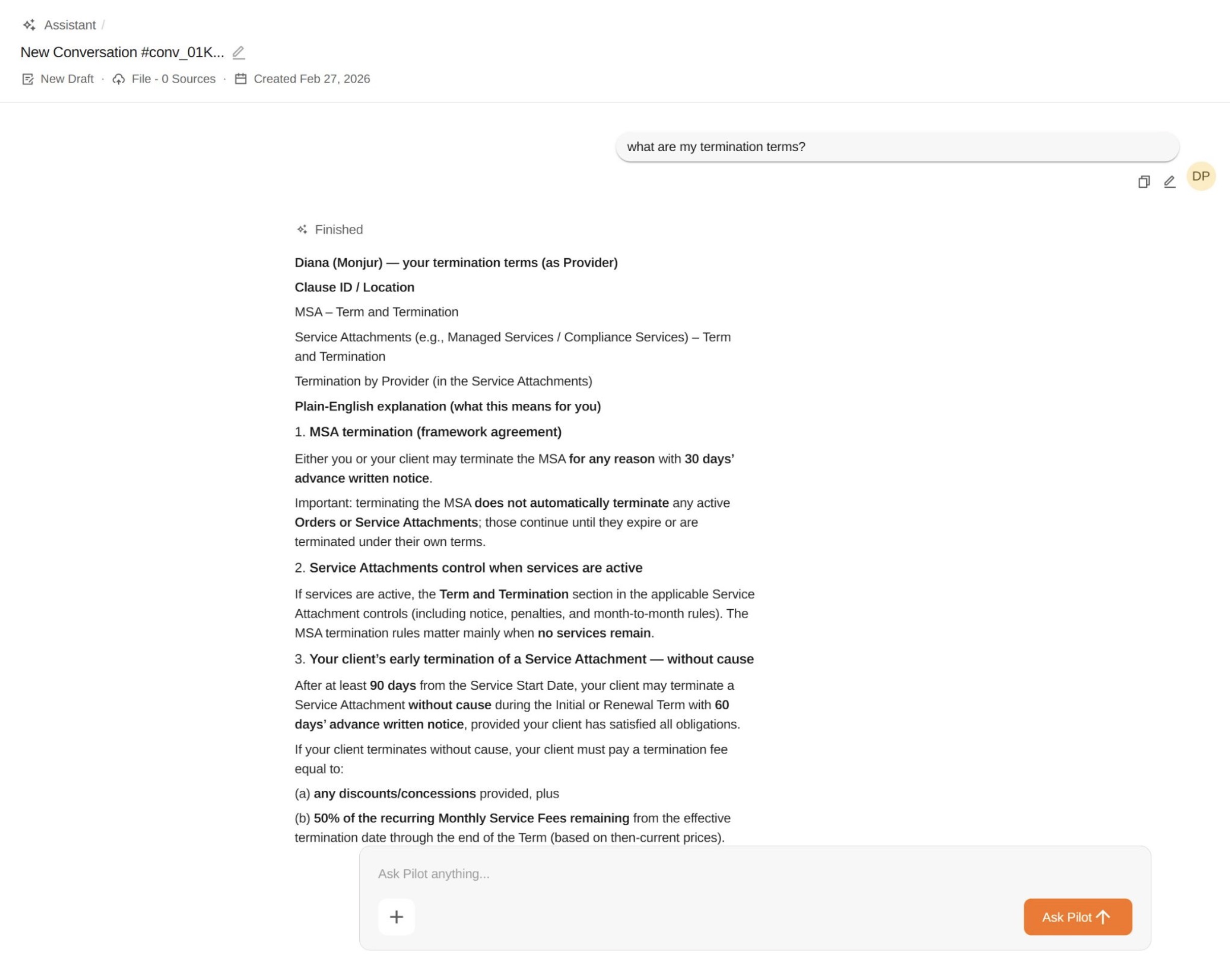
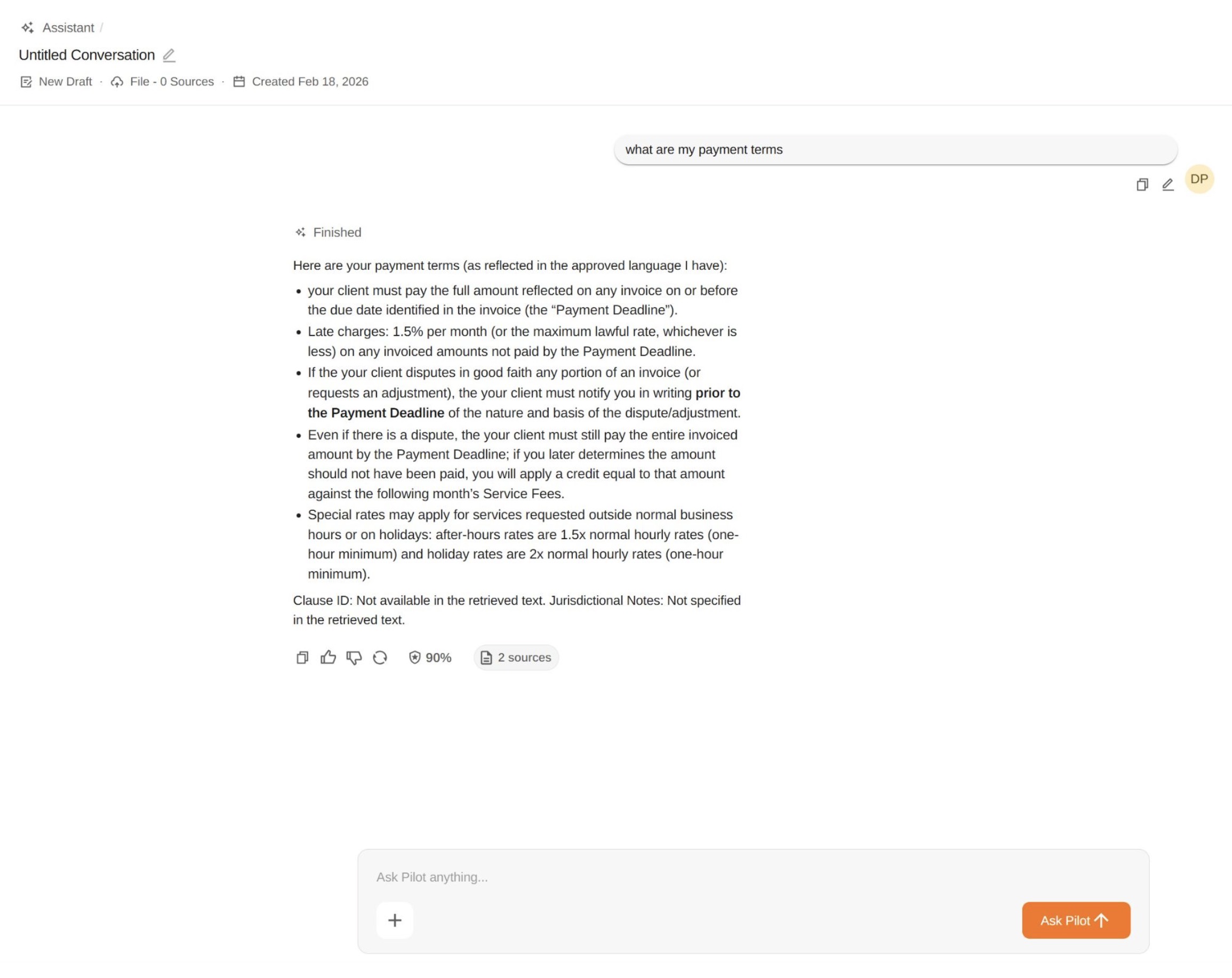
MSPs can query Monjur Pilot for a quick summary of relevant information within a particular contract (e.g., payment terms, termination terms)
Rob: When Chat GPT hit the mainstream in November 2023, I realized that generative AI could be instrumental in helping MSPs close deals more quickly by streamlining some of the legal tasks MSPs would typically turn to attorneys to accomplish. At the same time, I saw some of the pitfalls this technology could have for MSPs who sought to use Large Language Models for contracting advice. I realized that Monjur could become a safe, trusted platform for accurate, AI-powered contract intelligence. With Monjur Pilot, MSPs would no longer have to choose between slow, expensive lawyers, who can sometimes take days to respond to legal questions or contract review requests, and fast but risky DIY contracting using LLMs, which have no guardrails or oversight and are notorious for their hallucinated case law and dubious legal advice.
Monjur Pilot fills that gap by making contract intelligence more accessible, more responsive, and more aligned with real MSP workflows, while still keeping attorney supervision at the core. Built around Monjur’s decades-old document repository and each customer’s own knowledge base of contracts, Monjur Pilot functions as a 24/7 legal assistant for non-lawyers, helping MSPs confidently answer contract questions, automate contract redlining, and manage negotiations without slowing deals or increasing risk.
Monjur Pilot helps MSPs easily navigate complex legal contracts faster, delivering immediate, grounded answers to questions whenever and wherever they are within the sales cycle, without having to wait for feedback from outside counsel. Not only does this save MSPs time and money, it inserts contract intelligence directly into their sales and contract workflows, becoming a key part of how MSPs operate instead of something they revisit once a year or when something goes wrong.
Q.) How does Monjur Pilot differentiate itself from other AI-powered legal or contract management tools currently available?
Rob: Most AI contract tools are general-purpose systems built around Large Language Models. They analyze documents, summarize language, or suggest edits, but they are not grounded in actual legal documents or the realities of the managed services industry.
Monjur Pilot is different because the entire platform is built specifically for MSPs. That includes a large library of MSP agreements, decades of legal expertise in the channel, and thousands of real-world contract transactions that inform the platform’s knowledge base. We use Retrieval-Augmented Generation (RAG) to ensure Monjur Pilot’s AI-generated responses are accurate and drawn from attorney-reviewed legal documents.
Monjur Pilot understands the structure of MSP agreements in ways that traditional LLMs cannot, including common risk areas, service limitations, cybersecurity obligations, and compliance requirements that MSPs face with their clients. It also benefits from having attorneys in the loop, who have decades of experience serving the unique legal needs of MSPs and can provide expert legal guidance.
Monjur Pilot also brings real-time contract intelligence into everyday sales activities by integrating directly into tools that MSPs already use, like PSA, quoting, and sales platforms such as ConnectWise, Kaseya, Halo, and Quoter. This allows sales and operations teams to quickly understand what language is acceptable, what alternatives exist, and when something needs legal review. Monjur Pilot’s legal guidance is seamlessly integrated into the MSP’s operational workflow rather than in a separate legal tool. The result is more predictable negotiations and less friction during the sales cycle. Deals move faster because legal guidance is available in the workflow instead of sitting outside it. In many cases, MSPs can resolve routine contract questions immediately instead of waiting days for outside counsel.
Q.) Can you explain how the attorney-supervised component works in practice and why it is important for MSPs?
Rob: Monjur Pilot operates inside an attorney-supervised framework that’s grounded in each MSP’s Legal Knowledge Base, which includes our proprietary document library, MSP-specific agreements, policies, and approved clause alternatives. When Monjur Pilot answers questions or suggests contract redlines, it is working from those approved legal standards rather than generating content culled from the open internet, which could contain misinformation or biases.
Equally important, Monjur Pilot is designed to recognize uncertainty or its own lack of knowledge. We’ve gone to great lengths to assign confidence scores to our answers, so when confidence in a response is low or a query falls outside approved parameters, the system escalates the issue to Monjur’s legal team where MSPs can ask questions, share documents, and get a rapid response to their contracting questions from experienced attorneys who know their business.
With Monjur Pilot, the goal is not to replace legal judgment with AI but to make that expertise available in a faster, more consistent and accessible way. MSPs get real-time answers and contract support through AI, while attorney oversight ensures the guidance is reliable and aligned with their needs and our legal framework.
Q.) What are the biggest challenges MSPs face when it comes to contracts, and how does Monjur Pilot specifically solve them?
Rob: The biggest issue I see is that most MSP contracts are simply not built to hold up under real pressure. They look fine on paper, but in an actual dispute or even serious negotiation, they start to break down. Most contracts would not survive in a courtroom.
Part of that is structural. MSPs have historically relied on static templates or one-and-done attorney engagements to draft their contracts. Those documents age quickly as businesses evolve, the threat landscape changes, or regulations shift, but most MSPs aren’t focused on this, thinking they’re protected. Some examples include MSPs offering compliance advisory services without proper compliance advisory contracts. Another would be working with customers in regulated markets like finance or healthcare without the appropriate data protection and governance clauses mandated by international, federal, and state laws. Or they begin offering clients AI-related products and services using a pre-AI customer contract.
Static contracts often don’t reflect dynamic marketplace trends or specific risks. For example, in the case of ransomware or other cyber threats, many MSPs don’t have clauses that protect them from the criminal acts of third parties. Similarly, their contracts don’t limit their liability for acts or omissions of vendors, leaving the MSP exposed even if the fault is the vendor’s.
Another challenge is operational friction. As MSPs grow, their contracts multiply and different versions circulate across sales teams, account managers, and legacy deals, creating a situation where you are not entirely sure which terms govern which customer. Another disruption is having to rely on outside counsel to answer contracting questions. When legal is not embedded in the workflow, sales teams hesitate because they don’t know what they can and cannot say. Every question or contract redline turns into an expensive, back and forth exchange with attorneys that disrupts dealflow and eats into profitability.
Monjur Pilot addresses all of these challenges. First, it ensures that MSP’s contracts are rooted in current legal and regulatory precedent and legal documents that have been scrutinized by AI and human attorneys. We draw upon a Legal Knowledge Base that is continuously maintained, updated, and aligned with how the MSP’s business actually operates, so the contracts we help generate are both dynamic and rock-solid.
Monjur identifies and mitigates the potential legal gotchas and loopholes that busy MSPs don’t have the time or knowledge to include in their contracts, including the terms and conditions from more than 1,200 vendors and service providers. We ensure that MSPs have the right protections in their contracts if they offer AI products and services, covering things like AI input and output, data sharing for model training, and other considerations that are relevant to AI but wouldn’t be in a standard MSA.
Finally, we put professional-grade, attorney-supervised AI tools directly into the hands of MSPs so that deals don’t get sidelined by costly and time-consuming consultation with outside counsel, and so MSPs don’t have to resort to faster yet risky DIY contracting advice from LLMs that are known to hallucinate.
Q.) How does Monjur Pilot integrate into the existing workflows and platforms MSPs already use, such as PSA and quoting tools?
Rob: If legal functions live outside your workflow, it will always slow you down. That’s why we’ve integrated Monjur Pilot directly into the tools MSPs are already using every day.
All of the MSP’s agreements, clauses, and approved positions are centralized in a customized Legal Knowledge Base that’s accessible by Monjur Pilot. From there, we connect into platforms like ConnectWise, Kaseya, and Autotask, so when a deal is being quoted or a contract is being generated, Monjur Pilot pulls the correct, approved language into the document in real-time.
With Monjur Pilot, a salesperson can ask a contract question, request a revision, or evaluate a redline without leaving their workflow. If the request goes beyond the MSP’s approved guidelines, it gets flagged and escalated appropriately. So instead of legal functions being a separate step, it becomes an integral, integrated part of closing a deal. Contracts are generated with the right terms from the start, revisions happen faster, and decisions do not stall waiting on outside input.
Q.) What role does AI play in automating contract decisions, and how do you ensure accuracy and minimize legal risk?
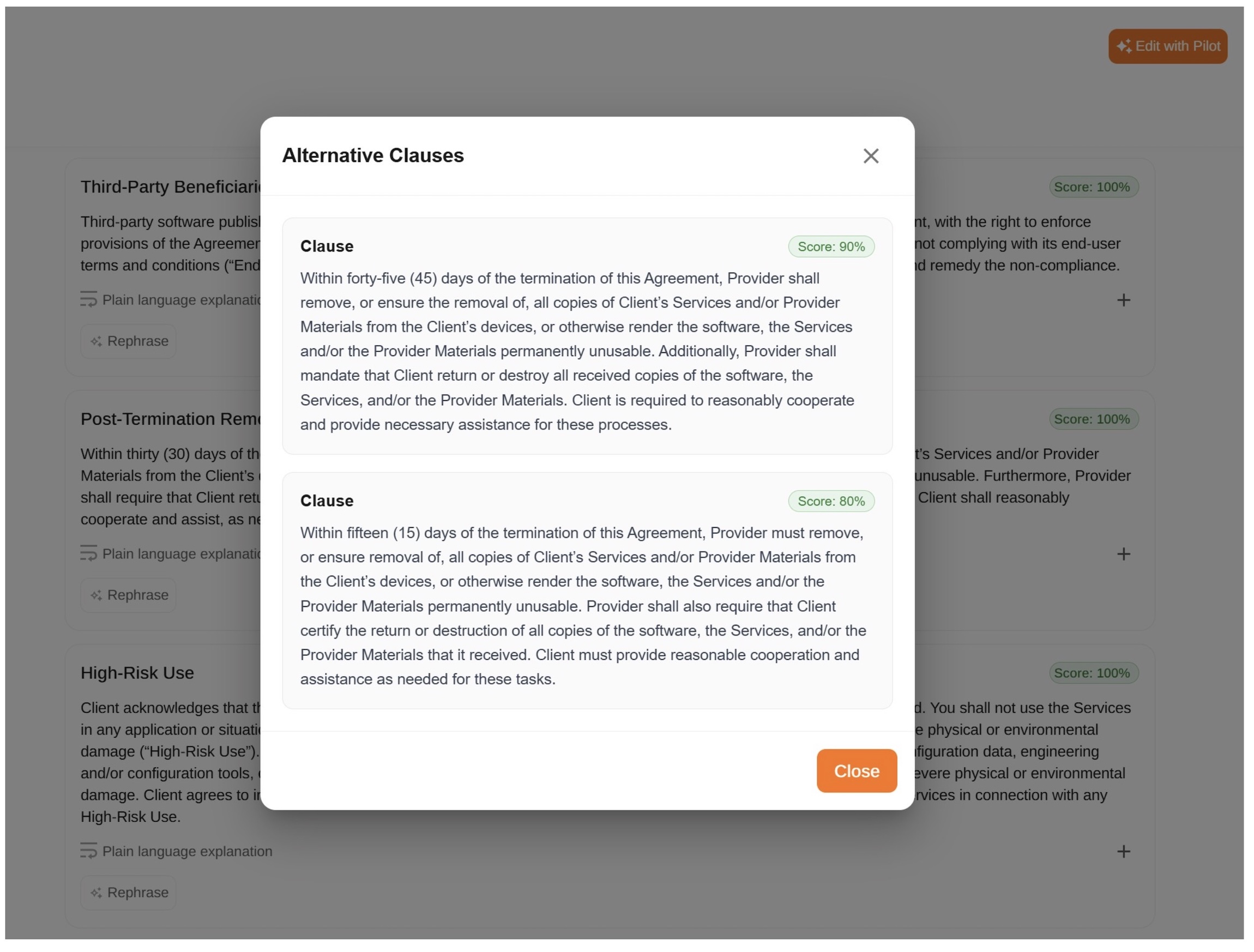
Monjur Pilot provides MSPs with several attorney-approved clauses they can implement during contract negotiations to minimize the expensive back-and-forth exchanges with law firms to review contract changes.
Rob: With a few inputs, Monjur Pilot can quickly draft an MSA that’s grounded in the MSP’s Knowledge Base and customized to the specific needs of the customer. If the MSP has a question or concern about the terms in the contract, Monjur Pilot addresses it in plain language, not legalese, and can provide alternative clauses that might be better suited to the specific deal. It also provides insights as to how these changes would impact the MSP’s risk, and how the prospect might react to the changes.
Monjur Pilot can automatically analyze the customer’s proposed changes, match them against the MSP’s approved documents, and automatically approve them or flag them for review. If Monjur Pilot is unsure about any proposed changes, or if its response falls below a certain confidence threshold, it will flag it to Monjur instead of guessing or inferring.
In this way, Monjur Pilot does most of the heavy lifting, leaving the most critical contracting decisions to the MSP or Monjur’s experienced attorneys.
Q.) Can you share any early feedback or real-world examples from MSPs currently using Monjur Pilot?

MSPs can start with a pre-approved template for contracts or other activities (such as off-boarding a customer) and then use Monjur Pilot to customize the document.
Rob: Todd Swaney, the COO of Houston-based Centre Technologies, recalled how he recently received an urgent text from his top salesperson about several contract changes he needed ASAP. Todd was stuck on an airplane runway for two hours but fortunately he had access to Monjur Pilot. For each contract clause Swaney was not comfortable addressing, Monjur Pilot gave him three potential options delivered in plain English with an explanation on how each change could impact his risk and how the customer might perceive them. Within 45 minutes, Todd was able to respond to his salesman with the new contract language while still sitting on the tarmac.
In another example, StrikeWorks Solutions CEO Victor Villanueva says he uses Monjur Pilot at night to handle document creation and redlining client changes, specifically citing that he doesn’t want to pay ‘emergency rates’ to outside counsel at 10:00pm for contract help.
Another MSP used Monjur Pilot to handle an offboarding letter for a customer who gave 30 days notice. Monjur Pilot quickly drafted a sample letter, incorporating specific references from the customer’s MSA. Separately, the MSP uploaded another customer’s NDA into Monjur Pilot and followed its guidance to decline that version and counter with a stronger one from Monjur’s document repository instead, which the customer accepted.
In all of these cases, Monjur Pilot helped MSPs quickly navigate complex contracting situations themselves, without having to engage an expensive outside legal firm that bills hundreds to thousands of dollars an hour.
Q.) How do you see AI-powered contract intelligence evolving in the MSP industry over the next few years?
Rob: I believe more MSPs will gravitate towards contract intelligence platforms like Monjur Pilot because they give MSPs greater confidence, visibility and control over the contracting process, and minimize the use of slow, expensive outside lawyers that disrupt dealflow and reduce profitability.
Stand-alone contracting point solutions, especially those built on top of foundational LLMs, will give way to more integrated solutions that are embedded into existing workflows and manage the entire contracting lifecycle, not just generate documents. These platforms will become increasingly AI Agent-driven, enabling deeper integration with PSAs, quoting tools, and sales workflows beyond simple APIs, and smarter contract negotiating within predefined guardrails.
At the same time, AI will never replace experienced attorneys who should always be in the loop in some form to ensure the accuracy and validity of the MSP’s contracts. When we combine all of the above, the legal aspect of contracts will no longer be a bottleneck or source of anxiety for MSPs. It will become a consistent, predictable, and less intrusive part of the sales process.
Q.) Any other topics you would like to discuss?
Rob: As a practicing attorney, what concerns me right now is responsible AI use, specifically how casually it is being used in legal contexts. I’m not opposed to AI; in the right hands it’s a powerful tool. But it’s imperfect and in the wrong hands it could have devastating consequences – especially when it’s used to get legal, medical, or other advice that is typically dispensed from a licensed, well-trained professional.
But even professionals are not immune to the lure of Gen AI. Despite numerous incidents and high profile news stories, we’re still seeing attorneys fall into the trap of using Gen AI as a shortcut or replacement for legal research and submitting court filings that cite nonexistent cases or misstate the law. If trained attorneys who understand the stakes and standards are getting this wrong, it raises a very real question: How can we reasonably expect non-lawyers to rely on these same tools for contracts or legal decisions without introducing serious risk?
There is a growing recognition of this at the regulatory level. New York’s RAISE Act and pending legislation like NYS Bill S7263 are early examples of states stepping in to define what responsible AI use should look like, particularly where the consequences of error are significant. If passed, S7263 will expose AI model creators to liability and damages if their chatbots dispense harmful professional advice. Other jurisdictions are moving in a similar direction, focusing on transparency, accountability, and the need for human oversight. This trend reflects an understanding that AI, left unchecked, can create more problems than it solves in legal and contractual environments. In my opinion, such legislation is necessary and a step in the right direction. No non-lawyer – human or otherwise – should be allowed to dispense legal advice. Nor should individuals involved in litigation leverage Gen AI to help prep their cases, as a recent landmark ruling in February concluded that written communications with or documents generated by publicly available AI tools are not shielded by attorney-client privilege.
From my perspective, responsible AI in this space starts with acknowledging its limits. It needs to be grounded in authoritative content, it needs to be supervised, and it needs to escalate uncertainty instead of masking it. MSPs are not looking to become legal experts, and they should not have to. The role of AI should be to support a system that delivers reliable outcomes, not to create a false sense of confidence in situations where the risk is very real.
