

Montara Therapeutics is a biotechnology company developing therapies for brain diseases through its proprietary BrainOnly platform, a CNS-targeting technology designed to improve drug safety and efficacy while enabling modulation of previously difficult-to-drug targets. The company is initially advancing programs in tuberous sclerosis complex and neurodegenerative diseases, with an approach intended to increase drug activity in the brain while limiting peripheral exposure and related toxicity. Pulse 2.0 interviewed Montara Therapeutics Founder and CEO Nicholas Hertz to learn more about the science behind BrainOnly, the company’s therapeutic programs, and its plans to develop safer and more effective medicines for neurological disease.
Nicholas Hertz’s Background
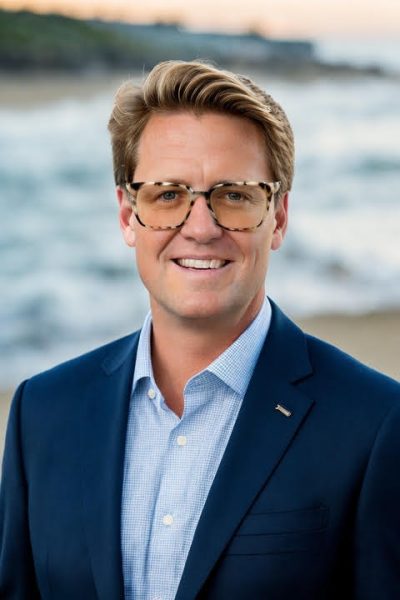
When asked about his background, Hertz shared:
I’m a scientist at heart.
I trained as a biochemist at UCLA and then as a chemist and chemical biologist at UCSF, where I did my PhD in Kevan Shokat’s lab.
My thesis work was on kinase biology, and during that time, I discovered the first class of molecules that could activate PINK1, a kinase that controls mitochondrial quality and plays a central role in Parkinson’s disease.
That discovery became the scientific foundation for Mitokinin, which I co-founded.
After my PhD, I did a postdoc in neuroscience at Stanford, then joined Mitokinin full-time as CSO.
I led the science and a lot of the capital strategy, and we advanced our PINK1 activators toward the clinic before AbbVie acquired the company in 2023 for up to $655 million.
Seeing that work validated by a large pharma company was a defining moment for me.
But I came away from Mitokinin with a conviction that wouldn’t let go.
CNS drug development is held back by a single, stubborn problem: drugs that work in the brain almost always work everywhere else too, and that peripheral activity creates the toxicity that limits how far you can push a dose.
I started Montara to solve that problem directly.
Our platform, BrainOnly, came out of the Shokat lab, and we are using it to go after brain diseases in a fundamentally different way.
Outside of work, I have my family, and I surf whenever I can.
Both keep me grounded, and the ocean has a way of putting everything else in perspective.
Primary Responsibilities
When asked about his primary responsibilities at Montara, Hertz explained:
Three things: science, capital, and team.
On the science, I stay close to the data.
We are a small company, and what we are building depends on rigorous, mechanism-driven decisions at every stage.
I am in the data myself, not reviewing it from a distance.
On the capital, I lead our fundraising and make sure we are building efficiently.
Having been through the full arc at Mitokinin, from seed to acquisition, I have a clear sense of what investors need to see and how to get a company to the clinic without wasting resources along the way.
And then there is the team.
We have three core scientific groups working across chemistry, pharmacology, biomarkers, and discovery.
Hiring the right people and keeping them focused are among the most important things I do.
Beyond that, I represent Montara externally, at conferences, with partners, and with our board.
My job there is simple: make sure everyone who matters, inside the company and out, understands where we are going and why.
Favorite Memory
When asked about his favorite memory working for Montara, Hertz recalled:
The day we replicated the original Shokat lab data in our own hands.
Up to that point, BrainOnly was a beautiful idea.
That experiment was the moment it became real.
I remember the feeling in the room when the numbers came back clean.
It was the difference between believing something could work and knowing it does.
Everything we have built since traces back to that day.
Addressing The Challenges Of CNS Drug Development
When asked about challenges in the sector and how Montara has responded, Hertz explained:
The core challenge is the one the whole field has wrestled with for decades.
Most drugs that act in the brain also act everywhere else, and that peripheral activity causes toxicity that caps how much you can give a patient.
Doctors are forced to choose between efficacy and tolerability, and patients are the ones who pay for that tradeoff.
A pediatric neurologist once told us she expected to put 80% of her TSC patients on everolimus, but the side effects were so harsh that only 5% could actually tolerate it.
That gap is exactly what we exist to close.
There have also been setbacks across the field that we have had to read carefully.
Earlier this year, the Biogen and Denali LRRK2 inhibitor BIIB122 missed its endpoints in the LUMA Phase 2b trial.
That was a hard moment for the LRRK2 field.
But when we looked at the data closely, the drug was hitting over 90% inhibition of LRRK2 in the periphery while reaching only about 30% engagement in the brain.
The problem was not the target.
The drug simply was not getting into the brain.
That is the precise problem BrainOnly is built to solve, and our goal is to push brain engagement well past what LUMA achieved without scaling the peripheral toxicity.
So a result that looked like a setback for the field actually sharpened our conviction.
Key Company Milestones
When asked about some of Montara’s most significant milestones, Hertz highlighted:
A few stand out.
First, closing a $28 million seed round with investors I deeply respect, including SV Health’s Dementia Discovery Fund, Two Bear Capital, KdT Ventures, and Dolby Family Ventures.
These are not passive check writers.
They bring real domain expertise, and they push us to be better.
Second, the team.
When AbbVie acquired Mitokinin, I was able to bring some of the best scientists from that company with me, and we have since added people with deep experience in building and scaling biotechs.
The caliber of the team we have assembled at the seed stage is something I am genuinely proud of.
We have also surrounded ourselves with extraordinary scientific minds as co-founders, not just advisors.
Kevan Shokat pioneered covalent drug discovery and drugged KRAS-G12C, a target the field had written off as undruggable for decades.
BrainOnly came out of his lab.
Thomas Südhof is a Nobel laureate in synaptic biology.
Martin Kampmann co-invented CRISPRi and CRISPRa screening.
Having founders of that caliber is a real differentiator.
On the programs, getting FDA alignment at our pre-IND meeting was a major step.
And the most foundational milestone of all was replicating the original Shokat lab data in-house.
That is when BrainOnly stopped being a promising concept and became a platform.
Since then, clean GLP safety pharmacology and strong preclinical efficacy in our TSC mouse model have kept validating the approach.
We’ve also most recently added Dirk Landgraf (Dementia Discovery Fund, Nitrase Therapeutics) to our team in the role of Chief Business Officer and Miles Gerson (Integra Therapeutics, Crosswalk Therapeutics) to our board.
Scientific Success Stories
When asked to share specific success stories, Hertz said:
I would start with the fundraise itself.
Raising in this environment is hard, and we did not just close our seed round; we upsized the second tranche.
That comes down to the team we have built and the conviction investors have in the science.
The MTX-E1 data is the clearest one scientifically.
Everolimus is already FDA-approved for TSC epilepsy, but the tolerability problems are severe enough that most patients cannot stay on an effective dose.
In our mouse studies, combining everolimus with MT1110 reduced seizures more than everolimus alone, while blocking two of the most clinically relevant side effects: immunosuppression and high blood sugar.
That was the proof of concept we needed.
The LRRK2 data matters too.
We have shown that our LRRK2 BrainTACs cross the blood-brain barrier and inhibit LRRK2 in the brains of mice, while co-dosing with a peripheral blocker restores normal LRRK2 signaling in the lungs.
After LUMA, the field now understands that peripheral inhibition alone is not enough.
You need the brain.
That is exactly what we are building toward.
We have also received grants from the Michael J. Fox Foundation supporting both our LRRK2 program and our mTOR work in Parkinson’s.
MJFF is rigorous about the science it funds, so having their backing on two separate programs means a lot.
It also speaks to how far BrainOnly can reach beyond TSC, and to the urgency of finding better options for Parkinson’s patients.
Future Goals
When asked about Montara’s future goals, Hertz explained:
In the end, it comes down to patients.
Our most immediate goal is to get MTX-E1 into TSC patients and actually change their lives.
Today, the best mechanistic treatment we have causes side effects so severe that most patients cannot stay on it.
Doctors are stuck choosing between controlling seizures and controlling toxicity.
We want to erase that choice, with a drug that meaningfully reduces or eliminates seizures without making patients sick.
Beyond TSC, we are focused on neurodegeneration.
What is coming with Alzheimer’s and Parkinson’s is staggering.
The number of people affected will grow enormously over the next few decades, and we still do not have treatments that stop or meaningfully slow these diseases.
We intend to be at the front of changing that, whether that means delaying onset, slowing progression, or treating people who are already suffering.
BrainOnly gives us a real shot at targets that have been impossible to drug safely until now.
Longer term, I want to look back and know we built something that mattered.
A company with a real portfolio of therapies, a genuine footprint in the TSC community, and a track record of getting safer, more effective drugs to people with neurological disease who have been underserved for far too long.
Why The Mission Is Personal
When invited to discuss another topic, Hertz concluded:
The one thing I would add is why this work is personal for me.
This mission is not abstract.
I watched my mother live with dementia, and my grandmother before her, and I know what these diseases do, not just to the person, but to everyone who loves them.
That experience sits underneath everything we do at Montara.
When I talk about getting safer, more effective drugs to people who have been underserved for too long, I am not describing a market.
I am thinking about my own family, and about every other family going through the same thing right now.
The science is what I love, but it is not the reason I do this.
The reason is that the people living with these diseases, and the people caring for them, deserve better than what medicine can offer today, and I believe we have a genuine chance to change that.
That is what gets me back into the data every morning, and it is what keeps the whole team pushing.
We are trying to build something that matters, for people who need it.
