

MY DR NOW is an Arizona-based independent primary care group that operates an “omnichannel” model, providing comprehensive care through walk-in clinics, in-home visits, and telemedicine services to make healthcare easily accessible. Pulse 2.0 interviewed MY DR NOW founder and CEO Payam Zamani, MD, to learn more.
Dr. Zamani’s Background
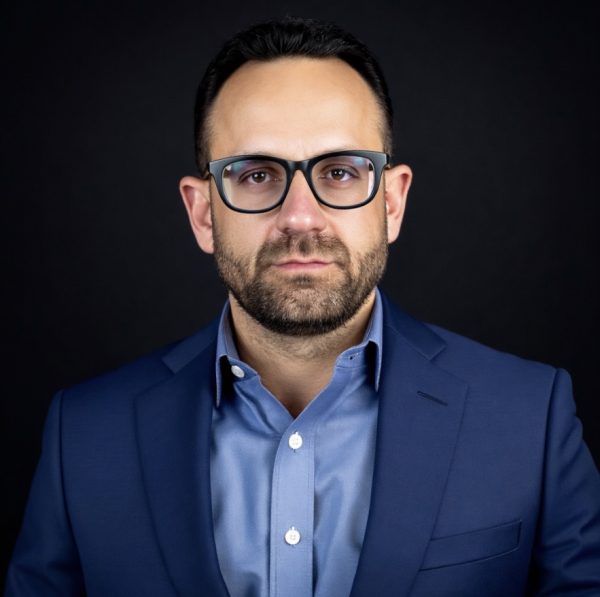
Can you briefly walk us through your background and what led you to build MY DR NOW? Dr. Zamani said:
“My path into building MY DR NOW was shaped by both personal experience and clinical reality. I was raised by a single mother who worked multiple jobs, and I saw firsthand how difficult it was for her to access even basic healthcare. Doctor visits were disruptive, time-consuming, and often delayed because the system simply did not accommodate real life. That stayed with me long before I entered medicine.”
“During my residency, I saw the same problem from inside the system. Primary care had become rigid, fragmented, and misaligned with patient needs. Long wait times, limited hours, and disconnected services forced patients to choose between their health and their responsibilities. MY DR NOW was built to solve that disconnect by designing a model around how people actually live, not how healthcare has traditionally operated. That combination of personal motivation and clinical insight created a very clear conviction that the system needed to be rebuilt, not just improved. From the beginning, this was about creating something fundamentally different, not incremental change. Today, we have 75 locations throughout Arizona and Texas with nearly 1,000 employees.”
Problem In Healthcare
What fundamental problem in healthcare were you trying to solve, and why did existing models fall short? Dr. Zamani shared:
“The fundamental problem is access. Healthcare is not failing because of a lack of clinical capability. It is failing because people cannot get care when they need it. Patients wait weeks for appointments, clinics operate on outdated schedules, and the system forces unnecessary tradeoffs between health and daily life.”
“Existing models fall short because they were built for institutional convenience, not patient reality. A 9-to-5, appointment-based system does not work in a world where everything else is on demand. When access is limited, patients delay care, conditions worsen, and costs escalate. We focused on solving access first, because when you do that, everything else improves, from engagement to outcomes to total cost of care. The reality is that most inefficiencies in healthcare are downstream of access failures, not clinical shortcomings. Fixing that single variable has a multiplier effect across the entire system.”
How MY DR NOW Is Defined
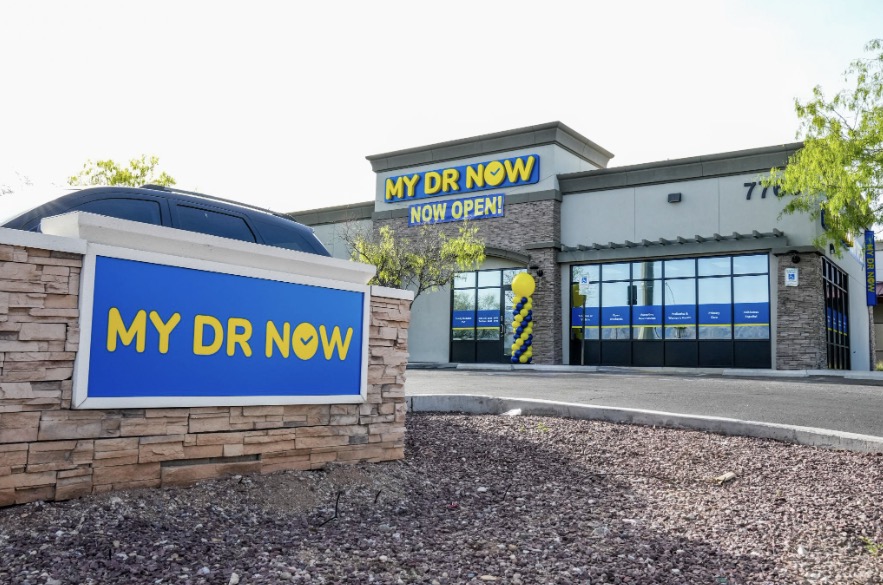
Screenshot
How do you define MY DR NOW today across urgent care, primary care, and digital health? Dr. Zamani explained:
“MY DR NOW is best understood as a fully integrated, omnichannel primary care platform. We are not an urgent care substitute, nor a standalone telehealth provider. We are a comprehensive system that delivers primary care through clinics, virtual visits, and in-home services, all connected into one experience.”
“Patients can seamlessly move between channels based on their needs. They might start with a virtual visit, walk into a clinic the same day, and receive follow-up care at home. The distinction between urgent care, primary care, and digital health disappears because everything is coordinated within a single platform designed for continuity, speed, and accessibility. What makes this powerful is not any one channel, but how they work together as a unified system. That integration is what allows us to deliver both convenience and true longitudinal care at scale.”
Core Value Proposition
What is your core value proposition? Dr. Zamani described:
“Our core value proposition is simple: We make healthcare ridiculously easy.”
“That means eliminating friction at every step. Patients can walk in, schedule same-day appointments, connect virtually, or receive care at home. We operate extended hours, seven days a week, and provide comprehensive services in one place. The goal is not just convenience for its own sake. It is about removing barriers so patients can engage earlier, stay compliant, and ultimately achieve better outcomes. Simplicity is not a marketing concept for us; it is an operational discipline. When you consistently make healthcare easy, patients respond by using it the way they are supposed to.”
Improving Access And Speed
What operational decisions have been most critical in improving access and speed for patients? Dr. Zamani pointed out:
“The most important decisions were around availability, proximity, and integration. We operate extended hours, including evenings, weekends, and holidays, because healthcare should exist when people actually need it. We also place clinics in high-traffic retail locations, making them easy to access within daily routines.”
“Equally important is integration. We built a model that allows labs, diagnostics, and multiple services to be available during the same visit. That eliminates the need for multiple appointments across different locations. Staffing, scheduling, and workflows are all designed around speed and continuity, allowing patients to be seen the same day, every day. We also standardized operations across sites, which ensures consistency regardless of location. That level of predictability is what allows us to scale access without compromising the experience.”
How Technology Is Integrated Into Workflows
How does technology integrate into your clinical and operational workflows, and where has it delivered the most ROI? Dr. Zamani noted:
“Technology is embedded across the entire platform, not layered on top of it. Our clinical workflows are unified through a single system, enabling seamless movement between in-person, virtual, and in-home care. This ensures continuity, real-time data flow, and a consistent patient experience regardless of channel.”
“The greatest return has come from operational efficiency and centralized infrastructure. Investments in automation, centralized services, and AI-driven workflows reduce administrative burden, improve throughput, and allow clinicians to focus on patient care. As we scale, these efficiencies compound, driving both better outcomes and stronger operating leverage. Technology also plays a key role in reducing fragmentation, a major pain point in healthcare. When data and workflows are unified, the entire system becomes more effective and easier to navigate.”
Unit Economics
How do your unit economics compare to traditional urgent care or primary care models? Dr. Zamani disclosed:
“Our unit economics are fundamentally different and significantly stronger than traditional models. We operate with 55% gross margins and over 27% site-level margins, which is uncommon in primary care.”
“What is more important is speed to profitability. New sites reach operating breakeven in their first full month and achieve full payback within 9 to 12 months. This is driven by standardized operations, high patient demand, and an integrated model that maximizes utilization. It allows us to scale quickly without sacrificing financial discipline. Unlike many healthcare models that rely on heavy leverage or long payback periods, our approach is built for durability. That combination of efficiency and speed creates a very strong foundation for national expansion.”
Current Run Rate
What is your current run rate? Dr. Zamani revealed:
“Our current run rate is approximately 500,000 patient visits and $100 million in revenue.”
“These numbers reflect both scale and consistency. We have built a system that not only attracts patients but retains them through ongoing relationships, which is critical in primary care. The volume is a direct result of access and convenience, not one-time utilization. More importantly, it demonstrates that the model works across a large and diverse patient population. That level of sustained demand reinforces our confidence as we expand into new markets.”
Differentiation From Competition
How do you position MY DR NOW against urgent care chains, retail clinics, and telehealth platforms? Dr. Zamani stressed:
“We are not competing on a single dimension. Urgent care focuses on episodic treatment, retail clinics offer limited scope, and telehealth is often disconnected from longitudinal care. We integrate all those capabilities into a single system anchored in primary care.”
“Our advantage is continuity. Patients are not starting over with each visit. They are part of a connected care model that knows them, follows them, and manages their health over time. It delivers the convenience of urgent care and telehealth without sacrificing the depth and relationship of primary care. That positioning allows us to serve as the front door to the healthcare system rather than a point solution. Over time, that creates stronger patient relationships and better outcomes.”
Improving A Patient’s Outcome
Can you share a specific example where your model significantly improved a patient’s experience, outcome, or cost of care? Dr. Zamani cited:
“A simple example is a working parent managing both their own health and their child’s care. In a traditional system, this might require multiple appointments across different days and locations. In our model, they can walk into a clinic in the evening, manage their own chronic conditions, complete preventive screenings, and address their child’s needs in a single visit.”
“That level of access changes behavior. Patients follow through on care, conditions are managed earlier, and unnecessary emergency room visits are avoided. The impact is better outcomes and significantly lower costs across the system. It also reduces patient stress, an often-overlooked component of healthcare quality. When care is simple and predictable, people are more likely to engage consistently.”
Biggest Challenges
What have been the biggest challenges in scaling the model, and how are you addressing them? Dr. Zamani acknowledged:
“The biggest challenge is maintaining consistency at scale. It is relatively easy to build a strong model in one location. It is much harder to replicate that experience across dozens of sites without variation.”
“We address this through standardized operations, centralized infrastructure, and a strong culture of accountability. Every site follows the same playbook, supported by centralized systems and leadership with deep tenure. This ensures predictable, repeatable performance as we expand. We have also invested heavily in training and internal leadership development to preserve our culture as we grow. That combination of systems and people is what allows us to scale without dilution.”
Future Growth
How are you thinking about growth: new locations, partnerships, or other expansion strategies? Dr. Zamani highlighted:
“Our growth strategy is focused on disciplined geographic expansion, starting with high-demand markets where access is limited. We prioritize concentration within key regions to build density and operational efficiency before expanding further.”
“We are also expanding into new states, with a significant focus on Texas. The model is proven, and growth is driven by replicating what works rather than reinventing it. Partnerships, particularly with payers, also play a role in aligning incentives around cost and quality. We are very deliberate about where and how we grow, because execution matters more than speed. That disciplined approach has been a key driver of our success to date.”
Long-Term Vision
What is your long-term vision for MY DR NOW as the company scales? Dr. Zamani indicated:
“Our long-term vision is to make primary care true infrastructure. Not something people search for when they are sick, but something that is always available, integrated into everyday life.”
“We are building toward a national platform that guarantees patients access across clinics, homes, and digital channels. The goal is to become the largest independently owned primary care provider in the country while maintaining the same principles of access, quality, and operational discipline that made the model successful. This is about redefining expectations, not just expanding footprint. When access becomes guaranteed, healthcare begins to function the way it should. That is the standard we are working toward.”
Misconception About Modern Healthcare Delivery
What’s one misconception about modern healthcare delivery that you think needs to be challenged? Dr. Zamani concluded:
“The biggest misconception is that healthcare is broken. It is not broken. Access is broken.”
“We have world-class clinicians, advanced technology, and strong clinical outcomes. The failure is that patients cannot access those resources when they need them. When you resolve access issues, you unlock the full potential of the system. That is where the real opportunity lies, and that is what we are focused on fixing. It is a much more solvable problem than people think, but it requires a willingness to rethink long-standing assumptions. Once you do that, the path forward becomes very clear.”
