

Nitin Seth is a technology entrepreneur, corporate leader, and bestselling author who is the Co-Founder and CEO of Incedo, a U.S.-based digital and AI transformation services firm. Recently, Seth wrote a new book called Human Edge in the AI Age. Pulse 2.0 interviewed Seth to learn more.
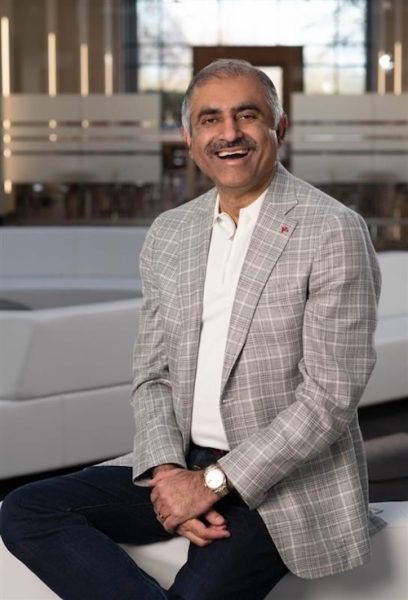
Writing Human Edge in the AI Age
What inspired you to write Human Edge in the AI Age, and what message did you most want readers to take away from the book? Seth said:
My first book was about digital, the second about data, so it seemed natural that the third would focus on AI. But as I began writing, I realized this would not be just another book about technology or business. AI is no longer simply a technological breakthrough; it is reshaping what it means to be human. As machines begin to reason, create, and interact in increasingly human ways, the real question is no longer about AI itself, but about the future of humanity. I felt this was the story that needed to be told.
The idea became clearer after a conversation with my wife, Arpna. She suggested that if I felt this strongly about the subject, I should write the book for our children: to help make sense of what this transformation could mean for their generation. That perspective shaped my thinking. This book is my attempt to understand the world they will inherit and, in doing so, offer a practical guide for anyone seeking to navigate the AI era with confidence and purpose.
Through this book, I wanted to shift the conversation from fear to possibility. I felt a strong need to bring balance to the often extreme discussions about AI, moving past simple optimism or fear. Rather than asking, “Will AI replace us?”, I believe we should be asking, “How do we become the best version of ourselves in the AI age?” Technology will continue to evolve, but our greatest competitive advantage will come from strengthening the qualities that make us deeply human: our judgment, creativity, empathy, courage, leadership, character, and ability to create meaning.
The book is therefore not a book about AI; it is a book about human potential in the age of AI. Drawing on my experiences across McKinsey, Fidelity, Flipkart, and Incedo, together with timeless wisdom traditions, I wanted to create a practical guide that helps people from all spheres of life, not just technology or business, navigate disruption with confidence rather than anxiety.
If there is one message I hope readers take away, it is this: the AI age is both an opportunity and a challenge. For those who remain in their comfort zones, it will be deeply disruptive as they will be pushed into irrelevance. But for those willing to continuously learn, adapt, and push beyond familiar boundaries, it offers an extraordinary opportunity for reinvention and growth. By strengthening the uniquely human qualities that no algorithm can replicate, we can use this moment not merely to keep pace with change, but to accelerate progress, both as individuals and collectively. Those who embrace this mindset will not simply survive the AI era; they will thrive because of it.
Human Capabilities That Will Become Most Valuable In The Years Ahead
As AI continues to reshape industries, which human capabilities do you believe will become the most valuable in the years ahead? Seth shared:
I believe AI will provide speed, scale, and intelligence, but it cannot replace human judgment, purpose, or values. As AI becomes more capable, the real differentiator will be timeless human capabilities such as creativity, problem-solving, resilience, leadership, and the ability to build meaningful relationships. In the book, I describe these through the POSSIBLE framework: an eight-dimensional approach to strengthening our uniquely human edge by enhancing problem-solving, embracing change, connecting with ourselves through spirituality, building resilience through sports, striving to create impact, finding balance, and developing leadership and entrepreneurial skills.
At a simpler level, these capabilities can be distilled into what I call the 3 Cs: Context, Creativity, and Connection. AI may solve 70–80% of a problem, but the remaining 20–30%, the part that creates real differentiation, comes from these human strengths. Context gives meaning, enables sound judgment, and helps us apply knowledge to real-world situations. Developing deep contextual understanding should therefore be our priority in the short to medium term, as it allows us to work effectively alongside AI. Creativity enables us to imagine what does not yet exist, challenge assumptions, and create entirely new possibilities. As AI increasingly automates existing work, cultivating creativity becomes our medium- to long-term advantage. Connection, our ability to build trust through empathy, care, shared experiences, and collaboration, is perhaps the most enduring human strength. It is what enables us to inspire others, build strong teams and communities, and achieve goals that no individual or machine can accomplish alone. This is not just a capability for the future; it is a timeless human advantage that we must continue to nurture. Together, these three capabilities will not only remain relevant in the AI era; they will become even more valuable.
How Leaders Ensure They Remain Relevant In The AI-Driven Economy
How can leaders ensure they remain relevant and effective in an increasingly AI-driven economy? Seth noted:
To remain relevant and effective in an increasingly AI-driven economy, leaders need to make three fundamental shifts.
First, they need to develop an entrepreneurial mindset. For decades, leadership has largely been about managing people, operations and optimizing performance. In the AI era, it is increasingly about creating new value, adapting quickly, and taking calculated risks. AI is not simply introducing a new technology; it is redefining how organizations compete, innovate, and create value. Leaders therefore need to think less like managers and more like entrepreneurs. Their role is no longer just to make decisions; it is to provide clarity amid uncertainty, inspire confidence through change, and help people and organizations discover new opportunities.
Second, leaders must be anchored in purpose and values. In a world where everything is changing, leaders must anchor themselves in what does not. Strategy is no longer a north star in today’s VUCA world; it is purpose and values that endure and stay timeless when everything is in constant flux. Leaders must therefore cultivate self-awareness rooted in purpose and values so that their decisions are guided by enduring principles rather than ego, noise, or short-term pressures.
Third, leaders must become comfortable with embracing duality. The AI era will be defined by opposing forces: disruption alongside opportunity, automation alongside human creativity, speed alongside reflection. Leaders will need to execute flawlessly today while building for tomorrow, pursue growth while maintaining profitability, and leverage AI while strengthening uniquely human capabilities. The ability to hold these tensions in balance, rather than choosing one over the other, will become one of the defining leadership capabilities of the AI era.
Ultimately, remaining relevant in the AI economy calls for a new leadership model. It is about combining an entrepreneurial mindset with sound judgment and the ability to navigate paradox, embracing rapid change while remaining anchored in enduring human values.
Leading with Values and Self-Awareness
Why do you believe values-driven leadership and self-awareness are becoming important competitive advantages for organizations and executives? Seth explained:
The AI era is an era of unprecedented change, ambiguity, and constant information. Leaders operate in a world of continuous disruption, shrinking decision cycles, and perpetual urgency. In such an environment, leadership cannot simply be about reacting faster; it must be about responding more wisely. That requires an inner anchor.
For me, that inner anchor comes from self-awareness and spirituality. While much of modern leadership emphasizes looking outward—to data, markets, and competitors—eastern wisdom traditions remind us to also look inward for answers. Self-awareness helps us understand our values, purpose, strengths, and biases, and those values become the foundation for better judgment. Without values and self-awareness, leaders risk becoming reactive rather than thoughtful, making decisions driven by noise, ego, or short-term pressures instead of purpose and sound judgment.
Practices such as meditation and mindfulness cultivate the clarity, resilience, and self-awareness needed to navigate uncertainty with confidence. I have been fortunate to practice meditation from a young age, and it has been a constant source of energy, clarity, and resilience, particularly during the most challenging phases of my career. It has taught me that spirituality is not about withdrawing from reality but about developing the inner strength to engage with it more effectively, thereby strengthening the human edge.
As AI increasingly augments intelligence, competitive advantage will depend less on access to technology and more on the quality of human judgment guiding it. Wisdom, the ability to apply context, values, experience, and ethical judgment to make sound decisions, will become one of the most valuable capabilities for leaders. Organizations led by self-aware, values-driven leaders will therefore be better positioned not only to navigate change but also to build enduring trust, create sustainable value, and unlock the full potential of AI.
Change In The Definition Of Success
In your view, how is the definition of success changing in the age of automation and artificial intelligence? Seth pointed out:
At an individual level, I believe the definition of success is fundamentally changing from finding opportunity to creating opportunity. For decades, success meant securing a job at a prestigious company and steadily climbing the corporate ladder. In the AI age, success will increasingly be defined by the ability to solve meaningful problems, create value, and continuously reinvent yourself. AI is democratizing access to capabilities that were once available only to large organizations. Today, a student can build products used by millions and a small team can compete with industry leaders on a global stage. Success in the AI era will be defined by your ability to imagine new possibilities and turn them into value at unprecedented speed.
At the organizational level, success is shifting from optimizing the existing business to continuously reinventing it. Most companies today are still using AI incrementally, layering it onto existing processes to improve productivity and reduce costs. While that delivers short-term gains, the real winners will be organizations that use AI to fundamentally reimagine customer experiences, redesign business models, and build entirely new sources of value. The question is no longer, “How do we improve the process?” but “What would this business look like if we built it from scratch with AI at its core?” Hence, organizational success in the AI age will not be measured by operational efficiency alone, but by the ability to continuously reinvent, learn faster than competitors, and create value that did not exist before.
At the societal level, success is shifting from creating wealth to creating sustainable and inclusive growth. The greatest opportunities in the AI age will belong to those who use technology not only to improve productivity but also to address humanity’s most pressing challenges: from climate change and resource sustainability to healthcare, education, financial inclusion, and equitable access to opportunity. In an increasingly interconnected world, lasting success will be measured not simply by economic growth, but by whether that growth is shared across society and achieved within the planet’s ecological limits. The leaders of tomorrow will be those who harness AI to create prosperity that is both inclusive and sustainable and not just profitable.
Mistakes Companies Make When Combining AI With Human Talent
What are some of the biggest mistakes companies make when trying to combine AI technologies with human talent and perspective? Seth described:
The biggest mistake companies make is treating AI as a technology initiative rather than a business transformation. Leaders often focus on deploying AI tools to automate existing processes and training talent on them, when the real opportunity is to rethink how the business creates value, serves customers, and organizes work.
Many organizations are still asking, “How do we train people to use AI?” The more important question is, “How should work happen in an AI-native enterprise?” Leaders should begin by rethinking the outcomes they want to achieve and redesigning workflows end to end around what AI and humans each do best. Then they should redefine the role of human talent within those workflows. Because AI is not simply changing individual tasks, it is reshaping the nature of work itself. The goal is not to help people do the same work faster with AI, but to enable them to do fundamentally higher-value work that only humans can do.
We are entering an era of large-scale cognitive disruption, where millions of knowledge-worker roles will be transformed. Yet this does not diminish the importance of humans; it elevates it. Organizations must steer human talent to shift from execution to reimagination and orchestration. In the near term, people will remain in the loop, providing context, judgment, domain expertise, and accountability while AI handles routine cognitive work. Over time, as AI becomes increasingly capable, the greatest human value will come from moving talent above the loop: imagining new possibilities, challenging assumptions, designing new business models, and creating entirely new sources of value.
The organizations that succeed will not be those that simply combine AI with human talent. They will be those that fundamentally redefine the relationship between the two.
Lessons Learned About Building Resilient Teams
Based on your experience leading Incedo and serving in executive roles across major organizations, what lessons have you learned about building resilient and adaptable teams? Seth pointed out:
Leadership is ultimately an exercise in personal judgment: knowing when to challenge people, when to support them, how far to stretch them, and how to inspire them to achieve more than they thought possible. Every leader develops a unique signature style, shaped by their values, personality, and lived experiences. Yet, while leadership styles differ, the principles for building great teams remain remarkably consistent.
The first is creating a compelling, shared purpose. Resilient teams are united by a mission they genuinely believe in. When people understand why their work matters and how it contributes to a larger goal, they bring greater ownership, commitment, and energy.
Second, adaptable teams are built with complementary strengths but shared values. High-performing teams are not made up of people who think alike. Diversity of skills, experiences, and perspectives drives innovation and better decisions, while shared values create the trust that holds the team together during periods of change.
Third, provide clarity while encouraging autonomy. Particularly in the AI era, where roles and ways of working are constantly evolving, people need clear expectations, priorities, and accountability. Clarity creates alignment, while ownership empowers people to adapt and make decisions.
Another lesson is that leaders must consistently raise the bar while creating psychological safety. The best leaders identify potential before it is obvious, challenge people to grow beyond their comfort zones, and create an environment where intelligent risk-taking, learning, and occasional failure are seen as essential to innovation rather than something to avoid.
Finally, resilient teams are forged in times of crisis. While stability sustains performance, it is adversity that reveals character, strengthens trust, and builds resilience. Moments of uncertainty and change test a team’s resolve, but they also create the opportunity to unite around a shared purpose and emerge stronger. Leaders should therefore view crises not merely as challenges to overcome, but as defining moments to shape high-performing teams.
Ultimately, resilient organizations are built by leaders who help people continuously reinvent themselves. Technologies, business models, and industries will keep changing, but organizations thrive when their people continue to grow, adapt, and unlock new potential alongside that change.
Preparing Over The Next Decade
Looking ahead, how do you see the relationship between humans and AI evolving over the next decade, and what should individuals and businesses be doing today to prepare for that future? Seth affirmed:
The defining shift in the relationship between humans and AI over the next decade will be our transition from being in the loop to being above the loop. In the near term, as AI automates an increasing share of cognitive work and transforms millions of jobs, humans will remain in the loop, providing context, judgment, ethics, and accountability while AI augments decision-making and execution. As AI becomes more capable, our role will increasingly move above the loop: setting direction, imagining new possibilities, orchestrating intelligent systems, and creating entirely new sources of value. The future of work will therefore be defined not by humans competing with AI, but by humans leading AI toward outcomes that only people can envision.
For businesses, this means moving beyond using AI as an efficiency tool to reimagining the enterprise with AI at its core. Leaders should start by redefining the outcomes they want to achieve, redesigning workflows end to end, and then redefining the role of human talent within those workflows. Organizations must treat data as a strategic asset, build AI-native operating models, and invest as much in uniquely human capabilities as they do in AI technology. The objective is not simply to automate work, but to create entirely new forms of value.
For individuals, the message is equally clear: don’t fear AI, make it your partner. Develop an AI-first mindset, build deep domain expertise, strengthen first-principles problem-solving, and cultivate an entrepreneurial approach to creating value. As AI increasingly democratizes knowledge and execution, human differentiation will come from context, creativity, judgment, leadership, and the ability to connect and inspire others.
Ultimately, the future is not something we should fear; it is something we must create. The organizations and individuals that thrive will not necessarily be those with the most advanced AI, but those that combine AI with human imagination, wisdom, and purpose.
Making AI Sustainable
What do you believe makes AI sustainable? Seth concluded:
I believe making AI sustainable is one of the defining challenges of our time, given its explosive growth and the rapid multiplication of the data centers needed to power it. For me, sustainability has to sit at the heart of the AI agenda. This is not just a technology challenge; it is a responsibility to future generations. And this sustainability spans two dimensions: planetary sustainability and societal sustainability.
As AI adoption accelerates, the compute required to train and run increasingly powerful models is growing exponentially, driving an unprecedented expansion of data centers and electricity consumption. AI’s environmental footprint is growing faster than the efficiency gains in the underlying technology. Every prompt, image generated, or model inference consumes compute, energy, and water; costs that are largely invisible to users but significant at a planetary scale. We need to consciously solve for it on a war footing through frugal innovation, energy-efficient architectures, responsible token economics, and greater focus on optimizing compute rather than simply scaling it.
The second is the sustainability of growth itself. AI has the potential to solve some of humanity’s greatest challenges, from healthcare and education to agriculture and public services. But if access to AI remains concentrated, it could also widen the digital divide and deepen inequality even as it increases overall economic output. The real opportunity is to use AI to democratize opportunity, empower communities, and unlock human potential at scale. That means designing AI not only for productivity and profit, but also for inclusion, accessibility, and equitable growth, ensuring AI creates broad-based prosperity rather than concentrating wealth and power.
Our challenge is to ensure AI becomes not just an engine of economic growth, but an architect of sustainable progress and the common good.
