

Ollang is a San Francisco-based AI technology company that helps enterprises translate, localize, and deliver multimedia content across more than 240 languages through a multi-agent platform combining over 100 AI models with human expertise. Pulse 2.0 interviewed Ollang Co-Founder and CEO Ebru Yıldırım to learn more about the company’s origins, AI-powered language infrastructure, enterprise localization technology, customer success stories, international expansion, and plans to make multilingual content production more scalable.
Ebru Yıldırım’s Background

When asked about her background, Yıldırım shared:
I’m Ebru Yıldırım, CEO and co-founder of Ollang. I started my career as a translator and interpreter, so language has always been much more than communication to me. It’s how people access knowledge, culture, opportunity and new markets.
I studied translation and interpreting at Marmara University and continued my graduate education in France, at the University of Orléans and the Sorbonne. My career then took me through several sides of the language industry, including working with global organizations such as Accenture, IKEA and Eurotunnel.
What makes my background different is that I’ve experienced the localization industry from almost every angle. I’ve been the linguist producing the work, the operator managing it, the buyer responsible for getting it delivered, and eventually the entrepreneur running a language services business.
Before Ollang, I founded and operated my own translation and interpretation agency, serving Fortune 500 companies and global organizations. That experience gave me a firsthand understanding of how difficult it was for even the largest businesses to scale their content across languages, formats and markets.
I eventually realized that the problem wasn’t a lack of talented linguists or translation technology. It was the infrastructure connecting everything.
That realization led me to co-found Ollang with our CTO, Aziz Ulak. We combined my experience in language and global operations with his engineering background to rethink how companies execute multilingual content at scale.
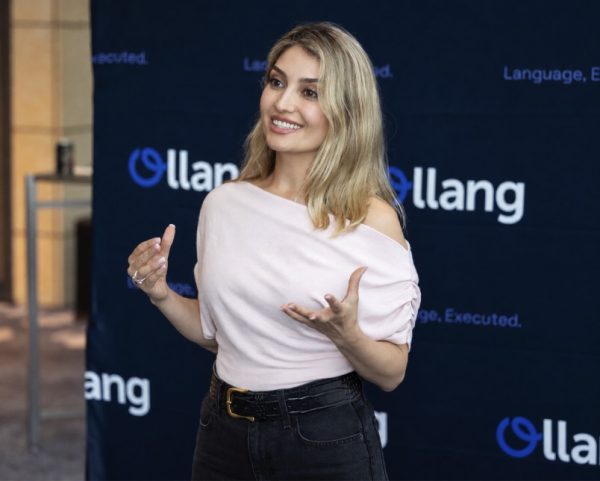
How The Idea For Ollang Came Together
When asked how the idea for Ollang originated, Yıldırım explained:
Ollang came from a problem I had experienced for years. When I was a translator, I was constantly moving between documents, spreadsheets, videos, terminology databases and feedback from different stakeholders. Technology was supposed to make my work easier, but in many cases it made the process more fragmented.
Later, when I was managing localization from the buyer’s side and running my own agency, I saw the same problem at a much larger scale. Companies were spending enormous amounts of time and money coordinating vendors, managing files, checking quality and moving content between disconnected systems. And the problem became exponentially more complicated when you added more languages, more markets and different types of content.
What struck me was that companies didn’t have a translation problem alone. They had an execution problem. When AI began transforming what was technically possible, I saw an opportunity to rebuild the entire process rather than simply make translation faster. That’s why we created Ollang. We wanted to bring AI models, human expertise, quality control and delivery into one intelligent system that companies could connect to their existing technology.
Our belief from day one was that language should never be the reason a company can’t enter a new market, reach a customer or share its knowledge with the world.
What Ollang Does
When asked about Ollang’s technology and the problems it solves for enterprises, Yıldırım explained:
Ollang is the AI execution layer that connects content, AI models and human experts in one system running inside a customer’s existing technology stack. It gives customers including Fortune 500 companies, global media organizations and consumer brands the infrastructure they need to reach new customers in their language and grow worldwide.
Localization has historically been slow and expensive because the work compounds with the scale of the deliverables. Delivering a single video to new audiences isn’t just one task: it requires script, subtitles, voiceover, on-screen graphics and accessibility features, each multiplied by every language. Going from five languages to fifty turns one video into hundreds of deliverables. At that scale the cost is prohibitive, so most companies expand a few languages and markets at a time.
Ollang removes those legacy constraints by working at the infrastructure layer within a company’s existing systems. We call Ollang the AI execution layer because it unifies the disparate tools, vendors and processes of legacy localization into a single multimodal, multi-agent infrastructure.
Video, audio, live content, images, text, documents and websites can all run through Ollang across over 240 languages. The platform handles every step, from AI model selection and translation to terminology enforcement, quality control, human expert review and delivery so companies get production-ready content in every target market.
Human experts stay in the loop because truly production-ready content goes beyond translation to voice and tone, visuals, cultural nuance and accessibility. They make sure every final version resonates with its audience.
My vision with Ollang is to change how companies see localization. When they unify their language operations and treat localization as infrastructure from the start, the process stops being a cost center and becomes a driver of substantial revenue and business growth. With more than 40,000 projects supported across over 25 content formats, Ollang is already driving that shift today.
Core Products And Features
When asked about Ollang’s core products and features, Yıldırım explained:
Our core product is the Ollang platform, an AI language execution layer that transforms content across video, audio, images, text, documents and the web into production-ready output in more than 240 languages.
At the heart of Ollang is our multi-agent AI infrastructure, which orchestrates more than 100 AI models within a single platform. Think of our AI agents as specialized digital knowledge workers. They understand the task, determine which models to use based on quality, speed and cost, and collaborate across different content formats to execute complex workflows from beginning to end.
But generating content is only part of the process. What makes Ollang particularly powerful is our intelligent expert-in-the-loop infrastructure. Our system identifies where human judgment is needed and brings in the right experts, whether that’s a healthcare specialist reviewing medical content, a technical linguist validating product documentation, or a cultural expert ensuring that a campaign resonates in a specific market.
This allows enterprises to automate at scale without sacrificing quality, accuracy or cultural relevance.
The result is not simply faster translation. It’s an end-to-end AI execution infrastructure that enables enterprises to produce, validate and deliver global content with the quality, speed and control their businesses require.
What Differentiates Ollang From Its Competition
When asked what distinguishes Ollang from competing translation and localization platforms, Yıldırım explained:
No company wakes up in the morning thinking, “We need more translations.” They think about how to reach more customers, enter new markets and grow their business yet localization has historically been one of the biggest operational bottlenecks to global growth. Companies create incredible products, campaigns and content, but reaching audiences across different languages and cultures requires coordinating multiple vendors, tools and workflows. That complexity limits how quickly and efficiently they can expand.
What makes Ollang different is that we’re bringing localization and global growth together through one intelligent AI execution platform.
We don’t just generate translations. We orchestrate more than 100 AI models through specialized agents that work together across video, audio, images, text and documents. These agents understand the company’s context, select the right models based on quality, speed and cost, and manage the entire workflow through to production-ready delivery. Human experts are brought in wherever specialized knowledge, cultural judgment or additional quality assurance is needed.
Equally important, Ollang works within the technology ecosystems companies already use. Through integrations with platforms such as TikTok One, Google Drive and Figma, alongside our APIs, SDKs and MCP capabilities, we embed multilingual execution directly into how enterprises create, manage and distribute content. Our customers can build workflows tailored to their products, brand standards and target markets rather than adapting their businesses to another disconnected tool.
This is especially powerful for complex content, from localizing thousands of images and digital assets to producing multilingual video, audio description and technical documentation at scale.
Ultimately, we’re not building another translation tool. We’re building the infrastructure that helps companies make their products, content and experiences available to the world, without language or operational complexity slowing their growth.
Customer Success Stories
When asked about specific customer success stories, Yıldırım highlighted Ollang’s work with Shorten and other enterprise customers:
One of the customer stories I’m proudest of is the impact Ollang made for Shorten, a mobile video streaming platform. Shorten faced a daunting task and needed to localize more than 10,000 short videos, each one to two minutes long, into 11 languages within three months. They needed a scalable, cost-effective solution that could maintain cultural precision and still meet their ambitious release schedule.
Our platform provided closed captions in English and subtitle translations into German, Japanese, Turkish, Russian, Indonesian and other languages. Specialized AI agents handled distinct tasks such as video understanding, cultural adaptation and self-correction, an approach that reduced translation errors by 60% compared to other AI with human-in-the-loop methods.
Shorten was able to localize more than 10,000 videos in three months, meeting its release schedule. They expanded into 11 new markets in that same timeframe, saved 83% on English-to-Japanese localization costs and reduced human effort by an estimated 76%, as measured by post-localization quality assessments.
For me, it shows that high-volume, fast-turnaround localization no longer has to come at the expense of quality or make global expansion financially out of reach.
We’re seeing that kind of positive impact across our customer base. One major enterprise saved $600,000 in its first year after moving its localization to Ollang. These results show what becomes possible when language stops being a bottleneck and starts working as infrastructure.
Challenges In Enterprise AI And Localization
When asked about recent challenges in the localization sector and how Ollang has addressed them, Yıldırım explained:
One of the biggest challenges in enterprise AI today is what I call the last-mile problem: the gap between an impressive AI-generated output and something a business can actually put into production.
AI can produce remarkable results when you’re translating a few pages, generating a short video or creating a single image. But the challenge changes dramatically when you’re localizing a 60-minute television episode, an entire series or a 50-slide training course containing text, video, graphics and audio.
Suddenly, it’s not just about translation accuracy. You need consistency across hundreds of assets, correct terminology, brand voice, cultural nuance, font sizes, layouts and even brand colors. Everything has to work together, and everything has to meet the customer’s standards.
Unlike code, where many errors can be identified through automated tests, language and creative work often involve subjective judgment. There isn’t always one correct answer. What works beautifully for one brand or market may be completely wrong for another. Defining what is good enough for production is often harder than generating the content itself.
That’s the challenge we’ve focused on solving at Ollang.
Rather than relying on a single AI model, we’ve built a model-agnostic, multi-agent execution system that learns and applies each customer’s terminology, brand guidelines, style preferences and quality requirements. Specialized agents handle different tasks, evaluate outputs and coordinate improvements, while human experts step in wherever cultural, creative or technical judgment is necessary.
We’ve seen this approach work across large-scale projects, from localizing thousands of short-form videos into multiple languages to managing complex creative assets that previously required extensive manual coordination.
Another challenge is changing how enterprises think about localization. Traditionally, it’s been treated as a cost center, something that happens after a product or campaign is created. We’re helping companies recognize it as an essential part of their global growth infrastructure.
The biggest lesson for me is that the future of enterprise AI won’t be determined by who can create the most impressive demo. It will be determined by who can turn AI capabilities into reliable, repeatable, production-ready outcomes at scale.
Favorite Memory Working At Ollang
When asked about her favorite memory working at the company, Yıldırım recalled:
There have been so many memorable moments, but one of my favorites was seeing our work on a TV series I personally loved, streaming on one of the world’s largest entertainment platforms.
We had worked on the subtitles, and I remember watching the show with a friend and getting ridiculously excited every time I noticed a particularly good localization. I kept saying, “We did that! That’s our work!” My friend probably heard it at least three times during the episode.
What made me especially proud was seeing how well the cultural nuances, humor and emotions carried across languages. Having started my career as a translator, I know how difficult it is to preserve meaning and make something feel natural to a completely different audience. Seeing our team’s work come to life on a show I genuinely enjoyed was a special moment.
And it happens in different ways all the time. Sometimes I’m scrolling through social media and see a global brand’s campaign or a short video with localized on-screen text. To most people, it looks effortless. But I know how much work goes into making that content feel natural and relevant to audiences in different markets.
What I find most rewarding is how many aspects of everyday life our technology touches. Our customers are educating people about healthcare, training teams in complex industries, sharing knowledge and telling stories that entertain millions. We’re helping them make those experiences accessible to people who might otherwise never encounter them.
Language is fascinating because communicating the right meaning can be challenging even when two people speak the same language. Now imagine doing that across dozens of languages and cultures, at scale.
I’m incredibly proud of what our team has built and, even more importantly, what our customers are able to create with Ollang.
And the exciting part is that I genuinely feel we’re just getting started.
Significant Company Milestones
When asked about Ollang’s most significant milestones, Yıldırım highlighted the company’s relocation to the United States, investor relationships, and enterprise adoption:
Without question, one of our biggest milestones was moving to the United States.
The idea for Ollang started in Türkiye, where my co-founder Aziz and I began building the company, raised our first pre-seed funding and started working on our initial product. We already had customers and a working technology, but moving to San Francisco fundamentally changed our perspective on what we could build and how quickly we could build it.
Being in San Francisco put us closer to some of the world’s most ambitious companies and people solving incredibly complex problems. What struck me most was how openly enterprise leaders shared their challenges and how willing they were to experiment with new technology to solve them. That changed the speed at which we developed our product, shipped new capabilities and learned from customers.
In many ways, that’s where Ollang became the company it is today.
Another major milestone was earning the trust of our first U.S. investors, including Michael Montgomery, and later Zeal Capital Partners and JFF Ventures. Their belief in our vision, alongside their experience and networks, has been incredibly valuable as we’ve built the company.
And of course, seeing some of the world’s largest enterprises across industries like automotive, social media, media and entertainment, and healthcare trust technology we built from scratch has been an extraordinary milestone. These organizations operate at a global scale, with incredibly high standards for quality, security and reliability. Knowing that our technology is becoming part of how they create content, reach new markets and serve customers around the world is something I’m especially proud of.
We’ve built so much from the ground up, from the technology and team to our enterprise relationships and operations. Looking back, the biggest milestone isn’t any single customer or funding round. It’s the transformation from two founders with an idea in Türkiye into a San Francisco-based AI company building infrastructure that some of the world’s leading enterprises trust.
And I believe we’re still in the early chapters of that journey.
Future Company Goals
When asked about Ollang’s future goals, Yıldırım outlined plans to expand the platform’s AI capabilities, integrations, and applications across global industries:
Our long-term vision is to make language infrastructure as fundamental to global business as cloud computing or payments infrastructure.
Today, companies build incredible products, content and experiences in one language, then spend enormous amounts of time and money adapting them for the rest of the world. I believe that model will fundamentally change.
In the future, language execution should be built directly into how businesses create, distribute and manage content. A company should be able to launch a product, publish a video, update technical documentation or run a marketing campaign and make it available to global audiences without rebuilding the process for every market.
We’re focused on three priorities to make that possible.
First, we’re continuing to advance our multi-agent AI infrastructure, including deeper context management, automated quality evaluation and more sophisticated workflows that can execute with less manual intervention while maintaining enterprise control.
Second, we’re expanding our integrations so Ollang can operate directly inside the enterprise systems where content is already created and managed. Our goal is to make language execution a native capability rather than a separate operational process.
Third, I believe we have an enormous opportunity to transform media and entertainment. Hollywood doesn’t have a shortage of great content. It has a challenge turning that content into sustainable revenue and reaching its full global audience. Every day, I see incredible films, television series and stories that could resonate with millions more people but remain inaccessible because of language, cultural and distribution barriers.
I genuinely believe AI-powered language infrastructure can help revitalize the entertainment industry by making global distribution economically viable for far more content. Imagine a world where a great story created anywhere can find its audience everywhere, regardless of its original language or production budget. That’s an extraordinary opportunity, not just for major studios and streaming platforms, but for independent creators as well.
And that same principle applies to enterprise learning, global marketing, healthcare and technical content. The opportunity isn’t simply to produce more localized content. It’s to unlock the economic value of what companies have already created and help them generate new revenue from markets they couldn’t previously reach.
This is also how we’re thinking about Ollang’s own growth. We’re building a business where our success is increasingly connected to the value we create for customers: helping them expand into new markets, reach new audiences and grow their businesses.
As AI models become more capable, we’ll continue expanding the complexity, scale and languages our infrastructure can support.
Ultimately, I want companies to stop asking, “How much will it cost to localize this for another market?” and start asking, “How much more could we grow if language were no longer a barrier?”
The Future Of Language Professionals And Localization Teams
Yıldırım concluded by discussing how AI is reshaping the role of language and localization professionals:
One topic I believe deserves more attention is how AI will redefine the role of language professionals and localization teams.
There’s a common assumption that advances in AI translation will eventually make language expertise less relevant. I see the opposite happening.
AI is making language generation increasingly accessible, but the need for cultural understanding, context, brand consistency, and quality judgment is becoming more important as companies produce content at unprecedented scale.
The role of the localization professional is evolving from manually managing translation tasks to defining quality standards, governing intelligent workflows, and helping companies make decisions about global markets.
I also believe this creates an opportunity for the industry itself. Localization leaders have historically been responsible for managing costs and delivery. With the right infrastructure, they can become strategic partners in international growth. I find that transformation particularly meaningful because I started my career as a translator.
We’re not just changing how language work gets done. We’re helping redefine its value to global business.
