

Omnea is an agentic operating system that connects company systems, automates procurement and supplier-management workflows, and gives humans and AI agents one place to manage suppliers and control spending. Pulse 2.0 interviewed Omnea Founder and CEO Ben Freeman to learn more.
Ben Freeman’s Background

When asked about his professional background and the experiences that shaped him as an entrepreneur, Freeman said:
Before Omnea, I spent four and a half years at Tessian, an AI cybersecurity company. I joined the early team before the seed round and later moved to New York to build out the U.S. business. By the time I left, we’d grown to a few hundred people and raised over $130 million from investors like Sequoia, Accel, and Balderton. That was my first real exposure to venture-backed technology, as I knew nothing going in.
Before Tessian, I did a very brief stint in investment banking at Lazard. I was a lousy banker, honestly, and it mostly taught me that entrepreneurship was what excited me and that I’d rather compete in that world.
My first proper business was a bootstrapped events company in Manchester, where I’m from. Festivals, gigs, student nights. I dropped out of university for it. It was a completely different game, but a very gritty journey and probably what shaped me the most as an entrepreneur, as it’s much harder to build in tough markets where there isn’t any venture money.
How Omnea Started
When discussing how the idea for Omnea came together, Freeman explained:
There’s a polished version of this story where it all fits together perfectly. The truth is messier. I learned about procurement by accident at Tessian. We sold to the world’s leading investment banks, law firms, and technology companies, the kind of organizations you’d assume have their processes nailed.
But the truth is that procurement teams on the other side didn’t stand a chance. Someone in the business throws a request over the fence, and they’re expected to negotiate and onboard a supplier at speed with no leverage and clunky, dated tools. They were destined to have a bad reputation, and it wasn’t their fault.
Back in 2019, I became slightly obsessed with price discrepancies in SaaS: the same software selling at wildly different prices depending on who negotiated and how. I nearly left Tessian to build a company around that, but I couldn’t fully get behind it as a market. Over the following period, I did around 300 user interviews.
I actually started with CIOs and realized I was building for the wrong people, so I went back to procurement leaders. Three things clicked:
- SaaS is just one category of spend, and the others matter just as much, so a point solution made no sense.
- It’s not only a money issue. Risk and governance matter as much as savings nowadays.
- It’s a horizontal problem. You can’t solve procurement just for procurement people; you have to solve it for all the other stakeholders, including employees requesting things, legal, IT, information security, and finance.
The final piece was pattern recognition from cybersecurity. In 2017, GDPR put information security in the spotlight, and the CISO role went from an afterthought to the boardroom. I could see exactly the same elevation coming for procurement and the CPO. Once I saw that, coupled with the opportunity to build a totally different product using AI, I knew the timing was right for Omnea.
Launching With The First Customer
When asked about his favorite memory from working at Omnea, Freeman recalled:
Going live with our first customer. We were patient while building the platform, which broke a lot of the standard startup rules. We weren’t first to market, so we had to be best in the market, and we were shipping to highly regulated enterprises where you can’t cut corners.
In the meantime, people had quit good jobs to join us, so it simply had to work. We put our usage metrics up on a screen in the office and watched the first requests come through, which was a special moment.
That customer later invited us to present at its company town hall about its procurement transformation. Hearing its employees talk about why they were excited justified every month we’d spent building before we shipped.
Core Products And Features
When describing Omnea’s core products and features, Freeman detailed:
Omnea is the agentic operating system for procurement and supplier management. We connect a company’s systems, automate workflows, and give humans and agents one place to manage suppliers and control spend.
In plain terms, for every large or fast-growing company, there comes a point where managing spend breaks down, even with an enterprise resource planning system or legacy procure-to-pay platform in place. Requesters bypass procurement, vendors get duplicated, contracts get signed by people who shouldn’t be signing them, renewals happen by accident, and nobody has actionable visibility into their suppliers.
The deeper problems underneath all of that are poor data handling and a lack of adoption. You can’t automate chaos.
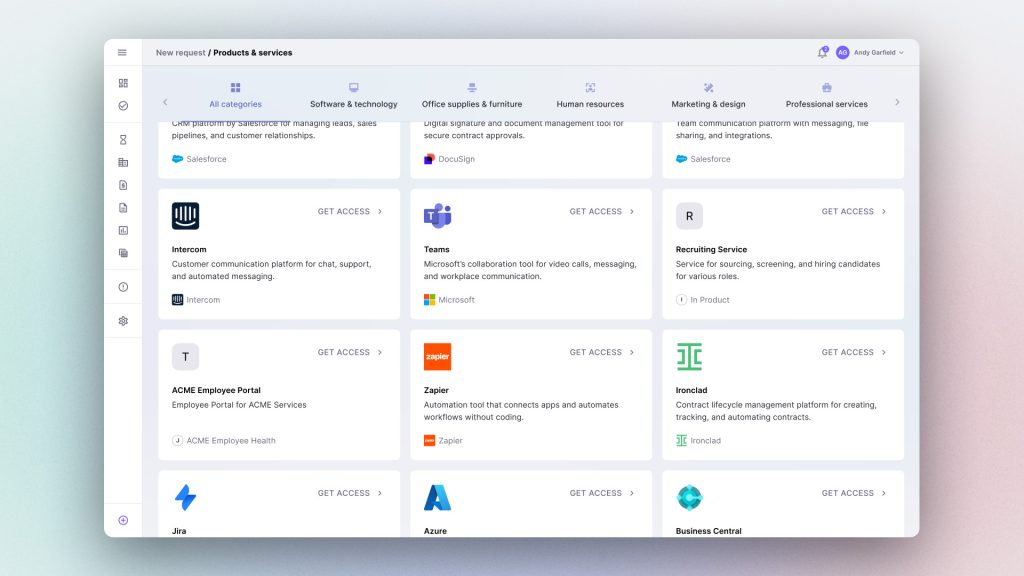
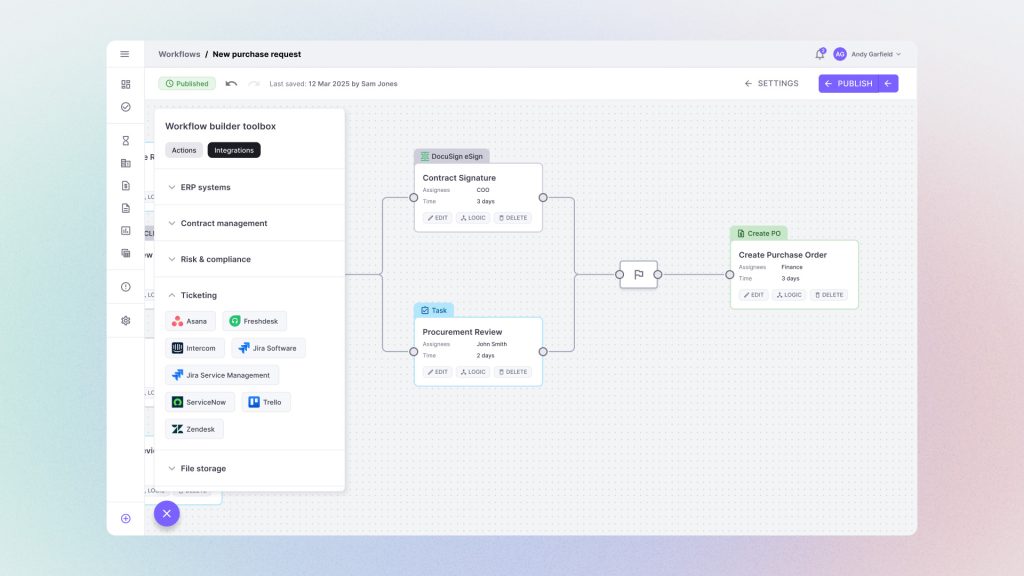
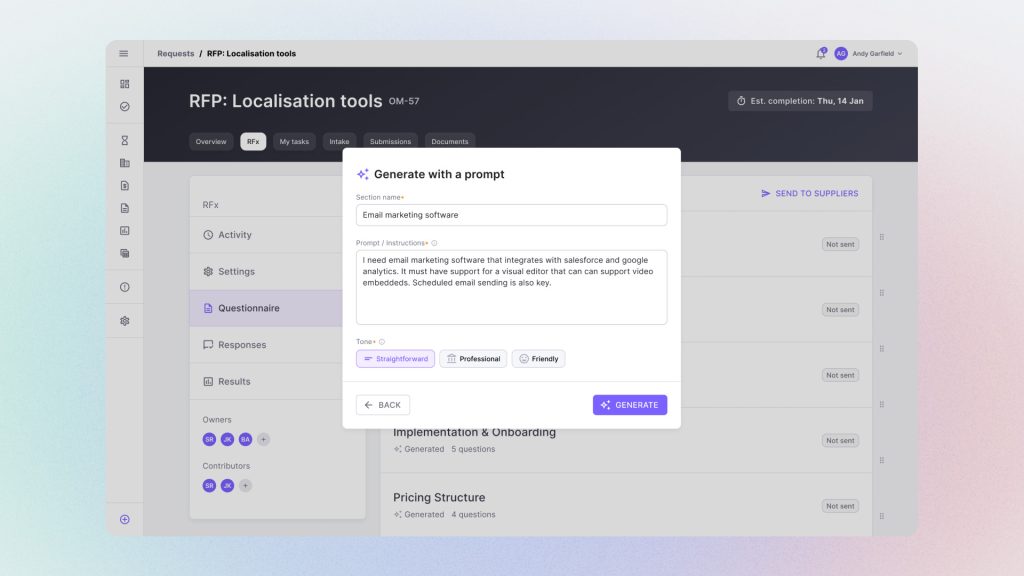
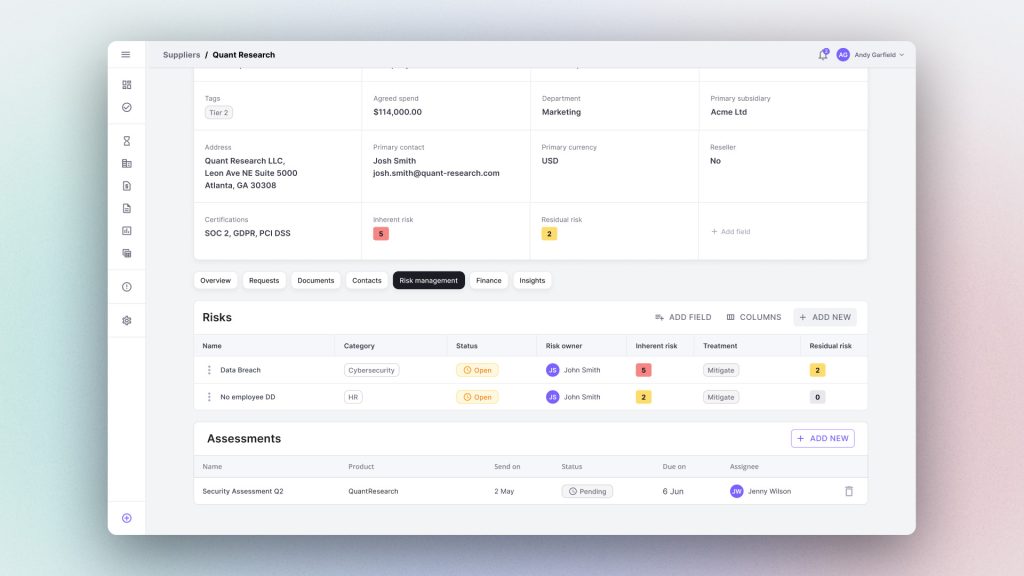
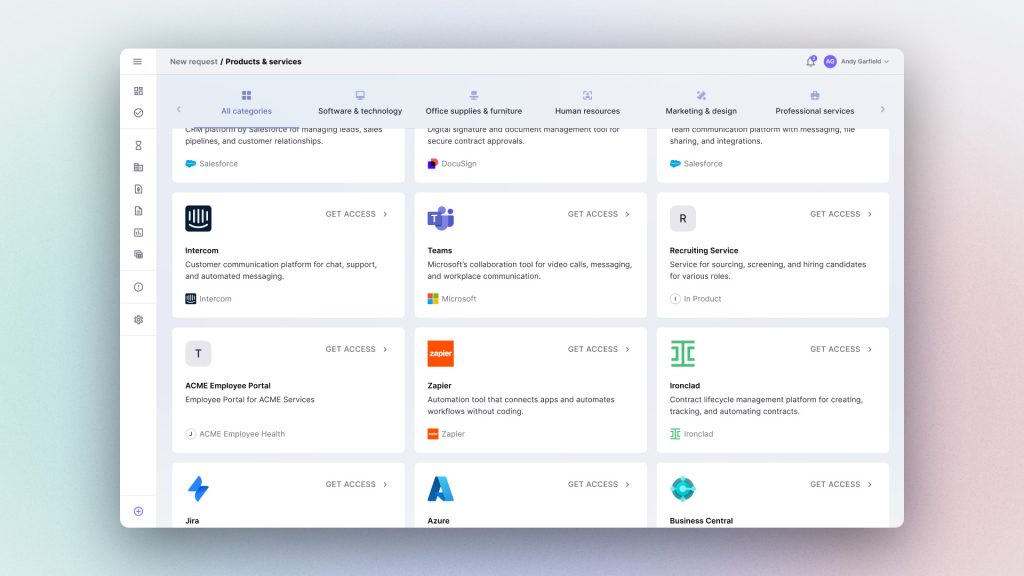
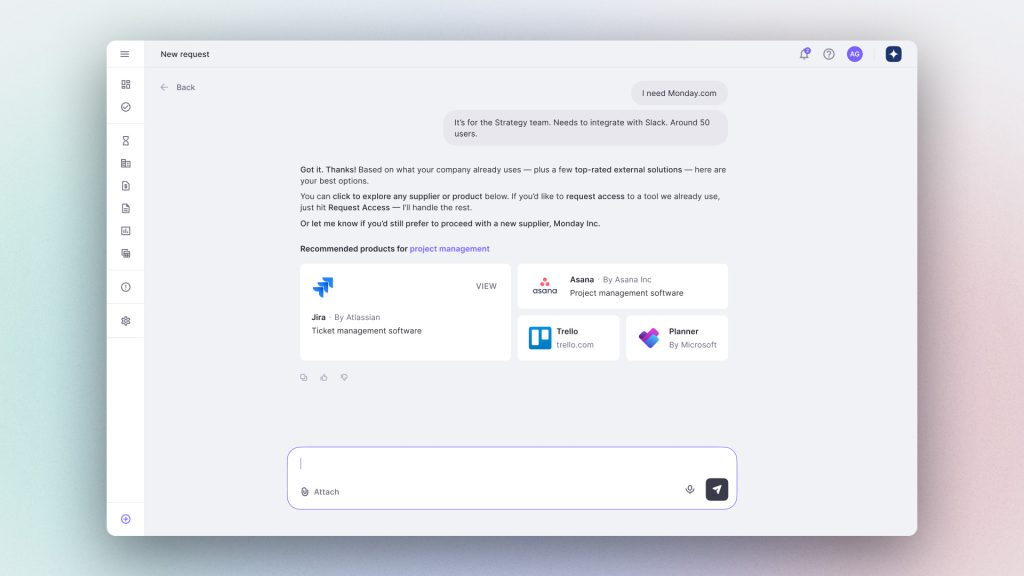
So Omnea fixes the foundation, automates the process across every system and team, and builds intelligence into it. Concretely, that means conversational intake embedded where people already work, whether that’s Claude, ChatGPT, Teams, or Slack; a no-code workflow engine that procurement teams can adapt themselves; an enriched supplier repository, a bit like Salesforce for your suppliers; renewals automation; and autonomous sourcing and third-party risk management, all in one place.
And because every request, approval, and risk decision feeds back into the same system, the agents deployed throughout get smarter over time rather than starting from scratch with every request.
Maintaining Talent Density
When asked about the challenges Omnea has faced and how the company has addressed them, Freeman noted:
Talent density is probably the area that is the most challenging. We interviewed over 10,000 people for our first 50 or so roles, and I am still involved in every hiring process in some way, which at our current pace is a real capacity constraint.
We’re deliberately fussy about mutual fit. I’m happy for us to spend more than 10 hours with a candidate and conclude that Omnea isn’t the right chapter for their career, explain why, and sometimes point them toward other companies.
The honest cost of that is speed. We’ve been slower to hire than we would have liked, and I’m more comfortable missing a hiring target than dropping the bar, if I have to choose one, because a slightly smaller business with a strong foundation beats the alternative.
How do we overcome it? Partly by playing it long. Plenty of people at Omnea joined on their second or third attempt when the right role came up, so we stay in touch.
And partly by making the equation work for the people we want. We over-index on equity, and nearly everyone in a senior role is a player-coach, so great people get real ownership rather than layers of management above them.
Technology Evolution
When discussing how Omnea’s technology has evolved since its launch, Freeman described:
The simplest way to describe it is that we’ve built outward. We started with the employee experience, sitting on top of a data layer we were obsessive about from day one.
We weren’t first to market, so we had to be best in the market, and a lot of that involved doing the boring things well: structuring supplier data at the agreement level so every agreement carries its own contract, spend, risk, and renewal information, while a supplier brings all its agreements together in one view.
From that base, we built into the specialisms. Third-party risk management came first because, when we looked at the market, nobody great at third-party risk management was good at procurement, and nobody great at procurement was good at third-party risk management. Then came sourcing, which increasingly runs autonomously.
All the while, we’ve been deepening the agentic capability and integrations, and this is where the early focus on data paid off. You can’t automate chaos.
Our agents run on clean, structured data, and every action a customer takes on the platform makes them more intelligent for that customer. The intelligence compounds rather than starting from scratch with every request.
That’s the journey to what Omnea is today: the agentic operating system for procurement and supplier management, one place where humans and agents manage suppliers and control spend, connected to the rest of the technology stack.
Major Company Milestones
When asked about Omnea’s most significant milestones, Freeman shared:
We’re at the stage where things are moving fast enough that milestones come almost constantly, and they start to blur. The latest development we announced is that we tripled revenue in the past 12 months following a 5x year before that. We’re also now around 200 people across our London and New York offices.
The milestone I’d actually pick out is the Future Founders Fund, which we recently launched in partnership with Firedrop. Anyone who has been at Omnea for five years can pitch the fund once and walk away with $250,000 in seed funding to start their own business.
It’s open to any venture-backable business; there’s no cap on how many founders we back each year, and recipients also get workspace, operational support, and coaching from our executive team and Firedrop’s network.
Customer Success Story
When invited to share a customer success story, Freeman explained:
You can find plenty of case studies on our website, but a more personal one that stuck with me was an early executive business review. A new CFO had joined one of our early customers and inherited a maturing procurement function that had already purchased Omnea.
The CFO told us openly that they hadn’t seen the value of procurement at their previous companies. We knew the procurement team had an uphill battle for recognition, so we invited the CFO, along with the heads of legal, IT, and procurement, and walked through the results: hours saved in the first six months, dollars saved, the change in renewals that were now proactively managed, and direct feedback from users.
They’ve since become one of our biggest champions and have spoken at our events. What made it matter was watching a procurement leader finally get the recognition they deserved. That’s the whole point of the company.
$75 Million In Funding
When asked about Omnea’s funding and revenue metrics, Freeman specified:
We’ve raised $75 million in total, and our latest round was a Series B led by Insight Partners and Khosla Ventures. We don’t disclose revenue, but I can say that we continue to more than triple every 12 months while remaining highly efficient.
Market Opportunity
When discussing the total addressable market Omnea is pursuing, Freeman stated:
It’s nearly limitless. Every company buys things from other companies, so the market is about as horizontal as it gets.
Procurement is also historically countercyclical, and it’s now being treated as a strategic growth driver. Companies want more influence over their spending, better control of their risk, or simply to move faster at a time when you’re disproportionately rewarded for adopting new technology more quickly than your competitors.
There is no lack of space in this market. We serve companies in every segment, from banks and retailers to technology companies and everything in between.
Competitive Differentiation
When asked what differentiates Omnea from its competition, Freeman concluded:
Everything starts with user experience. When the experience is great, adoption is great, and adoption is what unlocks everything else, from visibility into spending to control of risk.
Most providers fix intake for one stakeholder or build it only inside their own platform, which means the requester still has to come to procurement. We meet people where they already work, so raising a request happens in Teams, Slack, Claude, or ChatGPT rather than in another system they have to learn.
And large enterprises don’t necessarily want to rip out their procure-to-pay systems. They want the best layer connecting their existing technology stack, which is what we’ve built.
The second differentiator is how we’ve approached AI. A lot of this market is shipping agents for the sake of it, and one bad output means users stop trusting the whole thing.
We’ve gone the other way. Omnea’s AI learns from your own data and the actions your teams take on the platform. Every approval or rejection, every risk score, and every price benchmark makes it more intelligent for you, so the intelligence compounds over time rather than treating your data as a snapshot.
