PADO AI is an intelligent energy orchestration platform designed to help data centers maximize compute and productivity through real-time management of cooling, compute, power, storage, and grid resources. The company spun out of LG NOVA in May 2025 and operates independently while drawing on LG Electronics’ infrastructure and global capabilities. Pulse 2.0 interviewed PADO AI Founder and CEO Wannie Park to learn more about data center energy management, AI infrastructure, grid flexibility, and the company’s growth strategy.
Wannie Park’s Background
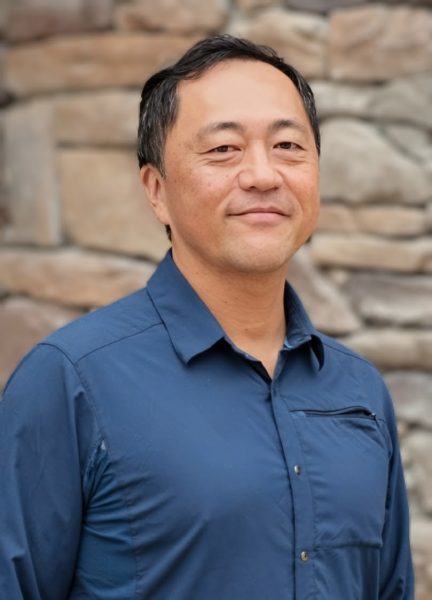

When asked about his background, Park shared:
I’ve spent more than 25 years building and growing companies across energy, IoT, and SaaS, with a focus on cleantech and sustainability.
Along the way, I’ve helped scale several companies through periods of major growth, leading to three successful exits.
Before founding PADO AI, I was SVP of Business and Corporate Development at Bidgely, where I focused on growth and strategic partnerships for the company’s AI-powered energy platform.
Before that, I served as CEO of Zen Ecosystems, which provided energy management solutions for small and mid-sized businesses, and also held leadership roles at Inspire Energy, a renewable energy and sustainability company.
I joined LG Electronics in September 2024 to help grow the company’s SaaS and software strategy focused on the energy transition.
Eventually, PADO AI spun out of LG NOVA in May 2025.
Today, my role is really focused on shaping the company’s vision and growth strategy, from product direction and partnerships to fundraising and helping customers navigate the increasingly complex energy landscape.
At the core of it all, our mission is to help data centers maximize utilization of the infrastructure that exists, become more energy independent and resilient to sustainably meet the compute and energy demands of AI.
How PADO AI Started
When asked how the idea for the company came together, Park explained:
The idea for PADO AI really came together through my work at LG Electronics and seeing firsthand where the energy transition is headed, especially when it comes to large commercial customers like data centers.
LG has a strong foundation in hardware, from battery storage to commercial HVAC and cooling systems, but there was also a huge opportunity to build the software layer that could intelligently manage those assets and make them work together more efficiently.
During this time at LG, we started to think about how to create a more vertically integrated solution for commercial energy users.
Data centers in particular are facing the most demanding power and resiliency challenges, and we saw an opportunity to combine intelligent software with LG’s infrastructure and global cloud capabilities to help customers better manage energy costs, improve uptime and operate more sustainably.
That ultimately led to PADO AI being born, spun out of LG NOVA in May 2025.
PADO operates independently and has the autonomy to move quickly, innovate and make decisions like a startup.
It’s somewhat of an unconventional model, but one that gives us the backing and scale of a global company while still maintaining the scrappiness needed to build in a fast-moving market.
Favorite Memory
When asked about his favorite memory working for the company so far, Park said:
We celebrated our first year of operations on May 28, 2026.
During this first year, we had our first company offsite in November 2025 at our six-month mark.
One of the key tenets on how the team was expected to show up for our first offsite was to be a Corporate Artist.
As we put on our Corporate Artist hat, I was humbled by the incredible team we assembled, who are both mission-driven and incredible operators.
Whether it was how we would use AI to solve the AI growth blockers or how we would never lose sight of sustainability when it comes to being part of the AI/DC hockey stick, I feel like we made good decisions.
This culminated in taking company headshots in subzero temperatures on a mountain in West Virginia.
Core Products And Features
When asked about PADO AI’s core products and features, Park detailed:
At its core, PADO AI is an intelligent energy orchestration platform designed to help data centers maximize compute and productivity through real-time management of cooling, compute and grid.
Our platform brings together different parts of a facility’s infrastructure, including power systems, cooling equipment and operational data, into one centralized system to give operators a clearer picture of how their facilities are performing and help them make faster, smarter decisions.
As AI continues to grow, traditional “first in, first out” approaches to handling AI workloads need more intelligence.
That’s where PADO comes in: AI- and machine learning-driven orchestration enables intelligent workload shifting to maximize compute, improve job scheduling, and enhance workload placement in real time.
Our software also supports precision cooling by directing workloads to areas with available thermal headroom, while enabling DER monetization through optimized battery storage systems usage during high-price energy events.
Additionally, automated carbon credit reporting and grid stability metrics help organizations align with ESG goals and evolving regulatory requirements.
Ultimately, PADO helps operators identify where workloads can be shifted, delayed or redistributed to reduce strain on infrastructure and lower energy costs while increasing compute, all within the same power limitations and without building anything new.
As the headlines read “build, build, build,” we are looking at unlocking the power these facilities already have but aren’t using.
Bridging Data Centers And Utilities
When asked about recent challenges in the sector and how PADO AI has addressed them, Park explained:
My team has deep experience marketing to and working with utilities.
In a simplified view, PADO sits between the utility and the data centers.
We are a firm believer that data centers should be grid-connected.
Given how divergent the DC vs Utility view is on time to power and grid connection, e.g. going behind the meter, providing flexibility, we struggle to help utilities and our clients bridge that gap.
With that in mind, we joined EPRI’s DC Flex to help bridge that gap with technology, policy and arbitration with the intent of delivering a repeatable, scalable blueprint for DC development as well as retrofits.
How The Technology Has Evolved
When asked how PADO AI’s technology has evolved since launching, Park said:
Early on, our focus was largely around helping commercial and industrial facilities better understand and manage energy usage through real-time monitoring, forecasting and optimization.
But as the market evolved and the AI boom spurred increasing pressure on the grid, we naturally jumped on the much bigger opportunity around data centers.
We expanded beyond traditional energy management into maximizing GPU performance by evaluating and managing AI workloads through an energy and cooling lens by actively helping them coordinate power, cooling, battery storage and compute workloads together in real time.
Our platform has become more predictive and automated over time, leveraging AI and machine learning capabilities to help operators get more computing capacity out of their existing infrastructure.
We’ve moved toward more open and integrated systems to work with existing infrastructure rather than requiring customers to overhaul their systems, which has allowed us to expand our integrations and open API capabilities so customers can connect to their systems, equipment, and grid data in one unified platform.
Key Company Milestones
When asked about some of PADO AI’s most significant milestones, Park highlighted:
We rounded out PADO’s first year in May, and we’re so proud of the milestones we’ve accomplished in the last 12 months.
In March, we announced the close of a $6 million Seed Round led by NovaWave Capital, an LG NOVA-supported fund.
This was a major validation point for both our technology and the market opportunity we’re addressing around AI infrastructure and data center energy management.
We’re using the funding to accelerate the delivery of our orchestration platform, which will help enterprise customers, channel partners, and mid-market colocation data centers scale AI workloads efficiently, operate within existing power constraints, and improve profitability.
We’ve also hit major milestones with energy partners, including working with VESSL to introduce the industry’s first energy-oriented MLOps workflow, and joining EPRI’s DCFlex initiative along with other stakeholders to find flexibility solutions for data centers.
Total Addressable Market
When asked about the total addressable market PADO AI is pursuing, Park explained:
Loosely, in 2026, I break it down as:
- Data Center Colocation Market: approximately $84 billion
- Data Center Power Management: approximately $16 billion
- Data Center Facility Automation: approximately $16 billion
Competitive Differentiation
When asked what differentiates PADO AI from its competition, Park said:
At a high level, everyone in this space is trying to solve the same problem: how to help data centers handle rapidly growing AI workloads without overwhelming power infrastructure.
But where we differentiate is how deeply we integrate software with the physical infrastructure inside the facility.
Other companies are focused primarily on workload orchestration or energy optimization from the software side, but we also get the advantage of deep hardware and infrastructure expertise through LG Electronics.
LG already is a leader in commercial HVAC and energy storage, letting us take a much more integrated approach across cooling, storage, power and compute instead of treating them as separate systems.
There is also a lot of conversation around futuristic concepts or long-term infrastructure buildouts, but we are building a platform that can have an immediate impact today.
By focusing on helping operators optimize the infrastructure they already have, we can improve efficiency, resilience, and compute capacity without waiting years for new grid connections or entirely new facilities.
From a market perspective, we separate ourselves once again from our ties to LG and their global scale.
We’re positioned to expand aggressively outside of North America, particularly in regions like Asia, the Middle East, Africa and South Africa, where energy and AI infrastructure demand is growing quickly.
Future Goals
When discussing PADO AI’s future goals, Park concluded:
Our future goals are centered on making data centers more efficient and more sustainable, while also expanding our footprint internationally, specifically across APAC and the GCC.
We want to continue to add more flexibility into data centers at scale so operators can improve time-to-power, including developing a repeatable “bridge power” plan to keep projects from getting stranded behind the meter.

