

Interview was originally conducted in December 11, 2025.
Phoenix Energy is a U.S.-based energy company founded in 2019, specializing in acquiring mineral rights, non-operating working interests, and oil & gas production across North America. Pulse 2.0 interviewed Phoenix Energy’s CEO, Adam Ferrari, to gain a deeper understanding of the company.
Adam Ferrari’s Background
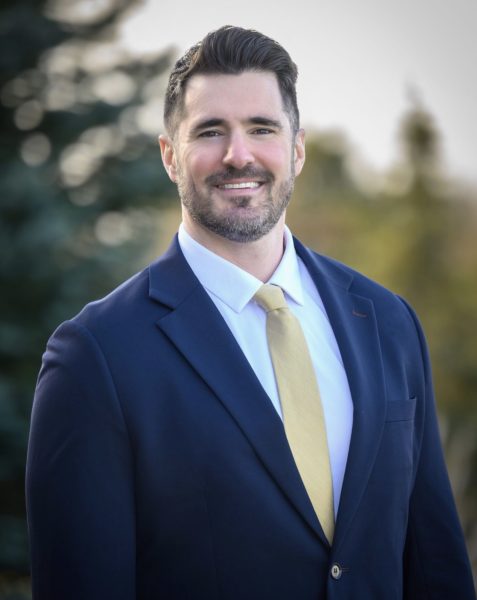
Could you tell me more about your professional background? Ferrari said:
“Yeah, absolutely. I’m a chemical engineer by training. I graduated from the University of Illinois at Urbana-Champaign, and I’ve always been drawn to tough technical challenges.”
“I started my career working for BP in the deepwater Gulf of Mexico, doing completions and production engineering on some of the most complex wells in the world. That experience taught me how critical it is to get the details right because there’s no margin for error when you’re 20,000 feet below the seafloor.”
“Later, I moved into investment banking at Macquarie Capital, where I focused on oil and gas deals. That’s where I started seeing how disconnected financial capital had become from the underlying asset value. I saw good projects get passed up for political reasons, and I saw bad projects get funded because of who you knew. That disconnect stuck with me and ultimately pushed me to build something different.”
“After gaining experience on the financial services side of the oil and gas industry, I transitioned back to the operating side with then-start-up Halcón Resources Corporation where I supported various exploration and development programs in the broader Gulf Coast region and the Bakken in North Dakota.”
“My professional experiences gave me a pretty unique perspective. I’d seen how the engineering side worked, how capital flowed, and how decisions were made — or not made — depending on who was in the room. Over time, I started thinking: there’s got to be a better way to connect good assets with smart capital. That’s what led me to start building what eventually became Phoenix Energy.”
Formation Of Phoenix Energy
How did the idea for the company come together? Ferrari shared:
“It started with a simple question: Why can’t regular people invest in energy companies the way institutions do? Following my time at Halcón, I pursued more entrepreneurial opportunities and took my first steps in energy investing by acquiring minerals, which gave me firsthand insight into the upstream value chain. We were just trying to find good properties and build some income, but the more deals I did, the more I realized that there was a massive gap between the assets and the capital. Wall Street had built a machine that served itself more than the actual operators or landowners. That gap between good assets and accessible capital is what sparked the idea.”
“Phoenix Energy, originally called Phoenix Capital Group Holdings, was founded in 2019 through funding from my family. Initially I acted as an advisor prior to assuming other roles before becoming the CEO. The vision was to provide investors — including regular people, not just the ultra-wealthy — with access to income-producing energy projects. The Company raised capital directly from individual investors, started with minerals, and then gradually transitioned into drilling and operating wells in late 2023. We didn’t try to be flashy. We just worked hard, stayed focused, and made smart choices. And today, we’re a publicly traded oil and gas company with significant operating activity and mineral interests across the Williston Basin.”
Favorite Memory
What has been your favorite memory of Phoenix Energy so far? Ferrari reflected:
“There have been a lot of great moments, but I’d say the one that stands out most was watching oil flow from our first operated pad. I was on-site with the team in North Dakota. It was freezing cold, and we were all exhausted, but we had finally completed our first set of three-mile horizontals. I remember watching the pressure gauges and seeing that production data come in, and knowing it was ours. We weren’t just partnering with other operators anymore; we were the operator.”
“For me, that was a turning point. All the work we’d done over the years — building our team, raising capital — it all came together at that moment. It made it real.”
Core Products
What are the company’s core products and features? Ferrari explained:
“We don’t offer a ‘product’ in the traditional sense. What we offer is the opportunity for investors to invest in our corporate bonds, the capital from which supports the work we’re doing as a company both in terms of financing our drilling and exploration operations and our purchase of mineral rights and non-operated working interests. Phoenix Energy is actively operating real American energy assets—we’re not just collecting royalty checks. We’re in the field, managing acreage, drilling wells, and optimizing production. That’s what we do every day, and it’s the business that supports our ability to meet our obligations to investors.’”
“The way we’ve structured the business is significant, too. We operate across three verticals — mineral rights, non-operated working interests, and operated wells — which gives us a lot of flexibility. If the best return for the company is to hold minerals and earn royalties, that’s what we do. If it makes more sense to drill, we’ll put a rig in the ground. We’re not tied to one narrow strategy, and I think that’s been a huge part of our growth. We’re always looking at where the economics are strongest and deploying capital accordingly. It’s a very hands-on business.”
Challenges Faced
Have you faced any challenges in your sector recently, and how did you overcome them? Ferrari acknowledged:
“All the time. That’s the nature of this industry.”
“One of the biggest challenges we’ve faced is federal land uncertainty. There’s a lot of red tape and shifting rules depending on who’s in office. We’ve learned not to bet the whole farm on one regulatory outcome. Instead, we diversify across privately held acreage, mineral interests, and different basins to keep ourselves moving.”
“Another challenge is managing capital during volatile oil pricing. We don’t try to guess where oil is going next quarter; we just make sure our projects can survive a downturn and still thrive when things turn around. That’s why our wells are designed to pay back quickly and produce for decades. It’s also why we’ve invested in technology that lets us react fast and we hedge some of our oil production against oil price decline.”
Evolution Of The Company’s Technology
How has the company’s technology evolved since launching? Ferrari noted:
“It’s changed a lot. When the company started, the team were just using spreadsheets and local data. Today, the company has built out a full proprietary acquisition platform that lets us scan, grade, and prioritize deals in real-time. We believe that we know how approximately many barrels are underground, when those barrels are likely to be produced, and what kind of return profile we can expect from investing in the asset.”
“On the operational side, we’ve embraced advanced completion techniques, pad optimization, and real-time monitoring of production. That’s how we’ve drilled some of the fastest laterals in North Dakota — we’re constantly improving based on data, not just experience. We try to make every well we drill better than the last one by applying what we’ve learned every day and constantly striving to improve and optimize production generally.”
Significant Milestones
What have been some of the company’s most significant milestones? Ferrari cited:
“There are a few milestones we are especially proud of. One of them is raising over 700 million in capital directly from individual investors. That kind of grassroots funding approach is still uncommon in the energy sector.”
“Second, drilling the fastest-ever three-mile horizontal in the Williston Basin. That wasn’t just luck. It was the result of a great team, good planning, and smart execution.”
“Third, scaling from a mineral buyer into a full-cycle operator. We now manage thousands of wells, run our own pads, and control the timeline and cost structure of our developments. That’s a huge leap, and it happened because we stayed disciplined.”
“And most recently, becoming a publicly traded company when our Series A preferred shares were listed on the NYSE American earlier this year. That step added another layer of transparency and accountability — and it positions us to pursue long-term growth with a broader investor base behind us.”
Customer Success Stories
When asking Ferrari about customer success stories, he highlighted:
“Yeah, there’s one that really stuck with me. We worked with a family in Montana that had inherited mineral rights they didn’t even know were valuable. They were going through a tough financial time — debts were piling up, and they were close to losing the land — but we helped them understand what they owned, made a fair offer, and closed the deal quickly. That money helped them save their ranch.”
“It’s easy to forget in this business that behind every deal, there’s a real person. For us, those relationships matter just as much as the numbers.”
Revenue/Funding
Are you able to discuss funding and/or revenue metrics? Ferrari revealed:
“We’re producing around 35,000 barrels per day as of November 2025. Our portfolio includes interests in over 7,000 gross wells across nine states, and we’ve got another 96 wells coming online over the next twelve months.”
“That growth didn’t happen by accident. We’ve been disciplined about how we scale, where we deploy capital, and how we manage risk. We’re not trying to be the biggest; we’re trying to be the most efficient and well-run.”
Total Addressable Market
What total addressable market (TAM) size is the company pursuing? Ferrari assessed:
“We’re focused on U.S. oil and gas, and specifically on high-quality acreage that produces strong near-term cash flow. That’s a multi-billion-dollar market just in the Williston Basin alone, and much larger when you include places like the Powder River Basin and Permian.”
“But we’re not chasing TAM for the sake of it. We care about opportunities where we can control the asset, improve performance, and extract value for the long term.”
Differentiation From The Competition
What differentiates the company from its competition? Ferrari affirmed:
“We’re not trying to flip this business. That alone puts us in a different category.”
“We’ve also built a model that lets us do more than just drill. We can buy minerals, participate in other people’s wells, or operate our own. As I noted earlier, that kind of flexibility is rare.”
“And we’re transparent. We talk to our investors. We explain what we’re doing and why. You don’t get that level of access with most oil and gas deals.”
Future Company Goals
What are some of the company’s future goals? Ferrari emphasized:
“We’re on track to hit 40,000 barrels per day. Beyond that, we’re expanding our footprint, bringing in our second full-time rig, and drilling 60+ wells in the next 12 months.”
“But more important than scale is sustainability. We want to be the kind of company that survives through cycles, delivers on its word, and builds real value for everyone involved. That’s what drives me every day.”
Additional Thoughts
Any other topics you’d like to discuss? Ferrari concluded:
“Energy’s more complicated than most people realize. Oil and gas often get politicized, and people forget that hydrocarbons power just about everything in their daily lives. Even things like solar panels and electric vehicles depend on oil-based materials to exist in the first place. The demand for all forms of energy has never been higher, and it continues to increase.”
“My message is simple: let’s have a more honest conversation about energy.”
“At Phoenix, we’re not anti-renewable — we’re pro-reality. We believe in producing American energy the right way, with a smarter, more disciplined approach. And we’re just getting started.”
This article contains forward-looking statements based on our current expectations, assumptions, and beliefs about future events and market conditions. These statements, identifiable by terms such as “anticipate,” “believe,” “intend,” “may,” “expect,” “plan,” “should,” and similar expressions, involve risks and uncertainties that could cause actual results to differ materially. Factors that may impact these outcomes include changes in market conditions, regulatory developments, operational performance, and other risks described in our filings with the U.S. Securities and Exchange Commission. Forward-looking statements are not guarantees of future performance, and Phoenix Energy undertakes no obligation to update them except as required by law
