

Polyverse Entertainment is an AI-native app development platform that builds popular social entertainment and creative generative AI applications such as AI Mirror. Pulse 2.0 interviewed Polyverse co-founder and CEO Queena Qiu to learn more.
Queena Qiu’s Background
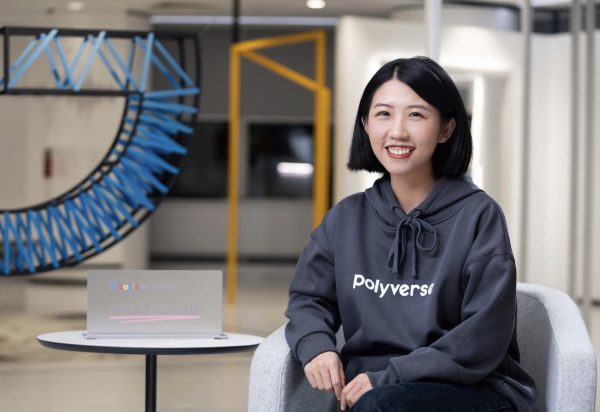
Could you tell me more about your background? Qiu said:
“My career has always been about scaling technologies that change how people interact with digital content. I graduated from university at 20 and began my career at Apple, where I was one of the youngest employees involved in the global launch of Apple Music and the rollout of Apple Media Services in China. I completed my bachelor’s degree while at Apple and later earned my MBA from Tsinghua University and MIT while working full-time at ByteDance, where I helped fuel TikTok’s international growth. Those years at the two biggest content and ecosystem giants provided the blueprint for how I build products at Polyverse Studio today.”
Formation Of The Company
How did the idea for the company come together? Qiu shared:
“While working at the forefront of mobile ecosystems, I saw a massive gap between professional content creation and the average user’s imagination. The tools existed, but they required expertise most people didn’t have. We realized that AI could be the great equalizer, closing the gap between top artists and casual creators. Polyverse was founded to bridge that divide by transforming complex AI models into intuitive, magical tools that allow anyone to express their creativity without technical barriers.”
Favorite Memory
What has been your favorite memory working for the company so far? Qiu reflected:
“The moment we realized we had truly gone global. Seeing AI Mirror climb the charts in dozens of different countries simultaneously—realizing that our aesthetic and tech resonated from Tokyo to New York—was a powerful validation of our universal design language. What really moved me was seeing tens of millions of users, not just tech enthusiasts but regular people, sharing AI-generated avatars and art that they felt truly represented them. We’re seeing people take the first step toward becoming artists and building large social followings. Casual creators are becoming the next generation of influencers and artists. That turned our technical hypothesis into a human reality.”
Core Products
What are the company’s core products and features? Qiu explained:
“Our ecosystem is built on two pillars:
AI Mirror: A powerhouse in the creative space and our flagship app. It’s an intuitive mobile application that uses advanced visual synthesis to turn photos into stylized art, ranging from anime to realistic portraits. Users have created more than 1.7 billion images with features like restoration, filters, enhancements, and background tools. It was one of the top downloaded apps in the Photo category on both App Store and Google Play for 2023 and 2025 in the, and it’s been featured four times by a16z as a leading consumer AI application—most recently ranking #17 for monthly active users.
Spellai: More than just a tool, it’s an art-focused social entertainment community. It allows users to create original IPs and characters, which the community can then co-create with and interact with, turning solo creation into a social experience. It has generated more than 800 million images to date and launched to a #1 ranking in Japan and #4 ranking in the U.S. within the first month.”
Challenges Faced
Have you faced any challenges in your sector of work recently? Qiu acknowledged:
“The primary challenge isn’t just the tech—it’s organizational. Because AI technology updates daily, the challenge is building an AI-native team requires us to rethink traditional hierarchy to foster an environment where our engineers and product managers can pivot instantly. We prioritize “learning velocity” over static expertise to ensure our internal workflows evolve as fast as the models we use.”
“We’ve also had to navigate a rapidly changing regulatory landscape. When we first launched our app, there were no regulations, no clear policy about content generation or specific limitations. Now the App Store and Google Play have released several new policies regarding content regulation and privacy information. Transparency is critical, not just for compliance, but for building trust with users.”
Evolution Of The Company’s Technology
How has the company’s technology evolved since launching? Qiu noted:
“We’ve moved far beyond simple image transformation. We’ve integrated sophisticated proprietary models that handle complex temporal consistency and high-fidelity texture mapping. Our tech stack is now a hybrid of ultra-fast inference for mobile and deep-learning architectures that allow for the nuanced character “co-creation” seen in our products.”
“What really sets us apart is our speed. We turn app capabilities into user experiences faster than market competitors by leveraging our team’s experience building top-ranked apps to identify and capitalize on strong use cases before they become industry trends.”
Significant Milestones
What have been some of the company’s most significant milestones? Qiu cited:
“Hitting our first 10 million users was a major turning point, but we have since bypassed 40 million total downloads across our suite of apps in under two years. AI Mirror reached #1 on the Google Play Store Photography chart and ranked in the top six on both Play Store and Apple App Store, just behind ChatGPT and Gemini, fueling a viral TikTok trend. Being featured four times by a16z in their “Top 50 Global GenAI Mobile Apps” list is a milestone we are particularly proud of, as it recognizes both our scale and our innovation. And doing all of this while fully bootstrapped, growing to tens of millions in revenue within three years with 200% year-over-year staffing growth, has been remarkable.”
Customer Success Stories
Can you share any specific customer success stories? Qiu highlighted:
“With AI Mirror, we’ve seen a massive surge in users using our styles to define their digital identities. One creator used our tools to conceptualize an entire anime-style brand that eventually led to a merchandise line. Similarly, on Spellai, we’ve seen community-owned characters emerge, where one user creates a protagonist and hundreds of others contribute to that character’s lore through AI-assisted art.”
“We’re also seeing creative use cases we never anticipated, such as people using AI to plan holiday decorations before committing to purchasing, or creating virtual Christmas trees when they don’t have space for a real one. It’s about giving people the tools to bring their ideas to life in ways that work for their lives and budgets.”
Funding/Revenue
Are you able to discuss funding and/or revenue metrics? Qiu revealed:
“While we have taken an intentional path by remaining primarily bootstrapped to date, this was a strategic choice to prove our business model’s core unit economics. By focusing on organic, product-led growth, we have achieved exceptional financial health, maintaining a Year-over-Year (YoY) growth rate of over 200%.”
“Our flagship products consistently rank as Top Grossing apps globally in their categories. This level of capital efficiency, reaching a significant global scale while remaining profitable, demonstrates the massive leverage we have. We are now in a position where we can strategically utilize external capital not just to survive, but to aggressively scale our dominance in the AI-native entertainment sector.”
Total Addressable Market (TAM)
What total addressable market (TAM) size is the company pursuing? Qiu assessed:
“We are looking at the intersection of the $500B creator economy and the $200 billion global gaming and entertainment markets. By turning viewers into players and creators, we are expanding the market beyond traditional creative professionals to everyone with a smartphone.”
“The consumer AI market has grown dramatically in just a few years, but it’s still dominated by AI assistants and chatbots. GenAI creative tools are still a small fraction of the market. What’s really going to shift is paid adoption. Very few users actually pay for AI tools. We’re going to see new business models emerge: pay-per-usage, outcome-based pricing, and hybrid models. As these mature, we should witness the consumer app sector double and paid adoption increase significantly.”
Differentiation From The Competition
What differentiates the company from its competition? Qiu affirmed:
“It’s our product DNA. Many AI companies are labs trying to be products. We are a product company that masters the tech. We focus on the emotional resonance of the output—how a user feels when they see their creation. We design our tools to be inherently shareable and social, which creates a natural viral loop. We don’t just build a utility; we build a destination.”
“We also differentiate through responsible development. At Polyverse Studio, we believe building responsible creative tools means amplifying human imagination while protecting trust. We focus on using AI for creativity and positive applications, and we set clear boundaries from day one.”
Future Company Goals
What are some of the company’s future goals? Qiu concluded:
“Our future is firmly rooted in the entertainment sector. We want to evolve our products into a holistic digital entertainment ecosystem where the line between watching a story and creating a story disappears. We are building the platform for the next generation of interactive, AI-driven franchises.”
