

Pramata is a contract intelligence company that helps enterprises organize, understand, and act on the information contained within their commercial relationships. The company has developed technologies including TrueDoc and AI TrueCheck to make complex contract data accessible and reliable for AI-powered workflows. Pulse 2.0 interviewed Pramata CEO Praful Saklani to learn more about the company’s evolution, contract intelligence, enterprise AI, and the growing role of AI agents in commercial relationships.
Praful Saklani’s Background
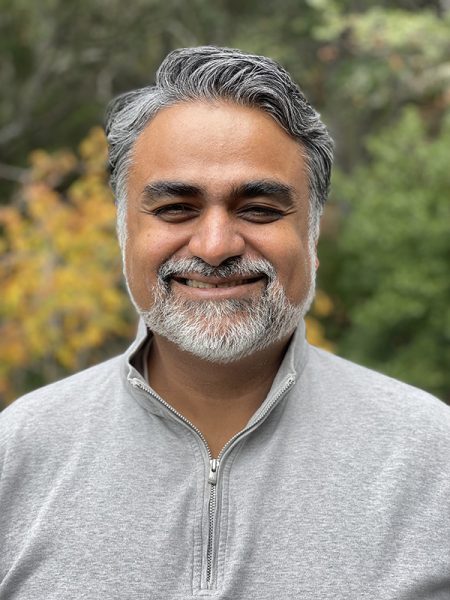
When asked about his background, Saklani shared:
I’ve been an entrepreneur since the late 90s, and my focus has always been on empowering smart business decision-making through evolving technology.
Early on, my team was doing some pretty cutting-edge work with fuzzy logic and probabilistic thinking. My first patent was actually built around fuzzy logic, which were the precursors to what we now call AI.
The world is waking up to the idea that everything doesn’t have to be deterministic, that you can get really far with prediction, but some of us saw that early on.
It’s been amazing to watch that idea mature from a niche technical concept into a world-changing story over the last five years.
The first company I started helped large businesses understand their travel procurement so that they could negotiate better deals with airline and hotel vendors. It was a great success, saving the companies we worked with millions on travel spending.
After that, I focused my attention on the issue of water availability. I worked with a startup called WaterHealth that pioneered technology to provide water access in rural communities across the Philippines and India.
Then in 2006, I dove back into the B2B world when I started Pramata, focusing on solving real-world problems for executives with groundbreaking contract technology.
Pramata has really brought the same early AI thinking full circle in terms of how enterprises understand and act on their commercial relationships.
How Pramata Started And Evolved
When asked how the idea for the company came together and how it has evolved with the explosion of AI, Saklani explained:
Pramata was created to attack a problem I had experienced myself as an executive, understanding all of the obligations and commitments that are embedded in commercial relationship documents like contracts and orders.
Our goal has always been to unlock the information inside of commercial relationship documents, not only to increase the efficiency of how businesses negotiate during contracting, but also to run a more profitable and sustainable business with fewer risks.
Decades ago, AI was really arcane. It required access to specialized researchers, hardware, and data scientists.
Even when you put a lot of work into it, if things changed, you’d have to reset the whole thing and start from scratch, reworking your data pipeline and training from the ground up.
It just wasn’t accessible for the common business person.
But when GPT-3.5 launched in 2022, it was just different. It was like witnessing the start of the automotive industry. We were no longer in the age of the horse and buggy.
Instead, it was like the Model T was here, and you could suddenly pump out a million vehicles in a year at an affordable price. It changed everything.
That seed of change created a model that eliminated the hardware layer, didn’t need input from a data scientist, and used natural language as both an input and output.
It was clear a major shift was coming, even though the technology still had the reasoning of a toddler.
Around early 2023, I told our product team we needed to revamp our platform for the modern age.
We knew a tech revolution was coming, and we didn’t want to build a platform that used AI. We needed AI to be at the center of everything it did.
Within the Pramata platform, we’ve integrated AI as a layer that operates on the contract intelligence found in businesses’ unique databases of commercial relationships. AI is both the input and output.
Doing that early on has allowed us to work with Global 1000 customers, forward-thinking mid-market customers, and cultivate partnerships with leading consultants like Deloitte and Bain.
These brands understand that Pramata is the leader in leveraging modern AI for contract intelligence and agentic access.
Favorite Memories
When asked about his favorite memory working for the company so far, Saklani said:
There are two aspects of leading Pramata that I think are really kind of amazing.
And this is less of a memory and more of a theme, but the first has been the chance to develop a work culture and see the way highly talented people thrive within that culture.
We’ve hired people right out of college and some who haven’t had a lot of previous opportunities in their career.
It’s so rewarding as a leader to see these individuals flower and become so mission-driven and passionate about what they’re doing. It’s truly amazing to see that kind of culture at Pramata.
The second is more of a memory from when we first started Pramata.
In the company’s infancy, we thought of it more as a departmental solution for legal teams, lawyers, and maybe some finance people, but we hadn’t conceptualized it as an enterprise-level asset or value-add.
That all changed when the sales leader from one of our customers, who had been using us in their legal department for M&As, came to us and said, “Hey, could we make this available to our 1,200 sales team members?”
A lightbulb went off at that moment, and in less than 180 days, that customer went from a $100,000 client to a million-dollar-a-year type of customer.
It’s because the value of Pramata wasn’t confined to just 50 people anymore. Suddenly we were adding value by helping 1,500 people across their organization work more efficiently and with greater success.
I remember we were all looking at each other, like, “Wow, that actually makes total sense that this would be valuable to a much broader group of professionals and more business functions.”
And so, that was a big “aha!” moment for us.
How The Technology Has Evolved
When asked how Pramata’s technology has evolved since launching, Saklani explained:
Pramata is a much different company now than it was in 2006.
We’ve always kept commercial relationship management at our core, but we’ve constantly iterated on the tech behind it to keep up with changing demands of our customers.
The intellectual property we’ve developed over the years is something I am particularly proud of.
A lot of people don’t know this, but we actually had to invent our own OCR (Optical Character Recognition) format to create machine-readable versions of contracts that are not interpretable by AI, which we call TrueDoc.
Contracts have language-related clauses that stretch across multiple pages or tables and can be 16 pages long, and are often inconsistent.
So we had to think about, “How do you make that readable to a machine? How do you make that readable to an AI agent?”
We’ve also invented an internal QA paradigm called AI TrueCheck, which provides 3 different methods to check and see whether any output is reliable.
Predictability of results is crucial; otherwise, AI is essentially useless.
TrueCheck’s creation took place over the course of 2 to 3 years, during which time we had to master how to use AI to get these results.
The learning process required us to really hone in on a modern version of contract intelligence, which delivered effective commercial relationship context.
Key Company Milestones
When asked about some of Pramata’s most significant milestones, Saklani highlighted:
We started off as a bootstrapped company, and then about a decade ago we brought in professional investors.
That in itself was a huge milestone.
We grew not just for the enterprise, but also for the mid-market during that time.
It gave us the ability to scale to people with more of a “land and expand” model versus just a fully realized and scaled model from the start.
It truly gave us the ability to make Pramata more accessible, which was huge.
Another major milestone was the development of Pramata’s partnership ecosystem.
The most prominent companies in the world should be using our product, and we knew we needed alliances with leading firms to make that happen.
We’ve announced partnerships with Bain and Deloitte, but we also have partnerships with other consultancy firms.
And now, we’re looking at expanding into different types of product partnerships as well.
This focus on being better together has been transformative for Pramata.
Biggest Levers For Success
When asked about Pramata’s biggest lever for success, Saklani said:
Our biggest lever for success is actually two-fold.
The first is customer centricity, especially in the world of AI where it only takes five minutes to be cool.
Meaning, not cool from a tech perspective, but what really moves the needle for our customers.
To accomplish this, my team and I really try to remain focused on the following three questions when it comes to what we’re building:
- Does this actually help somebody do their job better?
- Does this help somebody reduce business risk?
- Does this help improve profitability of the business?
We really try to understand what our customers are on the hook for, because we need to be on the hook for it too.
The second is culture, which is directly tied to doing something useful, rather than something “cool” and ultimately useless.
Having a mutual respect for your customer and focusing on achievement, merit, and outcomes is huge for us.
Competitive Differentiation
When asked what differentiates Pramata from its competition, Saklani explained:
In essence, Pramata makes it possible to access the huge layer of data living in your contracts that contains crucial context about your business.
Your company’s commercial relationship agreements are actually strategic assets, and our technology lets users treat them that way.
With this layer of contract intelligence, Pramata powers AI processes.
Think about AI as the most intelligent person you’ve ever met. Now clone them 10,000 times and imagine they never had to eat or sleep.
That person can be enormously useful to you, but only if they have the right context.
Tell them what music you like, hand them your listening history, and suddenly their recommendations are spot on.
The same principle applies to AI in your business, and that context lives in your contracts.
Most companies don’t think about it this way, but your contracts, negotiated terms, templates, and policy guidelines are proprietary intelligence.
It’s the operating system for your commercial relationships.
And right now, for most businesses, that operating system is completely inaccessible to the AI agents that could optimize it to drive massive results across the entire business.
Pramata is the best in the world at organizing, curating, and extracting that contract intelligence and commercial relationship info.
This context is an essential input for AI agents to be able to do almost anything with your customers, vendors, suppliers. It’s essential fuel.
That’s what sets us apart.
Getting AI to produce an interesting output has never been easier.
Getting it to produce something accurate, predictable, and useful at scale is a different story, and that’s exactly what we solve for.
Future Goals
When asked where Pramata is headed and about his goals for the company, Saklani concluded:
We keep hearing that AI is going to eat everything, and I’ve asked myself, “What is the role of Pramata in that world?”
Here’s what I know: the value locked inside contracts and commercial relationships is exploding.
As enterprises race to deploy AI across every function, the quality of what those agents can actually do comes down to the accuracy of the data they’re working from.
That’s where Pramata becomes mission-critical.
A lot of the heavy lifting of acquiring and connecting information is going to be done by AI agents.
They’ll pull contract intelligence from Pramata, pair it with data from your ERP, your CRM, your billing systems, and the results are what I’d call a 2 + 2 = 10 kind of thing.
We’ve always encouraged customers to cross-reference their contract intelligence against billing data to uncover errors, vendor overcharges, or renegotiation opportunities.
With agents, that kind of proactive decision-making isn’t a future vision; it’s happening now with our most forward-thinking customers.
I keep coming back to this key consideration in every conversation with our board, our investors, our customers: AI solutions simply do not work at scale unless the underlying foundation is solid.
There are four non-negotiable components to “PASS the test” for enterprise AI: Predictability, Accuracy, Scalability, and Security.
The hard truth is that if your contract data is a mess, if your documents aren’t intelligently organized and the data in them isn’t understood and structured, you will never achieve those four key components.
Agents are only as good as what you feed them.
That’s the role of Pramata. We own that foundation.
We make commercial relationship assets accurate, predictable, scalable, and secure so that everything built on top of it actually works.
