

Premium Guard Inc. (PGI) is a leading designer, manufacturer, and distributor of automotive aftermarket filtration products, including oil, air, cabin, and fuel filters—serving passenger, diesel, and powersport markets. Pulse 2.0 interviewed Premium Guard founder and CEO Anan Bishara to learn more.
Anan Bishara’s Background

Could you tell me more about your background? Bishara said:
“I began my career in advertising before moving into consulting, where I focused on private label strategies for retailers and manufacturers. In 1995, I received a Fulbright scholarship that brought me to Washington, D.C., where I earned my MBA at The George Washington University. That experience gave me both a global perspective and a strong foundation in business strategy. Early in my career I worked with companies facing supply chain and product challenges, which ultimately led me to the automotive aftermarket. Over time, I transitioned from advising businesses to building one — shaping what became Premium Guard Inc. (PGI). Today, PGI is recognized as a leader in private-label filtration solutions, serving the largest retailers, distributors, and fast-lube operators across North America.”
Formation Of The Company
How did the idea for the company come together? Bishara shared:
“The idea for PGI emerged from a gap I recognized early on in the automotive aftermarket. At the time, most private-label programs were positioned as bottom-shelf options — limited coverage, short lines, and products that sacrificed quality for price. I saw an opportunity to create something different: complete coverage, tiered-quality private-label filters that could meet or exceed the performance of national brands, while giving retailers and distributors greater flexibility.”
“Initially, I was brought in to address supply chain inefficiencies, but I quickly realized the bigger opportunity was to reimagine how products were sourced, manufactured, and delivered. By focusing on customer-centric solutions, leveraging global partnerships, and building a resilient supply chain, PGI grew into a company that not only solved operational pain points but also created long-term competitive advantages for our customers.”
Favorite Memory
What has been your favorite memory working for the company so far? Bishara reflected:
“One of my favorite memories is from the early days: making cold calls to potential customers. It wasn’t easy and I heard more people say “no” than “yes.”. I remember a lot of people hanging up on me. But persistence paid off. Eventually, I landed a major deal that helped launch PGI’s trajectory. It was a moment that reinforced the importance of resilience and believing in what you’re building.”
Core Products
Screenshot
What are the company’s core products and features? Bishara explained:
“PGI specializes in complete private-label filtration programs with tiered quality — good, better, and best — designed to give our customers the same depth of coverage as national brands, while creating real value by driving their top-line growth and bottom-line profitability. Our portfolio includes oil, fuel, engine air, and cabin air filters, and we’re recognized for turnkey programs that encompass engineering, packaging, planograms, logistics, and data support. These solutions serve professional installers, fast-lube chains, and retailers across North America.”
“At the core of our strategy is innovation — not just in product features and performance, but in developing market-driven solutions that address evolving customer and consumer needs. We continuously invest in advanced filtration media, higher dust-holding capacity, and extended-life products, while also designing programs that help our partners expand market share and improve financial performance.”
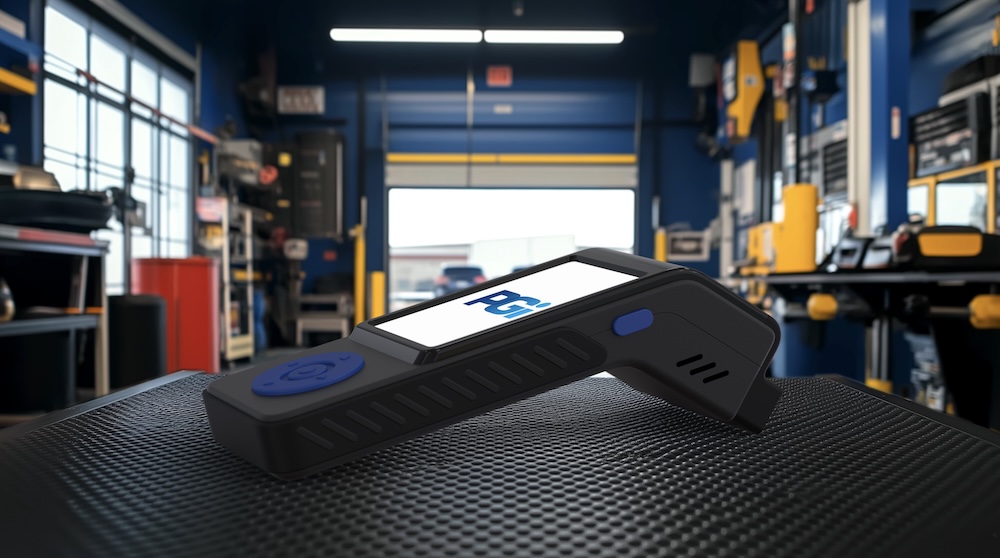
“Recently, we’ve expanded into Vehicle Interior Air Quality (ViAQ), developing the aftermarket’s first handheld diagnostic device that measures in-cabin air quality in real time. This breakthrough tool allows service professionals to give customers an objective assessment of cabin filter performance by measuring airflow and particle concentration. The impact is twofold: it safeguards drivers and passengers from harmful airborne contaminants, while helping consumers avoid premature replacements — saving money, reducing waste, and building trust in the service experience.”
Challenges Faced
Have you faced any challenges in your sector of work recently? Bishara acknowledged:
“Frankly, I view challenges are opportunities to get better. Each disruption allows us to identify gaps and weaknesses, and through continuous improvement and renewal, we become stronger and more resilient. The pandemic and the recent global supply chain crisis underscored this lesson. Instead of viewing volatility as a setback, we treated it as a catalyst to refine our model and build greater agility.”
“At PGI, we’ve designed our supply chain around redundancy, diversity, and adaptability. With manufacturing partnerships in nine countries and multiple distribution hubs across North America, we can shift quickly when geopolitical environments change, when new tariffs are imposed, or when trade agreements are renegotiated. This approach has served us well, ensuring that even in turbulent times, we protect our customers’ programs and maintain high service levels. Resilience, for us, isn’t static — it’s the result of ongoing improvement and a willingness to evolve with every challenge.”
Evolution Of The Company’s Technology
How has the company’s technology evolved since launching? Bishara noted:
“PGI has always been product- and customer-centric, and technology has been central to how we deliver on that promise. Throughout our history we’ve relied on data and technology to strengthen supply chain performance, improve forecasting, and support our customers’ growth. The current AI revolution is opening new horizons for the aftermarket, and PGI has begun deploying AI specifically in demand forecasting and predictive maintenance. These initiatives are still in their early stages, but they hold tremendous potential to make inventory planning more accurate and help customers make smarter, data-driven decisions.”
“On the product side, we continue to advance filtration technologies to protect engines and drivers alike, and we’ve introduced innovative solutions like ViAQ — our handheld diagnostic tool for in-cabin air quality — that gives installers new ways to serve customers. For us, technology isn’t a buzzword; it’s about applying the right tools to create tangible improvements in performance, reliability, and customer experience.”
Significant Milestones
What have been some of the company’s most significant milestones? Bishara cited:
“Several major milestones stand out to me:
Earning the trust of our first buying group, Pronto. That early partnership validated our business model, drove customer success, and proved that PGI’s private-label programs could deliver sustainable growth.
Launching our Extended Life synthetic blend oil filters in 2003. This breakthrough moment demonstrated that private-label programs could offer true premium products — not just entry-level alternatives — while also delivering higher margins and stronger growth for our customers.
Achieving strong organic growth built on deepening customer relationships and executing consistently.
Acquisition of Tenneco’s filters business, including the Tultitlán, Mexico manufacturing facility and the Interfil and Engine Clean brands, which strengthened our manufacturing footprint in North America.
Acquisition of IPC Global Solutions, creators of the ECOGARD brand and a leading player in the fast-lube market, which further expanded our capabilities.
Expansion of our distribution footprint, opening our 4th North American DC and surpassing 2 million square feet of capacity. This deeper inventory position allows us to serve customers faster and more reliably.
Opening our state-of-the-art FTZ distribution center in Weirton, WV, giving us tariff immunity and faster customs clearance.
Becoming the #1 private-label supplier in North America, a reflection of both our organic growth and our ability to scale with the industry’s leading retailers, distributors, and quick-lube operators.”
Customer Success Stories
Can you share any specific customer success stories? Bishara highlighted:
“The greatest customer success stories is really how PGI played a key role in transforming private label in the aftermarket. When we started, private-label programs were typically short lines — low quality, low price, and low margin. They were seen as a compromise. PGI changed that perception by building programs with best-in-class coverage and quality, offering three to four tiers of product performance.”
“This shift gave our customers the ability to displace legacy brands in premium categories while gaining more control over their product mix, coverage, and pricing strategy. It enabled our partners to expand margins, strengthen category performance, and grow their brands in ways that were not possible under the old private-label model. PGI’s approach has consistently driven customer growth in both topline sales and bottom-line profitability. That transformation is the ultimate measure of customer success.”
Differentiation From The Competition
What differentiates the company from its competition? Bishara affirmed:
“PGI is a product- and customer-centric company, driven by passion for what we do and for the customers we serve. That mindset is at the heart of everything and shapes the way we differentiate ourselves in the aftermarket. I’d highlight three key areas:
Turnkey Private Label Expertise – We deliver end-to-end programs — from product development and engineering to packaging, planograms, logistics, and data support — that empower our partners to compete directly with national brands and grow their own.
Supply Chain Agility – With a multi-region manufacturing footprint and a diversified distribution network, we provide resilience, redundancy, and speed. Our data-driven logistics strategies enable us to respond quickly to disruptions and keep our customers in stock.
Innovation – We continuously invest in product performance and market-driven solutions, from advanced filtration technologies to the ViAQ diagnostic system. And while still early, our use of AI in demand forecasting and predictive maintenance reflects how we’re applying technology to deliver smarter, more effective solutions for our customers.”
Future Company Goals
What are some of the company’s future goals? Bishara emphasized:
“PGI is entering its next phase of growth with a slate of new initiatives, including expansion into heavy-duty and specialty filtration, enhanced omnichannel programs with leading retail partners, and the launch of ViAQ, a patented, first-of-its-kind diagnostic tool that delivers real-time measurements of in-cabin air quality to support smarter, data-driven maintenance decisions.”
Additional Thoughts
Any other topics you would like to discuss? Bishara concluded:
“Yes — one topic I think is critical for our industry is the Right to Repair. It’s not just a policy issue, it’s about protecting consumer choice and ensuring that vehicle owners and independent shops have fair access to the data and parts needed to keep cars on the road. This directly impacts affordability, safety, and the long-term value of vehicles for consumers.”
“At PGI, we are fully committed to supporting the Right to Repair. We believe open access to vehicle repair and maintenance information creates a more competitive, innovative, and resilient aftermarket. It empowers professional technicians, supports independent businesses, and ultimately benefits every vehicle owner. Standing behind this cause is part of our responsibility as an industry leader and as a partner to both our customers and consumers.”
