QED Science provides an AI validity engine that breaks manuscripts and grant proposals into individual claims, tests each against the published literature, and scores them for originality and validity. The company also publishes The 1%, a blind ranking of the strongest new preprints in life science. Pulse 2.0 interviewed QED Science VP of Product Guy Ronen to learn more.
Guy Ronen’s Background
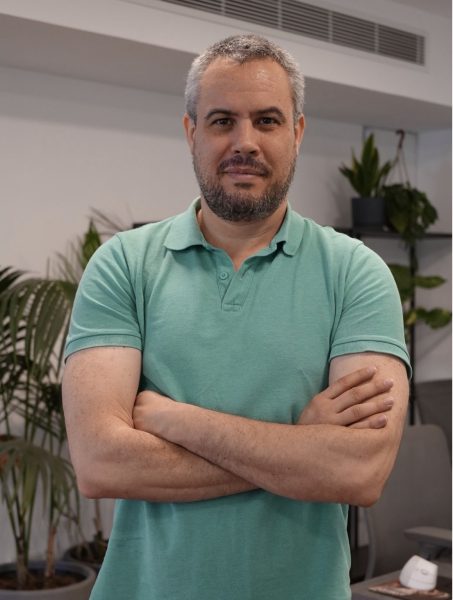

When asked about his professional background and the experiences that led him to QED, Ronen shared:
I am passionate about building products that people love and generate positive impact in the world. I studied computer science and cognitive psychology at the Hebrew University of Jerusalem, then managed a team of developers at Check Point in cybersecurity. For close to 20 years since then, I’ve been leading products end-to-end, and I’ve been a founder or co-founder on several of them.
At Google, I led Blogger, which had around half a billion readers a month at the time. I also led Google Trends, where you put in a keyword and see how search interest moves over time. And I was part of the founding team for Pinpoint, a Google product that helps journalists investigate corruption.
At QED, I lead our three consumer products. We’re also building our B2B products for pharma, which are deep in development right now.
QED’s Mission
When discussing what QED set out to do, Ronen explained:
The mission is straightforward: we want to help scientists validate research and push scientific discovery forward.
The scientific literature is an enormous corpus, and it’s noisy. We clean it up, tighten it, and validate it. So when someone reads through that literature with QED, what they get back is more reliable.
That’s what pushes research forward. Scientists build on what came before them. If what came before includes experiments that weren’t run properly, or claims that have contradicting evidence sitting elsewhere in the literature, then you’re building on something that isn’t grounded. That’s the problem we’re working on.
Working With A Multidisciplinary Team
When asked about his favorite memory from working at QED, Ronen recalled:
My favorite memory is a daily one, which is working with this incredible team. It’s a diverse group of very smart people, including life scientists, AI experts, data scientists, developers, designers, and more.
Until a couple of years ago, the classic product manager would tell you that internally they work closely with software developers and designers. Here, I also work with life scientists and with AI and data science people. It’s much more of a deep tech environment with some very smart people in the room.
In all honesty, it’s the most multifunctional team I’ve worked with.
QED’s Core Products
When describing QED’s core products and features, Ronen detailed:
We have three products for individual researchers, and all of them are free to use. They run on the same engine, and they’re connected, so the platform learns what you work on and carries that across all three.
Two things are worth saying before I go through them. The first is that we’re a critical thinking AI lab, and accuracy is the whole job. Our review process is patented, and we keep tuning it with leading scientists in the fields we cover. A review that isn’t accurate is worse than no review at all for a researcher, so that’s where most of our effort goes.
The second is the free part, because people are right to ask. Free doesn’t mean the user is the product. We don’t train on the papers or grants you upload. Your work stays yours. We keep the academic products free because the researchers who need this most often have the least budget for tools, and because their feedback is what makes the review better. The business is sustained on the commercial side, in pharma, for example.
Paper Reviews
Before you submit a paper to a journal, you can put it into QED and get a review at the level of an expert reviewer, done by our AI. There’s no human in the loop. The product breaks your paper into claims and shows them as a claim tree, so you can see which claim depends on which. Then, for each claim, we show the gaps we identified. For example, you claim A, but your experiments, or the experiments you reference in the literature, don’t support it.
Where we go further than most tools is what happens after that. Pointing at a problem is the easy half. We give you tuned suggestions for what to do about it, how to rewrite a claim so it matches what the data actually supports, or which experiment would close the gap. That’s the part a researcher can act on.
We also benchmark the paper against roughly 60,000 others and give it a score. For the first time, you can see where your science sits relative to everything else in the field. Part of that read is novelty. We tell you what’s genuinely new in your work and what isn’t, which is often the difference between an acceptance and a rejection. Researchers misjudge how their own discovery will be perceived more often than you’d think.
Grant Reviews
Grant reviews use the same engine. You run the grant through before you submit, and we surface the main claims and the weaknesses, with the same benchmarking and the same specific suggestions. For a grant, novelty reads matter even more, because reviewers are deciding whether your work is worth funding ahead of everything else on the pile.
Insights Feed
This gives researchers the most up-to-date papers relevant to their interests, including preprints as well as work that’s already in journals. They don’t have to chase everything and filter all the noise coming at them through social feeds, Scholar alerts, and word of mouth. They get a curated, personalized list. And because it sits on the same platform as the reviews, it learns from what you’ve actually been working on.
The Top 1%
When invited to explain QED’s 1% project, Ronen described:
Let me start by saying that around 200 preprints are published every day. That’s the frontier of science in terms of freshness. This work just came out of the lab, and it might take another year or two before it gets a stamp from a journal like Nature or Cell. It’s the front page of what’s coming out of academia.
Of course, not all of it is high quality, and until now there’s been no way to tell the difference. You go to bioRxiv, and there are hundreds of new preprints waiting for you. With the 1%, you get a lens that tells you where to spend your time. You can filter it by field, and we also show the top 10% of research within the Insights Feed product on the QED platform.
The reality is, researchers are extremely busy. They have labs, they’re running experiments, and most experiments fail, not because they’re bad scientists, but because that’s how science works. They don’t have time to sift through thousands of papers. So we find the gems for them.
I compared it to PageRank in a post I wrote. There were millions of websites, and the question became how you tell a good result from a bad one. This is the first time there’s a score that says a paper is worth reading, as if it already had the prestige-journal stamp it might not actually get for another two or three years.
With the 1%, you can stay up to date with the latest research and innovations in your field, giving you back more time to focus on the actual fun parts of scientific discovery and research.
Building Trust In A Noisy AI Market
When asked about the challenges in QED’s market and how the company has addressed them, Ronen noted:
Everyone is talking about AI, so there’s a lot of noise, and in some cases there’s real aversion. People have lost trust in these tools. So when we say we have an AI solution that does this well, some of them don’t believe it.
We use transparency to work through this problem. We’re open about what we do and how we do it, including how our scoring system works via white papers.
The other half of it is staying close to the community. Really listening to what users are saying, what they’re asking for, and responding to their concerns and their feature requests. I think that’s the right thing to do anyway, but it also builds trust. We’re building for them, not for what we assume they want. The feedback we receive from our community goes a long way to helping us deliver meaningful improvements to the platform.
How The Technology Has Evolved
When discussing how QED’s technology has changed since launch, Ronen said:
The special thing about QED is the community. We have users who come and use the tools, tell their friends, and come back again. And while they do that, we learn from them about the quality of what we provide.
There are built-in mechanisms for them to rate what they get. They can tell us whether a gap is good or weak. That gives us an ongoing stream of information we use to optimize our models, which feeds straight back into the output users get. It isn’t a “send us feedback” form that turns into an email. It’s built into the workflow.
We’ve been growing fast, too. A year ago, we had one product. Since then we’ve launched two more. So one axis is more products, covering more of what we’ve learned matters to our users. The other axis is the models themselves getting better from that constant feedback.
Major Company Milestones
When asked about QED’s most significant milestones, Ronen said:
We’ve seen the launch of three major products. Paper Reviews came out in October 2025, Grant Reviews a few months after that, and the Insights Feed launches formally in a month. Meanwhile, the 1% campaign went out a few weeks ago.
On growth, we started from zero a year ago. Today we have around 20,000 users across 2,000 institutions, where QED has already identified 200,000 scientific gaps. We have a diverse customer base too. On one side, we have Harvard, Yale, and MIT, but also researchers at institutions in Africa and Asia that aren’t as well known or funded. The fact that the products are free is part of that, as it levels the playing field by providing equal access to scientists, regardless of location and institutional prestige.
What Users Tell Us
When asked about customer success, Ronen shared:
I’ve talked with dozens of users, and the thing that comes up again and again is the level of scrutiny they get from QED’s paper review or a grant review. They love it.
It matters to them because these are high-stakes documents. A grant is their oxygen. It’s the funding they’re going to get. Seeing the gaps before they submit, and in many cases getting suggestions for how to close them, such as running another experiment or changing how something is written, is what they find most useful.
Hearing that over and over is a big source of satisfaction.
Market Opportunity
When discussing the total addressable market (TAM) QED is pursuing, Ronen specified:
The life science market in academia is around 1 million researchers globally. Those products are free, and we want to keep them that way, because it levels the playing field.
Pharma is where the commercial opportunity is, and they’ve expressed great interest in our product. Roughly 50 pharmaceutical companies sell more than $2 billion a year. There are hundreds selling between half a billion and two billion, and a few thousand more below that. Cumulatively, that’s trillions of dollars in annual revenue.
We have been developing solutions for key workflows like target validation, indication selection, and search and evaluation. We’re seeing big excitement towards these early products.
What Differentiates QED
When asked what sets QED apart from its competition, Ronen emphasized:
The depth of the scientific review and the critical thinking we apply to it. That’s what we hear from users constantly. How deep we go and how much scrutiny we apply.
Two things make that possible. One is the team, which is strong in both AI and science. The other is the ongoing stream of feedback from our users, who are top researchers themselves. That teaches us a lot.
While other solutions do exist, they don’t go as deep on the science. That’s the main difference.
Future Goals
When discussing QED’s future goals, Ronen concluded:
We would like to expand our impact by helping to cure people. We are doing this mainly by taking the know-how and the AI capabilities we’ve built for academia and putting them in the hands of drug discovery and pharma, clearly while keeping the safety and privacy standards our academic users expect.
Academia is the top of innovation, but there’s also the practical side, which is curing people. We’re not going to start a pharmaceutical company ourselves. We’re going to support the people already doing it by accelerating the scientific discovery and research process.
Longer term, there are other fields with the same problem. Agriculture and food science both seem promising, but pharma is where we focus right now.

