Stack Automation by Quali is a deployment automation platform developed for Cisco that condenses the manual, time-consuming process of setting up enterprise hardware, software, and AI environments from weeks into just hours. Pulse 2.0 interviewed Quali CEO Lior Koriat to learn more.
Lior Koriat’s Background


Could you tell me about your background? Koriat said:
“I have spent more than two decades working at the intersection of automation, systems engineering, and infrastructure. My career started in robotics and aerospace, where I founded Intellitech Engineering and built automation and simulation systems for defense applications. Those environments demand absolute reliability and governance, and that experience shaped how I think about every complex system I have worked on since.”
“I joined Quali as head of R&D, which gave me a direct view of the problems enterprises face when they try to scale modern infrastructure. I later became COO and then CEO, and have been building the company from that vantage point ever since.”
“What aerospace reinforced for me is that the hardest problems are almost never purely technical. They are coordination problems, consistency problems, and governance problems. Solving them requires thinking about the full system, not just individual components. That philosophy is behind everything we build at Quali.”
Reasons For Developing Stack Automation
What specific deployment and infrastructure challenges prompted Cisco and Quali to develop Stack Automation by Quali, and how widespread are these issues among enterprise customers today? Koriat shared:
“The problem has been hiding in plain sight for years. When an enterprise decides to build out AI infrastructure, the assumption from the outside is that the hard part is the AI itself. The models, the data, the strategy. But inside the data center, teams are dealing with something far more mundane and far more damaging: weeks of manual work just to get the infrastructure running in the first place.”
“Deploying a production AI environment is not simply provisioning a server. It means orchestrating accelerated compute, networking, storage, software layers, AI frameworks, third-party tooling, security, and observability, and bringing all of it together in a way that is validated, repeatable, and production-grade. When that process is manual, with multiple vendor engagements, fragmented tooling, and no unified workflow, weeks becomes the floor, not the ceiling. The hardware is rarely the bottleneck. The activation of that hardware, and governed accessibility to it, is.”
“But slow activation is only half the problem. Even after an AI factory is stood up, the economics rarely work the way they should. GPU clusters sit pre-allocated and underutilized, reserved for peak workloads that never fully materialize, while the cost per token stays stubbornly high and the business case for the investment quietly erodes. The real measure of an AI factory is not whether it can run a workload. It is whether it can run the right workload, on demand, at the right utilization level, at a cost the business can justify.”
“When Cisco and Quali came together, we were looking at the same problem from complementary vantage points. Cisco brings world-class infrastructure, validated architectures, and one of the deepest enterprise ecosystems in the industry. Quali brings over a decade of automation and orchestration built specifically for complex, multi-vendor environments. What we recognized together was that solving this problem the right way required both, and that the moment to do it was now, when automation and AI have finally matured enough to deliver something genuinely production-grade and economically defensible. Stack Automation is the result of that shared conviction: a platform designed not just to get enterprises to production faster, but to keep them operating efficiently once they are there.”
“As for how widespread the problem is, it is nearly universal among enterprises running on-premises or hybrid AI infrastructure. The cloud made provisioning look easy, and now IT teams are expected to deliver at cloud speed and cloud economics inside the data center. Without automation built specifically for this environment, that gap is simply not closable.”
Helping Organizations Reduce Operational Complexity
How does Stack Automation by Quali help organizations reduce the operational complexity associated with deploying AI, cloud, and infrastructure environments? Koriat noted:
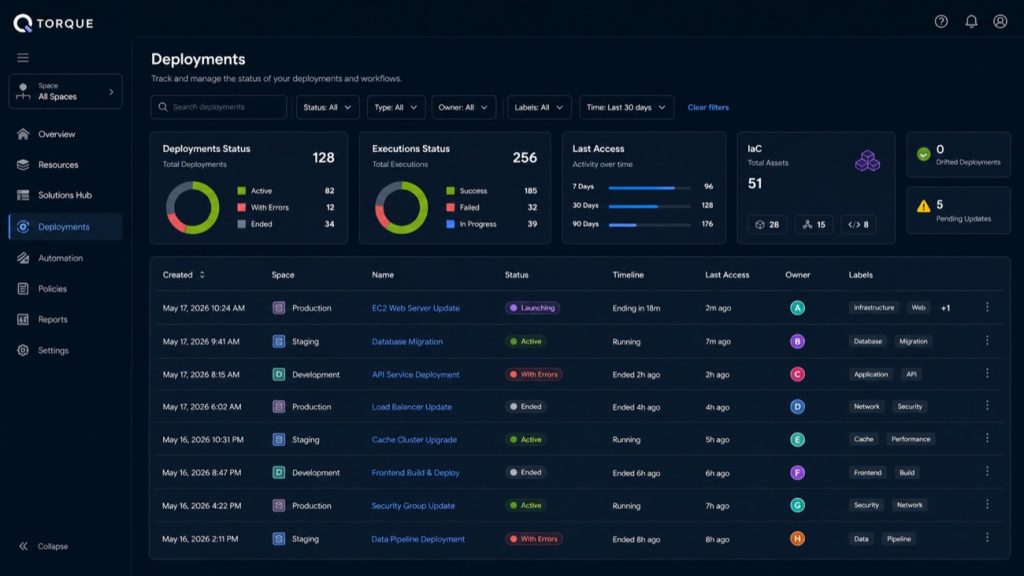
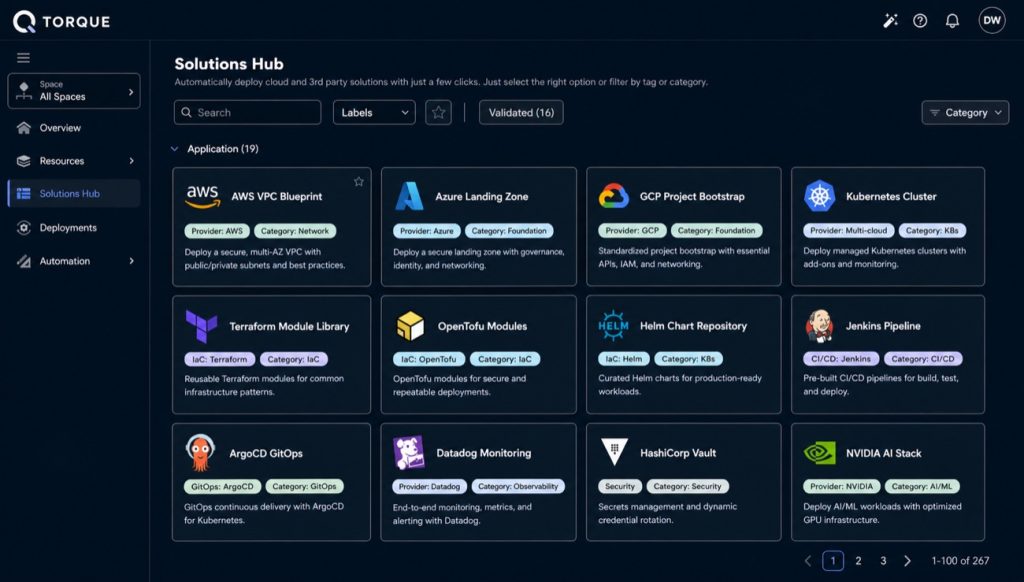
“Stack Automation takes what was a multi-week, multi-team, manual process and turns it into a governed, automated workflow that completes in hours. The centerpiece is the Solutions Hub, a centralized catalog of hundreds of validated, production-ready blueprints covering Cisco infrastructure, third-party software, and ISV applications. Every blueprint has Cisco’s validation baked in, which means security baselines, configuration best practices, and compatibility checks are applied automatically at the moment of deployment. You are not just deploying faster. You are deploying correctly, every time.”
“What makes Stack Automation genuinely different is that it operates across the full vertical stack, from bare metal up through networking, compute, storage, operating systems, AI frameworks, and application workloads, within a single governed platform. IT and platform engineering teams handle the foundational layers. Data scientists access validated, pre-configured AI environments on demand without waiting on a provisioning queue. AI application developers deploy and iterate on workloads against infrastructure that is already production-grade by the time it reaches them. The platform serves all three personas because the problem spans all three. That end-to-end continuity, from bare metal to running workload, is what eliminates the assembly problem rather than just shifting it to a different team.”
Operational Bottlenecks Preventing Organizations From Moving AI Projects To Production At Scale
Many enterprises are investing heavily in AI initiatives. What are the biggest operational bottlenecks preventing organizations from moving AI projects from pilot stages to production at scale? Koriat explained:
“The pilot-to-production gap is one of the defining challenges in enterprise technology right now, and infrastructure is a much larger part of the explanation than most people acknowledge publicly.”
“An AI pilot typically runs on a small cluster that someone has already provisioned, or on cloud resources someone else manages. It sidesteps the infrastructure problem because it is small enough to set up manually. But when a pilot succeeds and leadership asks for production deployment, suddenly you need AI PODs, GPU clusters, networking that can handle the throughput, storage that can serve the models, and a software stack that ties it all together. Without automation, that is a project measured in weeks or months, not days.”
“There is also a consistency problem. At pilot scale, one or two engineers know exactly how everything is configured. At production scale, across multiple sites or teams, that institutional knowledge does not scale. Configurations drift, and the resulting inconsistencies are some of the most time-consuming problems to diagnose and fix.”
“A third dynamic is accelerating all of this. Cloud token bills at enterprise scale have become untenable for many organizations. As dependency on models and agents grows, so does the cost of running them on someone else’s infrastructure. That economic pressure is driving a meaningful wave of GPU repatriation, enterprises moving their AI footprint from cloud and managed services back to secure, on-premises AI factories or distributed GPU capacity at the team level. That shift does not simplify the infrastructure problem. It compounds it. Every on-premises deployment that needs to match the reliability and self-service accessibility organizations came to expect from cloud creates exactly the kind of sprawl that breaks without a disciplined automation layer underneath it.”
“Stack Automation addresses all of this. It compresses deployment timelines, enforces consistency through validated blueprints, and delivers a cloud-like experience over on-premises and hybrid infrastructure. The goal is not simply to replicate what cloud makes easy. It is to give enterprises the operational confidence to own their AI infrastructure without sacrificing the speed and accessibility that made cloud attractive in the first place.”
Differentiation From Existing Infrastructure Automation And Orchestration Tools
What differentiates Stack Automation from existing infrastructure automation and orchestration tools currently available in the market? Koriat emphasized:
“The most important distinction is scope. Most automation tools handle one layer of the stack, one vendor’s technology, or one type of workflow. They do a specific job well, but the enterprise still has to manually coordinate across them. The complexity does not disappear. It just moves from the deployment itself into the coordination effort between tools.”
“Stack Automation covers the full stack in a single workflow. Physical infrastructure, Cisco software, third-party platforms, ISV applications, security baselines, and observability are all orchestrated together, with no handoffs between tools at different layers.”
“The second differentiator is the depth of the Cisco and Quali collaboration. Cisco brings infrastructure expertise, validated reference architectures, and a partner ecosystem that covers nearly every enterprise environment. Critically, those validated designs are built with Cisco Security Inside, meaning security considerations from network segmentation to access controls to compliance baselines are baked into the blueprint rather than addressed after the fact. Quali brings the automation intelligence and workflow orchestration that makes those designs deployable at scale, repeatably and without manual interpretation.”
“The third is the multi-persona design. Stack Automation does not serve one type of user and ask everyone else to adapt. IT and platform engineering, data scientists, and AI application developers each operate within their own context inside the same governed platform. That continuity across teams is something no single-layer automation tool can offer.”
“The fourth is breadth across heterogeneous environments. Stack Automation orchestrates Terraform, Ansible, Helm, OpenShift, NVIDIA NIMs, VMware, and third-party tooling alongside Cisco infrastructure in the same workflow. Most enterprises do not run a single-vendor environment, and any solution that requires one will stall at the first procurement conversation.”
Evolution Of Enterprise Technology Teams
How are enterprise technology teams evolving as AI becomes a core business priority, and what new skills or processes are becoming increasingly important? Koriat pointed out:
“The most significant shift is in how IT leadership thinks about its role. Infrastructure teams were long measured on uptime and cost control. Those things still matter, but the question now is different: how quickly can you stand up what an AI initiative needs, and how do you ensure it is production-ready rather than just functional? Platform engineering has moved from a niche discipline to a strategic priority as a result. The teams succeeding are those that have replaced reactive, ticket-based delivery with governed, self-service deployment as the default.”
“The relationship between infrastructure and security is also changing. Security used to be a review step after deployment. Now organizations are embedding it into the provisioning workflow itself. Stack Automation reflects that: Cisco-validated security baselines are applied automatically at deployment time, not audited afterward. That shift-left approach is becoming a baseline expectation, not a differentiator.”
“A third shift is just beginning to take shape, and I expect it to become one of the defining operational challenges of the next few years. As model and agent usage scales across the enterprise, token spend is becoming a material line item, and organizations are realizing they have very little visibility into what that spend is actually producing. Attributing token consumption to specific users, projects, and business outcomes is not yet a solved problem for most enterprises. Moving workloads back on premises to reduce cost per token is the right instinct, but it only addresses half the equation. The other half is traceability: a clear line of sight from GPU capacity through the infrastructure and workload layers, all the way to the business application consuming it. Without that, you can lower the cost per token without ever knowing whether you are spending those tokens well. The teams that will lead in this environment are the ones treating token allocation with the same rigor they apply to budget allocation, because at enterprise scale, they are the same conversation.”
Early Customer Feedback
Can you share any early customer feedback, use cases, or measurable outcomes that demonstrate the value of Stack Automation in real-world environments? Koriat highlighted:
“We announced Stack Automation at Cisco Live on June 3rd, and the level of engagement since has been telling. Not just in terms of pipeline, but in terms of the conversations themselves. What customers are responding to is not a feature set. It is the recognition that someone has finally approached this problem the way they need it solved.”
“What we are hearing consistently is that enterprises are exhausted by solutions that hand them sophisticated components and leave the assembly to them. They have the hardware. They have the architectures. What they have been missing is something that removes the complexity without removing the control, that delivers simplicity at the surface while preserving all of the sophistication underneath. Stack Automation gives them both: self-service access for the teams who need to move quickly, and full traceability and governance for the leaders who need to know what is running, where, and at what cost. In a world where AI infrastructure has largely been a black box, that combination of speed and visibility is what the market has been waiting for.”
“Software GA is targeted for August, with full-stack solution deployments including Cisco AI PODs following in October. The pace of engagement reflects something broader than product enthusiasm. It reflects how ready enterprises are for a solution that treats outcome delivery, not component availability, as the actual definition of done.”
Partnership With Cisco
How does the partnership with Cisco enhance the capabilities, reach, and future roadmap of Stack Automation by Quali? Koriat emphasized:
“The Cisco relationship is foundational to what Stack Automation is, not an add-on to it. This platform was co-developed with Cisco. The validated designs, the security baselines, the compatibility testing: all of that reflects Cisco engineering expertise embedded directly into how the platform works. It is a shared product, not an integration.”
“From a reach perspective, Stack Automation is available exclusively through the Cisco partner channel, giving it access to a global network of resellers and solution providers with deep relationships in the enterprise accounts that need it most. For Quali, that reach is transformative. For the channel, it provides a differentiated capability to bring into conversations about AI infrastructure readiness.”
“Equally important is the roadmap dimension. Cisco’s visibility into enterprise infrastructure planning, and their roadmap for AI PODs and the Cisco Secure AI Factory, directly shapes where Stack Automation goes next. Building with a partner at the center of global enterprise data center decisions is a very different position than building in isolation and hoping customers find you.”
Automation Changing Enterprise IT Operations
Looking ahead, how do you see automation changing enterprise IT operations over the next three to five years as organizations continue to adopt AI-driven technologies? Koriat predicts:
“The direction is clear. Manual, component-based infrastructure deployment will become untenable at the scale AI adoption demands. The concept of a validated blueprint is going to become as standard as a container image is in software delivery today, and the idea of assembling a complex infrastructure stack by hand will look as archaic in five years as manually configuring servers did after cloud automation matured.”
“Agentic intelligence will also change what automation means in practice. Stack Automation already includes agentic capabilities that allow teams to customize blueprints or build custom configurations using AI assistance. As those capabilities mature, the boundary between a human designing an infrastructure deployment and the system executing it intelligently will become much more fluid. What will not change is the need for governance. As automation becomes more capable, the layer that ensures every deployment is secure, consistent, and auditable becomes more important, not less. Speed and reliability have to go together, and that has been a core design principle of Stack Automation from the beginning.”


Additional Thoughts
Any other topics you would like to highlight about Stack Automation or the broader direction Quali is heading? Koriat concluded:
“The thing I want people to understand about Stack Automation is that it is not a tool that sits alongside the rest of your IT operations. It is designed to change the starting point. When a team gets a new AI initiative approved today, the first question is how long it will take to get the infrastructure ready. With Stack Automation, that question has a different answer.”
“For Quali, this partnership with Cisco represents something larger than a product launch. We have spent years building toward the conviction that infrastructure automation should be a strategic accelerator for enterprise innovation, not the bottleneck that delays it. Stack Automation is the most direct expression of that conviction we have shipped. What we are building together with Cisco is infrastructure that organizations can actually trust to keep pace with how fast they need to move, and I am genuinely excited about where that takes us.”

