

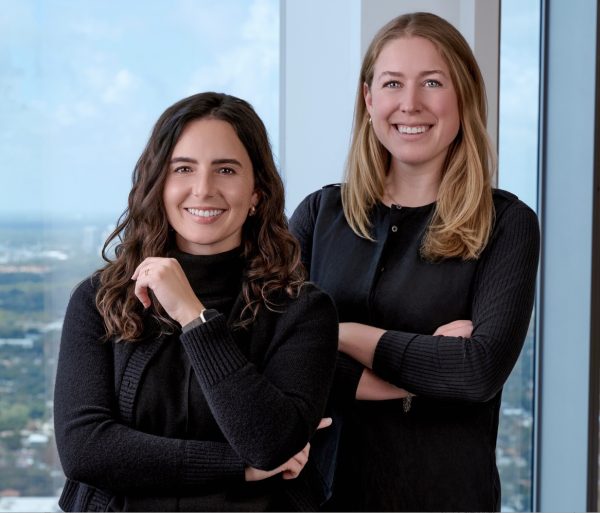
Raya Power manufactures plug-and-play, backyard solar-plus-battery pods designed to provide accessible and affordable renewable energy without the complex permitting or roof modifications required for traditional residential solar systems. Pulse 2.0 interviewed Raya Power co-founder and CEO Meghan Wood to learn more.
Meghan Wood’s Background
Could you tell me more about your background? Wood said:
“I was frustrated by rising energy bills and the helplessness of having no way to lower them as a renter, so I began exploring solar while completing my MBA and Master’s in Renewable Energy at Stanford. People talked about how affordable it had become, but it still seemed out of reach — no one I knew had it. The more I learned, the clearer the problem became: the technology worked, but the system around it didn’t. Solar was being sold as an expensive construction project to homeowners who could afford the price tag, knew they’d stay in their homes for years, and were willing to deal with the red tape. It was built for a few, not for most. That realization became my motivation. I set out to change how solar works — to make it simple, transparent, and built for everyone.”
“Meanwhile, all her life, my co-founder Nicole had seen the contrast between the steady lights of the mainland and the blackouts that defined daily life in Puerto Rico — and Hurricane María became the moment when that reality turned into a calling. While working on the Mars Rover at NASA’s Jet Propulsion Lab, Nicole lost contact with her family for two weeks as the island went dark, and she knew many families endured far worse, some without power for more than a year. The experience revealed a painful irony: we could send solar panels to Mars, yet couldn’t keep the lights on for people here on Earth. That clarity reshaped her path. Nicole left NASA to focus on energy access closer to home, earning a master’s in Design Impact Engineering at Stanford, where she learned to design with communities to build solutions that are radically affordable, resilient, and human-centered.”
“Fate intervened when I met Nicole at a friend’s wedding — two women passionate about reimagining access to solar energy. We quickly realized we shared the same vision: the technology for reliable, affordable energy already exists, but solar systems simply weren’t designed for the people who would benefit the most.”
Primary Responsibilities
What are your primary responsibilities? Wood shared:
“As CEO, I focus on Raya Power’s overall strategy and growth. This includes setting the company vision alongside Nicole, shaping our business model, and leading fundraising, partnerships, and go-to-market efforts. I spend a lot of time working with customers andpartners to ensure our product truly meets the needs of those left out of traditional solutions today. Internally, I work closely with the team to align product development with our mission of making renewable energy more accessible and affordable.”
“Nicole, who’s the CTO as well as a Co-Founder, leads the technical development of Raya Power’s hardware and software systems. This includes system architecture, product design, safety, and performance, as well as overseeing testing and iteration of our solar-battery technology. She also leads manufacturing and installation to ensure our systems are reliable, easy to deploy, and built for real-world conditions, especially in outage-prone regions. Her role bridges engineering and impact, making sure our technology delivers resilience without complexity.”
Favorite Memory
What has been your favorite memory working for the company so far? Wood reflected:
“One of the most meaningful moments for us was deploying our first Raya Pods. Seeing a concept move from early designs to a physical product in people’s homes was incredibly powerful. It was the first tangible proof that we could radically simplify solar and make it accessible in places where traditional systems simply do not work. In addition to this, hearing customer feedback each day on how they can’t wait to have our system and how it will change their lives is what pushes us forward each day.”
Core Products
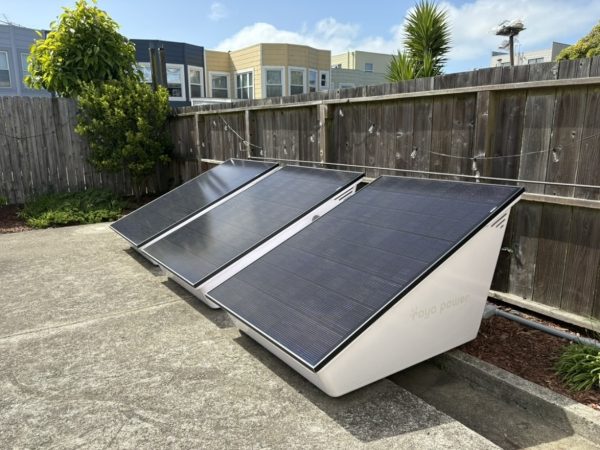
What are the company’s core products and features? Wood explained:
“Raya Power’s core product is a modular solar and battery system designed to make reliable, affordable energy accessible to people who have historically been excluded from traditional solar, including renters, small homes, and small businesses.”
“The system is designed for fast, non-invasive installation, eliminating the need for electrical panel upgrades, roof penetrations, or complex permitting. This significantly reduces the cost, time, and friction typically associated with adopting solar energy, while allowing customers to get up and running quickly.”
“Raya Power is built with resilience in mind. During grid outages, users can prioritize and control essential appliances, such as a refrigerator, fan, or internet router, through Raya’s app. This ensures continued access to power for critical needs when the grid is unreliable.”
“At its core, Raya Power combines simplicity, portability, and intelligent energy management. By redesigning both the hardware and the overall system experience, Raya Power delivers a practical solar solution tailored to real-world living conditions.”
Challenges Faced
Have you faced any challenges in your sector of work recently? Wood acknowledged:
“Education around solar and storage is a challenge. There is a lot of misinformation and less-than-ideal sales tactics that can make people stay away from the solution. We are just getting started, but a big goal is to increase access through simple education around the technology and a lot of transparency around the cost/benefits.”
Evolution Of The Company’s Technology
How has the company’s technology evolved since launching? Wood noted:
“Since our early prototypes, we have significantly refined the system’s modularity, user interface, and installation process. We have focused on improving ease of use, applicability to user needs, and simplicity of the installation process. Each iteration has been informed directly by customer feedback and on-the-ground deployments in Puerto Rico.”
Significant Milestones
What have been some of the company’s most significant milestones? Wood cited:
“First is bringing a radically new product to market, from coming up with the new pod idea to piloting it with customers in just over six months.”
“Another worthwhile mention is having our product look just as beautiful as we imagined, with feedback from the world echoing that. This gives people a new way to think about and adopt solar.”
Customer Success Stories
Can you share any specific customer success stories? Wood highlighted:
“The customer anecdotes we have on why they are excited about the Raya system fuel our work every day. We’ve already received some amazing feedback from customers on how our products are solving a major problem for them after countless hours sifting through expensive and impractical alternatives.”
“People from around the world have also reached out to us, expressing their interest in our product from places like Cuba, where daily electricity outages are an ongoing issue. From what we’ve received from people living in the US, there’s definitely a strong desire to switch to solar, but affordability continues to be a barrier—so there’s already keen interest in our products. These messages are only fueling our motivation and drive to make the products available on a much larger scale.”
Funding/Revenue
Are you able to discuss funding and/or revenue metrics? Wood revealed:
“We raised a $1 million pre-seed round in January last year, and will be raising additional funding this year.”
Total Addressable Market
What total addressable market (TAM) size is the company pursuing? Wood assessed:
“Raya Power is pursuing a U.S. total addressable market of approximately $370 billion, representing homes with suitable conditions for solar deployment. Within this, the serviceable available market is approximately $160 billion, focused on middle-and low-income households that face high energy costs and limited access to traditional solar systems.”
“Raya Power’s initial serviceable obtainable market is approximately $13 billion, targeting single-family middle-income households with individual air conditioning and adequate space for solar. The company’s beachhead market begins in Puerto Rico and California, which are high-cost, outage-prone regions in the United States, with plans to expand nationally and into other geographies over time.”
Differentiation From The Competition
What differentiates the company from its competition? Wood affirmed:
“Raya Power differentiates itself by redesigning solar and storage as a household energy appliance rather than a construction project. Traditional solar systems are built around permanent installations, electrical panel upgrades, permitting, and utility coordination, which exclude renters, small homes, and many small businesses. Raya Power removes those barriers by offering a system designed for fast, non-invasive deployment and everyday use.”
“Unlike grid-tied systems or balcony plug-in solutions, Raya Power does not export power back to the home or grid. Energy flows directly to supported appliances and integrated storage, which avoids interconnection requirements, reduces safety risks, and dramatically simplifies adoption. This architecture allows Raya Power to deliver both bill savings and outage resilience without modifying a home’s electrical infrastructure.”
“Raya Power also occupies a distinct space between rooftop solar and portable power stations. Portable batteries are typically designed for emergency use or camping and do not provide ongoing household energy offset. Raya Power, by contrast, is built for daily energy shifting, continuous use, and long-term home deployment.”
“Finally, Raya Power is a female-founded company deeply rooted in the communities it serves. The company has prioritized local deployment, workforce training, and women-led installation teams in Puerto Rico, reflecting a broader commitment to building an energy transition that is not only more accessible but more equitable.”
Future Company Goals
What are some of the company’s future goals? Wood concluded:
“Energy insecurity isn’t unique to Puerto Rico, and our aim is to eventually offer our products around the world, particularly in islands and remote regions, helping global communities comfortably keep the lights on and electricity bills down.”
