

Raylu is an AI-powered sourcing and research platform that automates core investor workflows – market mapping, company discovery, and founder outreach – for private-market investors, including private equity, growth equity, and venture capital firms. Pulse 2.0 interviewed Raylu co-founder and CEO Ali Dastjerdi to learn more.
Ali Dastjerdi’s Background
Could you tell me more about your background? Dastjerdi said:
“I studied machine learning at Harvard, where I also served as President of Harvard Student Agencies. After graduating, I joined Insight Partners as an investor, where I focused on companies in development tools, data/ML infrastructure, security, fintech, and vertical SaaS.”
“It was at Insight where I experienced firsthand how broken deal sourcing was. I watched talented analysts spend weeks on work that should take hours: stitching together lists, hunting for emails, updating CRMs manually. When LLMs became commercially viable, I saw an opportunity to fundamentally reimagine how private market investors find and engage with companies.”
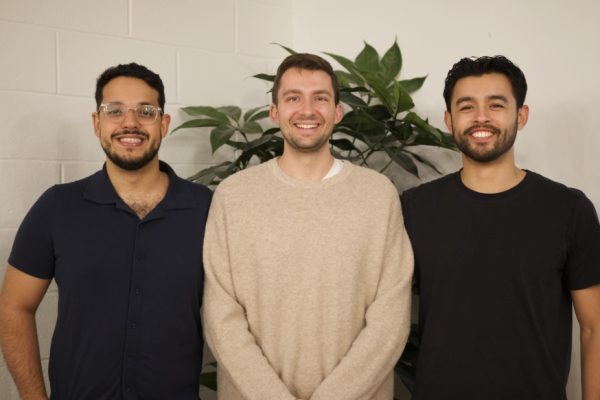
“I founded Raylu in 2022 with my two best friends: Nathan Ondracek (our CTO) and Sam Ilkka (our COO), both former AWS engineers. Nathan was actually my freshman roommate at Harvard, and he later met Sam at AWS. During the pandemic, I moved in with them in Seattle. That’s when we started sketching out what would become Raylu.”
Formation Of The Company
How did the idea for the company come together? Dastjerdi shared:
“The idea came directly from my frustrations as an investor at Insight Partners. Deal sourcing was incredibly manual. Analysts would cobble together market maps using Google searches, LinkedIn, and various databases. Then they’d hunt for contact information, draft individual emails, and manually update the CRM. A single thesis-to-outreach cycle could take weeks.”
“I knew there had to be a better way. When ChatGPT launched and LLMs became commercially accessible, I saw the opportunity, but I also knew that reliable deal origination demands more than just throwing AI at the problem. You need purpose-built infrastructure that turns non-deterministic AI into repeatable, trustworthy outcomes.”
“I called Nathan and Sam and said, “We need to build this.” They brought deep expertise in building enterprise-grade systems at AWS. In 2022, all three of us quit our jobs to start Raylu.”
“We actually have a ritual: there’s a single unopened beer in our office fridge. The pact is that the day the company collapses is the day we drink that beer. It’s a reminder that even if Raylu fails, our friendship is still worth toasting. That foundation of trust is what makes building this company possible.”
Favorite Memory
What has been your favorite memory working for the company so far? Dastjerdi reflected:
“The agentic system that finds companies for Raylu was a crazy process to build. We spent an entire month working with our first customer every day, seven days a week, until 3 to 4 a.m. trying to build AI agents that would perform properly against the human-made lists. One night at 5 a.m. we finally beat the test set. We went out to celebrate with breakfast right after!”
Core Products
What are the company’s core products and features? Dastjerdi explained:
“Raylu is the AI platform for private market investors. We help venture, growth equity, private equity, and corporate development teams go from thesis to booked founder meetings in minutes instead of weeks.
Our core capabilities:
Thesis-to-Market Map: Describe an investment thesis in natural language (for example, “Find agentic SOC automation tools selling into mid-market enterprises”) and Raylu generates a comprehensive, real-time market map in minutes. We uncover 2.5x more relevant companies than traditional databases, including bootstrapped and emerging players that others miss.
360° Company Reports: We auto-build detailed profiles on every target so teams don’t have to jump between 10 tabs. Each report includes business teardowns (products, pricing, GTM motion, buyer personas, hiring velocity), market context (growth projections, regulatory landscape, customer sentiment), and competitive positioning (head-to-head comparisons across features, traction, and financials). What used to take hours of scattered research can be scanned in minutes, and standardized across the whole team.
AI Enrich: Ask Raylu to find any information about any company. We extract 72 AI-generated data points (hiring velocity, patent filings, customer sentiment, tech stack, conference attendance, competitive positioning, and more) with 97% factual accuracy and cited sources. We can also enrich years of unstructured notes, emails, decks, and attachments in your CRM to surface ‘hidden gold.’
Automated Email Outreach: This replaces tools like SalesLoft entirely. Raylu identifies verified decision-makers and launches targeted, multi-touch email sequences written in your fund’s voice, enabling direct-to-CEO/founder outreach at scale. Because outreach is powered by deep research, our customers see 30% more meetings booked and reply rates exceeding 25%, far above what generic outbound achieves.
CRM Integration: Bi-directional sync with DealCloud, Affinity, and Salesforce. Market maps, companies, activities, and insights flow into existing CRMs with no workflow friction.”
Challenges Faced
Have you faced any challenges in your sector recently? Dastjerdi acknowledged:
“Definitely. A few come to mind:
AI skepticism in a relationship-driven industry. Private markets are built on relationships and trust. Many investors were initially skeptical that AI could add value to something as nuanced as sourcing. We overcame this by obsessing over accuracy (97% factual accuracy with cited sources) and by ensuring the AI augments the investor rather than replacing their judgment. The outreach is in their voice, the relationships are still theirs.
The reliability problem with AI agents. Agents are easy to prototype and hard to operationalize. Inputs drift, outcomes branch, and reliability suffers. We invested heavily in what we call “Deal Engineering,” which includes instrumentation, evaluation, and deep integration across the investor workflow. This lets us deliver consistent, trustworthy results at scale.”
Evolution Of The Company’s Technology
How has the company’s technology evolved since launching? Dastjerdi noted:
“Significantly. We’ve evolved in several key ways: agentic infrastructure, deeper integrations, expanded intelligence for our customers, and improved outreach. The reality is that our product improves every day because supporting investors in finding new investment opportunities requires a lot of refinement to support their workflow. With the feedback we get, the product has changed drastically in the last couple of months, and even more so in the last couple of years.”
Significant Milestones
What have been some of the company’s most significant milestones? Dastjerdi cited:
2022: Founded Raylu with Nathan and Sam. Left our jobs to build this full-time.
Seed Funding: Raised $4M led by Conversion Capital and Unusual Ventures, with angels including Arash Ferdowsi (Dropbox co-founder), Diego Oppenheimer (Algorithmia/DataRobot), and Trent Hedge (Pylon).
Series A: Raised $8M led by HighlandX in December 2025, bringing total funding to $12M. HighlandX was actually a customer first. They used the product, loved it, and asked to invest.
Customer Traction: Now serving 45+ private investment funds representing over $500 billion in AUM.
Team Growth: Expanded from the three founders to 22 people, with plans to reach over 40 in the next couple of months.
Funding/Revenue
Are you able to discuss funding and/or revenue metrics? Dastjerdi revealed:
“We’ve raised $12M in total funding:
$4M Seed led by Conversion Capital and Unusual Ventures, with angels including Arash Ferdowsi (Dropbox co-founder), Diego Oppenheimer (Algorithmia/DataRobot), and Trent Hedge (Pylon).
$8M Series A led by HighlandX, announced in December 2025. HighlandX was a customer before they were an investor. They used the product, saw the value, and asked how they could back us.
We’re not disclosing specific revenue figures at this time, but we’re serving 45+ funds representing over $500 billion in AUM, and we’re growing quickly.”
Total Addressable Market (TAM)
What total addressable market (TAM) size is the company pursuing? Dastjerdi assessed:
“Raylu is going after the same core budget as traditional private markets data platforms like PitchBook ($650 million ARR) and AlphaSense ($450 million ARR), with similar long-term expansion into PE, IB, M&A, and public markets/alt data. But instead of selling static data, Raylu’s AI agents continuously generate proprietary intelligence on private companies, giving us a path to out-scale incumbents who rely on BPO-driven data collection. We already command two to three times higher price per seat than data-only vendors because customers are buying outcomes, not just data.”
Differentiation From The Competition
What differentiates the company from its competition? Dastjerdi affirmed:
“A few key things:
- Purpose-built for investors, by investors. I lived this problem at Insight Partners. We built Raylu specifically for the private markets workflow, not a general-purpose tool adapted for investors.
- All-in-one platform. Competitors force you to cobble together a prospecting tool (SourceScrub, Grata), a sales automation tool (SalesLoft), and an AI research tool (ChatGPT). Raylu combines all three into one seamless experience. As one customer put it: “Why would you waste your time putting all those things together when you can work with a company that has purpose-built that for proprietary sourcing?”
- Deal Engineering philosophy. We’ve built instrumentation, evaluation, and integration infrastructure that turns non-deterministic AI into repeatable outcomes. Agents are easy to demo; making them reliable at scale is the hard part.”
Future Company Goals
What are some of the company’s future goals? Dastjerdi concluded:
“Our long-term goal is to become the operating system for private market investing – to make capital and companies match as efficiently in private markets as they do in public ones. In practice, that means becoming the default for the next tier of PE, growth, and venture firms, and ultimately the global standard for how private markets investors source and win deals.”
