Relatient provides intelligent patient scheduling and engagement technology designed to help healthcare organizations simplify scheduling, modernize patient experiences, and reduce manual burden across the patient access journey. The company supports over 150 million appointments each year and is expanding its platform across self-scheduling, voice AI, communication, automation, and other access workflows. Pulse 2.0 interviewed Relatient CEO Jeff Gartland to learn more.
Jeff Gartland’s Background


When asked about his background, Gartland shared:
I’ve spent my career around a simple healthcare truth: when access is difficult, everything else gets harder for patients, providers, and staff. That idea has shaped the work I’ve done for more than 25 years across digital health leadership roles, including at Carelon, Ciox Health (now Datavant), McKesson, and RelayHealth. At each stop, I saw how much friction is in the patient journey.
That’s what drew me to Relatient. In 2021, I joined as CEO because I believed patient access was becoming one of the most important operating challenges in healthcare. Today, Relatient helps healthcare organizations simplify scheduling, modernize patient experiences, and reduce manual burden across the access journey. The company now supports over 150 million appointments each year, which speaks to both the scale of the challenge and the demand for a better way to solve it.
What has stayed consistent for me is the belief that meeting modern consumer expectations and protecting operational integrity cannot be treated as separate goals when looking to accelerate practice growth. The best healthcare access strategies do both. That has become the lens through which I lead Relatient today.
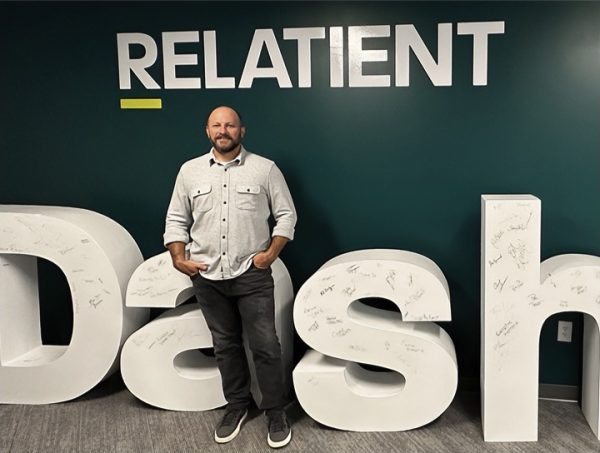
Screenshot
Primary Responsibilities

When asked about his primary responsibilities, Gartland explained:
My primary responsibility is to set the strategic direction for Relatient and ensure we execute it in a way that helps provider groups improve access for the communities they serve. That means aligning product, operations, go-to-market, and customer success around one core objective: helping healthcare organizations grow efficiently by making it easier for patients to connect and get care.
A big part of that is making sure we stay focused on the real operational problems our customers face. Healthcare access is not just a digital convenience issue. It is a workflow, staffing, utilization, and patient experience issue all at once. My job is not only to think about product innovation, but also to ensure our roadmap reflects the reality of how healthcare organizations actually work.
Core Products And Features

When asked about the company’s core products and features, Gartland detailed:
At the center of Relatient is Dash, our intelligent patient access platform. The backbone of that platform is a rules-based engine that helps healthcare organizations manage the real complexity of patient access, such as provider preferences, specialty-specific workflows, and operational constraints, in a way that stays accurate and scalable. That foundation is what allows us to expand access across multiple modalities without creating fragmented experiences.
Once the scheduling logic is unified, organizations can bring those capabilities into AI-enabled contact centers, online self-scheduling, and voice interactions while keeping the experience consistent and operationally sound. In other words, the value of AI is not just that it can converse. It is that it can sit on top of trusted operational and clinical logic and extend access in ways that feel simple to patients and sustainable to provider organizations. This same backbone supports connected access pathways across mobile, web, and chat.
Two important examples are Dash Self and Dash Voice AI. Dash Self, the No. 1 Best in KLAS solution for patient self-scheduling, allows consumers to book, reschedule, or manage appointments through a mobile-friendly, frictionless experience while adhering to provider-specific rules. Dash Voice AI brings those same capabilities into the phone channel, where many patients still prefer to engage.
Provider groups using these solutions have found one third of appointments are booked outside business hours, and many organizations particularly see strong new-patient growth through digital access. Across the over 150 million appointments managed by Relatient, we see large improvements in no-show rates, increases in provider utilization, and up to 20% efficiency improvements through automation.
Separating AI Innovation From Hype
When asked about challenges in healthcare technology and how Relatient has addressed them, Gartland noted:
One of the biggest challenges in healthcare technology right now is separating real operational innovation from all the AI hype. In patient access, it has become easy to build something that looks impressive in a demo. It is much harder to build something that can make the right scheduling decision within the complexity of real healthcare operations. That is where many newer entrants and point solutions jump into the space and struggle.
In healthcare, the challenge is rarely just having a natural agentic conversation. The harder part is understanding the downstream business logic. How provider preferences vary, how specialties differ, how appointment types and locations interact, and how decisions need to be made safely and accurately in real time all create edge case scenarios.
That is why we have stayed focused on building from the intelligence layer outward. Our view is that AI becomes far more valuable when it is grounded in operational logic rather than bolted onto disconnected workflows.
The way we have navigated this is by staying disciplined about what actually creates value for customers. We do not think of access as a collection of isolated tools; we think of it as a connected operating intelligence layer.
That is why our focus has been on creating a unified platform that can support voice, digital self-service, communication, and automation through a shared set of rules and workflows. That creates better patient experiences, but it also gives healthcare organizations more confidence that automation will work in the real world, not just in the demo environment.
Technology Evolution
When asked how the company’s technology has evolved since launching, Gartland explained:
The core idea behind Relatient has remained consistent: practices grow when patient access improves, and access improves when scheduling is accurate, connected, and intelligent. What has evolved is the breadth of modalities, experiences and capabilities we can layer on top of that foundation.
The rules-based scheduling architecture was built to handle complexity from the beginning, and over time we have extended it with more automation, analytics, and AI so organizations can bring the same intelligence into more parts of the patient journey.
That evolution matters because patient expectations no longer live in one channel. Some patients want to schedule online, some want to handle changes through text or chat, and many still rely on the phone. Some of these experiences need to flow from one channel to another seamlessly.
What healthcare organizations need is not a series of disconnected access tools, but a consistent way to deliver the same logic and same quality of experience wherever the interaction begins. Our technology has evolved to do exactly that: to make the access intelligence available across more touchpoints while keeping the experience simple on the front end.
A good example is Dash Voice AI. Voice AI is not valuable simply because it can handle a conversation. It becomes truly useful when it can act on trusted logic, automate routine requests accurately, and expand access without introducing more manual cleanup for staff. That same principle applies to self-scheduling, messaging, and API-enabled workflows.
Major Company Milestones
When asked about some of Relatient’s most significant milestones, Gartland said:
A major milestone for Relatient was the company’s 2021 growth investment, which created the opportunity to accelerate the vision for a more unified, intelligent patient access platform. Rather than pursuing disconnected expansion, the company focused on building a platform strategy that could support self-service, automation, and communication through a common scheduling and workflow foundation.
That strategy has delivered real results. Relatient now optimizes more than 150 million patient appointments annually and has averaged roughly 30% year-over-year in volume growth since 2021.
Self-scheduling adoption has accelerated significantly, with organizations using Dash Self seeing a 50% decrease in no-show rates, a 97% decrease in cancellations, and as many as 80% of online self-scheduled appointments coming from new patients, underscoring how modern access tools drive growth.
More broadly, the platform has improved the experience of millions of patients, providers and healthcare administrators.
Customer Success Stories
When asked about specific customer success stories, Gartland shared:
One story that stands out is Complete Health, a value-based primary care group that expanded from 1 to 24 locations in five years. As the organization grew, patient access became increasingly difficult to manage. Staff were handling more than 258,000 appointments annually, and provider preferences and rules were being managed across offline resources like binders, spreadsheets, and sticky notes. Relatient partnered with Complete Health to centralize scheduling workflows and bring more intelligence and consistency into the process.
What makes that story compelling is that it reflects a challenge many healthcare organizations face: access complexity compounds as organizations scale. By centralizing scheduling through Dash and automating how provider preferences are managed, Complete Health was able to transform a highly manual process into a more streamlined and patient-friendly experience.
The result was an average inbound call time of under three minutes, and Dash Voice AI was autonomously handling 56% of appointment-related calls. That allowed staff to spend more time on the interactions that truly required human judgment and attention.
Similarly, Raleigh Orthopaedic used Dash in a phased way across centralized scheduling, self-scheduling, and voice AI. This growing MSK specialty group achieved a 78% online appointment conversion rate, saw 33% of appointments scheduled after hours, and had its voice AI agent handle 54% of incoming calls, contributing to an 8% reduction in call abandonment.
Together, these stories show what happens when healthcare organizations simplify access in context to the complex underlying operational reality.
Competitive Differentiation
When asked what differentiates Relatient from its competition, Gartland emphasized:
The biggest difference is that Relatient is built around the depth of intelligent healthcare access, not just the surface layer of the interaction. Many tools can automate calls, chats, or digital forms. But in healthcare, that is only useful if the organization can trust the decision behind it.
Provider rules, specialty workflows, scheduling exceptions, and location-specific constraints all matter. That is where our platform is different.
Our approach starts with a rules-based foundation and then extends that intelligence across additional modalities and patient access workflows. That means healthcare organizations do not have to choose between convenience and control. They can simplify the patient experience while keeping the operational safeguards their teams depend on.
Relatient also links access points across interactions, creating a more consistent and predictable patient experience because provider logic is shared across those channels.
At a category level, our view is simple: healthcare does not need more point tools that work well in isolation. It needs a connected access layer that can scale. That is why we have focused on building an intelligent patient access platform rather than a single-feature solution.
Future Goals
When discussing Relatient’s future goals, Gartland concluded:
Looking ahead, one of the most exciting opportunities is making patient access more adaptive without making it less dependable. Today, many environments still rely on relatively rigid rules to protect operational accuracy. That is necessary, but the next step is to make those systems more context-aware and responsive, so they can better reflect preferences, needs, and real-time capacity while still preserving the integrity healthcare providers are seeking.
As AI capabilities continue to improve, the opportunity is not just to add new features. It is to use those capabilities to open more opportunities to bring that intelligence into the experience. The complexity should sit inside the system, not on the shoulders of the patient or the staff.
We see this across specialties and care settings where access complexity is especially high. Whether it is orthopedics or behavioral health, ENT or gastroenterology, the larger goal remains to keep helping healthcare organizations replace fragmented access experiences with something far more coordinated, scalable, and patient-centered.

