

Dr. Rohan Ramakrishna’s Background
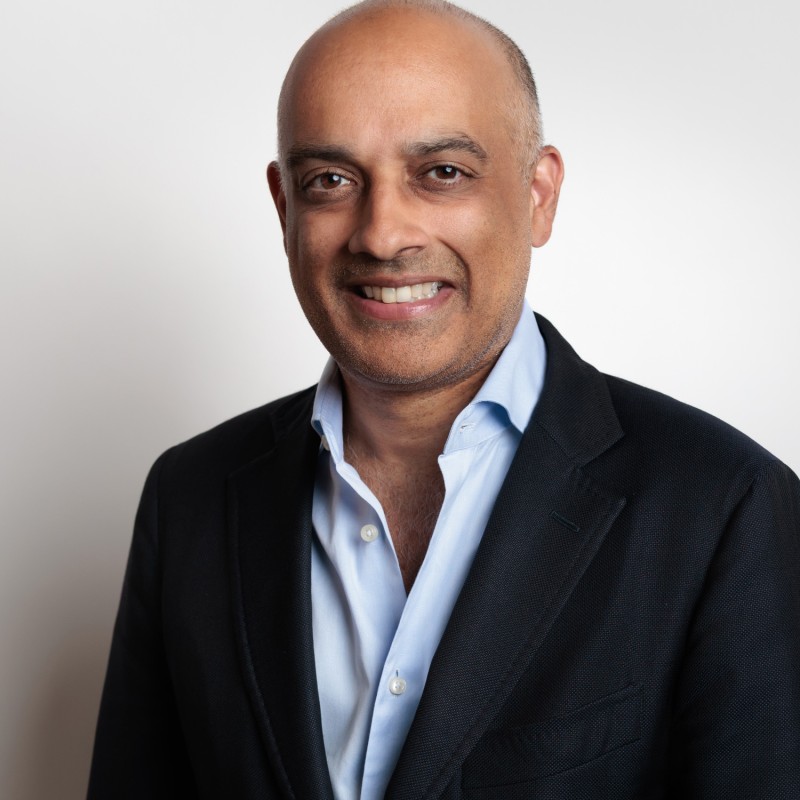
When asked about his background, Dr. Ramakrishna shared:
I’m a neurosurgeon that’s dedicated my career to the care of patients with brain tumors. I’m also a co-founder of Roon.
Those roles are more connected than they might initially appear. Medicine is an intensely knowledge-driven profession, but some of its most valuable knowledge never makes it into a paper, guideline, or textbook. It lives in the experience of physicians: what they have seen work, how they interpret imperfect evidence, and how they make difficult decisions when there is no obvious answer.
At Roon, I help bridge the worlds of medicine, technology, and community. My responsibilities include product and company strategy, partnerships, and helping ensure that what we build reflects how doctors actually think and work. Continuing to practice medicine is important to me because it keeps me close to the problems we are trying to solve.
How The Idea For Roon Came Together
When asked how the idea for Roon originated and how the company evolved, Dr. Ramakrishna explained:
Roon began with a simple observation: people navigating serious illness were surrounded by information but often lacked access to guidance they could trust. We initially built a platform through which leading experts could answer the questions patients and families were actually asking.
As we worked with physicians, however, we began to see a broader problem. Doctors themselves did not have a modern, trusted digital home. Their professional conversations were scattered across conferences, group texts, email chains, generic social media platforms, and informal curbside consultations.
My co-founders, Vikram Bhaskaran and Arun Ranganathan, and I became increasingly interested in what would happen if we could bring those conversations together.
That is what Roon is becoming: a physician intelligence network, a digital doctors’ lounge where verified physicians can exchange perspectives, discuss research, learn from one another, and turn the wisdom of individual doctors into a resource for the profession. We aim to empower all doctors by giving them access to the collective intelligence of their field.
Primary Responsibilities At Roon
When asked about his primary responsibilities at the company, Dr. Ramakrishna explained:
My job is to make sure that Roon solves meaningful problems for physicians rather than simply applying technology to medicine because it is possible.
That includes helping define our product and growth strategy, building relationships with journals and professional communities, and setting standards for trust and quality. I also spend a great deal of time speaking with doctors about how they currently learn, where existing tools fail them, and what would make Roon genuinely useful in their daily professional lives.
More broadly, I see my role as representing the physician’s perspective inside the company. Technology should amplify physicians’ expertise, not treat them as an afterthought.
Favorite Memories Working At Roon
When asked about his favorite memories working at the company, Dr. Ramakrishna highlighted the professional connections developing among physicians on the platform:
My favorite moments have been watching physicians who may never have met in ordinary life begin helping one another on Roon.
A doctor raises a difficult question, posts an interesting paper, or shares an observation from practice. Another physician from a different institution, specialty, or generation adds a perspective that changes the conversation. Very quickly, it begins to feel like the best kind of doctors’ lounge: curious, candid, occasionally argumentative, but ultimately oriented toward helping people practice better medicine.
Most importantly, though, it’s a community you belong to, and that feeling of belonging is what makes Roon special.
As a physician, you immediately recognize the value of those exchanges. They resemble the conversations that happen in the hallway after a conference presentation or when you call a trusted colleague about a difficult case. Seeing those interactions begin to occur across institutions and geography has been especially meaningful.
Another ongoing experience is the ability to meet physicians from across the country, from frontline doctors to former leaders of the NIH/NCI/CDC and more. It’s been so inspiring to hear the ways Roon is helping them solve problems and provide them with a professional community.
Core Products And Features
When asked about Roon’s core products and features, Dr. Ramakrishna explained:
Roon is a private, verified network built specifically for physicians.
Doctors can build professional profiles, follow colleagues and experts, share research and commentary, ask questions, participate in specialty-based discussions, communicate directly, and create groups around shared interests.
We are also developing formats that make medical knowledge more collaborative. For example, rather than treating a research article as a static object, Roon can become part of its ongoing life: authors can explain their findings, physicians can debate the implications, and clinicians can discuss how, or whether, the results should change practice.
AI is an important part of the product, but it works in service of the network. It can help physicians discover relevant conversations, summarize complex discussions, organize differing perspectives, and surface knowledge that would otherwise disappear into a feed or group chat.
Our AI implementation is to make collective physician intelligence more visible, useful, and scalable.
Challenges In Building A Trusted Physician Network
When asked about the challenges Roon has encountered and how the company is addressing them, Dr. Ramakrishna explained:
The central challenge is that physicians are both extremely busy and appropriately skeptical. They do not need another platform competing for their attention. They need something that provides enough professional value to justify the time they spend there.
Trust is equally important. Doctors need to know that they are speaking with verified peers, that conversations will retain a high level of quality, and that the product was designed around the realities of medicine rather than the engagement incentives of traditional social media.
We have addressed that by building closely with physicians, emphasizing verification and professional identity, and building for dialogue rather than attention. We are deliberately trying to create a high-trust network, even when doing so requires more patience than pursuing growth at any cost.
Significant Company Milestones
When asked about Roon’s most significant milestones, Dr. Ramakrishna highlighted the growth and composition of its physician network:
The most important has been the rapid growth of the network with our members representing frontline clinicians, department leaders, former heads of the NIH/NCI/CDC, and journals including the New England Journal of Medicine and American Heart Association Journals.
To have these members be key members of Roon so early in its history represents important validation that we are solving for an essential unmet need.
Physician Success Stories And Professional Collaboration
When asked about specific examples of how physicians benefit from Roon, Dr. Ramakrishna explained:
Because Roon is a physician network rather than a conventional enterprise product, we tend to think in terms of member success rather than customer success.
The most meaningful examples are often relatively simple. A physician encounters a question that is not neatly answered by a guideline and can quickly hear how respected colleagues are approaching it.
A researcher can explain the nuances of a newly published study rather than watching the work get reduced to a headline. A doctor entering a new field of interest can find the people and conversations that would otherwise take years to discover. Or just simply a place where doctors can celebrate or commiserate united by their shared professional identities.
Success for us is when a physician comes to Roon with one understanding of an issue and leaves with a more informed or nuanced one, or when a professional relationship begins online and becomes a durable source of collaboration.
Success for us also lies in our ability to provide meaningful, differentiated discovery for our doctors that is personalized to their practice and interests. We hope to be the inspiration and connection engine for medicine.
Funding And Investors
When asked about Roon’s funding and revenue metrics, Dr. Ramakrishna shared:
We publicly announced a $15 million Series A financing in November 2024. Investors included Forerunner, Firstmark, Sequoia, and TMV.
Total Addressable Market
When asked about the total addressable market Roon is pursuing, Dr. Ramakrishna explained:
At the broadest level, our market is the global physician community, 14 million doctors worldwide, depending on the dataset and definition used.
But the opportunity is larger than the number of physicians alone. Physicians influence an enormous ecosystem that includes clinical care, medical research, pharmaceuticals, medical technology, professional education, publishing, and health policy.
Our ambition is to build the professional intelligence network that connects that ecosystem. We want society to be able to benefit from the collective experience of the medical profession.
What Differentiates Roon From Its Competition
When asked what differentiates Roon from other medical technology products and professional platforms, Dr. Ramakrishna explained:
Most existing medical products are built as libraries, directories, publishing platforms, productivity tools or rapidly converging AI-powered medical search tools. They are useful, but they generally organize information that has already been formally documented.
Roon is built around a different premise: medicine does not only need a better library or better search capabilities. What’s missing is a resource to help physicians deal with the very large gray zones of medicine, where evidence is incomplete and local resources, real-world evidence, and judgment form the last few miles of medicine.
So what medicine needs, and what Roon aims to provide, is the new and essential physician intelligence network.
For example, the most valuable questions in medicine are often not simply, “What does the literature say?” They are, “How should I interpret this evidence?”, “Are other physicians seeing the same thing?”, “How would you handle this situation?”, or “Is this research actually changing practice?”
Roon is designed to capture that layer of knowledge. It combines a verified physician community with technology that can organize and amplify what doctors know collectively.
We are not trying to use AI to disintermediate physicians. We are using it to help physicians learn from one another at a scale that was not previously possible.
Future Goals
When asked about Roon’s future goals, Dr. Ramakrishna outlined the company’s ambition to expand its professional community and connect physicians through shared knowledge:
Our immediate goal is to build the most valuable professional community for physicians, one that doctors return to because it makes them better informed, better connected, and better able to do their work.
We are building the inspiration and connection engine for medicine, where every doctor can draw on the collective intelligence of the profession.
