

Saviynt provides an AI-powered identity and access governance platform that manages and secures digital access for human, non-human, and AI agent identities across an organization’s applications, data, and infrastructure. Pulse 2.0 interviewed Saviynt’s Chief Product & Strategy Officer, Jeff Margolies, to learn more.
Jeff Margolies’ Background
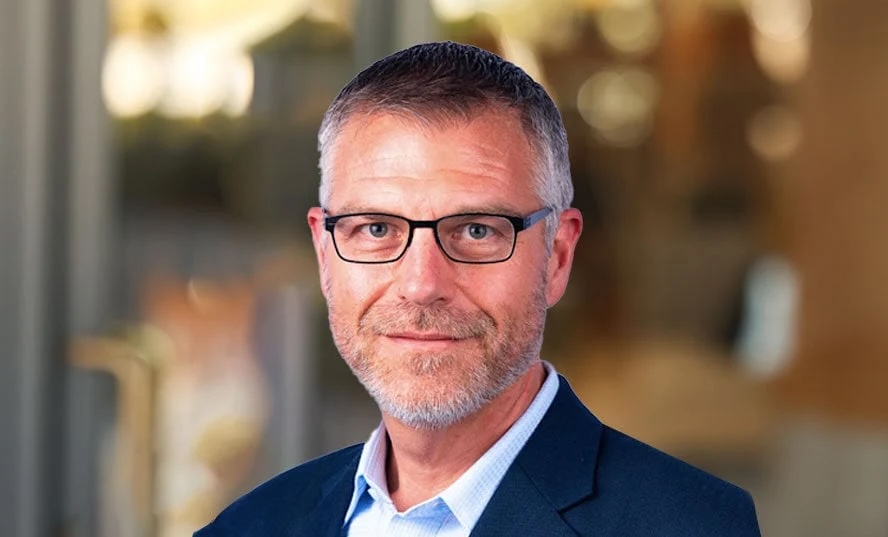
Could you tell me more about your background? Margolies said:
“I’ve spent more than 30 years in cybersecurity and identity, working across consulting, strategy, and product leadership. Before joining Saviynt, I was part of the security leadership teams at Accenture and Deloitte and also led strategy, partnerships, and corporate development at Mandiant. At Saviynt, I serve as Chief Product and Strategy Officer, focusing on product vision, technology partnerships, and long-term strategy. A big part of my role is helping the company balance what customers need today with where identity security is headed next.”
Role
What are your primary responsibilities? Margolies shared:
“My role sits at the intersection of product leadership, company strategy, and long-term growth. As Chief Product & Strategy Officer, I lead Saviynt’s product organization and work closely with customers and teams across the business to shape our product vision, roadmap, and innovation strategy. A big part of my focus is ensuring we are building solutions that address both today’s identity security challenges and the evolving needs of modern enterprises, especially as AI reshapes the technology landscape.”
Favorite Memory
What has been your favorite memory working for Saviynt so far? Margolies reflected:
“We recently held our company SKO at SoFi Stadium, an accomplishment in itself, but what made the experience memorable was the feeling we all had standing on the field of this iconic venue as a team. Saviynt has been on a remarkable growth trajectory over the past year, including raising $700M at a $3B valuation. Even with this momentum, it felt like one of those rare, surreal moments where you look around, smiling from cheek to cheek, and think, “How did we get here? We’ve made it!” There was a real sense that we had arrived, not just in terms of growth, but as a team and as a company. It captured the energy and camaraderie that make Saviynt special.”
Core Products
What are the company’s core products and features? Margolies explained:
“Saviynt’s core focus is helping organizations manage, govern and secure access across their business, from workforce identities to privileged access to the emerging world of AI and machine identities. What has always set us apart is our ability to support the complexity of the enterprise. Because large organizations do not operate in simple environments, our platform is built to help them govern access, reduce risk, and stay agile without forcing them into a one-size-fits-all model.”
Challenges Faced
Have you faced any challenges in your sector of work recently, and how did you overcome those challenges? Margolies acknowledged:
“The biggest challenge right now is the speed of change in the age of AI. Every company is trying to figure out how to move quickly enough to stay ahead, while also making sure they are solving real problems both operationally and for their customers. There is pressure coming from all directions, from the largest model providers to very fast-moving startups. In parallel, identity is the control plane for this new AI-driven world and requires investment. It determines who or what has access, what actions can be taken, and how those actions are governed. Without that foundation, organizations cannot safely scale AI.”
“Our answer has been to embrace that reality and move with urgency. We are investing in AI, building new capabilities quickly, and giving teams the room and resources to think boldly. A big part of that innovation is focused on enabling true AI transformation without sacrificing security, ensuring organizations can move fast while maintaining visibility, control, and trust across both human and non-human identities. At the same time, we have to stay grounded. We serve hundreds of customers, and not all of them are operating at the same pace as Silicon Valley. For us, it is about keeping one foot in the future and one foot in our customers’ reality.”
Evolution Of The Company’s Technology
How has the company’s technology evolved since launching? Margolies noted:
“Saviynt has evolved from a strong identity governance foundation into a broad identity security platform built for modern enterprise needs. Over time, we have expanded our capabilities to help organizations handle more complexity across applications, cloud, privileged access, and now AI-related use cases. A big part of that evolution has been expanding our focus beyond traditional identities to include non-human identities, such as machines, applications, and AI agents, which are rapidly becoming a core part of enterprise environments. Securing and governing all types of identities is critical as organizations scale automation and AI. The next major chapter is about helping customers secure AI-driven environments while also using AI inside our own platform to improve speed, insight, and execution. That includes ensuring organizations have the visibility, control, and governance needed across both human and non-human identities to operate confidently in an AI-first world.”
Significant Milestones
What have been some of the company’s most significant milestones? Margolies cited:
“As with any company of our size and maturity, there have been several important milestones along the way that we are proud of. Reaching the $100 million in ARR mark was a major moment, and of course, we are excited for what comes next. Another key milestone was when Sachin, our CEO, and Paul, our president, moved into full-time operational roles, which really accelerated the company’s pace, allowing us to move faster on product innovation, scale the organization more effectively, and align more closely around a unified long-term vision. More recently, the launch of our AI-related products feels like another major turning point. As organizations rapidly adopt AI, they are facing a new class of identity challenges driven by non-human identities, autonomous agents, and dynamic access patterns. Our AI-driven innovations are designed to address this shift directly, helping enterprises secure and govern these new identities while enabling them to scale AI safely and confidently. This is not just a product evolution, but a response to a broader market need as identity becomes the control plane for AI. Sometimes you only realize you were standing on a milestone after the fact, but this is a major step forward for the company and for the industry, as it represents a shift toward securing identity in an AI-first world and enabling organizations to innovate without compromising control or trust.”
Customer Success Stories
Can you share any specific customer success stories? Margolies highlighted:
“One example that stands out is Hertz. A couple of years ago, they were not seeing the value they wanted from the platform. Instead of pulling back, we leaned in, spent more time with them, and worked closely through the challenges. Today, they are a strong partner and a good example of what can happen when you invest in the relationship and stay focused on outcomes. The impact has been significant. Hertz migrated more than 200 applications to Saviynt Identity Cloud within a year, onboarding 35,000 human identities and 6,000 machine identities over that same period. They also leveraged Agentic AI through Saviynt’s Integration and Onboarding Agent to automate onboarding for legacy and mainframe applications. That helped eliminate roughly 3,000 manual tasks per month, with potential monthly savings of up to $240,000 based on an estimated $80 cost per task. For us, that is the larger story: identity security success is not just about deploying technology. It is about partnership, trust, automation, and staying close to the customer over time so the program delivers measurable business and security outcomes.”
Funding/Revenue
Are you able to discuss funding and/or revenue metrics? Margolies revealed:
“What I can say is that recent funding has helped accelerate the business in meaningful ways, especially around R&D, talent, and product innovation. We recently raised $700 million in a Series B round at an approximate $3 billion valuation, which reflects strong market confidence in our vision and the growing importance of identity security as organizations adopt AI at scale. It has enabled us to invest in new teams, bring in specialized talent, and move faster in key growth areas, including AI. This investment is helping us accelerate product development, expand AI-driven capabilities, and deepen integrations across the broader ecosystem as enterprises modernize their infrastructure. It has also allowed us to continue investing in the people who have helped build the company and position Saviynt for its next stage of growth. More broadly, it enables us to scale our platform globally and continue advancing identity security as a foundational layer for organizations operating in the AI era.”
Differentiation From The Competition
What differentiates the company from its competition? Margolies affirmed:
“One of our biggest differentiators is the comprehensiveness of our platform. We are built to meet the complexity of real enterprises, not ask customers to simplify their world to fit a narrow solution. For example, our platform converges identity governance, privileged access, application access, and identity security posture management into a single approach, allowing organizations to manage access across applications, data, and infrastructure without stitching together multiple point solutions. Our culture is another key differentiator. Saviynt has a very practical, roll-up-your-sleeves mindset. We are focused on solving problems, moving quickly, and helping customers succeed. That shows up in how we engage during implementations and beyond, working closely with customers to address real-world challenges rather than taking a one-size-fits-all approach. And finally, we work very closely with customers. That partnership mindset shapes how we build, how we prioritize, and how we think about the company’s future. Many of our customers actively participate as design partners, helping shape new capabilities, particularly as we expand into areas like AI and non-human identity security. That collaboration ensures we are building solutions that reflect real enterprise needs and evolving market demands.”
Future Company Goals
What are some of the company’s future goals? Margolies emphasized:
“At the highest level, our goal is to become the leading identity security company for human and nonhuman identities. Right now, that means staying focused on AI, growth, and excellence. A big part of that is ensuring we are leading in how organizations secure and govern AI identities, which are quickly becoming the fastest-growing and most complex identity type in the enterprise. We want to lead the conversation around identity security in the age of AI, particularly as identity becomes the control plane for AI-driven environments and organizations look for ways to innovate without introducing new risk, continue growing the business, and keep improving how we operate so we can scale effectively and serve customers even better.”
Additional Thoughts
Any other topics you would like to discuss? Margolies concluded:
“One of the most important conversations happening right now is how identity security strategies must shift in light of AI. As more systems, agents, and workflows become AI-driven, the need for clear governance, accountability, and human oversight only grows. What’s changing is the scale and nature of identity itself. Enterprises are no longer just managing human users, but also machine identities, service accounts, and now AI agents that can operate autonomously and make real-time decisions. That fundamentally changes the risk profile. Without the right identity controls in place, organizations can lose visibility into who or what has access, how decisions are being made, and how to enforce accountability. That makes identity not just a security function, but a foundational requirement for safely adopting and scaling AI. That is a major area of focus for Saviynt, and I think it will be one of the defining challenges and opportunities for the industry over the next few years.”
