

Sentinel Global is a San Francisco-based venture capital firm that invests in enterprise technology founders developing AI, blockchain, and open computing architectures to reshape global markets. Pulse 2.0 interviewed Sentinel Global founder and managing partner Jeremy Kranz to learn more.
Jeremy Kranz’s Background
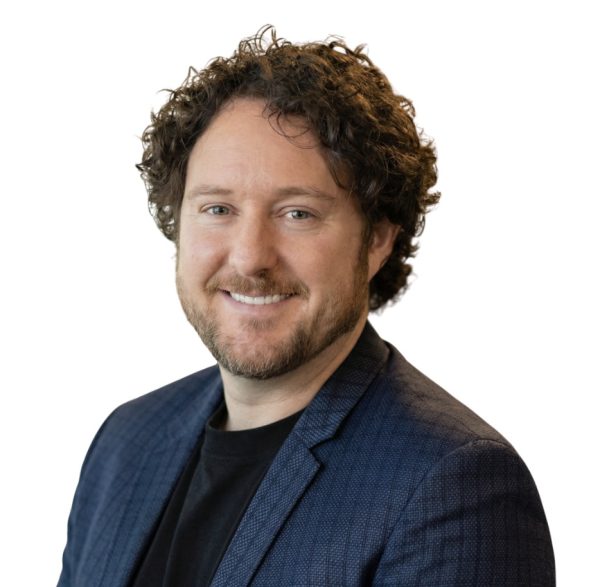
Could you tell me more about your background? Kranz said:
“I’m a venture capitalist, but really just a very curious person. I’ve worked for over 25 years in VC, and have been fortunate enough to see more than 20 of my portfolio companies go through IPOs across major global markets.”
“My journey began with a deep curiosity, inspired by characters like Inspector Gadget and Optimus Prime, which led me to study operations research and decision sciences—how things are made. I started as a kid entrepreneur, facing the typical challenges of leadership, decision-making, management, and finance.”
“My first non-entrepreneurial job was at a large company during the peak of the 90s tech boom. With a teammate, I developed a new software program using queuing models, which unexpectedly turned me into a software company builder. However, I didn’t enjoy the founding process, and my bosses ultimately encouraged me to transition into venture capital. My move to VC was somewhat accidental; I love being involved in creation but not running the company itself.”
“I started my venture career at Intel Capital in the late 90s, just before the dot-com era. Since everyone was focused on Silicon Valley, I was assigned the two least popular categories: open-source software, which people wrongly believed would never be profitable, and emerging markets. This led me to Asia in 1999, 2000 and 2001, setting the stage for a career that was initially non-US focused.”
“For two decades, I built and managed the technology investment arm for GIC, the Singapore Sovereign Wealth Fund. Although based in San Francisco, I ran the program globally. My investments were always driven by specific themes, many of which are the same as the themes we focus on today at Sentinel.”
“Separately, I founded The Bridge Forum, a platform created out of personal passion to connect startups in developed markets with enterprises worldwide for business development. I ran this at no cost to participants, and it grew into one of Silicon Valley’s premier international connectivity platforms and business development engines, which is still successful today.”
“In essence, I am a venture capitalist, but at my core, I am simply a very curious person.”
Evolution Of The Firm’s Thesis
How has your firm’s thesis evolved over time? Kranz shared:
“My orientation has always been thematic, focusing on three core areas, all of which are extensions of subjects I’ve covered throughout my career and that remain relevant in their latest iterations.
- Movement of People, Packages and Food: This was my initial passion as a child and remains one of the three themes we cover at Sentinel Global today: supply chain optimization and connected commerce.
- The Role of Programmable Money: This is the evolution of what was once “Fintech.” It involves the infusion of protocol-based systems, such as blockchain, stablecoins and tokenized real-world assets, into the traditional financial system.
- Enterprise IT Stack: This covers the systems that make the enterprise world function, including the shift from on-premise to the cloud, as well as the distributed cloud, and now the emerging, complex world of AI implementation. This theme is an extension of my past work investing in open-source, enterprise-oriented companies and those that leverage it, like Zoom.”
Favorite Memory
What has been your favorite memory working for your firm so far? Kranz reflected:
“Our unique ‘Unlimited Partner’ model views our Limited Partners (LPs) as true partners, not just shareholders. Our goal is to ensure their business success goes beyond simply delivering investment returns.”
“A true highlight for me is when these Unlimited Partners invite my team or Sentinel Labs to discuss the future of investment management, particularly how technology and AI will drive disruption in areas like tokenization. This dynamic mirrors my previous role at GIC, where I engaged with large institutions about the impact of tech disruption. Having these direct, forward-looking conversations with my Unlimited Partners on a new stage is a real pleasure and my favorite memory so far.”
Significant Milestones
What have been some of your firm’s most significant milestones? Kranz cited:
“Here are the significant milestones:
- Fundraising Against the Odds: We successfully raised a sizable fund as a solo general partner, which, especially under the current challenging market conditions, is a major achievement and hopefully a unique one.
- Executing a Contrarian Strategy: We made a commitment to our Limited Partners (LPs) to have a concentrated portfolio and take big, contrarian swings. We delivered on this promise with our very first sizable investment in a blockchain data platform, Chainalysis. This high-conviction bet has worked out exceptionally well and will largely define the success of Fund I. I am proud of the courage and fortitude we showed in following through on our “not a spray and pray” philosophy.
- “Bringing the Band Back Together”: It is a real pleasure to have key individuals I’ve worked with in the past rejoin me at Sentinel Global in this new capacity. We have established playbooks, we run well as a team, and the market is familiar with our collaborative approach. Specifically, I’m thrilled to be working again with Ethel Chen, a former Sequoia Capital Global Equities investor who has backed companies like Anthropic, Databricks, Zoom, and Snowflake. Ethel and I worked together at GIC, and that shared history matters enormously. As a team, we bring more than 45 years of combined investing and operating experience, and every senior member has done meaningful work outside the United States.”
Investment Success Stories
Would you like to share any specific investment success stories? Kranz highlighted:
“We made an investment in Via, a Boston-based company founded by a multi-time, successful enterprise founder. While it’s early for our Fund I, Via is a standout. For years, critics have argued that blockchain couldn’t be used to build profitable, truly useful enterprise solutions. Via refutes this by developing cybersecurity software based on a zero-knowledge proof blockchain.”
“A bold statement, but if you visit their website, it currently says, ‘We sell blockchains to the Department of Defense.’ They have strong customer loyalty and are growing rapidly. Their customers include the U.S. Department of Defense, and their technology is used to secure cyber and IoT assets in the war theater. This is a powerful story at a time when people are asking, “What has blockchain actually contributed to the world?” Keeping our troops safe is a pretty good answer.”
Industry Focus
What are some of the industries that your firm is focused on? Kranz noted:
“We are a B2B, enterprise-focused firm that addresses complex problems, particularly in regulated industries like government and finance, where ‘half-hearted’ solutions are unacceptable.”
“For investment themes, one of our focuses is on the Finternet, which is the infusion of financial services directly into the fabric of the internet so traditional markets can operate more seamlessly in a digital-first world. It is about making financial infrastructure native to how the internet already works, rather than something layered on top of it.”
“Next, we look at supply chain innovation through what we call connected commerce. This is about enabling systems, partners, and platforms to actually talk to each other, reducing friction across supply chains and allowing commerce to move faster, more transparently, and with fewer handoffs.”
“Finally, we are focused on the enterprise IT stacks of the future. This includes how organizations are preparing for advanced technologies like AI and quantum computing, and what it takes to build resilient, flexible infrastructure that can support those next-generation applications as they move from theory into real-world use.”
“We are a multi-stage, global investor, focusing on mixed stages (Series A, B and C). Our portfolio companies are located both within the U.S. and internationally.”
Differentiation From Other Firms
What differentiates Sentinel Global from other firms? Kranz emphasized:
“Our firm offers two key differentiators in the venture landscape.”
“First, we are uniquely global in our orientation at a time when many venture firms have reduced their international focus, particularly in markets like China, India, Southeast Asia and Latin America. We have prioritized developing business development relationships in these regions. While our investment team is not physically based there, this network allows us to provide portfolio companies with valuable, market-specific resources when they need help.”
“Second, we leverage Sentinel Labs as a major facilitator. Sentinel Labs generates research and fosters community focused on the tactical realities of implementing enterprise technology. We pride ourselves on being “truth tellers,” focusing on the actual impact of technologies like AI or quantum. Sentinel Labs acts as a crucial bridge between founders and enterprise adopters, helping to reduce friction, shorten time-to-market, and increase the likelihood of success for both parties.”
“A core part of what makes Sentinel Labs different is Sago, an AI product we built internally and have now extended to our LPs and founders. Sago is lightweight, fast to onboard, and designed to make our research actionable rather than theoretical. We’ve already onboarded a number of LPs to initial tools and workflows, with more functionality on the way. The idea was simple: we built these AI tools to sharpen our own work first, and once we saw what they could do, it made sense to put them in the hands of the people we serve.”
Future Firm Goals
What are some of your firm’s future goals? Kranz described:
“The goals for the firm are to elevate the capabilities of Sentinel Labs to be a meaningful partner for founders and for enterprises dealing with the complex implementation of new pioneering technology. That’s why our teams are a heavily weighted group of previous operators who’ve actually run their own businesses, combined with teammates who have strong underwriting capabilities.
Our primary goals are to:
- Build Research and Network Capabilities: We are focused on developing the research and network capacity around Sentinel Labs.
- Advance Tokenization: We believe the tokenization of financial instruments will transform both private and public markets over the next five years, and we intend to advance this trend.
- Be ‘Looking Around the Corner’ Investors: We want to be known as investors who think several steps ahead of the market. For instance, we made a quantum investment a year ago, well before it became a popular rage. We aim to be two, and if we’re lucky, three years ahead of where the market’s “lemmings” go.
Finally, we’ve identified ways to leverage AI for our investors. We initially built an internal incubation program and engineering team to service our own needs. We then translated these lessons into tools that benefit founders, other VCs, and our investors in the Sentinel Global fund, providing them with access to what we believe is an important part of the future.”
Additional Thoughts
Any other topics you would like to discuss? Kranz concluded:
“First, on defense versus offense in AI innovation, a lot of attention today is still going to defense even though most innovation dollars are clearly flowing to offense. By offense, I mean using AI to drive improvements and unlock new capabilities. Defense is about lowering AI failure rates, managing the expanding cyber risks created by AI-driven attacks, and dealing more effectively with hallucinations and low-quality data creeping into the enterprise. Right now the balance feels like 90% offense and 10% defense, but that pendulum is going to swing. The organizations that look ahead will rebalance those priorities and treat protection and resilience as part of innovation itself.”
“Next, on supply chain data management, the last decade was all about scale. Companies invested heavily to build network effects and grow infrastructure as fast as possible. Now the focus has to shift to improving the margins of that scale, and that work is much more hands-on. It is about figuring out how my data and your data can make both of us stronger and how we share the benefits and the costs of building that capability together. That shared data management layer is becoming a major topic in supply chains, but making it work ultimately requires real behavioral change, not just new technology.”
“Finally, the vision for Sentinel Global comes from having seen innovation from two angles at once, serving on the leadership team of a highly respected sovereign wealth fund while actively investing in technology. The core idea is that Sentinel may look like a venture fund, and it is one, but at heart it is a technology translation and transformation fund. We translate innovation into underwriting, identifying where value can be created in both technology companies and tech-enabled businesses. We translate it across private and public markets, and we help investors who are diversified across asset classes understand what these shifts really mean for investment management.”
“We are entering a world where private shares are tokenized and traded around the clock, public stocks trade 24/7, and access to capital broadens dramatically. That could mean someone buying a few cents’ worth of a global company on a phone, or building a highly customized ETF that blends public and private assets and settles instantly on chain. As the financial system gets rebundled, long-standing assumptions about liquidity, risk, and asset classes start to break down.”
“The traditional playbook for portfolio management, which has guided investors for decades, will need to be rewritten. In a world where illiquid assets become more liquid through rebundling, you can no longer draw the same clean lines between asset classes. We are already seeing this dynamic with stablecoins, where crypto’s most compelling use case turned out to be making cash even more liquid. What comes next is liquidity moving into areas that were once illiquid. Stocks, bonds, and eventually private companies will trade continuously on chain.”
“That shift is inevitable, and the vision for Sentinel Global is to be firmly on the right side of that curve.”
