

Smart Workforce AI provides an AI-powered, cloud-based platform that optimizes staff scheduling, predicts labor demand, and streamlines workforce management to reduce costs and improve employee satisfaction. Pulse 2.0 interviewed Smart Workforce AI co-founder and CEO Mohamed Yousuf to learn more.
Mohamed Yousuf’s Background
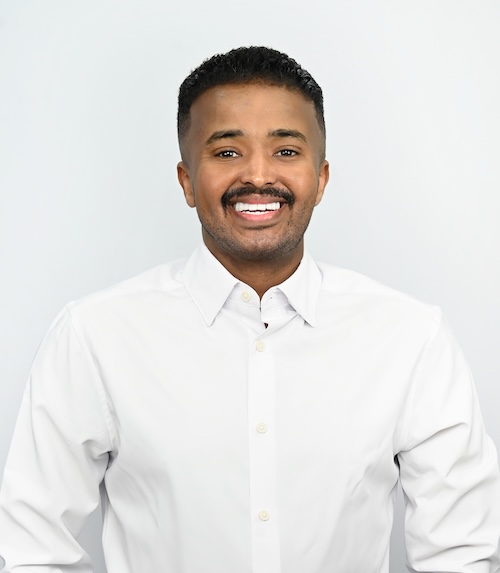
Could you tell me more about your background? Yousuf said:
“My background is very operational. For over 15 years, I worked inside environments where time, compliance, and human limits all collide, in aviation, large scale operations, and shift-based work. I was the end user building schedules, managing requests, handling disruptions, and dealing with the overall impact on people. That experience shaped how I think. I did not come from theory. I came from the reality of what breaks when systems scale faster than the tools supporting them.”
Formation Of The Company
How did the idea for the company come together? Yousuf shared:
“When the AI wave really started to take off with ChatGPT at the end of 2022, I spent time exploring what was emerging. I saw AI tools popping up everywhere marketing, legal, content, sales. A lot of people were rushing to learn entirely new domains just to apply AI to them. I took a different path.”
“Instead of learning something new, I looked back at what I already knew deeply. Scheduling, operations, shift based work. I had lived with those problems for years. When I mapped my own experience against what AI was suddenly capable of, the gaps became obvious. So much of the work was repetitive. So much time was spent cleaning data, reacting to changes, and manually analyzing patterns that humans were never meant to do at scale.”
“That’s when it clicked. AI wasn’t meant to replace the people doing the work. It was meant to absorb the repetition, the constant recalculation, the heavy data analysis, and give humans back the time to make better decisions. Smart Workforce AI came from that , not from chasing a trend, but from finally having the right technology to solve a problem that had existed for a long time.”
Favorite Memory
What has been your favorite memory working for the company so far? Yousuf reflected:
“To be honest it’s all the really cool AI tools we are constantly applying, at first it was an AI optimizer, then shortly after we added conversational AI to make changes instead of someone actually doing it, so just seeing these changes that I only dreamed of when I was a scheduler is really fantastic. As time passes a lot of “Aha” moments come, that’s why it is very important for companies to invest in R&D. The future is changing so rapidly, you can’t just build one model and that’s it. You need to continuously improve to stay competitive.”
Core Products
What are the company’s core products and features? Yousuf explained:
“At its core, Smart Workforce AI connects forecasting, scheduling, and workforce decision making into one system. We focus on demand-based staffing, intelligent schedule optimization, compliance awareness, and real time visibility for both leaders and employees. Flexibility is key, we want shift based employees to take control of their lives, companies can set their minimums and maximums and then allow teams to communicate with AI to constantly change their schedules to meet their life requirements as that continuously changes.”
Challenges Faced
Have you faced any challenges in your sector of work recently? Yousuf acknowledged:
“Yes, a lot of the changes we have implemented without data at times It is hard to see real results. That is why it is important to partner with clients, to offer pilot projects with financial incentives. For example, you can ask a client to try a new feature, and if it works out well, they will get a lifetime discounted rate or can be applied to their package for free. This way you can use their data to train the AI.”
Evolution Of The Company’s Technology
How has the company’s technology evolved since launching? Yousuf noted:
“Yes, all the time. We are in a time where technological advances are happening every few weeks compared to the past where it was every few years. With this, we need to always be in the loop with the latest technologies, whether it is through articles, or podcasts. It is a must to be aware, not just something that is good to do. When you are updated with the latest trends, you can think of how it can help your business. For example, with the success of ChatGPT, the world realized that conversational AI is what people prefer, to talk back and forth with AI to come up with an outcome. You can see that today with Notion AI, where previously people would build tasks and projects manually, today you can just talk with an AI tool to create those projects, to do lists, tasks with due dates, etc. The future is constantly changing, and it is very important to pay attention.”
Significant Milestones
What have been some of the company’s most significant milestones? Yousuf cited:
“The AI forecasting tool that works with different datasets for different industries. In the past and currently you have some scheduling tools that are industry specific, we taught our AI to look at different data sets for different industries to forecast their employee counts very accurately. For example, hospitals might look at emergency walk-ins, or patient bookings and with specific performance metrics per nurse it can forecast accurately what their upcoming requirements are. For example, ‘Foot Locker,’ might look at sales data, customer foot traffic and sales per salesperson ratio to determine how many sales people they need and at what time of the day. In the afternoon when people are working it could be less than in the evenings, so instead of having those standard working hours, it can remix it a bit.”
Customer Success Stories
Can you share any specific customer success stories? Yousuf highlighted:
“We had a cleaning company that had about 110 employees; most were contractors. After we looked at their performance metrics to forecast their staffing needs, we noticed some employees worked faster than other employees. They didn’t have a baseline, so when we looked at ways to increase productivity, they didn’t need to hire as many contractors, and saved approx. 20% in salaries. These are hidden costs that companies are not aware of, that might not be obvious, but when they are saving this it really helps them profit.”
Funding/Revenue
Are you able to discuss funding and/or revenue metrics? Yousuf revealed:
“We went bootstrapped to start this business. The benefit I had and that I am grateful for is that my partner is very strong in tech, being a software engineer, product engineer, and an AI researcher. This really helped as he knew everything from a tech side of things, and I knew the business. We didn’t rush to market, we focused on quality, and waited until everything meets what we say we are selling. We saw some delays, but in the long run it’s always better to start strong with the right features then to just start with an MVP and upgrade as we go. Our revenue metrics are using a SaaS model, we offer three packages, Foundation, Intelligence, and Enterprise. For foundation we offer basic scheduling tools and basic AI tools, intelligence is where things get interesting and the AI tool becomes more of a copilot, and depending on the company it can make certain decisions without manager override. Enterprise is very hyper personalized, as there will be a lot more integrations, and we usually offer a price range that is affordable for a larger company.”
Total Addressable Market (TAM)
What total addressable market (TAM) size is the company pursuing? Yousuf assessed:
“At a high level, we see Smart Workforce AI operating in a $60–80B+ global TAM. Here’s how we think about it simply:
Globally, there are about 1.3–1.5 billion shift-based workers across healthcare, retail, hospitality, manufacturing, logistics, and field services. Even excluding categories like call centers, this is one of the largest labor segments in the world.
If you assume a very conservative average of $4–6 per employee per month for workforce scheduling, forecasting, and optimization software, that alone represents: about $60B+ annually at the low end, and about $80B+ annually as platforms expand into forecasting, compliance, and decision support. Importantly, we believe this market grows over time.
As AI begins to automate repetitive 9–5 desk jobs first, more people will shift into trades and service roles that require physical presence and are much harder for AI to fully replace. Outside of a few areas like call centers, shift-based work is more resistant to full automation.
That means while desk-based SaaS markets may plateau or shrink, shift-based workforce scheduling becomes more critical, expanding the long-term TAM for Smart Workforce AI rather than reducing it. Also people’s wellbeing is starting to become a major discussion point, the long processes of asking your manager for certain requests, and waiting or being rejected due to the manager being overwhelmed with request, this will change as people will be able to talk with AI which is available 24/7, and can accurately see what effects each requests may cause.”
Differentiation From The Competition
What differentiates the company from its competition? Yousuf affirmed:
“We started as an AI first scheduling tool, not saying that we will take away jobs, but reduce workload on managers, shift supervisors, etc. We look at ways to constantly add new AI tools, while other companies are looking at ways to change their current workflows to absorb AI. Their initial datasets, workflows etc. are not built to continuously learn or real time updates, we have built it where our systems are constantly learning. We are an AI first company.”
Future Company Goals
What are some of the company’s future goals? Yousuf emphasized:
“Right now, we are focused on continuously updating our current features; we don’t want to be a feature-heavy system. We want to keep it simple and easy to use. In the future there are different avenues we can look at that works well with Smart Workforce AI, for example a Smart Marketplace, when we have enough data for each industry, we can see when the requirement for part timers are needed and connect it with smart workforce ai and there HR recruitment platform to book them well in advance to limit any onboarding delays. This is just an idea for now, we want to make our platform as good as it can get before we start branching out to other ideas.”
Additional Thoughts
Any other topics you would like to discuss? Yousuf concluded:
“One thing I strongly believe we need to start doing now is building real structures that support reskilling and long-term career planning, not after the disruption happens, but before. Students need better visibility into whether what they are studying today will still be relevant in a few years. There is no value in pushing people through college or university only for them to realize halfway through that the role they trained for no longer exists or is shrinking fast. This is where governments and educational institutions need to work much more closely together and take responsibility for leading the future of work instead of reacting to it. In my own time, I’ve been working on a framework called AIRA (Artificial Intelligence Revenue Authority). It’s a complex, long term study that looks at how value and profit created by AI could be identified and structured in new ways to support reskilling, workforce transitions, and economic stability.”
“Every major work revolution has its benefits and risks. The real risk isn’t the technology itself; it’s a slow and broken integration process. We don’t want a future where people are laid off and left waiting. The goal should be fast transitions from displacement to reskilling and into new roles, with systems in place to support that shift as it happens. Additionally, allowing new grads to study in something that will employ them, Intelligence will not be the major focus on the future, but the management of it will be, hence why I believe shorter courses will be of greater outcome then long degrees as things are moving very fast continuously.”
