Social Links is an OSINT (open-source intelligence) company that builds a modular security-tech product to protect organizations from AI-driven digital risks that threaten their people, assets, brands, and operations. Pulse 2.0 interviewed Social Links co-founder and CEO Ivan Shkvarun to learn more.
Ivan Shkvarun’s Background
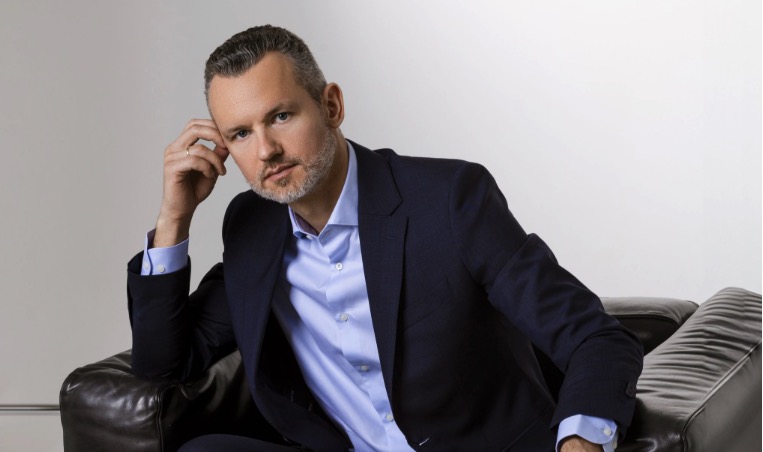

Could you tell me more about your background? Shkvarun said:
“Since my university years, I’ve been working with data. Early on, I was focused on identifying patterns and hidden connections across disparate information sources. More than two decades ago, I began noticing how frequently individuals and organizations attempted to erase or manipulate their digital footprints – deleting posts, editing records, or obscuring prior statements. My role as a data analyst was to reconstruct and surface that suppressed information. Even back then, I understood that online content could not be taken at face value.”
“In 2017, when one of the first deepfake videos featuring Barack Obama circulated publicly, my perspective shifted further. It became clear that not only text but even visual evidence could be fabricated convincingly. This realization – well before the current wave of generative AI – was a turning point for me. I concluded that trust can no longer rely on surface-level perception.”
“That moment ultimately shaped my professional direction. Today, I am committed to building and supporting mechanisms that enable people to verify information independently, assess its reliability, and make informed decisions about what deserves their trust.”
Formation Of The Company
How did the idea for the company come together? Shkvarun shared:
“The company emerged from a clear convergence of problem awareness and a determination to address it systematically. Two developments were especially influential. First, around 2010, the explosive growth of social networks fundamentally reshaped communication models, advertising ecosystems, and the scale of user-generated data. Second, in 2017, the release of one of the first deepfake videos featuring Barack Obama demonstrated how rapidly digital trust could erode.”
“The combination of exponential data growth, rising misinformation risks, and the technological advancement of deepfakes crystallized our initial mission: “To restore trust in data.” Over time, this evolved into a broader strategic vision: ‘Secure Trust.’”
“The company originally had three co-founders, all with strong technical backgrounds in IT, data risk management, and information security within the banking sector. Sadly, our first co-founder passed away seven years ago due to health issues, and the second stepped away from the company two years ago. I’ve been part of the journey since day one.”
“Recognizing the structural shift in the data landscape driven by social networks, we began developing an OSINT prototype in 2015 as a side project. Within three weeks, we secured our first client, validating the concept. By 2019, we fully committed to scaling the solution. That decision positioned us to become a global leader in OSINT by 2023, further strengthening that position into 2025.”
Core Products

What are the company’s core products and features? Shkvarun explained:
“Social Links is building the security layer for the AI Agent Economy.”
“For more than 10 years, Social Links has been a global leader in OSINT and digital investigations, serving 500+ customers across 100+ countries and integrating 1300+ methods & sources.”
“Today, we are evolving beyond investigations into a much larger opportunity: protecting businesses and people from AI-driven fraud, misinformation, impersonation, and digital manipulation.”
“Fraud risk is projected to reach $1-2 trillion by 2028-2030. Yet among the top AI startups, there are no dedicated leaders focused on preventing AI misuse across public digital channels. This protection gap is where we operate.
AI Defender is our modular modern digital risk protection platform, covering the full incident lifecycle:
- Secure Frame – real-time user screen protection and fake detection
- Detect Scope – live monitoring of digital threats across the business environment
- Investigate Trace – deep OSINT-driven investigations powered by our decade of expertise
We are shifting from the $30 billion to $60 billion OSINT market toward the $1 trillion $2T AI Fraud Risk market, positioning Social Links as the trust infrastructure for businesses operating in an AI-driven world.”
Our long-term vision is clear: Secure Trust – enabling persistent identity, verified interactions, and trusted AI-to-AI communication as the AI Agent Economy emerges.
Problems Being Solved
Can you elaborate on the problem your company is solving and why it matters at a global scale? Shkvarun noted:
“AI-driven fraud is on track to become one of the harshest economic threats of the decade, potentially reaching $1 trillion to $2 trillion in global losses by 2028. That is the core problem we are addressing.”
“This estimate is based on combining Sequoia Capital’s long-term market modeling of AI adoption with real-world fraud dynamics observed across large-scale digital economies. The methodology relies on historical market transitions and empirically observed fraud behavior.”
“If we look at the rise of software-as-a-service two decades ago, SaaS initially represented only a marginal share of the global software market. The transformation that followed was not driven by explosive growth in overall IT spending, but by a shift in how value was created and delivered. Over roughly fourteen years, SaaS expanded from approximately 2% of the market to more than half, fundamentally reshaping the industry.”
“Artificial intelligence now sits at a similar inflection point. Today, the global software and IT services market is estimated at around $10 trillion, while AI represents only a fraction of a percent of that total. Even under conservative assumptions, AI-driven revenue could exceed $12 trillion within the current decade.”
“What makes this projection deliberately conservative is that AI is no longer confined to software. It increasingly underpins finance, healthcare, logistics, automotive systems, and automated decision-making across the real economy.”
“The second part of the problem becomes clear when we examine what happens as markets scale. Across digital history, fraud has proven to be a persistent and proportional byproduct of growth. As transaction volumes increase and systems become more automated, fraud adapts and expands alongside them.”
“Payment fraud already accounts for billions in losses even in mature systems. E-commerce platforms continue to suffer large-scale fraud driven by account takeovers and credential abuse. Identity theft remains at record levels across major economies. In tightly regulated markets such as card payments, fraud ratios have been reduced to low single-digit percentages after decades of infrastructure investment. In newer digital markets – including online lending, peer-to-peer transfers, crypto, and identity-driven platforms – fraud has historically captured 5–10% of transaction value.”
“When those empirically observed ratios are applied to an AI-driven economy measured in the tens of trillions of dollars, the impact becomes substantial. Even conservative assumptions produce hundreds of billions in losses. Accounting for overlapping attack surfaces, automated scaling effects, and the speed at which AI systems can be exploited, AI-enabled fraud could realistically reach $1-2 trillion globally by 2028.”
“The defining risk lies in the pace of automation. AI systems increasingly operate with minimal human oversight, enabling fraud techniques that can replicate, adapt, and propagate faster than existing controls were designed to handle.”
Funding/Revenue
Are you able to discuss funding and/or revenue metrics? Shkvarun revealed:
“Social Links has raised a total of $7 million to date – a $4 million seed round in November 2022 and the recent $3 million follow-on funding disclosed in the press release. The company has always been profitable, so the funds are dedicated solely to creating new value and expanding sales. The key metric we are ready to share is a projected $10 million ARR by the end of this year, which we expect to achieve and raise next round with Institutional Investor to achieve our super ambitious goals!”
Differentiation From The Competition
What differentiates the company from its competition? Shkvarun affirmed:
“Our differentiation lies in expertise, positioning, and strategic focus.”
“In OSINT and Digital Risk Intelligence, we operate alongside companies such as Silobreaker, Maltego, Kela, Babel Street, ShadowDragon, as well as adjacent players like ZeroFox and SOCradar. We see many of them as contributors to the broader security ecosystem rather than purely competitors.”
“What sets us apart is that our technology is built on more than 10 years of operational experience combating crime and fraud across 105+ countries. That investigative expertise is embedded directly into our AI systems, enabling real-time analysis of open data and digital risk signals.”
“As we expand beyond OSINT into AI-driven risk prevention, the competitive landscape shifts toward major platforms like Google, Microsoft, and Palantir Technologies. Yet none of the leading AI companies is fully focused on preventing AI-powered fraud across public digital channels.”
“We are positioning ourselves precisely in that gap – building the trust and security layer for the emerging AI Agent Economy.”
Future Company Goals
What are some of the company’s goals? Shkvarun emphasized:
“Our focus for 2026-2028 is the new solution, the AI Defender. Subsequently, we will build software for a new AI agent identity verification infrastructure to Secure Trust. This addresses the persistent identity challenge identified by Sequoia. Full-scale product launch and market expansion are planned for 2028-2030, potentially starting with an open-source version to engage the community and experts. We see ourselves as central to creating trust architecture and a vibrant ecosystem involving communities, companies, and governments (already working with 100+ countries B2G).”
Positioning
What’s the company’s positioning? Shkvarun described:
“We help businesses maintain sustainable, profitable growth in an AI-driven, agentic world.”
“We protect the trust that AI fraud and manipulation put at risk across their operations and market position.”
Total Addressable Market (TAM)
What total addressable market (TAM) size is the company pursuing? Shkvarun assessed:
“Our Total Addressable Market is the emerging AI Fraud & Digital Trust Infrastructure sector, which we estimate will exceed $250B+ by 2030.
This market forms at the intersection of three major segments:
- Fraud detection & prevention – projected at $150–200B
- Digital identity verification – $80-100B
- Threat intelligence & investigation – $35-40B
What drives this expansion is structural. AI-generated fraud is scaling rapidly – including deepfake identity attacks, synthetic personas, and autonomous AI agents interacting online. At the same time, trust in digital content and digital identity is eroding.
As AI becomes embedded across financial systems, platforms, and automated decision-making, fraud prevention, identity assurance, and investigation intelligence converge into a unified trust layer. That convergence defines the $250B+ TAM we are pursuing by 2030.”
Favorite Memory
What has been your favorite memory working for the company so far? Shkvarun reflected:
“One of the most recent examples was in 2024, when I saw how criminals had started using AI and launched DarksideAI. Later I saw the same idea echoed in the words of Sequoia, YC, and other industry leaders.”
“That’s incredibly exciting – this is exactly what entrepreneurship is about: seeing something early, acting on it, and building it forward. Especially when it’s a 100% match with your personal values.”
Significant Milestones
What have been some of the company’s most significant milestones? Shkvarun cited:
“One of our most significant milestones was being recognized as an OSINT Radar Leader in 2023 and again in 2025 – effectively confirming our position as a global leader in the field.”
“What makes it meaningful is that we started nearly 20 years ago as practitioners working with open data, and more than 10 years ago as founders building this company from scratch. We were just regular IT engineers who believed in the potential of OSINT early on – and over time, that conviction turned into global leadership.”
Customer Success Stories
Can you share any specific customer success stories? Shkvarun concluded:
“Because a significant portion of our clients are B2G and national security organizations, we are often limited in what we can disclose publicly. What I can say responsibly is that our work has contributed to thousands of saved lives globally, including child protection cases, and we have supported multiple national-level operations.”
“To give a concrete example from the public sector: a national police authority was investigating suspicious crypto transfers linked to a potential AML risk. For nearly a year, they could see the transactions but could not attribute them to a real individual.”
“The only starting point was a short alias connected to a crypto wallet, just a few characters. Using that fragment, we identified ten potentially linked online profiles. Investigators began monitoring them. One individual consistently showed online behavior immediately following large crypto transactions that indicated sudden illicit income. After full procedural verification, he was arrested as part of a broader criminal money-laundering structure. In this case, a six-character alias led to the identification and arrest of a key participant in a major crypto laundering network.”
“On the B2B side, we worked with a large oil company facing large-scale brand abuse. Whenever the company launched official digital advertising campaigns, criminal actors simultaneously launched illegal AI-generated ads using the same brand – diverting traffic, selling counterfeit products, and operating phishing sites to steal credit card data. The scale was significant, and traditional monitoring methods were not sufficient. Within the first weeks of our engagement, we detected and helped suppress the coordinated activity.”
“We delivered a similar outcome for a financial exchange, identifying and tracking illegal advertising campaigns exploiting its brand.”
“What has fundamentally changed is that AI has transformed the security landscape. Criminal actors now operate with automation, synthetic content, and massive scale. Traditional defenses struggle to keep pace. That is why we are building AI security agents because today, only AI can effectively counter AI-driven threats.”

