

SolarWinds is advancing its approach to IT management through SW1, an agentic AI system designed to help organizations manage increasingly complex digital environments while maintaining human oversight and control.
Built around the company’s AI by Design principles, SW1 aims to bring AI-powered automation, operational insights, and governance together across on-premises, cloud, and hybrid infrastructure.
Pulse 2.0 interviewed SolarWinds Chief Technology Officer Krishna Sai to discuss the technology behind SW1, the shift from IT operators to AI orchestrators, and how organizations can balance automation with security, accountability, and trust. Pasted markdown
Krishna Sai’s Background
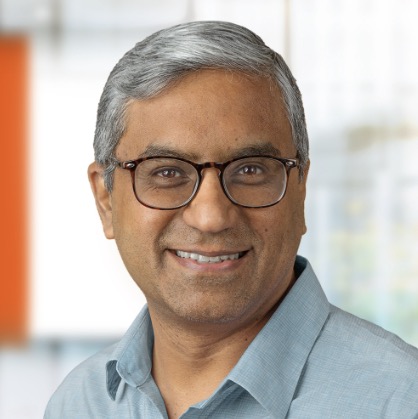
When asked about his background, Sai shared:
I’m the Chief Technology Officer at SolarWinds, where I lead the engineering, technology, and architecture teams, building the next generation of IT management.
With more than two decades of experience, I’ve spent my career doing what I love most: scaling teams, solving hard problems, and building products that make a difference for the people using them.
Before joining SolarWinds, I held leadership roles at Atlassian and Groupon, and earlier in my career at Polycom. I’m also a founder at heart, having co-founded two technology companies, and I hold several patents.
You can catch me on the Get With IT Podcast, in Digitalisation World, Software Engineering Daily, and across TechStrong.
At SolarWinds, I’m focused on shaping and executing the company’s technology vision across observability, hybrid IT management, AI-powered analytics, and secure-by-design development.
For me, it’s about more than keeping the lights on. It’s about making sure engineering teams can innovate with speed and confidence in a world that’s becoming more automated and AI-driven every day.
I’m passionate about building the kind of infrastructure and culture where reliability and creativity aren’t tradeoffs; they reinforce each other.
SW1 And AI By Design
When asked what SW1’s proprietary Agentic Framework and AI by Design principles mean in practice, and how the system differs from other AI tools used by IT teams, Sai explained:
AI by Design is a structural framework that governs all of our product development at SolarWinds. It’s built on four pillars: privacy and security, accountability and fairness, transparency and trust, and simplicity and accessibility.
In practice, that means governance is baked into the architecture of SW1 from the start, not layered on as an afterthought. And I think that distinction really matters.
Most AI tools IT teams encounter today either give them a chatbot interface or bolt on AI summaries to existing dashboards. SW1 operates differently.
It functions as an agentic AI teammate, giving organizations a single, trusted interface that orchestrates AI across on-premises, private cloud, public cloud, and hybrid environments.
One of the things I always come back to is this: you can’t have a probabilistic system that people are expected to trust deterministically. That trust has to be earned through how you build it.
So where a lot of vendors are racing to deploy AI capabilities, we’ve been deliberate about building the conditions where AI can actually deliver, with customer-defined guardrails, clear accountability, and governance that ensures teams stay compliant and aligned with their policies.
That’s what makes SW1 different. It’s not just about what it can do, it’s about how it does it, and whether your team can actually trust it to do it.
Preparing IT Teams For The Shift From Operator To Orchestrator
When asked how IT leaders should prepare their teams for the transition from operators to orchestrators, a shift identified by four in five IT professionals in SolarWinds’ IT Trends Report, Sai said:
AI is reshaping IT roles, with a clear shift away from hands-on IT operations towards driving automation and overseeing automated systems and workflows.
This shift matters because the consequences of getting it wrong are significant: undertrained teams, ungoverned AI deployments, and fragmented infrastructure don’t just slow adoption, they create operational and security risk at scale.
Organizations that treat AI readiness as a cultural and structural investment will be the ones that convert automation into a durable competitive advantage.
Sai identified three areas where IT leaders should concentrate their efforts:
Make training structural, not optional. 61% of frontline managers say formal training is the most critical element for building AI skills, yet fewer than four in 10 C-suite leaders agree. That gap is dangerous. Understanding when to trust AI, when to override it, and how to govern it is a new skill set that doesn’t develop through exposure alone.
Build governance before you need it. Organizations are deploying AI faster than they’re defining rules around it. An AI by Design approach with clear policies on autonomous versus human-oversight zones is what makes AI adoption sustainable.
Treat infrastructure consolidation as an AI prerequisite. 83% agree AI is only as effective as the data it can see, yet 67% report at least moderate fragmentation. Unified visibility isn’t optional: it’s the foundation that determines what AI can actually deliver.
Where AI Is Delivering Measurable Value
When asked where AI is creating the most measurable value in IT environments and where its capabilities still fall short of expectations, Sai explained:
When I think about where AI is actually delivering measurable value in IT environments today, it comes back to a simple truth: technology should serve people, not the other way around.
And right now, the clearest evidence of that is in reducing the toil that IT professionals face every single day.
What we’re hearing from our customers is that 65% of IT professionals cite reducing manual effort as the top benefit, and 61% point to faster root cause analysis.
That’s showing up in real workflows: alert triage, log correlation, capacity forecasting, and ITSM ticket routing. These are the areas where AI is genuinely shortening the distance between a problem occurring and a problem being resolved.
However, the trust gap is real.
At SolarWinds, our philosophy is AI by Design. AI should augment the judgment of IT professionals, not replace it.
The symbiotic relationship between human expertise and AI capability is where the highest productivity lives.
In mission-critical environments, control and trust have to come before autonomy. Resilience isn’t just about systems that are fast; it’s about systems that are trustworthy.
And right now, building that trust is the most important work we can do.
Why Governance Must Be Built Into AI Architecture
When asked why SolarWinds embedded governance, safety, and control into SW1’s architecture from the beginning, rather than adding those capabilities later, Sai explained:
When governance is retrofitted onto an AI system, it becomes a checkbox, a layer that can be bypassed, misconfigured, or stripped away under pressure.
When governance is foundational, it shapes every decision the AI agent can make.
In IT environments, ungoverned AI has severe risks.
Runaway automation isn’t just an inconvenience. When an AI agent remediates issues in production without appropriate human checkpoints, you can take down a healthy service while trying to fix a degraded one.
In complex hybrid environments, the blast radius of an unchecked automated action can cascade across dependencies in ways no single alert would predict.
The speed that makes AI valuable becomes the exact thing that makes ungoverned AI dangerous.
Compliance violations carry consequences that extend well beyond the IT team.
An AI taking actions that conflict with regulatory requirements, moving data, modifying configurations, or escalating privileges, can expose the organization to audit failures, legal liability, and breach of customer trust.
These aren’t recoverable with a rollback.
Shadow AI may be the most insidious risk of all.
When governed tools feel too slow or too constrained, teams find workarounds. They adopt ungoverned tools on the side: tools without auditability, without policy alignment, and without visibility to the organization.
You end up with AI operating inside your environment that no one has sanctioned and no one can see.
That’s not an AI problem; it’s a governance collapse.
SW1’s architecture addresses this through customer-defined guardrails, policies that specify where AI operates autonomously and where human sign-off is required.
The upcoming capability expansion also includes SLO/SLA risk prediction with proactive intervention controls, ensuring that governance scales with capability.
Reducing Cognitive Load With SW1
When asked how SW1 addresses the growing cognitive load associated with AI adoption and what responsibility vendors have to avoid adding unnecessary complexity, Sai said:
Most people I talk to, including IT pros, have found AI is making their role more demanding, and AI tool use continues to proliferate, each with its own interface, alert streams, and output validation requirements, which directly contribute to an IT professional’s workload.
SW1 directly counters this by consolidating into a single governed identity, so IT professionals have one interface to query across the entire environment.
It reduces alert noise by filtering duplicates, correlating related signals, and surfacing only the most actionable issues.
It also automates runbook and workflow generation from existing knowledge bases, reducing the mental load of designing responses from scratch.
Every AI feature that requires a new validation loop, a new dashboard, or a new skill to operate is a net increase in cognitive load.
Without proper planning, AI can introduce risks through security and governance gaps, while adding more fragmentation for teams that don’t have the capacity to truly absorb it.
Building Trust In Agentic AI
When asked what he would say to IT teams that remain skeptical of agentic AI because of concerns about losing oversight and control, Sai explained:
Skepticism from IT teams is real, and honestly, it’s earned.
When AI is bolted onto existing systems as an afterthought, it forces humans to validate everything, and our 2026 IT Trends Report found that 71% of IT professionals say the biggest friction AI introduces is exactly that: the need to double-check its outputs.
That doesn’t build trust. That just adds work.
What I’d say to skeptical IT teams is this: the goal was never to take control away from you. The goal is to give you better leverage over the environments you’re already responsible for.
And the way you do that is by being deliberate about where AI acts autonomously, where it has to explain itself, and where human judgment is non-negotiable, not as a policy document, but built into how the system actually works.
With SW1, that’s what we’ve tried to do.
It’s not about giving IT teams an AI that they have to trust on faith. It’s about giving them an AI that earns trust through transparency, through explainability, and through guardrails that keep them in the loop where it matters.
When the system tells you why it made a decision, and when you can define where it can act and where it has to stop and ask, skepticism starts to give way to confidence, not because we said so, but because the experience proves it.
The Future Of Human IT Professionals And AI Agents
When asked how the relationship between human IT professionals and AI agents may evolve over the next two to three years, Sai highlighted findings from the IT Trends Report:
The IT Trends Report makes something very clear: the IT professional is already moving from operator to orchestrator. That shift is happening now.
IT professionals are already interpreting AI-driven insights (59%), designing intelligent workflows (56%), and validating AI outputs (47%).
The role is expanding, and the people in it are stepping up to meet it.
When I look at the next two to three years, I see four things taking shape, and they all build on each other.
Tiered autonomy becomes the operating model. AI handles defined operational zones on its own, while IT professionals govern policy, manage exceptions, and set strategy.
Point tools give way to agent ecosystems. A single governed identity, something like SW1, orchestrates multiple specialized agents, each purpose-built, all working within a unified policy framework.
That’s a fundamentally different architecture than the fragmented tooling most teams are managing today.
Human value moves to where it matters most. IT professionals won’t be eliminated from this picture but will be elevated to the decisions that require contextual expertise, institutional knowledge, and judgment that AI simply cannot replicate.
Infrastructure consolidation becomes a competitive advantage. Organizations that unify their visibility early will pull ahead, and not just because their AI has better data today, but because that advantage widens every quarter.
Fragmented environments will struggle to close that gap.
The orchestrator role is the future of IT leadership. And the teams that embrace it now will define what enterprise IT looks like on the other side of this.
SolarWinds’ Long-Term Product Vision
When asked what the launch of SW1 signals about SolarWinds’ broader product direction and long-term vision for IT automation, Sai explained:
SW1 is the convergence point of everything SolarWinds has been building, brought together into a single agentic interface.
And what it signals is simple: we believe the future of IT is autonomous, and we’re building for it now.
What excites me about where this goes is that SW1 isn’t just responding to problems; it’s anticipating them.
Predicting SLO and SLA risk before a breach occurs. Automatically discovering assets and surfacing coverage gaps so teams aren’t flying blind. Enforcing compliance through customer-defined guardrails so control scales with autonomy. And turning institutional knowledge trapped in documentation into something the system can actually act on.
None of these are standalone features.
Together, they represent SW1 growing from a capable agent into a trusted orchestrator, one that earns broader autonomy by consistently operating within the boundaries IT teams set for it.
That balance between autonomy and accountability is exactly where we want to be, and exactly where the industry needs to go.
The Growing Strategic Importance Of IT Professionals
When invited to discuss another topic, Sai emphasized how AI is making the IT profession more strategic and increasingly important to broader business decisions:
IT professionals state that their own role has become more strategic, more automation-driven, more cross-functional, and more complex.
There’s a structural transformation of a profession happening in real time.
What strikes me most is the cross-functional piece. AI is pushing IT out of the server room and into business conversations.
IT professionals are increasingly the people in the room who understand what automation can and can’t do, what data is trustworthy and what isn’t, and what risk looks like when a system acts without human oversight.
That expertise is now consequential far beyond the IT function.
The headline of this report is operator to orchestrator. But the deeper story is that AI isn’t simplifying IT; it’s elevating it.
The bar is higher. The stakes are higher. And the people who rise to meet that are going to be some of the most important professionals in any organization over the next decade.
