

Stereotaxis develops robotic magnetic navigation systems and related devices that let physicians remotely steer catheters during minimally invasive procedures, especially cardiac ablation to treat heart rhythm disorders (arrhythmias). Pulse 2.0 interviewed Stereotaxis Chairman and CEO David Fischel to gain a deeper understanding of the company.
David Fischel’s Background

Could you tell me more about your background? Fischel said:
“After studying mathematics and finance at university, I began my career working for a venture capital firm in Israel focused on medical devices. I’ve always been interested in learning about medicine and technology, but it was here that I was able to fully immerse myself in meaningful innovations that stood to transform the future of medicine and learn from the pioneers driving it firsthand. Compelled to further my experience in the healthcare investment arena, I went on to join DAFNA Capital in Los Angeles to continue investing in medical technologies and to my surprise, discover the company that would inspire my next career venture: Stereotaxis.”
“I immediately understood the potential impact this technology could have on the surgical robotics space and wanted to have a heavy hand in making that a reality. Eventually, I made the transition from investor to operator to do just that. Leading this company and helping advance the robotic surgery space has been my focus for the past eight years. We’ve done incredible work to date, and excitingly enough, we have even more on the horizon. Combining my personal and professional passions, joining Stereotaxis as Chairman and CEO gave me everything I was looking for in a career that’s equal parts challenging, highly innovative, and meaningful.”
Formation Of The Company
How did the idea for the company come together? Fischel shared:
“The initial research for Stereotaxis’ technology was driven by the need to develop more precise control of devices used to navigate the human vascular system during interventional procedures. Traditionally, this involved using stiff pull-wire based devices, where the distal tip was controlled from the proximal end. These devices were challenging to navigate due to mechanical constraints and the complexity of the vasculature. The innovative idea was to use precise, externally applied magnetic fields to allow direct distal control of these interventional devices, which enables more precise control overall. This allowed not only improvement in the control of the device but also eliminated the need for the pull-wire mechanism which improves the safety of the device as it navigates through delicate anatomy.”
Favorite Memory
What has been your favorite memory working for the company so far? Fischel reflected:
“The most rewarding aspect of working at Stereotaxis is getting to experience and witness the full end-to-end process in which technology concepts are refined and then turned into actual real-world products that ultimately are being used by physicians to treat their patients. I’ve been fortunate to watch this full life cycle on several of our innovations. It gives me an immense feeling of pride seeing our efforts and struggles ultimately become tangible technology that positively impacts medicine and helps improve the lives of physicians and patients.”
Core Products
What are the company’s core products and features? Fischel explained:
“Stereotaxis offers a robust suite of innovative technologies, all geared toward advancing the field of endovascular surgical robotics by making procedures less invasive, more accessible, reducing patient risk, and resulting in better outcomes for patients.”
“The Genesis RMN System was designed to enable unprecedented responsiveness to physician control through its powerful Robotic Magnetic Navigation (RMN) System. The Genesis magnets are held on flexible robotic arms that offer increased system angulation and associated imaging angulation that support improved performance and reliability.”
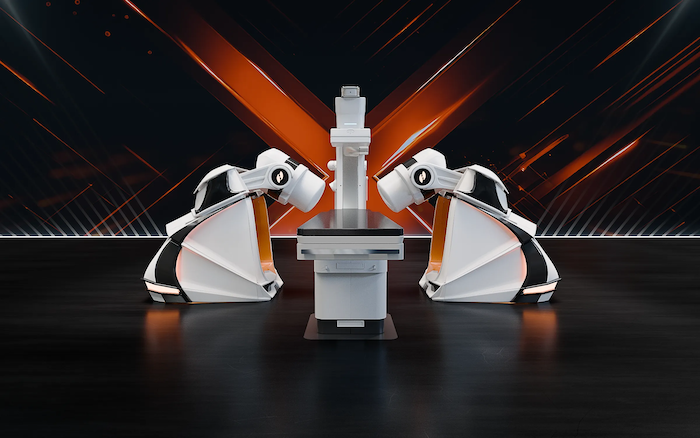
“The GenesisX System combines the long-established benefits of Robotic Magnetic Navigation and the speed and responsiveness of Genesis, in a semi-mobile, more easily implemented form factor. It allows users to set it up in a cath lab, regardless of space limitations, in just a weekend. The design significantly simplifies installation and addresses key infrastructure barriers that have limited adoption among physicians. GenesisX received FDA clearance in November. This was a landmark approval for the company as we transform the accessibility and scalability of RMN to support broader robotic adoption across endovascular surgery.”
“The Synchrony display system aggregates all cath lab systems and procedural information onto a central high-resolution display in the procedure room and in the control room for improved procedure workflow. SynX is our cloud-based app that integrates with Synchrony to enable increased connectivity with the operating room (OR) through remote procedure monitoring, training, support, and collaboration so the OR is no longer isolated as it has been traditionally.”
“Our Map-iT portfolio of differentiated high-quality diagnostic EP catheters enhance and enable the treatment of complex arrhythmia with unmatched performance and durability. MAGiC Sweep is the world’s first robotically navigated high-density EP mapping catheter. The MAGiC catheter, our newest innovation approaching the market, is a robotically navigated magnetic interventional ablation catheter for minimally invasive cardiac ablation procedures. It provides unparalleled catheter precision, stability, and flexibility. Both are used in conjunction with our robotic systems.”
Evolution Of The Company’s Technology
How has the company’s technology evolved since launching? Fischel noted:
“Since launch, Stereotaxis has evolved its offerings and reach as a pioneer in magnetic catheter navigation and platform-based innovator advancing robotic precision in cardiac procedures. The original magnetic navigation system introduced a groundbreaking way to remotely steer catheters inside the heart using external magnets—offering greater precision and safety compared to manual techniques. Over time, the system evolved with deeper integration into electrophysiology (EP) labs, syncing with leading 3D mapping systems to enhance visualization and procedural accuracy.”
“When the Genesis RMN System was launched in 2020, our company took another major leap in surgical robotics. With this next-generation platform, we were able to provide the same magnetic navigation capabilities but in a more compact and cost-effective design. Since then, our portfolio has continued to evolve to drive even greater capabilities and outcomes. In addition to incorporating digital tools that support remote connectivity, real-time collaboration, and future AI-driven navigation, we’ve received a string of major FDA approvals and are expecting another soon.”
“The GenesisX System makes our technology even more accessible, by providing all the capabilities of Genesis in a form factor that can be more easily, rapidly, and broadly adopted. Working to solve room restrictions and lab modification barriers to adoption, this semi-mobile system can be set up and taken down in a cath lab over a weekend. Additionally, our MAGiC Sweep Catheter’s recent FDA approval was another major milestone in our offerings and for the EP field. It greatly enhances precision, workflow, and safety in cardiac electrophysiology by uniting high-density mapping with advanced robotic control.”
“Our continued evolution signals our company’s progress towards becoming a robotic leader with a broad portfolio of proprietary, differentiated catheters, and the MAGiC Sweep really reflects the first tangible milestones in this strategic transformation.”
Significant Milestones
What have been some of the company’s most significant milestones? Fischel cited:
“Other than our pipeline of technological advancements and innovations mentioned above, our recent innovation efforts with AI solutions leader, NVIDIA, has accelerated our next phase of technological progress focused on digital solutions, including AI and decision-making capabilities, to enhance robotic systems and transform what is possible for patient treatment. We’re excited to continue diving deeper into AI applications.”
“We also announced a collaboration with CardioFocus in October. The collaboration combines both companies’ proprietary technologies to advance robotic Pulsed Field Ablation (PFA) technology towards commercialization for the treatment of cardiac arrhythmias.”
“Additionally, Stereotaxis’ initial clinical results using the MAGiC RMN ablation catheter were recently published in the Journal of Interventional Cardiac Electrophysiology. The study consisted of treating 67 patients with a broad spectrum of arrhythmia and demonstrated acute efficacy of 94% and safety of the catheter. These initial results are significant in proving the value of our robotically navigated offerings, and continued assessments of sustained efficacy will remain ongoing for further results.”
Customer Success Stories
Can you share any specific customer success stories? Fischel highlighted:
“With over 150,000 surgeries and patient lives touched to date, our successes are far-reaching.”
“One of our earliest adopters, Cardiologist and Electrophysiologist Dr. Sabine Ernst, had a case study report published by the Heart Rhythm Society showcasing a compelling, transformative patient success story. The case proved that ablation can be safely and effectively carried out via vascular access from the arms versus the traditional, more invasive groin access point, through usage of remote magnetic navigation. This is just one, highly significant application of how our system can change surgeons’ abilities and improve the patient’s experience.”
“In addition to our physician advocates proving the impact of Stereotaxis at their own organizations, the macro impact data helps paint a bigger picture of current success and opportunities for continued, broadened impact as we grow our market share. On average, our users have experienced a 7.6% increase in efficacy (or freedom from recurrence) and a 6.2% increase in acute success or outcomes. Patients have experienced a 72% reduction in major complications affecting patient outcomes and 36% reduction in radiation exposure.”
Funding/Revenue
Are you able to discuss funding and/or revenue metrics? Fischel revealed:
“Sure. As a publicly traded company, all our financial information is available to the public. Stereotaxis has been publicly listed for many years, and we were fortunate to list on the New York Stock Exchange five years ago. Currently, we generate approximately $30 million in annual revenue and have guided towards double-digit revenue growth this year. Our revenue is split approximately equally between robotic system sales, service contracts on our installed base, and revenue from disposables used in each procedure.”
Total Addressable Market (TAM)
What total addressable market (TAM) size is the company pursuing? Fischel assessed:
“The market potential is huge, making discussions about TAM almost silly from our modest vantage point. In the electrophysiology (EP) space alone, our current clinical focus to treat patients with heart arrhythmias, there are approximately 1.5 million procedures performed annually and nearly $10 billion in annual revenue. Our robotic platform is versatile and can be applied in a broader range of medical applications beyond EP which expands our TAM several fold, to an estimated $20-40 billion. Stereotaxis is a unique company pioneering differentiated technology in large existing markets with significant unmet medical need.”
Differentiation From The Competition
What differentiates the company from its competition? Fischel affirmed:
“Uniquely, Stereotaxis has no direct competitors in our field. Instead, it is the traditional, manual surgical methods still used by the majority of physicians for navigating catheters during procedures. By enabling remote, computer-controlled movements with millimeter precision and reducing the need for radiation-heavy fluoroscopy, we’re able to offer a safer, more consistent alternative to manual navigation making our position unique in the market.”
Future Company Goals
What are some of the company’s future goals? Fischel concluded:
“We remain focused on building futuristic, magnetic-driven surgical robots to enable the safest, most precise minimally invasive surgical procedures. Part of this overarching goal includes continuous innovation to make the technology more accessible and adoptable across a wide variety of hospitals and operating rooms regardless of existing infrastructure, and impactful across a broader range of surgeries. Additionally, our integration of AI and connectivity will further redefine what’s possible in the OR by helping identify risks, enhance navigation, and deliver better outcomes. As technical innovation and industry demands evolve, so do we as a company. We’re excited to continue serving as the pioneer defining the future of endovascular medicine.”
