

Studio Atelico is an AI-first game studio developing on-device AI technology intended to make artificial intelligence part of gameplay itself rather than simply a development or content-generation tool. The company is building a proprietary AI engine and its debut game, Bobium Brawlers, a mobile card and dice battler that allows players to create their own creatures through natural-language descriptions. Pulse 2.0 interviewed Studio Atelico CEO and Co-Founder Piero Molino to learn more about its approach to on-device AI, creative ownership, AI-native game mechanics, and the future of generative AI in gaming.
Piero Molino’s Background

When asked about his background, Molino shared:
I’ve worked in AI research for more than 15 years, in large organizations and in startups, and focused both on scientific papers and applied research.
While at Uber, I contributed to most of the major applied AI projects and created an open-source project, Ludwig, to simplify training of AI models.
That was the basis of the company I founded in 2020, Predibase, that I eventually sold to Rubrik in 2025.
I have always had a deep passion for video games since I was young. I learned how to program on my Amiga because I wanted to make games, and now I’m a collector and retro gaming enthusiast.
After selling Predibase, I believed that the AI technology was ready for making an impact in the games industry, so I started Studio Atelico to combine my personal and professional passions.
How Studio Atelico Started
When asked about the key moments that led him to start Studio Atelico and the gap he was trying to address, Molino explained:
There wasn’t a single defining moment. I can truly say it was a lifelong journey.
I’ve been interested in both video games and AI for a long time. I started coding games as a kid, and was always drawn to titles like Populous, SimCity, and Dungeon Keeper, which hinted at more dynamic, system-driven experiences.
The real turning point came when I saw the Generative Agents paper from Stanford.
It felt like the technology had finally reached a point where it could meaningfully change games.
But when I spoke to developers at GDC, many were running into the same issues with cloud-based AI: cost, latency, and limitations that made it hard to use in real-time systems.
At the same time, most AI applications in games were focused on making the development process cheaper, not new kinds of gameplay, and there were growing concerns around how these systems impact creators.
The idea for Studio Atelico came from that gap: building on-device AI systems designed for real-time, interactive experiences, with a more intentional approach to creativity and ownership.
An AI-First Approach To Games
When asked what Studio Atelico wanted to do differently from how the gaming industry was approaching AI, Molino said:
One of the main differences is that we don’t treat AI as an external tool or a production tool.
We design our systems so that AI is part of the runtime of the game itself.
That changes how you think about design. It becomes less about generating content ahead of time, and more about how systems behave and respond in real time.
The second piece is being explicit about constraints.
A lot of current approaches, the cloud-oriented ones, optimize for scale, but not necessarily for control or authorship.
We think those are critical if you want to build meaningful player experiences.
Balancing AI And Human Creativity
When asked how Studio Atelico approaches concerns that AI could replace creativity rather than support it, Molino explained:
For us, the question is simple: does this technology expand what creators can do?
We’re very intentional about building systems that keep humans in creative control, where AI becomes a tool for expression, not a substitute for it.
That means designing for authorship, for control, and for meaningful input from both developers and players.
If AI removes the need for creative decision-making, then it’s not something we’re interested in building.
Artist Rights Contract
When asked why Studio Atelico introduced the Artist Rights Contract, or ARC, Molino said:
There’s a growing disconnect between how AI systems are trained and how creators are treated.
A lot of models rely on data that artists never explicitly agreed to contribute, and there’s very little transparency or compensation in that process.
We felt that if we’re going to build AI into games, we need to address that head-on.
ARC is our way of setting a baseline and locking it into a legal contract: creators should have visibility, consent, and participation in the value that’s being created.
It’s not the final answer, but it’s an important step toward a more sustainable relationship between AI and creative work.
Why Atelico Is Betting On On-Device AI
When asked about his view that cloud AI is poorly suited for video games, Molino explained:
Games are fundamentally interactive, real-time systems.
Relying on cloud-based AI introduces latency, cost, and scalability challenges that don’t align well with that.
More importantly, it creates a dependency that limits what developers can do creatively.
If every interaction needs to go through a server, you’re constrained in how responsive your game can be, and if every interaction generates a cost for the developer, the game will be designed to minimize that cost and would not explore what the tech truly allows.
We believe the future is on-device: running AI locally, where it can be fast, reliable, and fully integrated into gameplay.
That opens up a very different design space.
Running models on-device removes those constraints and allows you to treat AI as part of the core simulation, rather than an external dependency.
How On-Device AI Works
When asked what on-device AI means and how it changes what is possible compared with cloud-based approaches, Molino explained:
On-device AI means the models are executed locally, on the player’s hardware, instead of being served from the cloud.
From a technical standpoint, that gives you lower latency and more predictable performance.
But the more important impact is architectural: you can integrate AI directly into gameplay systems without needing to manage network calls or external dependencies.
That makes it possible to build systems that are continuously interactive and responsive, rather than episodic.
And from an economic perspective, instead of developers having to pay a cost per interaction, which gets very expensive if you have many concurrent players, they literally pay nothing.
Balancing Randomness And Creative Constraints
When asked about some of the most exciting or unexpected capabilities that emerged while building the engine, Molino said:
One of the most interesting aspects is that while developing the game we discovered how there’s a fine line between generating something too random that is not interesting or relevant, and generating something that is too strictly adherent to the inputs.
In our game that means finding the balance between generating decks that are unexpected but broken, or balanced but same-y.
We discovered the mechanism for getting the best of both worlds, and having variability within creative design constraints, and that’s very exciting for the future of developing games with this tech.
Bobium Brawlers
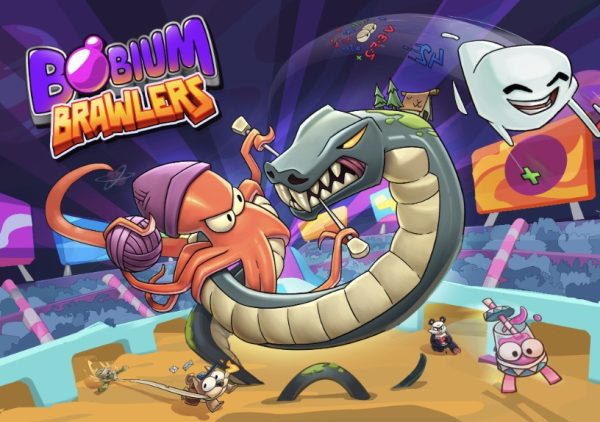
When asked about the core concept behind Bobium Brawlers and why it was the right first project for Studio Atelico, Molino explained:
At its core, Bobium Brawlers is about creativity and ownership.
We chose a creature battler because it’s a genre people understand, which gives us a strong foundation, but within that structure, we can introduce something new: the ability for players to create their own creatures by just describing them, in a very natural way that has never been possible before.
It’s the right first project because it lets us demonstrate what our technology can do and what new mechanics it allows, doesn’t require us to develop for five years like a AAA title would have required, all while delivering a fun game that is accessible and easy to pick up and play.
How AI Powers Player Creation
When asked how AI appears in the Bobium Brawlers experience, Molino said:
AI allows us to move beyond predefined content.
Instead of choosing from a fixed set of options, players can actively invent their creatures: how they look and how they battle. It just requires them to type it out in a short description.
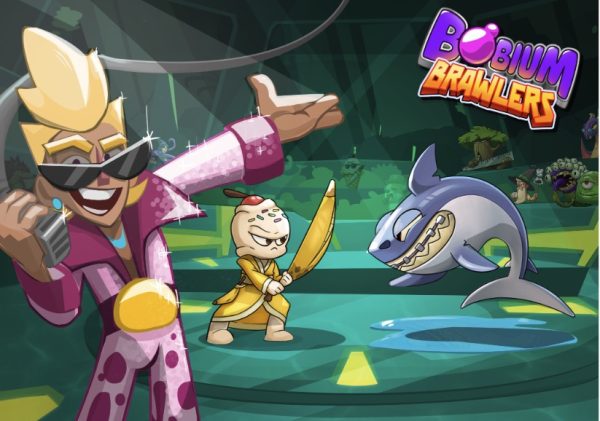
The system responds to that input in a way that feels dynamic, rather than constrained, and generates both the creature looks and the gameplay mechanics, a deck of cards, associated with the creature.
That level of flexibility would be impossible to achieve without AI, especially at scale.
Making AI-Generated Content Personal
When asked how Studio Atelico is ensuring AI-generated content feels unique rather than generic, Molino explained:
That’s a very real concern, and one we take seriously.
A lot of generic output comes from systems that aren’t designed with strong creative constraints or player input.
On the creative constraints, our AI models are trained on the art created by our artist, in a way that captures their style and doesn’t look generic.
On the players input, it’s about giving players meaningful control and ensuring the system responds in ways that reflect their intent.
We capture what the user describes, and make sure both the images and the deck of cards incorporate what the user requested fully, and that’s only possible by using AI.
When players feel ownership over what they’ve created, it stops feeling generic and starts to become personal, and we have seen players growing very attached to their creatures.
Building The Team And Technology
When asked how Studio Atelico has prioritized its team, technology, and first title, Molino said:
Our focus has been on building a strong foundation.
That means investing in the Atelico AI engine, but also assembling a team of seven people that understands both sides of what we’re trying to do, AI and game development at the same time.
It’s a multidisciplinary challenge, and getting that balance right has been critical.
The funding has given us the runway to move Bobium Brawlers forward, fully develop the first release of our AI Engine, and ensure creativity, not just cost-cutting.
This is the heart and soul of our work at Studio Atelico.
Key Learnings And Pivots
When asked about the biggest learnings that have shaped Studio Atelico’s direction, Molino explained:
The biggest learning for us was that fun AI-first games live somewhere in the spectrum of fully authored clockwork game mechanics and the randomness that a LLM produces.
Before settling on Bobium Brawlers we explored more than 10 prototypes.
Some of them had less space for LLM-driven mechanics and were more classical games with just a mild AI sprinkle on top.
On the other end of the spectrum you had prototypes where the entire game mechanic was governed by an LLM, and they were chaotically fun but the players quickly got bored because there wasn’t a way to actually get better at the game and the LLM choices felt arbitrary at times.
So we discovered that the most fun designs lived somewhere in the middle of that spectrum.
Bobium Brawlers with its AI-powered creation and hand-designed battle mechanics show that clearly, but there’s many more fun games to develop in its neighborhood.
Key Company Milestones
When asked which milestones have been most meaningful in validating Studio Atelico’s approach, Molino said:
Announcing Bobium Brawlers publicly was a big one, because it gave us a way to show what we’re building, and how the technology translates into an actual player experience.
Showcasing the game at the GDC also gave us confidence in the strength of the approach, with many developers telling us that ours was “the first game where AI makes sense.”
Introducing ARC was another important moment.
It made it clear that our approach isn’t just technical, but also about how we define a more transparent and collaborative relationship between AI and creators.
Internally, a key validation has been getting the technology to a point where it meaningfully supports gameplay.
That’s when it shifts from being an interesting capability to something that’s actually viable in a product.
Early reception from third-party developers using our AI Engine has been phenomenal and reinforced that we are on the right track tech-wise too.
Misconceptions About AI In Game Development
When asked about misconceptions developers have about integrating AI into their workflows, Molino said:
Some developers reject the use of AI in development because they make the mistaken equivalence that AI inherently means stolen appropriation and the replacement of creative jobs.
The first issue is not really about AI itself, but about how some cloud providers trained their models.
You can train AI on data that artists willingly provide without stealing from anyone, so we should start disentangling the technology from the companies selling it.
As for the narrative around replacing creative jobs, that is often pushed by large companies and AI providers to inflate their valuations.
In reality, AI can become a powerful tool in the hands of those same creatives, enabling them to produce more work and achieve higher-quality results.
It is similar to how personal computers made desktop publishing, accounting, and many other tasks that were previously limited to specialists ultimately accessible to far more people.
Rather than killing creativity, those technologies expanded it, and AI has the potential to do the same.
Where Generative AI Is Overestimated And Underestimated
When asked where the gaming industry is overestimating and underestimating the impact of generative AI, Molino explained:
I think it’s overestimating it on the game development and production side, and dramatically underestimating it on the gameplay side.
Most companies are treating AI as a way to produce content faster, when its real potential is in creating game worlds, characters, and systems that feel far more dynamic, reactive, and alive.
New Forms Of Gameplay
When asked whether AI will primarily enhance existing games or enable entirely new types of gameplay, Molino said:
Both.
Think about the transition to real-time 3D rendering.
Early PlayStation-era games were often just 2D concepts adapted into 3D, with mixed results. Many of the first 3D platformers, for example, felt awkward and imprecise.
But only a few years later we got games like Super Mario 64, which completely redefined the platformer genre for the 3D era, alongside titles like Resident Evil, Metal Gear Solid, and Half-Life that delivered a level of immersion and cinematic storytelling that simply was not possible in 2D.
I think generative AI will follow a similar path: at first it will mostly enhance existing game structures, but over time it will also enable entirely new forms of gameplay and player interaction that we can barely imagine today.
Shaping AI In Gaming
When asked what role Studio Atelico hopes to play in shaping how AI is used in games, Molino concluded:
We want to contribute to defining best practices.
That includes technical approaches, like on-device systems, but also frameworks around ownership, consent, and design.
If we can show that these things are compatible, and not trade-offs, that’s a meaningful contribution.
We also want to trailblaze new game mechanics and experiences that were not possible before, hoping that sparks the imagination of developers and designers to create something unprecedented.
