

SuperSonic POS is a fast cloud-based point-of-sale platform that helps businesses manage payments, inventory, and operations. Pulse 2.0 interviewed SuperSonic POS CEO Mahdi Hussein to gain a deeper understanding of the company.
Mahdi Hussein’s Background
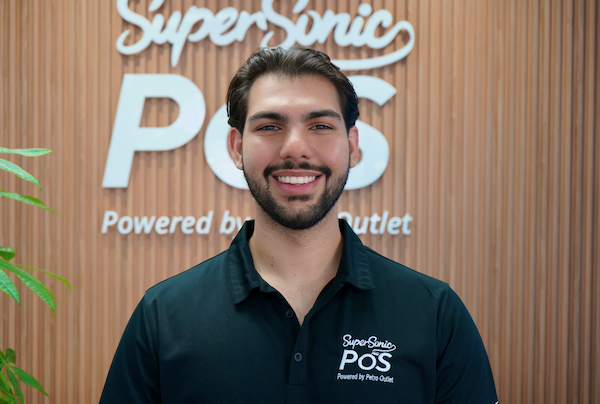
Could you tell me more about your background? Hussein said:
“I grew up in this business, gas stations, convenience stores, retail — it’s been part of my life for as long as I can remember. My family has owned and operated stores for decades, so I’ve experienced first-hand the challenges that come with running a small retail business. When I took over managing the stores myself, I quickly realized how outdated and disconnected the systems were. That’s really where my journey as a founder started, not from a tech background, but from the reality of operating these businesses every day.”
Formation Of The Company
How did the idea for the company come together? Hussein shared:
“It came out of necessity. We were dealing with daily headaches, disconnected POS systems, pricing mistakes, no real-time data, and inventory that was almost impossible to keep track of across locations. At one point, I just thought: why isn’t there a system built for owners like us? So we started by building what we wished existed for our own stores. That eventually grew into Petro Outlet, and as we evolved and expanded into more sectors, SuperSonic POS was born. My role now is very hands-on: product direction, customer experience, and making sure we stay close to the real problems store owners face.”
Favorite Memory
What has been your favorite memory working for the company so far? Hussein reflected:
“One that always sticks out: a customer suspected internal theft but couldn’t prove it. We installed our system with integrated camera syncing, and within a week, it uncovered the issue. What started as one cashier turned into multiple employees being involved. It was wild, like something out of a movie. But for me, it was a moment that reminded me why we do this. We’re not just helping businesses run smoother, we’re protecting livelihoods.”
Core Products
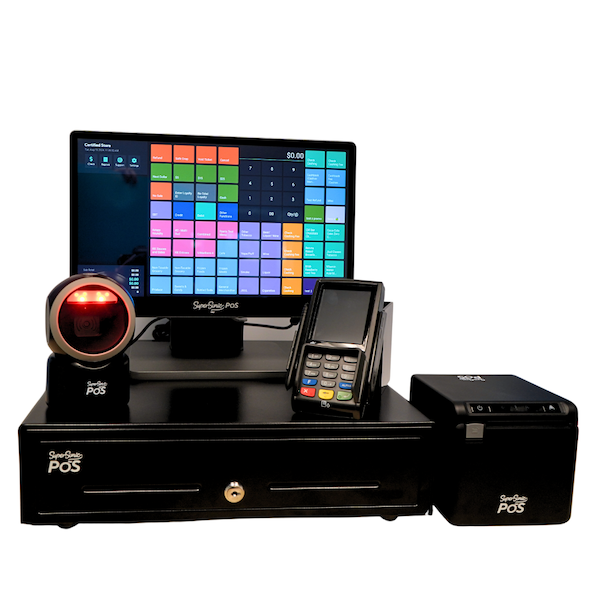
What are the company’s core products and features? Hussein explained:
“At the core, we offer a cloud-based POS system built specifically for convenience stores, QSRs, and small retailers. Some of our key features include:
— Live Camera Loss Prevention — real-time transaction-to-video sync
— AI-Powered Inventory Management — auto-categorizes SKUs, simplifies receiving, and manages vendors
— Dual Pricing Compliance — fully compliant dual-pricing integration
— Built-in Panic Button — discreet, silent emergency alert system without extra hardware
— Loyalty & Rewards Programs — fully customizable to drive repeat customers
— 24/7 U.S.-Based In-House Support — real humans, not outsourced call centers
— Tobacco Scan Data Compliance — full regulatory reporting built-in
We’re constantly expanding the platform, but the focus is always solving real pain points for operators.”
Challenges Faced
Have you faced any challenges in your sector of work recently? Hussein acknowledged:
“The biggest challenge is always keeping up with how fast things are evolving, not just tech, but regulations, compliance, fraud tactics, payment processing rules. We’ve built flexibility into our platform so we can adapt quickly. We make sure our merchants stay fully compliant without extra complexity.
Evolution Of The Company’s Technology
How has the company’s technology evolved since launching? Hussein noted:
“We started very simple, mostly focused on getting pricing, inventory, and reporting under control. Over time, we layered in AI to handle categorization, camera syncing for loss prevention, cloud architecture for remote control, and expanded integrations across delivery platforms, tobacco compliance, and more. What’s important is that everything we build is based on actual merchant feedback. We don’t release features for the sake of it, it’s always tied to a real operational problem.”
Significant Milestones
What have been some of the company’s most significant milestones? Hussein cited:
“A few stand out:
— Successfully transitioning from Petro Outlet into the broader SuperSonic POS platform.
— Scaling into multiple states and thousands of daily transactions.
— Launching our AI-powered security and loss prevention features.
— Building a support model where merchants get live in office US-based support 24/7, 365 days a year.”
Customer Success Stories
Can you share any specific customer success stories? Hussein highlighted:
“Beyond the internal theft story I mentioned, one that stands out is a merchant who was losing track of slow-moving inventory and bleeding cashflow. With our system, they were able to identify dead stock quickly, rebalance purchasing, and increase margins significantly within just a few months. For a small operator, that kind of improvement is huge.”
Funding/Revenue
Are you able to discuss funding and/or revenue metrics? Hussein revealed:
“We’ve been fortunate to grow profitably without needing outside capital to date. Staying self-funded has allowed us to keep full control of the product roadmap and stay close to the customer instead of chasing investor milestones.
Total Addressable Market (TAM)
What total addressable market (TAM) size is the company pursuing? Hussein assessed:
“When you combine convenience stores, gas stations, QSRs, and small retail, the TAM easily crosses over $100 billion globally. But for us, the real opportunity is much more specific, it’s the underserved, independent operators who’ve been overlooked by both legacy POS giants and generic SaaS solutions.”
Differentiation From The Competition
What differentiates the company from its competition? Hussein affirmed:
“Simple: we lived the problem. Most POS companies are built by software people trying to sell into retail. We’re store owners who built tech. That gives us a very different perspective on usability, support, and real-world needs. We’re not just offering software, we’re giving operators peace of mind, better margins, and security. And unlike many others, we’re 100% in-house: no third-party hardware dependencies, no outsourced support teams.”
Future Company Goals
What are some of the company’s future goals? Hussein emphasized:
“Our focus is scaling intelligently, adding more integrations, refining our AI features, and expanding into new regions while keeping the same level of support and personal touch. Long term, I see us continuing to innovate at the intersection of security, AI, and retail operations. There’s a lot more we can do to protect and empower store owners.”
Additional Thoughts
Any other topics you would like to discuss? Hussein concluded:
“I think a lot of people underestimate just how complex small retail really is. It’s not just scanning items and printing receipts, it’s cash management, compliance, loss prevention, HR, inventory, payments, pricing, vendors, and more. If we can continue to simplify that world for operators, we’re doing our job.”
