

Synchrony is a leading consumer financing company that provides credit and payment solutions to tens of millions of consumers. Pulse 2.0 interviewed Synchrony SVP and Chief Talent Officer Claudine Hoverson to learn more about her professional background, the company’s use of artificial intelligence, responsible AI governance, employee adoption, workforce training, and future plans for AI-driven workplace transformation.
Claudine Hoverson’s Background
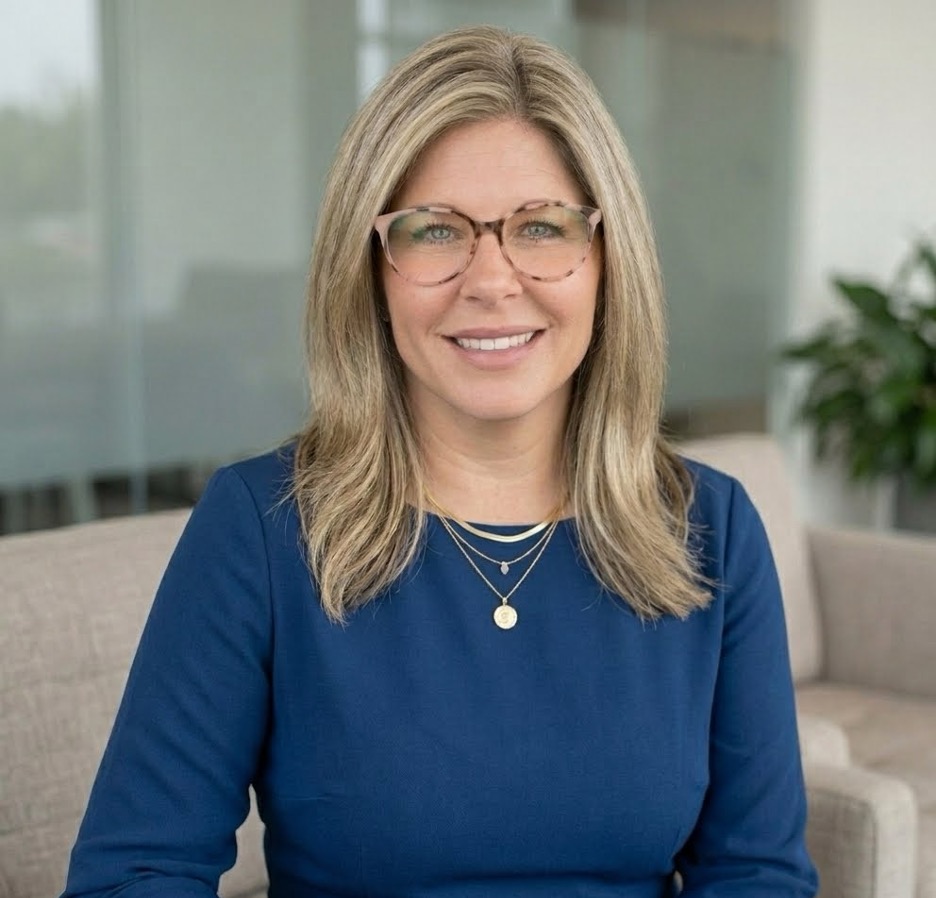
When asked about her professional background and primary responsibilities at Synchrony, Hoverson shared:
My career has been dedicated to helping people succeed in the workplace, and has included a wide range of roles, from early positions in recruitment to leading large-scale organizational change and global talent strategy. In my current position as the SVP and Chief Talent Officer at Synchrony, I’m responsible for directing the strategy for how we attract, develop, and engage our workforce to meet the company’s needs.
Much of my recent focus has involved shaping the company’s approach to talent, engagement, and performance management strategy, which integrates flexibility, co-creation with employees, and a continuous coaching model to drive a high-trust, high-performance culture.
This strategy has enabled us to cultivate leadership behaviors such as candor, empathy, coaching, and accountability. The results have been stronger business outcomes, including agility, resilience, and innovation.
I have also played an integral role in navigating workforce transformations, most notably leading the shift to remote work during the pandemic and establishing a long-term flexibility model for our global team. From leadership development to enterprise-wide engagement initiatives, I manage efforts that strengthen our workforce and prepare us for the future of work.
AI Applications And Employee Use Cases
Discussing high-impact AI applications currently in production or undergoing pilot testing, Hoverson highlighted how Synchrony is using generative AI to improve employee experiences, streamline HR operations, and accelerate business processes:
Our agile mindset shapes our approach to AI, building upon the company’s decade-long use of AI and machine learning. One area where this has been particularly successful is in our collaboration with Great Place To Work, which publishes an annual list of the 100 best companies to work for, a ranking based primarily on employee surveys, and whose mission is to create more resilient, successful sustainable businesses.
My team and I applied Generative AI to analyze tens of thousands of employee survey responses and asked it to surface key themes for leaders. Previously, that work took close to two weeks. With AI, we generated the initial insights in a couple of hours, then spent our time validating the results, focusing on priority areas and deciding what actions to take. It was an effective way to evaluate an AI use case quickly.
Since then, we have been actively innovating with AI. For example, Gen AI automates routine HR tasks like writing job descriptions and turning broad objectives into clear and measurable goals with human review to ensure accuracy, saving thousands of hours and freeing leaders to focus on coaching and strategic support. In addition, we’re piloting AI solutions to automate onboarding tasks like ID setup and laptop provisioning.
Some of our best AI ideas come from design-thinking workshops with HR leaders. For example, we’re piloting a GenAI tool for our HR advocates who support our frontline employees. The tool aims to deliver accurate, timely benefits and policy answers, freeing up our HR team to focus on providing deeper support to employees.
Beyond HR, our tech teams are using GenAI coding tools to write millions of lines of code, speeding delivery for business partners. Our internal GenAI platform, SynchronyGPT, streamlines routine tasks so employees can focus on strategic work. In addition, AI helps our associates with natural language search and summaries, enabling them to respond to customers faster with greater empathy and accuracy.
Responsible AI Governance And Employee Trust
Explaining the safeguards Synchrony has established to ensure employee-facing AI remains trustworthy, particularly regarding accuracy, bias, privacy, and transparency, Hoverson outlined the company’s governance framework:
Our organizational structure advances innovation while providing strong oversight and governance. To ensure that employee-facing AI is trustworthy, Synchrony has established a multi-layered governance framework centered on transparency, training and oversight. Our approach includes the following guardrails:
Dedicated Governance through the Responsible AI Working Group: This group ensures that the use of AI benefits consumers and communities by promoting internal guidelines that prioritize data security, intellectual property and accuracy. The team guards against bias and ensures decisions like credit offers are fair and transparent for every customer. Finally, it partners with public and private sector to promote responsible, consumer-first AI practices. By anchoring AI leadership within our products, digital and Innovation team, we ensure that these ethical guardrails are directly aligned with our business outcomes and high-trust culture.
Building Trust and AI Fluency with Our People: Our strategy includes built-in guardrails for transparency and governance to ensure AI usage remains trust powered. Our AI Field Guide provides employees with practical guidance, prompt examples and repeatable playbooks to ensure they use tools like our internal GPT platform (SynchronyGPT) effectively and accurately. We focus on building AI fluency, providing job-relevant training and hands-on upskilling in areas like advanced prompting and drafting to help employees understand and control the AI tools they use.
We also use an “AI for All Index” (developed with Great Place To Work) to measure employee sentiment and guide responsible AI use in the workplace. Currently, 90% of our employees trust Synchrony to use AI fairly and ethically, 82% of employees say AI will create new growth opportunities for Synchrony and nearly 80% believe it will have a positive impact on their careers (all well above benchmark).
Protecting Privacy through a “Trust Stack”: As we move toward more advanced AI, our technology and incubation teams are building a new “Trust Stack” and developing Agentic identity tools to keep data secure and ensure that digital interactions remain high trust for employees, partners and customers.
Change Management And Employee Adoption
When asked about the most important lessons learned from introducing AI and encouraging employees to adopt new technologies, Hoverson emphasized the importance of a high-trust workplace culture:
A high-trust culture is key in bringing employees along. According to a report, “How High-Trust Culture Drives Business Success,” by Great Place to Work, high-trust workplaces see better financial results, greater resilience during market volatility and faster innovation. The report also notes that when trust is strong, companies can speed adoption, moving more quickly to reinvent systems and products. Most impressively, these companies generate higher revenue growth than those with the fewest employees able to participate.
Trust is very important when managing change, especially AI-driven change. The process has to be human-centered, with leaders helping employees understand how AI will affect their roles and build new skills. Because listening, coaching and co-creation are essential, AI adoption is not treated as a top-down rollout but as an organizational change that succeeds when people trust the process and feel they have a role in it.
Our success in managing change around AI is an important reason that we have been named the No. 1 Best Company to Work For in the United States and in New York by Great Place To Work.
AI Literacy And Workforce Training
Describing how Synchrony prepares managers and employees to use artificial intelligence effectively and responsibly, Hoverson pointed to the importance of leadership participation, practical training, and sharing successful applications across the company:
It starts at the top. Synchrony’s senior leaders use AI themselves and encourage people managers to model experimentation with AI so it can become a daily skill that makes work more meaningful. Our AI Field Guide and companywide prompt training further equip employees to use AI effectively and wisely. And we also encourage the sharing of use cases with peers and teams, scaling best practices quickly across the company.
It’s working. Nearly 100% of senior leaders and every function in the business are using AI tools. SynchronyGPT is already saving thousands of hours and enabling employees to move faster and focus on higher value work. It gives employees a thoughtful, safe, always-on partner for brainstorming, writing, coding and refining ideas.
Preventing Shadow AI And Unapproved Tool Usage
Addressing how Synchrony encourages AI innovation while preventing employees from using unauthorized tools, Hoverson explained the company’s approach to enterprise-wide standards and transparency:
We treat AI like any other enterprise capability: leaders set expectations, employees apply safe-use standards, and functions across the company partner to enable progress. We’re transparent about why some tools are restricted, primarily to protect data, privacy and company IP.
The Future Of AI At Synchrony
Looking ahead over the next 12 to 24 months, Hoverson outlined how Synchrony intends to use AI to improve employee experiences, expand access to knowledge, and help its workforce focus on higher-value activities:
Synchrony is building skills for the workforce of tomorrow. Powered by a culture of curiosity, trust and continuous learning, our teams are prepared to adapt and thrive alongside AI. We see AI as more than a productivity tool, because it democratizes expertise across roles and regions. So, we’re going to continue innovating with AI to make employees’ jobs better, allowing them to focus on higher value work that matters. Empowered with AI, they will continue to provide credit access for tens of millions of customers and help hundreds of thousands of businesses grow.
