At Talkdesk, AI is increasingly bringing people strategy, enterprise technology, organizational design, and business transformation together. As the company pursues an AI-first transformation, its approach includes rethinking workforce planning, employee development, technology adoption, and how human and AI capabilities can work together. Pulse 2.0 interviewed Talkdesk SVP, Global Head of People Dr. Shauna Geraghty to learn more.
Shauna Geraghty’s Background And Talkdesk Journey
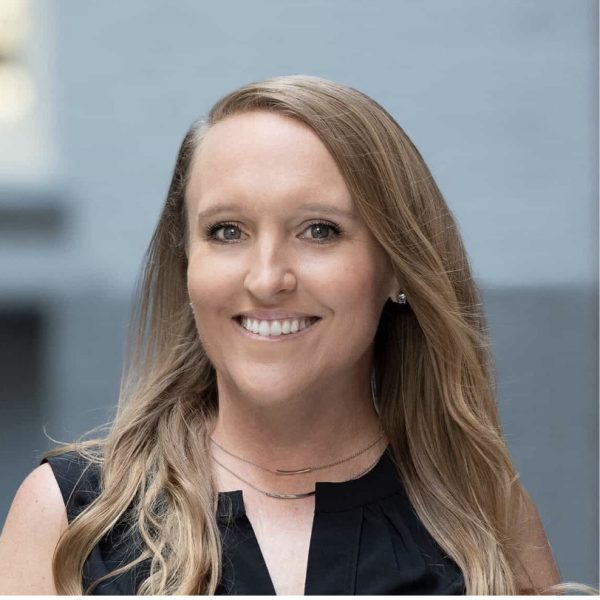

When asked what initially attracted her to Talkdesk and how her role has evolved as the company has grown, Geraghty shared:
I joined Talkdesk as its first U.S. employee in 2012, when the company only had a few employees. At the time, I saw it as a once-in-a-lifetime opportunity: the chance to work alongside incredibly ambitious founders and help build a company from the ground up. More than a decade later, I still feel that way. The company, the challenges and my role have evolved dramatically, but the opportunity to keep building and reinventing what’s possible still feels once in a lifetime.
One of my favorite stories from those early days really captures what it was like to build Talkdesk. Our founders were native Portuguese speakers and needed someone to write the copy for our first website. I was in the middle of my doctorate in clinical psychology and had no marketing experience, but I knew how to research and learn quickly. So I spent a weekend doing my own “website offsite” researching the industry and building the initial website copy from scratch.
That became a theme of my early years at Talkdesk: there wasn’t a playbook, so you figured out what the business needed, learned quickly and built it. I started by helping establish marketing, but from the beginning, my role was really about stepping into whatever the company needed most.
My role has continued to evolve around that same principle: stay close to the company’s most important challenges and be willing to adapt. As Talkdesk scaled globally, my responsibilities expanded from building individual functions to leading people and talent, and focusing more broadly on organizational design, leadership, performance and transformation. More recently, my role expanded to include enterprise technology and helping lead our AI-first transformation.
My clinical psychology background has been an important through line. It taught me how to understand human behavior, motivation and change. These are all skills that became increasingly valuable as the company scaled. Today, I sit at the intersection of people, technology and business strategy, helping ensure that how we organize, develop talent and deploy AI translates into better business performance.
That experience has also shaped my view of the future: the role of HR leaders is becoming much broader. Increasingly, we need to be business transformation leaders who can bring together people, organizational design and technology to fundamentally rethink how work gets done.
Why HR And IT Are Converging
When asked why she believes HR and IT are converging into a single decision-making layer and what is accelerating that shift, Geraghty explained:
HR and IT are converging because the decisions each function makes are increasingly converging.
As AI and automation become embedded in how work gets done, you can’t make a technology decision without considering its impact on roles, skills, workflows and organizational design, and you can’t make a workforce decision without understanding the technology that will enable it.
AI is accelerating this shift dramatically. The question is no longer simply, “What technology should we deploy?” or “Who should we hire to own this task?” It’s “How should this work get done, what should be automated or augmented by AI, and what capabilities do we need from people?” Answering those questions requires people and technology leaders to operate together.
Employee expectations are also changing. People expect workplace technology to be intuitive, personalized and increasingly AI-enabled. Creating that experience requires HR to understand the technology architecture and IT to understand the employee experience, adoption and behavior change required to make it successful.
When HR and IT remain siloed, companies risk investing in technology without adoption, adding headcount where automation could create leverage, or redesigning organizations without considering what AI makes possible.
Bringing these functions together creates a competitive advantage because it allows companies to make integrated decisions about people, technology and work and ultimately move faster from AI investment to measurable business impact.
Bringing HR And IT Together
When asked about the challenges that can arise when bringing HR and IT closer together and how leaders can overcome differences in priorities, processes and organizational culture, Geraghty noted:
The biggest challenge is that HR and IT often come to the table with very different operating models. IT has traditionally optimized for security, stability and governance, while HR focuses on employee experience, organizational effectiveness and change. Both perspectives are critical, but they can create friction if teams optimize for their own functional outcomes rather than a shared business objective.
The most important step is establishing shared outcomes. At Talkdesk, we’ve increasingly focused both teams on a common question: how can we use people and technology together to make the organization more effective? That means aligning around business metrics (adoption, productivity, speed, cost and employee experience) rather than separate HR and IT measures.
One lesson we’ve learned is that changing reporting lines alone doesn’t create convergence. You have to clarify ownership and decision rights, create shared operating cadences and build trust between teams that may approach problems very differently.
Leaders also need to actively break down legacy thinking; for example, challenging whether a problem really requires additional headcount or whether technology and automation can solve it differently.
Ultimately, the goal isn’t to make HR think like IT, or IT think like HR. It’s to create a shared mindset where both teams start with the business problem and then determine the right combination of people, process and technology to solve it.
Balancing AI Adoption And Governance
When asked how she balances rapid AI adoption with governance, security, employee trust and responsible use as the leader of Talkdesk’s AI Steering Committee, Geraghty explained:
I don’t view rapid AI adoption and responsible governance as competing priorities. Done well, governance is what allows you to move faster because employees understand which tools they can use, what data is appropriate, and where the boundaries are.
At Talkdesk, our AI Steering Committee owns AI strategy, tooling and governance, but we pair that with a much broader focus on AI fluency. Our goal isn’t simply to give employees access to AI or have them complete training. We measure success by whether AI actually changes how people work, how managers lead and how functions deliver business outcomes.
That requires creating a secure environment where employees can experiment while also building the judgment to use AI responsibly. Our enablement covers practical skills alongside responsible use including security and data governance, fact-checking outputs, understanding hallucinations and knowing how to work within enterprise data guidelines.
Employee trust is especially important. AI is evolving incredibly quickly, and companies won’t have every answer upfront. We’ve tried to be transparent that this is a journey we’re taking together: expanding the tools and capabilities available to employees while building the skills, guardrails and secure environment that allow them to innovate safely.
When done right, responsible AI adoption shouldn’t slow people down with endless controls. It should do the exact opposite: providing the clarity, capability and confidence to move even faster within safe boundaries.
How AI Is Changing HR
When asked how AI is changing recruitment, workforce planning, employee development and other people-related functions at Talkdesk, Geraghty said:
AI is changing nearly every part of the HR function at Talkdesk, but the biggest shift is that we’re moving from using AI simply to make existing processes faster to asking whether those processes should exist in their current form at all.
In recruiting, for example, we’re using AI and automation to reduce administrative work across the hiring process so recruiters and talent operations coordinators can spend more time assessing talent, advising hiring managers and engaging candidates.
In workforce planning, we’re increasingly looking at technology and talent together. Before adding headcount, we ask whether the work can be automated, redesigned or moved to a different operating model.
Employee development is evolving as well. Rather than treating AI as a standalone training topic, we’re building AI fluency into how employees develop and how leaders think about their teams. The goal is for employees to understand how AI can augment their specific roles, automate lower-value work and create capacity for more strategic, creative and customer-facing work.
The benefits extend beyond efficiency. AI gives people teams an opportunity to deliver faster, more personalized employee experiences while giving managers better information to make workforce decisions.
Most importantly, it allows HR to spend less time administering processes and more time on the work where human judgment matters most: talent, organizational design, leadership and business transformation.
Measuring AI And Technology Impact
When asked what metrics and outcomes Talkdesk uses to determine whether closer integration of people strategy, technology and AI is improving the organization, Geraghty explained:
The most important principle is that we don’t measure success by technology deployment or AI usage alone. Adoption matters, but the real question is whether technology is changing how work gets done and improving business outcomes.
We look across several dimensions: employee experience and engagement, AI fluency and adoption, quality and retention of talent, operational efficiency, and ultimately business impact.
We also look at whether automation is creating meaningful capacity by reducing manual work, simplifying processes and allowing teams to accomplish more without simply adding headcount.
Increasingly, we’re focused on connecting these measures. For example, it’s not enough to know that employees are using an AI tool; we want to understand whether they are applying it effectively, whether it is changing workflows, and whether that translates into greater speed, better outcomes or lower cost.
That shift from measuring activity to measuring impact is critical. Ultimately, the goal of bringing people, technology and AI together is to build an organization that can operate more effectively, adapt faster and free our people up to focus on the work that creates the greatest value.
Future Of People And Technology Leadership
When asked how she expects the responsibilities of Chief People Officers and technology leaders to evolve over the next several years, Geraghty concluded:
I expect the boundaries between people, technology and business transformation to continue disappearing. As AI becomes embedded across organizations, Chief People Officers will need to understand technology architecture, automation and AI economics, while technology leaders will need a much deeper understanding of organizational design, workforce capabilities and behavior change.
The fundamental question for both functions will shift from “How do we support the workforce?” to “How should work get done?” That means determining what should be automated, what should be augmented by AI, where human judgment creates the most value, and then designing the workforce and technology environment around that model.
For people leaders specifically, I think workforce planning will become much more dynamic. Headcount will no longer be the default answer to increased demand. Leaders will need to evaluate human capacity, AI agents, automation, skills and location together and understand the economics and business impact of each.
I see my own role continuing to evolve in that direction, further into the intersection of people, technology, organizational design and AI transformation. I’m particularly interested in how agentic AI changes organizational structures, roles and management itself.
As organizations increasingly operate with a hybrid workforce of human and AI workers, I believe one of the most important leadership capabilities will be designing systems where both can work together effectively.

