

Tarkenton is a company that provides B2B SaaS platforms, AI-powered tools, and strategic support to help small-to-midsize businesses grow, offering solutions in HR, legal services, and custom software development. Founded by NFL Hall of Famer Fran Tarkenton, the company focuses on leveraging technology to improve operational efficiency and business performance. Pulse 2.0 interviewed Tarkenton President Will Adams to learn more.
Will Adams’ Background
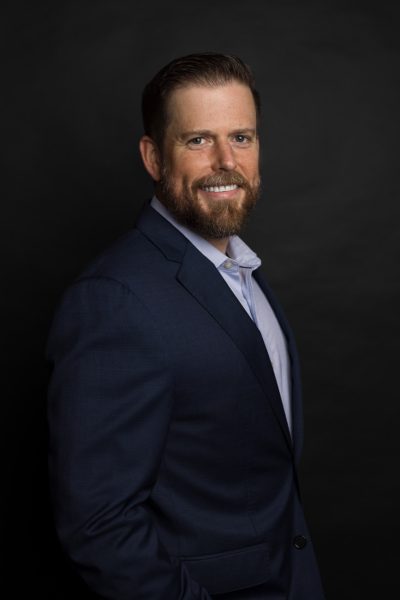
Could you tell me more about your background? Adams said:
“I’ve been with the Tarkenton organization since 2010, working at the intersection of business and technology, primarily serving small and midsized companies, often in partnership with large enterprise organizations. pipIQ may be our newest launch, but the work behind it has been years in the making, much of it shaped alongside enterprise partners navigating real operational and governance challenges.”
“One lesson has shaped my career: you either lead change, or you get led by it.”
“In large organizations, change is complex. There are multiple stakeholders, competing incentives, regulatory considerations, and real risk exposure. Innovation does not fail because of a lack of ideas; it stalls because alignment is hard. At the same time, in smaller entrepreneurial companies, you can move faster, but it is easy to get buried in execution and never step back to design the future.”
“My focus has been building organizations that thrive in change, and doing it in collaboration with partners who operate at scale. That means technological change, like the AI wave we are in now. It also means cultural change, economic cycles, and leadership development. To me, leadership is setting the example and building teams, internal and external, that are steady, disciplined, and ready to meet the moment with clarity and confidence.”
Formation Of The Company
How did the idea for the company come together? Adams shared:
“It started with a practical need.”
“Our development team built an internal AI tool to safely access our proprietary data. We have decades of intellectual capital, and we wanted the speed of AI without exposing sensitive information to public systems.”
“At the same time, we were watching how the market was using AI. Employees were pasting confidential information into public tools. Client data, financial data, internal strategy documents. Not maliciously, just casually.”
“That’s when it became clear: companies didn’t just need AI. They needed a secure, structured way to use it.”
“pipIQ was built to solve that problem.”
Favorite Memory
What has been your favorite memory working for the company so far? Adams reflected:
“That’s a tough question, because there have been many meaningful moments. But if I step back, my favorite memory isn’t a single event. It’s watching this organization consistently meet the moment.”
“pipIQ is a great example. We saw a shift happening in the market. Instead of debating it or fearing it, the team leaned in. We moved with urgency, but not recklessness. We experimented. We iterated. We were willing to get things wrong in service of getting them right. There’s a big difference.”
“What I’m most proud of is the mindset behind it. This team embraces change. We don’t treat failure as something to hide from; we treat it as feedback. We evolve in real time. We test ideas. We refine them. And we keep moving.”
“In a period when AI has created a lot of noise, confusion, and anxiety, we’ve intentionally worked to provide the opposite to our partners: calm, clarity, direction, and steadiness. When leaders are navigating uncertainty, they don’t need more jargon, fear, or grand promises. They need disciplined thinking, practical solutions, and partners they can trust.”
“Seeing our team show up that way, consistently, is what stands out to me most.”
Core Products
What are the company’s core products and features? Adams explained:
“Our core product is pipIQ, which stands for Private Intelligence Platform. It’s a secure AI workspace built for teams and companies.”
“It centers around four core principles:
- Privacy by design.
pipIQ was built with layered protections to keep company data within a controlled environment. Prompts and files are never used to train public models. It includes granular access controls, audit logs, PII scrubbing, and alignment with SOC 2 Type 2, HIPAA, and GDPR standards.
- Company aware intelligence.
Organizations can upload documentation into secure knowledge bases. pipIQ generates responses grounded in a company’s own policies, standards, and data, not generic internet answers.
- Structured productivity.
This is not a blank chatbot. We’ve built purpose-driven workspaces for brand communication, company knowledge, and productivity. Structure drives better outcomes.
And finally, there’s the team behind it. In a market moving this fast, technology is not the scarce asset. Experienced builders are. Architects. Engineers. Operators. We are not limited by a feature list. We’re focused on business outcomes.”
Challenges Faced
Have you faced any challenges in your sector of work recently? Adams acknowledged:
“Education is the biggest challenge.”
“Many organizations underestimate the risk of unsecured AI. At the same time, others overestimate how hard secure adoption needs to be. So, some don’t think there’s a problem. Others think the problem is unsolvable.”
“The truth is simpler. The risk is real. And it is solvable.”
“We lead with education. We show what’s happening inside organizations. When leaders see it clearly, the shift is immediate.”
“Then we make adoption practical. A secure solution only works if people use it. That means removing friction and building an experience that fits how teams really work.”
Evolution Of The Company’s Technology
How has the company’s technology evolved since launching? Adams noted:
“Early on, our focus was foundation: security architecture, model flexibility, and governance.”
“Since launch, three major evolutions stand out:
First, we built a more cost-effective and flexible architecture. pipIQ now scales from small teams to larger enterprise deployments.
Second, we improved performance, especially around knowledge retrieval and response quality. Accuracy matters.
Third, we’ve deepened our commitment to our founding belief: the mission of business is to help people. We’re not ‘selling’ a fixed product. We’re listening and working with partners and clients to solve real problems.”
Significant Milestones
What have been some of the company’s most significant milestones? Adams cited:
“Two stand out.”
“Launching the product and service was a defining milestone.”
“Many companies talk about AI. We built and deployed a secure platform that organizations rely on. But more importantly, we built it to be adaptable.”
“pipIQ can be customized to the way a company works. It can be extended as needs evolve. It integrates into existing systems and workflows. And we can develop new capabilities around it as business requirements change.”
“That flexibility matters. Enterprise environments are not static. Governance shifts. Regulations evolve. Priorities change. We designed pipIQ to support that reality, not fight against it.”
“Second, achieving compliance alignment with SOC 2 Type 2, HIPAA, and GDPR standards. Trust must be earned and independently validated.”
Customer Success Stories
Can you share any specific customer success stories? Adams highlighted:
“We’re seeing strong traction in professional services and financial organizations where data sensitivity is high.”
“One client rolled pipIQ out to a small team first. Within weeks, they were reporting a 30 percent improvement in day-to-day efficiency. That team is now championing broader adoption internally.”
“Another organization, a nonprofit serving neurodivergent individuals, people with disabilities, and veterans, told us that decisions that used to take days of back-and-forth are now resolved in a single working session. Less analysis paralysis. More mission-focused work.”
“That’s the outcome that matters.”
Funding/Revenue
When asking about the company’s funding and revenue details, Adams revealed:
“We’re privately owned and well capitalized. As a matter of practice, we don’t publicly disclose financials.”
“What I can say is this: pipIQ was built for long-term sustainability. We’re focused on disciplined, scalable growth and delivering lasting value to clients and partners.”
Total Addressable Market
What total addressable market (TAM) size is the company pursuing? Adams assessed:
“Our focus is on small- and mid-sized businesses, particularly those that handle sensitive information.”
“There are millions of organizations in the United States alone navigating AI adoption without a secure framework. Healthcare, finance, legal, and professional services. The need is broad and urgent.”
“We reach this market both directly and through enterprise partners who embed private intelligence into the ecosystems their clients already use.”
“The opportunity is substantial, but we stay focused on one thing: responsible adoption without sacrificing governance or clarity.”
Differentiation From The Competition
What differentiates the company from its competition? Adams affirmed:
“First, experience: Fran Tarkenton, our founder and CEO, is widely known for his NFL career, but what many people do not realize is that he has spent more than 50 years building and leading technology companies that serve both small businesses and large enterprises. He has lived through multiple waves of technological disruption, from early computing to the internet era to today’s AI transformation. This is not our first cycle of change. That depth of experience informs how we build, serve, and partner.”
“Second, service: In many technology sectors today, human service is disappearing. We’ve taken the opposite approach. Service is in our DNA. When clients work with us, they have access to real people who understand their business.”
“Third, partnership: We don’t take a ‘take it or leave it’ posture. We start with the problem. Sometimes the solution is straightforward. Other times, it requires collaboration and design. We’re comfortable in both scenarios.”
Future Company Goals
What are some of the company’s future goals? Adams emphasized:
“Three priorities:
– Embedding private intelligence into the tools and platforms businesses already rely on
– Expanding governance and integration capabilities for larger enterprises
– Continuing to lead the conversation around AI privacy, structure, and responsible architecture
We believe private intelligence will become the standard, not the exception.”
Additional Thoughts
Any other topics you would like to discuss? Adams concluded:
“AI is already inside most organizations, whether leadership realizes it or not.”
“If you believe it’s not happening inside your company, it probably is. Employees are experimenting. Files are being uploaded. Data is moving.”
“The question is not whether to adopt AI. The question is whether you will adopt it intentionally.”
“Responsible leadership means putting structure around what is already occurring. It means setting clear standards and enforcing them.”
“We believe secure, private intelligence will define responsible AI in business. Our role is to make that standard accessible, practical, and enforceable, for both enterprises and everyday teams.”
