

Teague is a human-centered design group that brings together hardware and software designers, engineers, researchers, strategists, and prototypers to support clients from early-stage research through physical and digital realization. The company’s VP of Design is Matt McElvogue. Pulse 2.0 interviewed Teague VP of Design Matt McElvogue to learn more.
Background in Design and Research
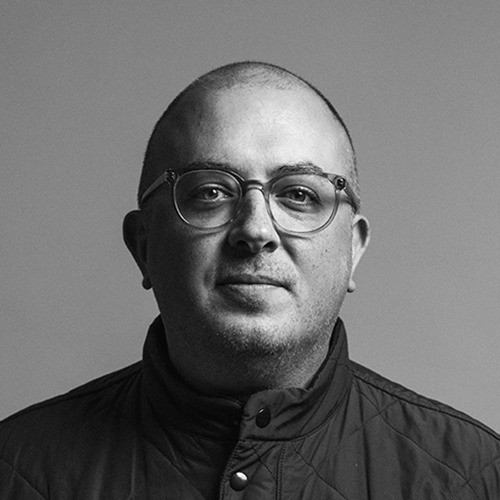
Asked about his background, McElvogue said:
My background spans graphic design, user experience, and design research, though UX and design research are really where I’ve spent the bulk of my career.
Over the years I’ve had the opportunity to advise senior decision-makers across enterprise software, automotive, and defense sectors on design and innovation strategy. It has been a career built on understanding how people interact with complex systems and finding ways to make those interactions better.
Primary Responsibilities
Asked about his primary responsibilities at Teague, McElvogue explained:
I lead an organization of over 100 people spanning design, engineering, advanced prototyping, research, and strategy disciplines.
A big part of my role is guiding Teague’s growth strategy: defining where we play in the market, identifying new verticals we can expand into, and guiding the narratives that connect our capabilities to the priorities of industry leaders.
A Favorite Memory
Asked about his favorite memory working for the company so far, McElvogue reflected:
I’m going to cheat and give you two.
The first was working hands-on with autonomous car prototypes out in the field. This involved getting our technology and interfaces working with the vehicle in an iterative way, going through rounds of end-user feedback, and refining things in real time.
The second was working with storied NASA astronauts, now in the private sector, to design interfaces for a future commercial space station. We were thinking through how to support the new kinds of work that will happen in space, and how to care for a new generation of space travelers and workers.
Core Services and Features
Asked about the company’s core services and features, McElvogue detailed:
At our core, we are a human-centered design group. We bring together hardware designers, software designers, front-end developers, engineers, lighting experts, visualization specialists, researchers, strategists, and prototypers all under one roof. The breadth of that capability is intentional. It lets us support clients across the full arc of a project, from early-stage research all the way through to physical and digital realization.
Challenges in the Sector
Asked whether he has faced any challenges in his sector of work recently and how he overcame them, McElvogue outlined:
Being a services business means we’re always exposed to economic shifts that ripple through our client base. There’s rarely a time when one of our target verticals isn’t facing some kind of headwind. Our response to that is constant vigilance: analyzing what may be coming, how it could affect our clients, and proactively exploring new verticals where our offer has real relevance.
We also invest time and money in self-disruption, ideally well before our clients ask us to change. Lately that has meant developing genuine capabilities around AI as part of the design process: understanding what it’s actually good for, what it isn’t, how to use it while protecting client IP, and updating our operational processes and contracts to be transparent with clients about how we want to integrate AI into our collaboration with them.
Technology Evolution Since Launch
Asked how the company’s technology has evolved since launching, McElvogue described:
We are celebrating our 100th anniversary this year, so the evolution has been continuous and significant. Over that time, we’ve had to adapt and reinvent ourselves alongside the industries we serve. That means constantly experimenting with new approaches to achieve better results.
More recently, a major focus has been getting ahead of new security requirements for defense work. That has involved substantial IT investment to ensure we meet the data security standards as the DoW shifts its policies. It is less visible work than a new design capability, but it’s foundational to being a trusted partner in that space.
Significant Milestones
Asked about the company’s most significant milestones, McElvogue noted:
We have been part of a remarkable number of firsts over the past 100 years.
In the 1930s, we kicked off a 30-year partnership with Eastman Kodak, helping bring photography into the mainstream. We designed the baseline cabin architecture for every single passenger plane Boeing has ever produced. Before the International Space Station, we partnered with NASA to design crew quarters for Space Station Freedom. We designed the very first Xbox with Microsoft. And more recently, we’ve been working with defense companies to explore the future of autonomous systems.
This thread of being present at important moments in technology history is something we’re genuinely proud of.
Customer Success Stories
Asked to share specific customer success stories, McElvogue highlighted:
One of the most recent examples we are proud of is a three-story design and build project we delivered for Starlab Space. Our team worked on it for several years and recently finished installing it at Johnson Space Center in Texas.
Starlab is a joint venture founded by Voyager Technologies and Airbus, and the mock-up was built as a test and training vehicle for preparing astronauts and technical teams well ahead of the station’s launch. It gives Voyager the ability to optimize equipment layout, finalize what they’ll send up to support new commercial endeavors, and run crew training. Later it will serve as an Earth-based twin during active station operations. It’s the kind of project that sits at the intersection of everything we do best.
Funding and Revenue Metrics
Asked to discuss funding and/or revenue metrics, McElvogue shared:
Not in specific terms, but we are one of the largest independent design firms in the world and one of the longest running. We became an ESOP last year, though employee ownership has actually been part of our story for most of our history. That structure matters to us. It means the people doing the work are also shareholders, so they have an additional stake in project outcomes and the success of the business.
Competitive Differentiation
Asked what differentiates the company from its competition, McElvogue emphasized:
A few things stand out. First is the breadth of our offer. We can support our clients from the very first blank-page research phase all the way through to physical and digital realization. That’s rare.
Second is our deep systems DNA. We understand how design decisions ripple through complex programs, development cycles, and regulatory landscapes in the core industries we serve. That context enhances the quality of our work.
Third is our experience with the physical embodiment of AI: robotics, autonomous systems, and human-machine collaboration in real-world environments. That’s increasingly where some of the most interesting problems live.
And finally, we have a real passion for modernizing legacy platforms. Bringing contemporary design thinking to deeply integrated, long-established software and hardware systems is something we have championed repeatedly.
Future Goals
Asked about the company’s future goals, McElvogue concluded:
Teague aims to be the leading design partner for complex, intelligent physical systems. We want to shape how humans and advanced technology collaborate across aviation, defense, space, and robotics. Those are domains where the stakes are high, the systems are genuinely complex, and good design has outsized impact. As part of that ambition, the constant goal is making our client partners as successful as possible.
