

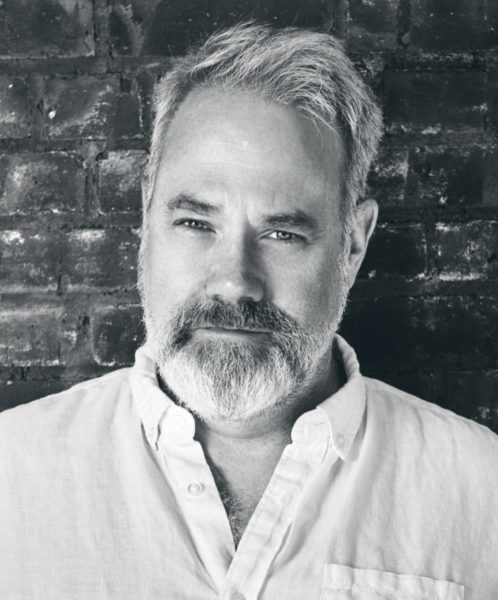
Ted Royer spent more than 25 years in advertising, including over a decade as chief creative officer at Droga5. He now serves as co-founder and creative lead at Folk Devils, a project-based creative consultancy focused on brand building, advertising campaigns and design.
His memoir, And Then It Just Got Worse, examines identity, accountability, shame, ambition, relationships and the process of rebuilding his life after his career and personal identity were upended.
Pulse 2.0 interviewed Royer to learn more about his background, what inspired the book, and how his views on accountability, redemption, success, and self-worth have evolved.
Ted Royer’s Background
When asked about his background, Royer shared:
I have always loved creativity and creative expression. Nothing thrills me more than to see a form of art or communication moved forward in a new, innovative and inspiring way.
The advertising industry gave me the opportunity to turn that passion into a career for more than 25 years. I love how fast-paced and collaborative the environment is, as well as the challenge of trying to come up with new ideas that could have a real impact on the world we live in.
I spent over a decade at Droga5 as chief creative officer and now serve as co-founder and creative lead at Folk Devils, a project-based creative consultancy firm that specializes in brand building, advertising campaigns and design.
What I didn’t appreciate initially was just how much of the pursuit of being “creative” built an identity that had become completely wrapped up in a career. It wasn’t until I lost everything that I was forced to step back and ask who I was without the title or the industry I had spent decades working in.
That question became one of the central themes of my memoir.
Why Royer Wrote And Then It Just Got Worse
When asked what inspired him to write And Then It Just Got Worse and why he decided now was the right time to tell his story, Royer explained:
Nearly a decade ago, I was on set shooting a Super Bowl commercial when I received a phone call from a colleague telling me that my name was circulating on an anonymous #MeToo list online.
In an instant, both my career and personal life shattered. I struggled with overwhelming shame, humiliation and depression and lost my sense of who I truly was as a person.
The years that followed forced me to confront difficult questions about myself, my relationships with others and the kind of person I wanted to be.
Writing this book wasn’t something that I planned to do, especially because, for a long time, I was still processing what happened – both to me and caused by me – and trying to understand everything for myself.
As time went on, though, I realized that I wasn’t really writing about one event. I was writing about everything that came after it: the slow process of trying to rebuild, the narratives we create and the meaning and identity we pour into them.
Today, eight years later, I’m finally ready to talk about my experience and the observations that grew from it.
Losing A Career And A Sense Of Identity
When asked about the emotional and psychological impact of losing the identity he had spent decades building, Royer said:
My entire identity was tied to my career. After getting fired from Droga5, I lost that career. The initial loss of my identity was the hardest experience I’ve ever gone through in my life.
I had spent decades building a career that gave me purpose, community and a clear sense of who I was. Without realizing it, I’d let my work become the way I measured myself.
When that was gone, I wasn’t just trying to figure out what I should do next. I was trying to answer much bigger questions: How does one face accountability honestly and constructively? What does cancellation really say about one person and about all of us?
For a long time, I thought the ultimate goal was getting my old life back. Eventually, I realized that was the wrong way to look at everything. I needed to face what happened head on and hold myself accountable for hurting other people. I needed to put in real work, figure out how to move forward and make sense of what happened.
As the old adage goes, “the only way out is through.”
Public Shame, Mental Health And Relationships
When asked how public shame and social isolation affected his mental health, relationships and sense of self, Royer explained:
Public shame is brutal. It completely changes how you see yourself, how you think other people see you and how willing you are to engage with the world around you.
There were many periods where I questioned everything. I even contemplated suicide. Anyone who has experienced shame knows it is so powerful that bowing out becomes a real option.
There is also a difference between shame and guilt. Guilt is, “I did something wrong.” Shame, is “I AM something wrong.”
I have definitely made mistakes. I had emotional affairs and hook-ups. I got high and drunk with coworkers. I was one of the bosses, and the power imbalance was real.
Unfortunately, I never found out the nature of the accusation against me or whom I had harmed. It was, and still is, very difficult trying to examine my own behavior while lacking information that would help me to understand exactly what I am meant to examine.
Accountability And Redemption
When asked how he defines accountability and redemption, Royer said:
I’ve spent the past eight years thinking about those two words. To me, accountability means being honest with yourself and taking responsibility for the wrongs you have done to others.
It’s asking difficult questions, listening to what people are truly telling you and accepting that the work doesn’t ever really end. It’s not one apology or one conversation. It’s the constant work that you have to keep doing for yourself and others.
Royer described redemption as a more complicated concept:
Redemption is not something that you can suddenly announce or decide you’ve achieved. You may never be redeemable in some people’s eyes, and that’s not something you can control. The only thing you can control is how you choose to live going forward.
Rebuilding His Life And Career
When asked about the biggest lessons he learned while rebuilding his life and career, Royer explained:
At first, I kept measuring every opportunity against the career that I had lost. That mindset made it impossible to appreciate what was right in front of me.
It took me years to realize that rebuilding isn’t about recovering the life you once had. This experience really put “you can never go home again” into context for me. It’s about accepting that your life has changed, learning from the past and deciding what you’re going to build next. What can you do today that will be a net good for you and your loved ones?
That mindset shift changed everything for me. I started putting my energy into new work, co-founding Folk Devils and eventually writing the book. Ironically, letting go of my old definition of success is what finally allowed me to move forward.
How His Views On Ambition, Ego And Success Have Changed
When asked how his views on ambition, ego, masculinity and success have evolved, Royer said:
Earlier in my career, ambition was closely tied to achievement: the next campaign, the next award, the next milestone. All of those things felt like evidence that I was living a happy, successful life.
While I still believe ambition is valuable, I no longer believe that external success or validation is a reliable measure of a person’s worth. Today, I place a lot more value on empathy, humility and self-awareness. Those qualities make someone a better leader than any award or title ever could.
I could go on and on about our egos. Our ego can be our best friend – protecting us and driving us forward – and our worst enemy, filling us with fear and anger.
Advice For Executives And High Achievers
When asked what advice he would give to executives and high achievers who tie too much of their identity and self-worth to their careers, Royer said:
Your resume is not your whole identity. I know so many people who place all their self-worth in their title or salary.
Build a life that’s bigger than your career. Surround yourself with people who love and support you – and love and support them back.
Challenge yourself with new experiences and ideas. Listen to perspectives that differ considerably from your own and challenge your own narratives.
What Royer Hopes Readers Take Away
When asked what he hopes readers take away from And Then It Just Got Worse, Royer said:
Concepts like identity, accountability, masculinity, power and ego are evolving all the time. I hope the book adds to constructive conversations about these concepts.
I don’t expect readers to agree with me on everything that I wrote, and that was never the point. I wrote it with the intention of helping to drive conversations forward with grace, humility and some hard-earned perspective.
I hope it helps.
