

Theia develops markerless motion capture technology that turns standard video into high-quality biomechanics data without requiring markers or sensors on the person being measured. Theia’s core software, Theia3D, is used across sports performance, research, and product development, and the company is expanding into areas such as ball tracking. Pulse 2.0 interviewed Theia CEO Marcus Brown to learn more about markerless motion capture, athlete performance, and the evolution of biomechanics technology.
Marcus Brown’s Background

When asked about his background and what led him to focus on markerless motion capture, Brown shared:
My background is in mathematics, and my career has been focused on turning complex data into practical tools that help people make better decisions.
What drew me to markerless motion capture was the gap between the value of human movement data and how difficult it was to collect at scale.
The way people move can tell us a lot about performance, function, and recovery, but traditional biomechanics has typically required specialized labs, markers, sensors, and expert operators.
That limited how and where movement data could be used, and it limited the size of datasets teams could build. Without larger datasets, it is much harder to understand individuals over time or use movement data predictively.
Theia was built to change that. Our goal was to make high-quality motion capture practical in the environments where people actually move.
With our core software Theia3D, organizations can use standard video to measure movement without putting anything on the person or disrupting their natural motion.
When motion is easier to measure consistently, it becomes a practical input for better decisions across sport performance, research, and product development.
The Gap In Sports Performance Analysis
When asked what gap in sports performance analysis led to the creation of Theia and how the idea evolved into a commercial platform, Brown explained:
The gap was that teams wanted better movement data, but the tools available made that data hard to collect in real sport environments.
Sports teams lose millions of dollars in actual and potential revenue each year due to athlete injuries. The physical demands of modern sport are increasing, and leagues and teams are looking for better ways to understand the specific movement patterns and risk factors that contribute to injuries.
Traditional marker-based motion capture can produce valuable data, but markers and sensors can interfere with how an athlete naturally moves.
If you are trying to understand something like ACL injury risk, one of the most common and consequential injuries in basketball, you need to see how an athlete lands, decelerates, or changes direction naturally and at full-speed.
If the testing environment or technology changes their mechanics, the data may not accurately reflect the movement pattern you are trying to understand.
That is what Theia was built to do. With Theia3D, teams can capture high-quality biomechanics data from video, without putting anything on the athlete.
That makes the data more practical to collect and more useful over time.
The bigger opportunity is longitudinal analysis. A single assessment can be useful, but the real value comes from tracking how an athlete’s movement changes across training, fatigue, recovery, and return-to-play.
That gives performance teams a stronger data foundation for making decisions around workload and training.
That is how Theia evolved from a markerless motion capture technology into a commercial platform. We are seeing biomechanics move from a specialized research tool into a repeatable performance data layer that teams can use at scale.
Our selection for the NBA’s league-wide biomechanics program is a strong example of that shift. More than 500 athletes have already gone through testing as part of that program, which is designed to better understand athlete movement and support efforts to reduce injury risk across the league.
Scaling Theia And Expanding Capabilities
When asked about his priorities as Theia scales its technology and expands into new capabilities like ball tracking, Brown said:
My priority is making sure Theia continues solving real problems for the people using our technology.
That starts with trust. Our customers use Theia3D to make decisions in research, sport, product development, and performance environments, so the data has to be reliable.
Theia3D has been validated by more than 50 independent peer-reviewed studies, and that scientific foundation is central to how we build and scale the platform.
The next priority is usability. As more organizations adopt biomechanics, they need tools that fit their existing workflows, not systems that add complexity.
That means continuing to make Theia easier to deploy in more environments, including more flexible camera setups over time.
Ball tracking is part of that same evolution.
In baseball, performance teams do not just want to measure how an athlete moves. They want to understand how that movement connects to the bat and the ball.
Our goal is to help customers capture richer data, move faster, and make decisions without compromising trust in the results.
As we scale, I’m excited to bring that same rigor into more sports, more environments, and more use cases.
Solving Fragmented Baseball Performance Data
When asked what problem the new Ball Tracking module solves that existing tools have not been able to address, Brown explained:
The problem is that baseball performance data has historically been fragmented.
Teams can measure body movement, bat path, and ball flight separately, but using separate technologies creates extra work for coaches and analysts who have to manually sync data after training sessions.
Ball Tracking brings those pieces together inside Theia3D.
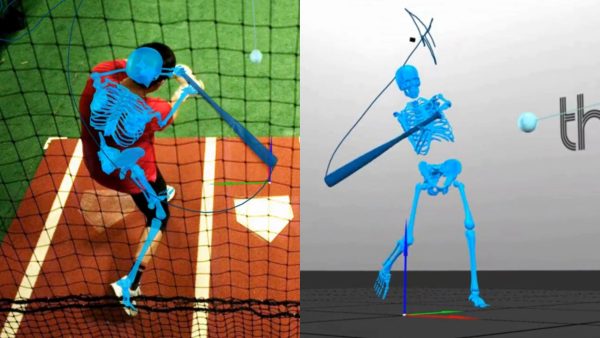
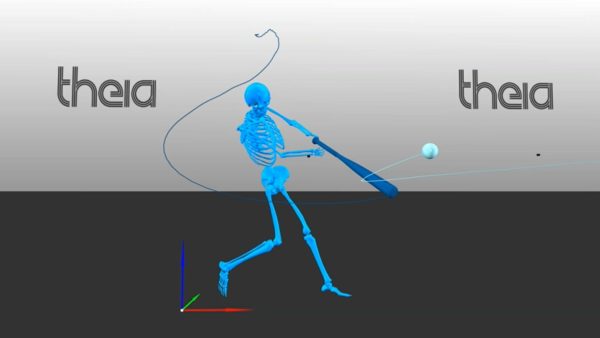
Teams can now connect how an athlete moves, how the bat moves, and what happens to the ball in one synchronized workflow.
That matters because the outcome alone does not tell the full story.
A coach may know the exit velocity, launch angle, or release speed, but the bigger question is: what did the athlete do to create that outcome?
Ball Tracking helps teams answer that question faster, with less manual work, and a more complete view of performance.
Why Ball Tracking Now
When asked why this was the right time to introduce ball tracking into the Theia3D platform, Brown said:
The baseball community has invested heavily in biomechanics data for over a decade. The next step is connecting that movement data to the outcome on the field.
That is what our customers were asking for.
They did not just want to know how an athlete moved, or what happened to the ball in isolation. They wanted a more complete view of performance.
Ball tracking helps connect that full chain: body movement, bat path, and ball flight.
Now teams can analyze how specific movement patterns, swing mechanics, and release mechanics relate to outcomes like exit velocity and launch angle.
For us, this was a natural evolution of Theia3D and a response to where baseball performance analysis is going.
Teams want fewer disconnected systems and more integrated workflows that help them make better decisions faster.
Changing The Coaching Workflow
When asked how combining biomechanics, bat path, and ball flight in one system changes how coaches and analysts work day-to-day, Brown explained:
It makes the workflow faster and easier to use inside a real training environment.
At the elite level, time is a precious commodity.
Coaches and analysts often only have a small window before, during, or after a training session to collect the data they need.
If that time is spent fitting athletes with markers, managing multiple systems, and manually stitching data together after, there is simply less time available for actual feedback and training.
With Theia3D, there is zero athlete setup time.
Athletes can be captured in their normal clothing, without markers or sensors, while body movement, bat path, and ball flight are tracked in one system.
That changes the workflow significantly.
Coaches and analysts can move from a “collect now, analyze later” model to a faster feedback loop during training.
Using The Data To Improve Performance
When asked for a practical example of how a team or coach might use the data to improve performance, Brown explained:
A practical example would be a hitter working to improve exit velocity and launch angle.
With Theia3D, the coach can look at the full sequence together: how the athlete moved, how the bat traveled, and the resulting ball outcome.
For example, they may see that the athlete is opening the pelvis too early, which changes the bat path and produces lower-quality contact.
The coach can then adjust the cue, have the athlete take another round, and quickly see whether the change improved the bat path, exit velocity, and launch angle.
That is the value: coaches and performance staff can see how movement affects the performance outcome, and are then able to provide feedback and make adjustments on the spot, without having to stitch everything together after the fact.
Key Company Milestones
When asked about some of Theia’s most significant milestones, Brown highlighted:
One of the most important early milestones was the independent validation work performed on Theia3D.
The software has now been validated in more than 50 peer-reviewed studies across a wide range of movements and environments.
That scientific foundation has been critical to our adoption across research, product development, and elite sport.
Another major milestone is our role in the NBA’s league-wide biomechanics initiative.
That program reflects the broader shift we are seeing in elite sport, where movement data is becoming an important part of how organizations assess athlete performance and reduce injury risk.
More recently, our expansion into baseball has been an important step forward.
Working with leading player development organizations like Driveline Baseball and Maven Baseball Lab shows the growing demand for high-quality biomechanics data in applied sport environments.
Across all of these milestones, the broader theme is the same: biomechanics is moving from the lab into day-to-day decision-making.
Organizations want objective movement data they can trust, and they increasingly see it as a competitive advantage.
