Tiny Health is a microbiome health platform focused on making gut and vaginal microbiome data measurable, clinically useful, and actionable across different stages of life. The company uses shotgun metagenomic sequencing, a proprietary bioinformatics pipeline, longitudinal microbiome data, and TinyAI to help consumers, clinicians, and healthcare organizations interpret microbial function rather than simply identify which organisms are present. Pulse 2.0 interviewed Tiny Health Founder and CEO Cheryl Sew Hoy to learn more about microbiome intelligence, clinical validation, healthy aging, and the role microbiome data could play in personalized healthcare.


Watch the announcement video here.
Defining Microbiome Intelligence
When asked how Tiny Health defines microbiome intelligence and why it may be more clinically useful than traditional consumer microbiome testing approaches, Sew Hoy explained:
This category has been stuck on a flawed premise, believing that a test’s job is to hunt a single fixed pattern of what looks like a “healthy” microbiome. I disagree with that framing, and the science doesn’t support it either.
Everyone’s gut is as unique as a fingerprint, but uniqueness and measurability aren’t in conflict. Microbiome science has now matured to the point where we can detect hallmarks of a healthy vs. unhealthy microbiome, and that could look a million different ways.
What actually determines whether a microbiome is functioning well are things like butyrate-producing capacity, whether Akkermansia sits in the range associated with metabolic health, whether opportunistic pathogens are elevated enough to be driving inflammation through LPS, and whether there’s enough diversity and resilience to bounce back from a stomach bug, an antibiotic course, or travel.
Microbiome intelligence is what you get when you combine that functional lens with scale. Our biggest moat isn’t a database of microbes, it’s a growing map of the human microbiome and what those microbes mean in the context of real people’s lives.
With hundreds of thousands of longitudinal samples and metadata behind it, every new sample adds to our ability to distinguish signal from noise, discover new biomarkers, and make results more useful.
That creates a flywheel: more data leads to better science and interpretation, which leads to more useful recommendations, which brings in more customers, which makes the dataset and pipeline even stronger.
TinyAI sits on top of that foundation. We believe firmly that AI is only as good as the data and science it’s built on, so our approach is to build it on nearly 200,000 deeply characterized samples and clean health data, on top of a streamlined, validated pipeline.
Other microbiome companies that claim to leverage AI may be processing various microbiome studies published, and the flaw is that they’re all combining different sequencing methods, running different DNA-extraction protocols and bioinformatics pipelines.
You cannot create condition biomarkers by ingesting all the data from these studies because there’s too much variation between them. What you’ll end up getting is “garbage in, garbage out.”
There’s a difference between a test that tells you simply which bacteria showed up versus a system that tells you what your gut is doing, why, and what to do about it.


Measuring Microbiome Function
When asked which functional characteristics of an individual’s microbiome can now be measured or interpreted in ways that were not practical a few years ago, Sew Hoy said:
Rapid technology advancements have enabled our industry to shift from taxonomy to function.
I think of 16S sequencing as a blurry, low-resolution photo: you can make out the broad shapes, the general families of bacteria present, but not much detail.
Shotgun metagenomic sequencing is the high-definition version of that same photo. It reads all the DNA in a sample, so we can see individual strains clearly and, more importantly, what they’re actually doing, which gene functional pathways are active.
Culture and qPCR-based stool tests are a different problem entirely. That’s the typical panel a doctor orders in a clinic, and those panels are quite limited: they overemphasize pathogenic microbes like E. coli, fungi, and parasites, so when we see symptoms, they often get chalked up to something to eliminate rather than a missing beneficial function to replenish.
Narrow panels like that miss the second problem completely.
Another technology for microbiome sequencing is RNA, which is measuring the gene expression of your microbiome. While this technology is great for measuring instantaneous responses to what you just ate or what drugs you just took, its less stable and more temporal nature makes it harder to reproduce and consistently characterize your gut microbiome health for lifestyle interventions.
The functional resolution that shotgun metagenomic sequencing enables is what lets us surface whether we have important short-chain fatty acid markers, GABA function, fiber digestion functions, methane production, hexa-LPS indices and other gut inflammation markers.
Our proprietary pipeline also enables us to create new markers in the gut that didn’t exist in this category before: Gut Microbiome Age, which estimates how inflammation may be impacting a person’s chronological age; Gut Resilience Score, which measures how resistant your gut could be against the occasional stressors of life; GLP-1 Index, your gut’s ability to naturally produce GLP-1; and Urolithin-A capacity, a marker that’s important for mitochondria health.
Two people’s microbiomes can look nearly identical at the taxonomic level and be completely different once you look at their function, and that’s very often where the answer to a real symptom, like poor sleep, skin flares, or GI distress, actually lives.
We make every recommendation evidence-based, laid out step by step, and linked back to the underlying research on PubMed, labeled as emerging, established, or limited evidence, so people know exactly how much weight to put on it.
Clinical Validation
When asked how Tiny Health approaches clinical validation and separates meaningful biological signals from correlations, Sew Hoy explained:
We started with the first 1,000 days on purpose. An infant’s gut is low in diversity and highly malleable in that window, which is exactly why the science on disruption and intervention is strongest there: specific deficiencies in an infant’s gut have turned out to be strong signals for atopic conditions like eczema.
Building our clinical validation on that foundation is how we learned to separate real signal from noise, a discipline we’ve since been able to extend into older kids and adults.
We’re the only gut microbiome company that has published an interventional randomized controlled trial: a 2025 RCT in Pediatric Allergy and Immunology showing that targeted microbiome interventions reduced infants’ odds of developing eczema by 83%.
We’ve published three peer-reviewed papers so far, including research connecting early-life gut microbiome profiles to eczema and food allergies, and a preprint showing our proprietary bioinformatics pipeline outperforms industry benchmarks in detecting clinically relevant microbes across all life stages.
We’ve been able to do this because we built the company with PhD microbiologists and pediatric physicians who understand the intricacies of the developing gut.
Earning a place alongside partners like Mayo Clinic, Stanford Medicine, and Allina Health meant showing an at-home test could meet the same bar for accuracy, reproducibility, and validity as a test processed in an academic or clinical lab.
There’s still a lot of variability across this category in how microbiome testing is actually performed and interpreted, and I think that’s the real source of skepticism, not the science itself.
Shotgun metagenomics is table stakes for measuring the microbiome accurately and consistently, but plenty of companies in this space are still not using it or aren’t sequencing at the depth or resolution needed to generate meaningful insight.
Read depth matters just as much: you need to measure deeply enough to move past “what organisms are there” to “what can they actually do.”
That function-first approach is why we own our full bioinformatics pipeline in-house, rather than relying on someone else’s black box.
At the end of the day, health data is only meaningful if it’s clinically useful. We’re not just measuring the microbiome, we’re building the evidence to understand what it means: which patterns actually matter, how they relate to health, and what can change them.
That’s how we’re trying to help set the standard for how the microbiome gets measured and interpreted across the field.
Bringing Microbiome Data Into Clinical Care
When asked what needs to happen for microbiome data to become a more routine part of how physicians and other practitioners assess and manage patient health, Sew Hoy explained:
The biggest hurdle we hear from clinicians isn’t skepticism, it’s familiarity.
Our advisor Dr. Qian Yuan, a pediatric GI doctor at Mass General and Harvard Medical School, put it well: “It all depends on the doctor’s knowledge of the gut microbiome and their ability to guide families based on the results.”
Most physicians were never trained to read a microbiome report, so we’ve built an in-house clinical education team solely focused on teaching providers how to interpret our gut and vaginal microbiome tests and integrate them into their existing workflow.
Dr. Yuan now uses Tiny Health as a first-line workup for children and teens with complex allergies or GI symptoms, in some cases avoiding an EGD or colonoscopy that runs insurers thousands of dollars and comes back inconclusive roughly 30% of the time, against about $199 for our test, our provider rate.
That’s the model we’re scaling with this funding. We’re putting $5 million of the Series B toward a Microbiome Research Program, focused on supporting interventional studies that can help us understand how changing the microbiome can improve health outcomes.
There are already thousands of interventional studies happening across areas like food allergy, metabolic health, and nutrition. But many aren’t using shotgun metagenomics, which means they can miss much of what’s actually changing in the microbiome, including changes in microbial functions.
And microbiome research is technically challenging. Doing it well requires the right methodology, sequencing depth, bioinformatics, and scientific expertise, which can make this type of research difficult for independent researchers and practitioners who don’t have access to a large microbiome research core.
We want to remove that barrier and help practitioners, academic researchers, and companies incorporate high-quality microbiome data into interventions they’re developing.
A practitioner could add scientific outputs to their existing protocol. An academic researcher could add microbiome testing to a patient cohort they’ve tracked for years, which opens up new markers for tracking health.
A company developing a prebiotic or another ingredient meant to shift the gut microbiome could use our testing to actually demonstrate the biological impact of their product instead of just claiming it.
The bigger idea is not just to fund more microbiome research, but to help raise the standard for how microbiome data is generated in interventional studies.
By making rigorous shotgun metagenomics more accessible, we can help generate the evidence needed to understand what interventions actually change the microbiome and improve outcomes.
Ultimately, clinicians who are confident interpreting microbiome data and translating it into actionable guidance are the ones who adopt it, and that confidence comes from both training and from seeing credible research come out of programs like this, not just from the existence of evidence.
Connecting Consumer Testing And Traditional Healthcare
When asked how the relationship between consumer microbiome testing and traditional healthcare could evolve, Sew Hoy said:
That’s exactly where our industry is headed, in fact it’s already happening.
While bloodwork and other diagnostics can tell you what’s wrong, the gut microbiome layer can often tell you the root cause behind that, and is increasingly becoming core to any clinical care.
Our platform today serves three overlapping audiences: consumers who are managing chronic conditions or looking to optimize health and wellbeing, using their results to take root-cause action; clinicians across functional and integrative medicine, as well as concierge and longevity clinics such as Mayo Clinic, Allina Health, and Atria Institute, using our reports to guide conversations about nutrition, lifestyle, and supplementation; and dozens of enterprise partners, including Superpower, Siphox and Nia Health, who integrate our microbiome intelligence directly into their own platforms and patient programs.
The gut isn’t a standalone data point. It’s connected to every major system in the body: the gut-immune axis, gut-skin, gut-hormone, gut-metabolic, gut-vaginal, gut-lung, gut-oral connections, and more.
It’s also a modifying layer that shapes how someone responds to a given treatment, whether that’s a GLP-1, hormone therapy, or chemo.
As more of that evidence gets published and more practitioners are trained to interpret it, I expect microbiome data to sit alongside bloodwork and genetics as a routine, longitudinal signal rather than a specialty test people order episodically.
Microbiome Health And Aging
When asked what researchers are beginning to understand about the relationship between the microbiome and aging, Sew Hoy explained:
We built Tiny Health on the science of the first 1,000 days of life, when the gut microbiome is most malleable and its influence on lifelong immune health is strongest.
What we’re finding as we extend that same rigor across the lifespan, on a dataset that now spans the first week of life to over 100 years old, is that a lot of what gets treated as inevitable decline may actually be tied to specific, measurable shifts in gut function, and that those shifts show up in the gut well before someone would notice them anywhere else.
The clearest example is inflammaging, the slow, low-grade rise in inflammation that tends to come with age.
As people get older, gut diversity often dips, the bacteria that produce protective compounds like short-chain fatty acids and indole-3-propionic acid can decline, and other microbes that trigger inflammation tend to become more abundant.
That combination can weaken the gut barrier, which lets bacterial byproducts slip into the bloodstream and keep the immune system on alert, and it becomes a loop: a weaker gut lining feeds more inflammation, and more inflammation makes it harder for beneficial bacteria to thrive.
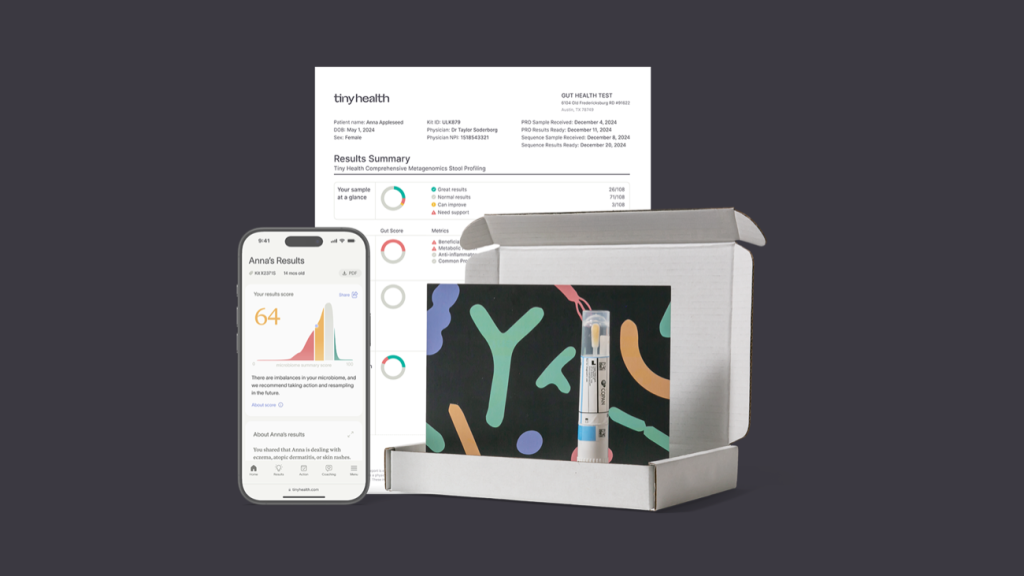
We just launched Gut Microbiome Age, which uses a machine-learning model trained on thousands of samples to show adults where their gut falls relative to others their age and sex, broken down across six categories: gut barrier and inflammation, beneficial functions, disruptive functions, diversity and resilience, disruptive microbes, and beneficial and common microbes.
Research on healthy older adults, including centenarians and other long-lived populations, has consistently linked a more diverse, resilient gut to healthier aging.
The part I think has the greatest potential for real intervention is that, unlike your actual birthday, your Gut Microbiome Age isn’t fixed.
It moves with the same nutrition and lifestyle factors that are already within someone’s control: eating a wide variety of plants and fermented foods, cutting back on ultra-processed food, staying active, managing stress.
There’s no such thing as a perfect gut, and no single ideal number to chase. The goal is a gut resilient enough to support someone well at any age, and that’s a target people can work toward when they’re empowered with the right insights.
Making Complex Microbiome Data Actionable
When asked how Tiny Health plans to turn increasingly complex microbiome data into information that remains understandable and useful without oversimplifying the science, Sew Hoy said:
Our goal is to make the microbiome measurable, accessible, and actionable at every stage of life.
We started with the first 1,000 days, in a particularly vulnerable population: babies with atopic conditions.
Every recommendation we give is evidence-based, broken into concrete steps, and linked back to the actual research, labeled by strength of evidence so people can calibrate their own confidence in it.
We’ve carried that same discipline into our adult product.
TinyAI is the newest layer of that, and we were deliberate about where AI belongs in this system: on top of the science, not driving it.
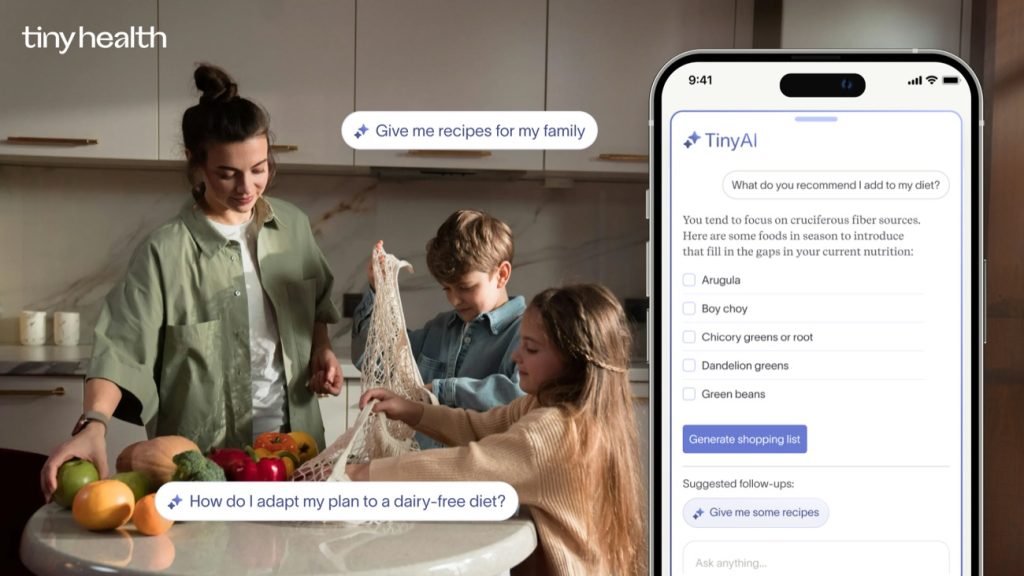
It’s a conversational AI embedded directly in the results experience, but it sits on a foundation of nearly 200,000 deeply characterized samples, clean metadata, and a pipeline that already determines what’s worth measuring and validating in the first place.
We did not build a general-purpose AI bolted onto a lab report, or one that generates untrained guidance you may get from ChatGPT or Claude.
The goal is to make sure the right level of complexity reaches the right audience, whether that’s a parent trying to understand a single result or a clinician integrating our data into a broader workup.
Future Goals
When asked about the most important scientific, clinical, and product milestones Tiny Health hopes to achieve over the next several years, Sew Hoy explained:
Our current healthcare system is built to treat disease after it happens. It’s sick care and doesn’t look at preventing disease or driving us toward optimal health.
What started as a solution for my own family, and families like mine, became the infrastructure for an entire industry, and I don’t think that’s the ceiling.
We’re building a platform where in the near future, we can predict disease before it happens and intervene to prevent it.
Getting there comes down to two guiding principles.
First, clinical rigor: we don’t put anything in front of a customer or a provider that isn’t backed by real science, which is why we invited the authors of the papers I was reading early on to sit on our scientific advisory board, and why we spent two years on R&D before we ever launched.
Second, once you have rigor, you have to satisfy clinical utility.
We could have the most advanced and accurate sequencing platform in the world, but if clinicians and practitioners aren’t actually deriving value from it, then why are we building this? It has to change health outcomes.
That’s why we stood up a dedicated Clinical Education team, and why our research arm doesn’t just publish our own studies, it helps partners prove out the rigor behind their own supplements, protocols, and clinical findings too.
For microbiome intelligence to become mainstream, it needs rigorous, published, replicated scientific evidence, reimbursement pathways that make it accessible, and clinicians who are trained and confident enough to act on it.
We built this company on the belief that the gut is the foundation of health, and this funding, especially the $5 million Microbiome Research Program, lets us prove that at scale.
I don’t think that’s an overstatement to call the microbiome the next frontier of medicine, and Tiny Health is at the forefront.

