

Transit is a Montreal-based mobility technology company developing a public transportation navigation platform that helps people plan trips, track real-time departures, and navigate cities using buses, trains, bicycles, scooters, and other transportation options. Founded in 2012 by Sam Vermette and Guillaume Campagna, the company serves approximately 9 million monthly users across 40 countries and works with more than 200 transportation agencies. Its platform combines official transit data, crowdsourced rider information, machine learning, and trip-planning technology to improve the experience of using public transportation. Pulse 2.0 interviewed Transit Co-Founder and CEO Sam Vermette to learn more about the company’s origins, navigation technology, partnerships with transit agencies, innovations in real-time transportation data, and its mission to make cities less dependent on cars.
Sam Vermette’s Background
When asked about his background, Vermette shared:
I’m the co-founder and CEO of Transit. I studied industrial and product design at the Université de Montréal, and after teaching myself to program in 2009, I spent several years building and shipping iOS apps before we started Transit, because I was riding the bus and got frustrated with the quality of navigation apps for public transit.
My work has always been focused on what actual riders are experiencing, what someone standing at a bus stop actually needs to know, and how clearly we can communicate it.
My role is much broader today, leading the overall company growth and how we can provide more riders with smarter ways to navigate their cities, but I still work alongside our product design team. That product mindset continues to shape how I lead the company.

How The Idea For Transit Came Together
When asked how the idea for Transit originated, Vermette explained:
As smartphones became part of everyday life, we wanted people to be able to open their phone and immediately see the public transit options around them.
Guillaume Campagna, our co-founder and CTO, had already built Canada’s first widely used public transit app in 2009, when he was 18. We founded Transit together in Montreal in 2012 and launched in Toronto that same year.
We designed Transit to show real-time departures for nearby lines without asking you to type in a stop number or address. That’s still the core of the experience, but we’ve expanded the app to provide more features for riders, from multimodal trip planning to automatic detour detection to crowdsourced rider feedback about their specific stop, vehicle, and route.
Today, 9 million people use Transit each month in more than 1,500 cities across 40 countries; we’ve actually launched in over a dozen new countries over the past year alone, including a major launch in cities across all 16 of Poland’s regions.
As CEO, my job is to set the company’s long-term direction, protect our product and our culture, and make sure our work with agencies keeps serving riders first. We’re a team of about 100 people, and most of us work out of our office in Montreal.
Favorite Memory Working At Transit
When asked about his favorite memory working at the company, Vermette highlighted partnerships with major Canadian transportation agencies during the World Cup:
It’s difficult to choose just one, but this June stands out. TransLink named Transit its recommended trip-planning app for Metro Vancouver on June 4, and four days later, the TTC announced a year-long pilot with us in Toronto. With Ottawa and Calgary already partners, four of Canada’s five largest transit agencies were now recommending Transit to their riders.
Toronto and Vancouver both launched their partnerships right before hosting the World Cup, which meant we could work with teams inside TransLink and the TTC on navigation improvements in time for the first match.
We adjusted our trip planner to guide fans away from choke points before and after matches and around fan festivals in both cities, and worked with TTC on better in-station wayfinding.
In Toronto, our automatic detour detection was running on TTC buses and streetcars, including when thousands of German fans shut down streets for their fan march. Watching our technology and our agency partnerships at work during one of the busiest periods these systems have ever faced was especially rewarding.
Core Products And Features
When asked about Transit’s core products and features, Vermette explained:
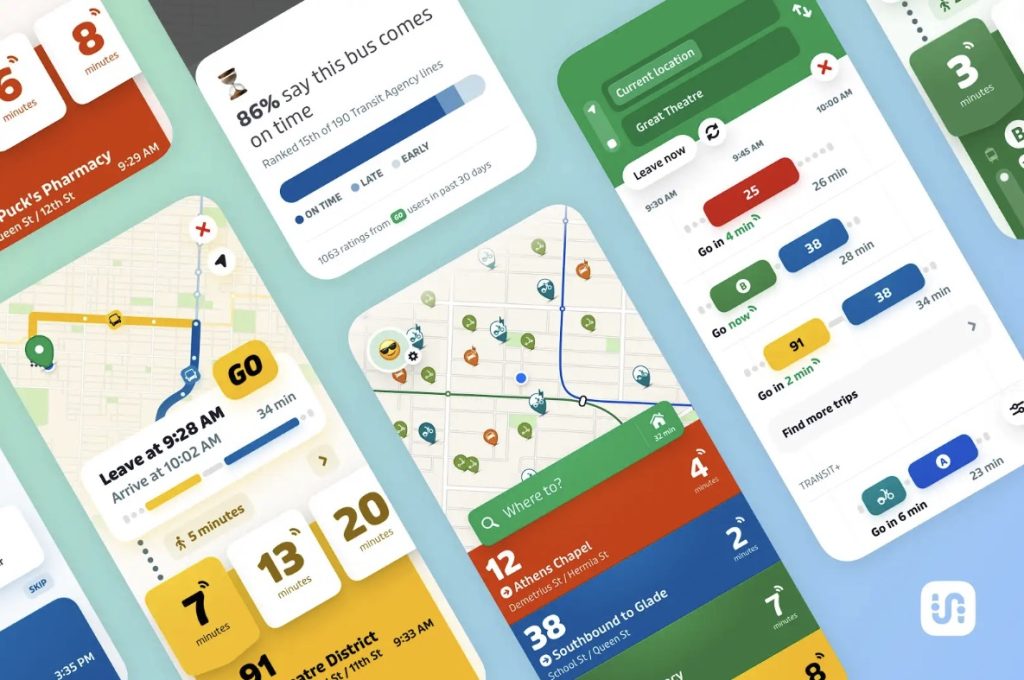
When you open Transit, it shows real-time departures for nearby lines along with service alerts, and because the app works offline, you can see when your bus or train will arrive at lightning speed. You can also enter a destination and see suggested routes, including multimodal routes that combine bikes, scooters or taxis with public transit options.
GO is our step-by-step navigator. It sends a “leave now” notification timed to your vehicle’s real-time position and tells you when it’s time to transfer or get off. Riders using GO can opt in to share their location anonymously, which crowdsources live vehicle positions for other riders waiting further down the line.
Rate-My-Ride asks riders short questions during their GO trip about on-time performance, crowding, cleanliness, safety and stop amenities, and each answer is linked to the specific route, trip and stops involved. TTC riders alone send more than 500,000 responses a month, which we pass on to the TTC’s Research & Analytics team, creating a positive feedback loop between riders and the people who run their service.
Our automatic detour detection uses machine learning to recognize when a bus or streetcar has left its usual route. It shows the detoured path and temporary stops in the app and notifies the agency.
Riders can also share a live link to their GO trip so friends and family can follow along in real time, and sharing ends automatically once they reach their destination.
Royale is our premium subscription, which enables unlimited departure schedules, additional trip-planning options and customizable app icons. Agencies can sponsor Royale for all their riders, which removes the paywall and brings the agency’s own branding into the app. Toronto, Vancouver, Ottawa and Calgary have all done this.
All of it serves the same goal, which is making getting around by transit, biking and walking so dependable that people don’t feel like they need a car.
Challenges In Public Transit Technology And Data Integration
When asked about the challenges facing public transit technology and how Transit has addressed them, Vermette explained:
One of the biggest challenges is the quality and availability of high-quality public transit data. Some agencies still don’t have modern vehicle-location hardware, standardized real-time feeds, or reliably updated schedules and stop data.
We deal with that by working closely with agencies and through 14 years of compounding improvements in our data management pipeline that cleans, compresses, converts and improves transit open data feeds.
We also supplement open data with information crowdsourced from riders. When someone uses GO or responds to Rate-My-Ride, that person can improve the experience for everyone else by sharing real-time trip information like bus locations or crowding levels.
Another challenge is that public-sector partnerships take time. Every agency has its own procurement process, technical environment and priorities. Trust scales more slowly than technology. We overcome that by building deep long-term relationships and demonstrating our value, one city at a time.
How Transit’s Technology Has Evolved
When asked how the company’s technology has evolved since launching, Vermette noted:
We began as a simple app to check nearby transit times, and Transit has since grown into a full-featured customer experience platform that supports riders and agencies through the entire journey.
To name a few highlights, we launched our first mobile ticketing integration in 2018, and today, riders can buy tickets inside Transit for more than 100 agencies across North America.
Our premium subscription service, Royale, followed in 2021, and today more than 200 agencies in four countries have partnered with us to sponsor Royale for their riders and make Transit their official app.
Automatic detour detection launched in 2023, which helps riders keep track of their ride through unplanned disruptions. Most recently, we launched live trip sharing for GO trips in September.
There’s been so much more along the way: underground location tracking for trains, safety-focused bike navigation, a web trip planner for browser users. Every month we push out updates with new features or improvements to make the app faster and more accurate.
The biggest change is that information now moves in both directions. Agencies share their real-time data with us, which we share with riders, and riders help us understand what’s actually happening on the ground, which we share back to agencies.
That flow reaches beyond our own app too. For example, our web trip planner now powers directions on the TTC’s website, and the TTC integrates our automated detour detection feed into its open real-time data so every app and website showing TTC service can display it.
Significant Company Milestones And Global Growth
When asked about Transit’s most significant milestones, Vermette cited its international user base, agency partnerships, and subscription business:
We now serve 9 million monthly users in more than 1,200 cities and 40 countries, and we have more than 200 agency partnerships across the US, Canada, France, and New Zealand, including 36 of the 100 largest agencies in the US and Canada.
In Canada, more than half of transit riders are on a system that has partnered with Transit.
GO was a significant product milestone because it turned Transit from something riders checked before a trip into an app that stays with them the whole way.
Launching Royale in 2021 gave us a subscription business with riders and became the foundation of our agency partnerships.
Transit is funded entirely by riders and agencies. We don’t blast riders with ads or sell user data to brokers. This type of responsible business model is unique among direct-to-consumer navigation apps, and successfully getting it up and running was a huge milestone.
Customer Success Stories And Transit Agency Partnerships
When asked about customer success stories demonstrating Transit’s impact, Vermette highlighted transportation agency partnerships and the platform’s performance during the World Cup:
Our Canadian agency partnerships are good examples. Toronto, Vancouver, Ottawa and Calgary all sponsor Royale, giving their riders access to premium features without individual app users needing to purchase subscriptions.
The World Cup showed the platform’s value at scale. More than 4 million locals and visitors opened Transit across host cities, and riders answered Rate-My-Ride questions over 600,000 times about how their transit systems were performing.
In Kansas City, which ran an entirely new transit network for the tournament, our Preview Mode helped riders get ready for it, and real-time information signs on the ground were powered by Transit’s APIs.
We also set up tournament fare payment options in Kansas City and the Bay Area, and our web trip planner powered directions on the TTC’s website and for Kansas City’s official host committee.
In Toronto, the Rate-My-Ride data we send to the TTC’s Research & Analytics team helps them measure rider satisfaction on every line and decide which service improvements to prioritize.
That kind of feedback shows an agency how riders are experiencing its service, beyond what an operational report can capture.
What Differentiates Transit From Its Competition
When asked what distinguishes Transit from general-purpose navigation platforms and competing mobility applications, Vermette affirmed:
General-purpose mapping products treat public transit as one mode among many, while for us, it’s the entire focus.
Calculating a route is only one part of the problem. The more difficult work involves building trusted agency relationships, integrating local operational data, and determining whether a rider’s specific bus is actually going to arrive when expected, which makes what we do closer to infrastructure than a maps feature.
That’s why we work under contract with transit agencies, city governments, US state departments of transportation and Canadian provincial authorities.
We also combine official data with what millions of riders contribute through GO and Rate-My-Ride, and that community layer gives us a real-time picture of conditions while making transit more social and collaborative.
Because Transit is funded by riders and agencies, our business depends on serving them well.
Future Company Goals
When asked about Transit’s future goals, Vermette emphasized expanding the company’s technology to help reduce dependence on personal vehicles and improve urban transportation:
Our mission is to make cars obsolete, and in practice, that means helping create cities with fewer cars by making public transit, walking, and cycling easier, more dependable and more enjoyable.
For cities and transit agencies, we want Transit to become a complete platform that helps them guide riders through their journeys, inform them about service changes, and listen to their feedback.
That includes trip planning, rider feedback, fare payment, marketing and communications, rather than simply displaying schedule data.
For riders, we want getting around to feel more personal, social, and rewarding. Public transit is something millions of people experience together every day, but most apps don’t reflect that, and features like live social trip sharing are part of how we’re changing it.
Ultimately, we want people to feel confident that they don’t need a car to get around, and that their city can become greener, calmer, and more livable as a result.
