

Trintech is the trusted AI platform for governed autonomous finance, helping organizations modernize financial operations across the Office of the CFO. Guided by our purpose to give people time back for what matters most, we enable finance teams to reduce risk, strengthen controls, and improve accuracy through AI-driven automation for reconciliation, transaction matching, close management, journal entries, intercompany accounting, and compliance. Pulse 2.0 interviewed Trintech CTO Sunil Padiyar to learn more.
Sunil Padiyar’s Background
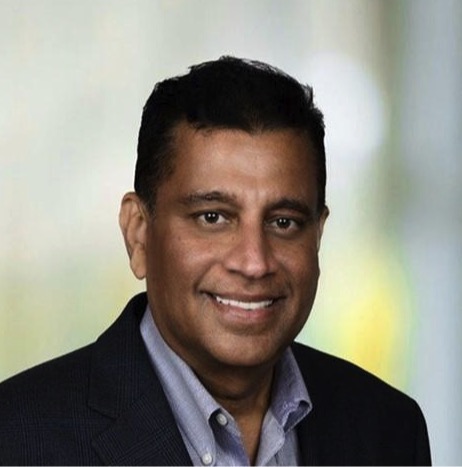
Could you tell us more about your professional background and what led you to your current role as CTO? Padiyar said:
I’ve spent more than twenty years building technology organizations designed to give companies more control, speed, and intelligence in how they operate. My work has taken me through fintech, enterprise SaaS, and large-scale AI platforms, but the through-line has always been the same: turning complicated, high-risk processes into systems that are simpler, smarter, and relentlessly reliable.
What ultimately pulled me to Trintech was the opportunity to help finance organizations transform the way they work. Today’s finance teams are navigating intense pressure, compressed timelines, stricter compliance requirements, fragmented data landscapes, and increasingly global operations. I saw a unique opportunity to combine AI, automation, and modern engineering to help finance teams work with greater confidence while strengthening governance, visibility, and control across the financial close and beyond.
With cloud maturity, real-time data intelligence, and advances in AI all converging at once, we’re at an inflection point. This is the moment to redefine what finance teams should expect from their technology—not just automating manual work, but enabling more intelligent, connected, and autonomous financial operations so teams can focus more of their time on higher-value decisions.
Evolution of The Technology Vision
How has your technology vision evolved since becoming CTO? Padiyar shared:
When I first stepped into the CTO role, our mandate was clear: accelerate automation. But the landscape didn’t sit still. AI capabilities leapt forward, ERPs modernized, and enterprise data finally became accessible in ways that make true intelligence possible. That momentum has reshaped my vision.
We’ve moved from automating individual tasks to enabling more intelligent, connected financial operations. Today, the focus is on:
Embedding AI and intelligence directly into workflows so actions become proactive, not reactive.
Applying decision intelligence to surface and mitigate risk before it ever impacts reporting.
Building a connected ecosystem that interprets data, not just moves it, giving finance a real-time understanding of what’s happening and why.
Standardizing integrations to deliver a predictable, governed, enterprise-wide foundation instead of a patchwork of point solutions.
Unifying cloud, security, and data architecture to ensure scalability, resilience, and trust.
This evolution shifts finance from a backward-looking cycle to a predictive, insight-driven, continuously improving close—one that delivers greater control, sharper accuracy, and far more confidence. It’s not just modernization; it’s a redefinition of what “close” should mean in a digital-first enterprise.
Memorable Experience
What has been your most rewarding or memorable experience as CTO so far? Padiyar reflected:
The most rewarding moments are when I get to see customers genuinely feel the impact of what we’re building. During our early AI pilots, we watched accountants reclaim hours from variance explanations, reconciliations, and documentation, work that had historically been tedious, error-prone, and mentally draining.
But the real highlight wasn’t just the time savings. It was seeing finance teams realize, sometimes for the first time, that technology can remove complexity and restore control instead of adding yet another layer of friction. Watching that mindset shift—seeing confidence replace skepticism—has been incredibly meaningful. It’s the clearest signal that we’re not just improving workflows; we’re changing how finance teams experience their work.
Key Technology Milestones
What have been some key technology milestones under your leadership? Padiyar cited:
A few milestones stand out because they’ve fundamentally strengthened our AI platform and elevated what our customers can expect from us:
— Modernizing our global cloud architecture to deliver far greater scale, resiliency, and performance, setting the foundation for true enterprise-grade operations.
— Standardizing integrations through a unified, enterprise-ready framework that replaces fragmentation with predictability and governance.
— Advancing embedded AI across the close—from anomaly detection and reconciliation accuracy models to GenAI copilots that remove manual effort and accelerate insight.
— Launching our internal LLM trained on finance-specific knowledge, enabling faster support, deeper context, and more tailored guidance for our customers.
— Strengthening our data intelligence layer so finance teams can shift from reacting to issues to anticipating and mitigating risk before it impacts results.
Each of these milestones is more than a technical upgrade—they’re tangible proof of our commitment to delivering measurable results: higher accuracy, faster cycles, stronger governance, and radically improved visibility across the close.
Major Business Impact
Could you share an example of a technology initiative that created major business impact? Padiyar highlighted:
One of the clearest examples is our embedded AI strategy. Intelligence isn’t an add-on—it’s becoming foundational to how finance operates. By infusing AI directly into reconciliations, matching, variance analysis, and documentation, customers have been able to cut reconciliation cycle time, improve match rates, and dramatically increase confidence in their reporting.
Another major driver of impact is our integration modernization initiative. By standardizing integration patterns and embracing industry-standard, off-the-shelf connectors, we reduced onboarding friction, strengthened reliability, and created a far more predictable integration landscape for enterprise customers.
Together, these foundational shifts have meaningfully elevated accuracy, speed, governance, and control across the financial close.
Industry Focus
What industries or domains are you most focused on innovating in right now? Padiyar pointed out:
We’re focused on industries where operational complexity, regulatory rigor, and global scale collide—manufacturing, retail, hospitality, financial services, energy, and healthcare. These sectors feel the pain of fragmented data, compliance pressure, and high-volume transaction flows more acutely than most, making them ideal environments for intelligent automation.
From a technology perspective, our investment priorities are clear:
AI and agentic systems that transform workflows end-to-end, not just accelerate individual tasks
Data lineage and decision intelligence to give finance teams trustworthy, explainable insight
Secure automation frameworks built to meet enterprise-grade governance and control requirements
Cloud-native modernization that delivers performance, scalability, and resilience at global scale
ERP extensibility and API-driven ecosystems that eliminate integration barriers and unlock interoperability
Our mission is to deliver a platform that is intelligent, connected, and governance-first, empowering finance teams to operate with greater clarity, agility, and confidence, no matter how complex their landscape becomes.
Differentiation
What differentiates Trintech’s technology approach from others in the market? Padiyar affirmed:
What differentiates Trintech’s technology approach is the combination of depth, intelligence, and trust, reinforced by a set of advantages that translate directly into faster value and stronger outcomes for our customers.
Depth: We bring a deep understanding of enterprise finance, ERP complexity, and global risk. That domain expertise shapes how we architect, integrate, and scale our platform.
Intelligence: Our AI is embedded directly into critical workflows—improving accuracy, accelerating decision-making, and surfacing insights when and where they matter most.
Trust: Governance, transparency, and security are foundational. We design for mission-critical reliability because finance teams cannot afford failure.
Alongside these pillars, we differentiate through fast time to value, intuitive user experiences, advanced matching and reconciliation capabilities, built-in risk and control mechanisms, modularity, and simple scalability across growing and increasingly complex environments.
Together, these strengths form a unified approach: intelligent, governed, and purpose-built for the realities of enterprise finance.
Challenges Faced
What challenges have you faced, and how have you addressed them? Padiyar acknowledged:
The biggest challenge has been balancing the pace of innovation with the stability, accuracy, and governance demanded by an AI-driven financial close. These are mission-critical systems, and failure simply isn’t an option.
We’ve addressed this by strengthening engineering quality and culture, expanding automated testing and continuous delivery, deepening cross-functional alignment, modernizing our infrastructure, and standardizing integrations to remove unnecessary variability.
This foundation enables us to innovate aggressively while preserving the trust, reliability, and control our customers expect.
Goals
What are your goals for the next few years? Padiyar emphasized:
Our goals over the next few years center on three major priorities:
AI-First Platform: Embedding AI and agentic capabilities across financial operations so intelligence becomes a fundamental operating layer, not simply another feature.Global-Scale Infrastructure: Continuing to advance our cloud, data, and security architecture to support the scale, resilience, and performance required by the world’s largest enterprises.
Deep Ecosystem Integration: Expanding interoperability across ERPs, analytics platforms, and enterprise data systems to create a truly connected financial operations landscape.
The vision is simple: Trusted finance that runs itself.
Emerging Technologies
Are there emerging technologies you’re particularly excited about? Padiyar concluded:
Beyond generative AI, I’m particularly excited about several emerging capabilities that will reshape how finance operates:
Process intelligence paired with AI agents that can understand context, anticipate bottlenecks, and take action autonomously.
Data lineage connected to autonomous decisioning, giving finance both transparency and intelligent recommendations rooted in interpretable data flows.
Self-healing integrations that adjust to system changes without manual intervention.
Predictive close calendars driven by historical patterns, risk signals, and operational capacity.
AI-driven enterprise risk mapping that continuously evaluates controls, anomalies, and exposure across the business.
We’re entering an era where finance systems won’t just assist, they’ll anticipate, optimize, and act within the boundaries of strong governance. Finance operations will continue evolving from periodic, manually intensive processes into intelligent, continuously improving systems.
